Hops bring a rush of fresh growth in spring, bold lobed leaves through summer and aromatic cones on female plants as the season turns. Their underground crown survives winter while the climbing stems are renewed each year. Choose a variety and support that fit your garden before planting this enthusiastic perennial.
Hardy perennial climber
Female plants bear cones
Strong support essential
Sun for a good harvest
Annual stems die back
| Botanical name | Humulus lupulus |
| Family | Cannabaceae |
| Habit | Herbaceous perennial climber |
| Climbing method | Twining stems, known as bines |
| Typical tall varieties | Around 5 to 8m of seasonal growth |
| Smaller garden choice | Prima Donna, approximately 3m |
| Foliage | Lobed green leaves; golden in Aureus |
| Winter appearance | Stems die back; crown remains underground |
| Flower sexes | Male and female flowers on separate plants |
| Cone crop | Produced by female plants |
| Best cropping position | Sunny, with shelter from damaging wind |
| Soil | Fertile, moisture retentive and well drained |
| Plant spacing | At least 1m; allow more for spreading growth |
| Bare root planting | Usually November to March, subject to conditions |
| Spring planting | Complete by April where practical |
| Training season | Spring into early summer |
| Main UK cone harvest | September, with variation either side |
| Autumn maintenance | Cut back dead or harvested bines |
| Propagation | Division, root cuttings or softwood cuttings |
| Handling | Wear gloves; keep plants and cones away from dogs |
| Plant name | Crop type | Spacing |
Sow indoors
Plant outdoors
Harvest
Polytunnel | |||||||||||
|---|---|---|---|---|---|---|---|---|---|---|---|---|---|---|
| Jan | Feb | Mar | Apr | May | Jun | Jul | Aug | Sep | Oct | Nov | Dec | |||
| Hops | Unusual & exotic | Single 150cm, In row 150cm, Row gap 200cm; adapt to the support and mature variety | Plant outdoors | Plant outdoors | Plant outdoors | Plant outdoors | No activity recorded | No activity recorded | No activity recorded | Harvest | Harvest | Harvest | Plant outdoors | Plant outdoors |
Sow indoors: no months recorded. Plant outdoors: January, February, March, April, November, December. Harvest: August, September, October. Polytunnel: no months recorded.
The planting band covers dormant bare root plants and early spring establishment. Follow the supplier’s advice for the material supplied, and delay planting in frozen or saturated ground. Harvest is mainly September, with early and late varieties extending into August or October. Seed sowing and polytunnel growing are not the routine approach for a named female hop.
Hops suit a substantial trellis, pergola or purpose built system of wires and strings. They can provide seasonal screening, but the bare winter framework will remain visible after the stems die back.
For a cone harvest, buy a named female plant. For foliage, compare colour and mature vigour. A smaller variety is a better starting point for limited space than repeatedly cutting a tall hop down during summer.
Photo: Michel Langeveld, CC BY-SA 4.0. Resized and optimised; cropped for display. Adapted image under the same licence.
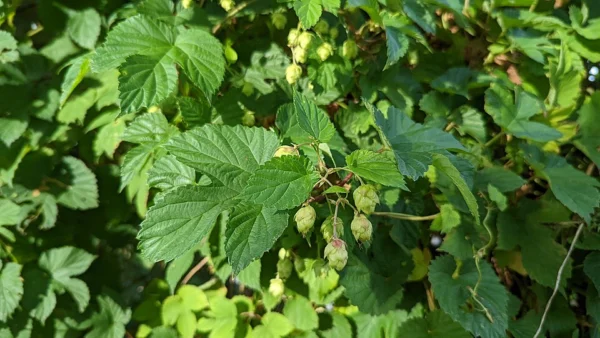
Choose open sun for good cone production. Light shade can suit a foliage display, although a dark, crowded corner is unlikely to give the same growth or harvest.
Prepare fertile soil that holds moisture but drains freely. Avoid a permanently wet hollow, and clear perennial weeds before the root system becomes established.
Install strong supports before planting. Plan a way to lower strings or reach the crop safely, and leave room to inspect the crown and separate shoots.
Keep the hop away from delicate neighbouring plants that its bines could overwhelm. The rough growth can irritate skin; wear gloves and sleeves when training or cutting, and prevent dogs eating plants or discarded cones.
Photo: Radomianin, CC BY-SA 4.0. Resized and optimised; cropped for display. Adapted image under the same licence.

A healthy named plant or rhizome gives a more predictable result than seed. The best planting date and depth depend on whether the supplier sends a dormant crown, a rhizome section or a potted plant.
1.
Match the variety’s eventual height to a secure support and the space available for its side growth.
2.
Plant dormant material in suitable ground between late autumn and early spring, or establish spring supplied plants promptly according to their instructions.
3.
Keep bare roots moist before planting. If planting must wait, follow the nursery’s short term storage guidance rather than leaving the plant in a warm room.
4.
Prepare a generous area of soil and improve it with well rotted organic matter where needed. Do not work heavy ground while it is saturated.
5.
Plant at the depth specified for the supplied material. Bare root crowns may need their growing points a few centimetres below the surface; do not guess from advice for a different plant form.
6.
Allow at least 1m between crowns, with extra room for vigorous plants and access. Keep each variety’s climbing strings distinct.
7.
Firm gently and water if needed to settle the soil. Apply a surface mulch without leaving the crown buried in a soggy heap.
8.
As spring shoots lengthen, guide a few strong bines clockwise around the strings. Check them frequently while they learn their route.

Watering
Water new plants during dry spells while roots establish. Vigorous summer growth can use considerable moisture, so check the soil beneath the mulch instead of judging by a passing shower.
Water thoroughly into the root area and allow excess water to drain. A small container dries quickly under a large canopy; if growing in a pot, choose a substantial drained container and maintain reliable watering.

Feeding
Improve poor ground before planting and renew an organic mulch as it breaks down. Established hops benefit from reasonable fertility to support their annual replacement growth.
Where additional feeding is needed, use a suitable general fertiliser at its labelled rate. Check moisture, drainage and root health before treating every pause in growth as a shortage of nutrients.

Pruning
Train selected strong shoots in spring, commonly two or three per string. Remove surplus shoots where they create congestion and keep neighbouring varieties from tangling together. Retain productive side growth rather than clipping the whole plant like a hedge.
Cut dead bines back after the season finishes. If harvesting by lowering or cutting stems earlier, clear the remaining spent growth in autumn. Inspect the perimeter for unwanted shoots and remove them before they climb surrounding plants.

Winter care
An established crown normally stays outdoors through winter. A bare support and no visible leaves are expected, not evidence that the plant has died.
Check wires, anchors and strings while the framework is accessible. Maintain drainage around the crown, and protect an exposed container from prolonged severe freezing where necessary.
Common hop has rough twining stems and toothed leaves, usually with three or five pronounced lobes. Female flowers develop into overlapping papery green cones. Male flowers form loose branching clusters instead.
A plant’s sex cannot be established from a young leaf alone. Retain the nursery label if cone production matters. This guide covers perennial Humulus lupulus, rather than other plants sold with the informal name hop.
Photo: Rasbak (attributed by Wikimedia Commons), CC BY-SA 3.0. Resized and optimised; cropped for display. Adapted image under the same licence.
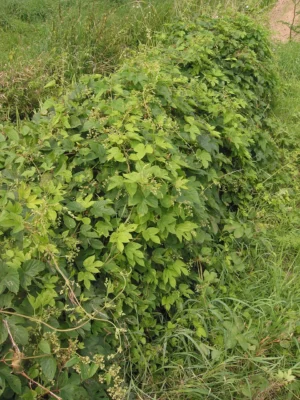
British commercial hop growing is especially associated with the south and west of England, but suitable gardens elsewhere can support this hardy climber. Local warmth, exposure and variety influence cone ripening.
Check cones from late summer, with September the main harvest period. They become lighter, papery and aromatic as they mature. Inspect several clusters; do not assume every cone on a bine is ready together.
Process harvested cones promptly. Dry those intended for storage with good airflow, or follow an appropriate fresh use immediately. Do not pack wet cones tightly into a sealed container, where they can deteriorate quickly.
Photo: Jan-Herm Janßen, CC BY-SA 4.0. Resized and optimised; cropped for display. Adapted image under the same licence.
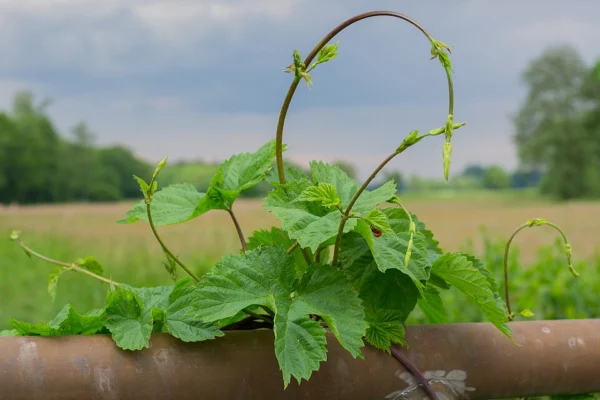
Inspect shoot tips and leaf undersides. A few aphids need not spoil the plant; encourage predators and remove small troublesome colonies by hand where practical.
Red spider mite can be troublesome in hot, dry conditions. Look beneath leaves for mites and fine webbing. Address drought stress and confirm the cause before choosing a treatment.
Hops can suffer downy mildew. Remove affected growth, improve airflow and avoid unnecessary leaf wetness. Repeatedly stunted or diseased shoots from the crown warrant advice from a specialist supplier.
Check whether the plant is female, then consider shade, drought and establishment. A first year plant may concentrate on roots. Cutting away too much summer growth can also remove potential cropping shoots.
Remove unwanted shoots early and guide retained bines onto their own support. If the annual growth is consistently unmanageable, reconsider the position or replace it with a smaller selection.
Division and root cuttings can reproduce an established named female plant. Take material only from healthy stock, retain viable buds and follow a suitable propagation method for the season. Softwood cuttings are another option.
Seedlings vary and may be male, so seed is an uncertain route to a particular cone crop. Keep labels with every propagated plant; an unidentified vigorous seedling is not equivalent to a named brewing variety.
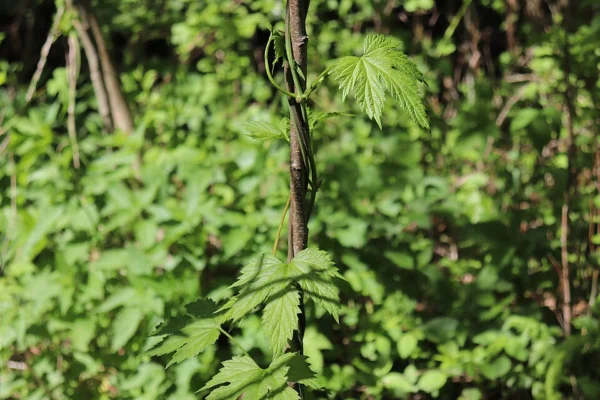
Prima Donna
A female hop reaching roughly 3m, making it easier to fit on a garden support than traditional tall varieties. It carries green foliage and aromatic cones. Smaller still means vigorous seasonal growth.
Illustrative common hop shoots; this plant is not confirmed as Prima Donna.
Photo: Matvei Kiselev, CC BY-SA 4.0. Resized and optimised; cropped for display. Adapted image under the same licence.
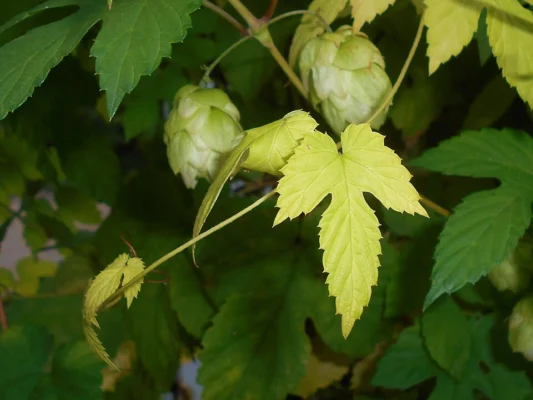
Aureus
Golden hop is grown especially for its yellow foliage and decorative cones. It can reach 4 to 8m, so give its bright leaves a substantial framework and enough soil moisture.
Humulus lupulus Aureus, identified in the original botanical garden photograph.
Photo: Salicyna, CC BY-SA 4.0. Resized and optimised; cropped for display. Adapted image under the same licence.
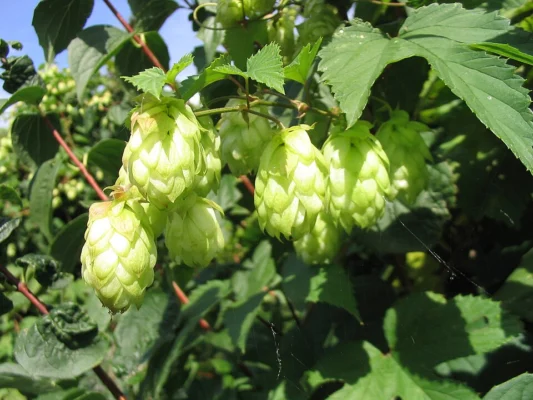
Fuggle
A traditional English aroma hop associated with Kent. Choose it for a named cone crop and give it a proper climbing system; its familiar brewing name does not indicate a compact plant.
Illustrative wild hop cones; the plant is not identified as Fuggle.
Photo: Hagen Graebner, CC BY-SA 2.5. Resized and optimised; cropped for display. Adapted image under the same licence.
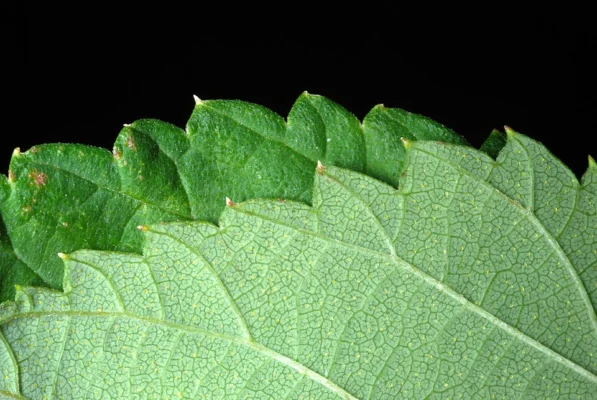
Goldings
A long established group of related English aroma selections, with differences in harvest timing. Ask the nursery which selection it supplies and allow for a tall plant with spreading lateral growth.
Illustrative hop leaf detail; this is not a confirmed Goldings plant.
Photo: Douglas Goldman, CC BY-SA 4.0. Resized and optimised; cropped for display. Adapted image under the same licence.
Compare named female hops by size, foliage and intended cone use. Ask how the plant will be supplied and follow the nursery’s planting instructions. Have its permanent position ready before vigorous spring growth begins.
Hop leaves can feed comma butterfly caterpillars. Inspect feeding damage before removing every caterpillar; a vigorous ornamental hop may tolerate some shared foliage.
Keep some nearby flowers available for insects and avoid routine blanket spraying. Managing a few troublesome colonies selectively preserves more of the garden’s predators and other visitors.
Published by Buy From Farmers Direct. Sources checked 6 October 2026. Growing references: British Hop Association: what is a hop?; British Hop Association: the growing year; A Plus Hops: planting instructions; A Plus Hops: growing hops; A Plus Hops: frequently asked questions; A Plus Hops: harvesting; Essentially Hops: hop plant guide; RHS: Prima Donna hop; RHS: Aureus golden hop; British Hop Association: Fuggle; British Hop Association: Goldings; RHS: butterflies in your garden; RHS: downy mildews. The seasonal timeline uses the shared BFFD Growers Calendar record; adjust timings to your variety and local conditions.
Yes. Humulus lupulus is a perennial. Its above ground stems die back in autumn while the living crown produces new shoots the following spring.
Choose a female plant if you want cones. Male plants carry different flower clusters. A named nursery plant is the simplest way to obtain a predictable female variety.
Dormant bare root plants are commonly planted from November to March in workable ground. Spring supplied plants should usually be established by April. Follow the supplier’s advice for the specific material.
Many varieties rapidly outgrow one. Prima Donna is a smaller option, but still reaches around 3m and needs strong support, water and space for its side growth.
Usually around September in the UK, although variety and weather can shift the date. Mature cones feel papery and smell aromatic. Check the plant regularly rather than relying on the calendar alone.
Remove the spent stems after harvest or autumn dieback, leaving the perennial crown in place. Renew supports and train fresh shoots when growth restarts in spring.
Give hops a strong framework, a realistic amount of room and attention during their spring climb. A suitable female variety can then provide both a lively summer screen and a distinctive autumn harvest.
Explore more growing guides: Blackberry, Comfrey, Chamomile.
Want to get food independence, support your local grower, get better prices and shop more privately?
Local food isn’t just something you find. It’s something you protect. A free account helps keep local supply visible, supported, and resilient.

….it takes 30 seconds for food lovers and 5 minutes for suppliers
We built this for people who care where their food comes from. For people who want to remain food secure. For Farmers to get to the local people, who deserve a better income and to deliver a better price for you. For the environmentally conscious and the privacy-conscious. An account simply helps us make the map and supplier reach more useful to you, without changing how open it is. You’re always in control.


Find local food. Stay connected to it. Create a free account to support local producers and be part of a growing food network.


