Horseradish brings a sharp, peppery flavour to sauces, dressings and vegetable dishes. This hardy perennial is easy to establish, but its spreading roots need a deliberate home. A deep container makes harvesting and controlling the plant much simpler, especially in a small garden where escaped root fragments would be difficult to remove.
Hardy perennial
Grow in a deep pot
Vigorous spreading roots
Sun or partial shade
Autumn root harvest
| Botanical name | Armoracia rusticana |
| Family | Brassicaceae |
| Plant type | Herbaceous perennial |
| Main edible part | Pungent white roots |
| Other edible part | Young leaves, used sparingly |
| Position | Sun or partial shade |
| Growing medium | Fertile, moist and well drained |
| Soil pH | Tolerates a broad range |
| Typical height | About 60 to 90cm |
| Spread | Roots can extend beyond the visible clump |
| Recommended home | A deep, drained container |
| Container size | At least 30cm wide and deep; 40cm or larger is useful |
| Plants per container | One young plant is a simple starting point |
| Main planting window | March to June |
| Propagation | Root cuttings or division |
| First root harvest | Lightly in the second autumn |
| Main root harvest | Autumn and early winter |
| Leaf harvest | Small amounts in spring and summer |
| Winter habit | Leaves die back; roots remain alive |
| Wasabi relationship | Related, but a different plant |
| Plant name | Crop type | Spacing |
Sow indoors
Plant outdoors
Harvest
Polytunnel | |||||||||||
|---|---|---|---|---|---|---|---|---|---|---|---|---|---|---|
| Jan | Feb | Mar | Apr | May | Jun | Jul | Aug | Sep | Oct | Nov | Dec | |||
| Horseradish | Root vegetables | Single one plant per large pot, In row 45cm if grown in ground, Row gap 60cm | No activity recorded | No activity recorded | Plant outdoors | Plant outdoors | Plant outdoors | Plant outdoors | No activity recorded | No activity recorded | No activity recorded | Harvest | Harvest | Harvest |
Sow indoors: no months recorded. Plant outdoors: March, April, May, June. Harvest: October, November, December. Polytunnel: no months recorded.
The planting band covers young plants and root cuttings from spring into early summer, rather than seed sowing. October to December marks the main root harvest on established plants; it does not promise a crop in the first year. Roots can be lifted at other times when needed. Outdoor horseradish needs no polytunnel season.
Choose horseradish if you enjoy using a little fresh root and can give one plant a permanent container. A modest harvest goes a long way, so there is rarely a need for a whole row.
Think about containment before planting. This is a poor choice for an uncontained mixed herb bed: its strong growth can crowd smaller plants, and pieces left behind after digging can start again.
Photo: Leslie Seaton from Seattle, WA, USA, CC BY 2.0. Resized and optimised; cropped for display.
A sunny position encourages sturdy growth, while partial shade is also suitable. Keep a container where you can reach it easily for watering and autumn lifting.
Use a substantial pot with drainage holes. A container at least 30cm wide and deep is a minimum; a larger one gives roots more room and dries out less quickly.
Stand the pot where escaping roots can be noticed and removed. An open bottomed raised bed is not a reliable barrier, and a pot sunk into soil still needs checking beneath its drainage holes.
If you already have horseradish in open ground, treat it as a permanent clump and harvest carefully. Avoid moving soil containing its roots into neighbouring beds or spreading fragments with a cultivator.
Photo: Agnieszka Kwiecień, Nova, CC BY-SA 4.0. Resized and optimised; cropped for display. Adapted image under the same licence.
Buy labelled root cuttings, often called thongs, or a young plant. Starting with one healthy plant is easier to manage than establishing several large clumps.
1.
Choose a deep container with clear drainage holes and a stable base. Decide where it will stay once it becomes heavy with compost and roots.
2.
Fill with peat free multipurpose compost, leaving a little space below the rim so watering does not immediately overflow.
3.
Plant in spring or early summer when you can keep the new plant watered. Avoid working with frozen or saturated growing media.
4.
For a potted plant, soak a dry root ball first, then remove the nursery pot carefully and set the plant centrally at its previous compost level.
5.
For an unsprouted root cutting, make a deep narrow hole and place the root vertically with its top about 5cm below the compost. Follow the supplier’s instructions for already shooting plantlets.
6.
Cover the cutting, or firm around the root ball, and water thoroughly. Allow excess water to drain away rather than leaving the pot standing in a full saucer.
7.
Label the container and check moisture as shoots develop. Remove competing weeds by hand while they are small.
8.
Give the plant its first season to build roots. Plan a light harvest in its second autumn, retaining enough healthy root and growing points for the following year.

Watering
Check container compost regularly from spring to autumn. Water when it starts to dry, wetting the root zone thoroughly; the aim is steady moisture without leaving the roots waterlogged.
Large leaves may droop during dry weather. Check the compost before watering, and move a pot into light shade during a very hot spell if keeping up with demand becomes difficult.

Feeding
Potted plants benefit from a suitable general purpose feed during active growth. Use a liquid feed at its labelled rate or an appropriate spring granular feed, accounting for fertiliser already in fresh compost.
An established plant in reasonably fertile garden soil usually needs little extra feeding. A spring mulch of garden compost can improve the soil, but keep fresh material clear of emerging shoots.

Pruning
Remove dead foliage after it has collapsed in autumn, or before new shoots appear in spring. Routine trimming of healthy leaves is unnecessary when you are growing the plant for roots.
Annual harvesting helps manage a container clump. Tip it out when dormant, take no more than half the roots, and replant the retained portion in fresh compost. Work over a tray to catch fragments.

Winter care
Horseradish is hardy outdoors across the UK and normally disappears above ground in winter. Mark the pot clearly so an apparently empty container is not accidentally planted with something else.
Keep drainage holes clear through wet weather. A dormant plant needs much less water than a leafy summer clump, so check the compost instead of continuing a summer watering routine.
Mature horseradish has large, elongated green leaves with conspicuous veins and often wavy edges. Young emerging foliage can look narrower and more divided. Slender flowering stems carry clusters of small white flowers.
The roots have pale tan skin and white flesh. Grow from an identified plant rather than using these broad features alone to identify an unfamiliar wild plant; several unrelated weeds have large leaves.
Photo: Joanna Boisse, CC BY-SA 4.0. Resized and optimised; cropped for display. Adapted image under the same licence.
The roots cope with British winters without a heated greenhouse. In colder districts, wait for workable conditions before planting and give new roots time to establish before taking a harvest.
In southern and eastern gardens, a container may dry surprisingly quickly in summer. Some afternoon shade and a larger volume of compost can make the watering routine easier.
In wetter western gardens and on heavy ground, drainage is the main practical concern. A pot allows you to choose a suitable growing medium while keeping the plant away from waterlogged soil.
Photo: Krzysztof Ziarnek, Kenraiz, CC BY-SA 4.0. Resized and optimised; cropped for display. Adapted image under the same licence.
Small root fragments can regenerate. Lift escapes carefully, collect the roots and keep checking for regrowth. Contain new plantings in a pot; simply cutting down the leaves will not remove established roots.
First check whether the compost is dry. Water a thirsty pot thoroughly and review its size and position. If it remains wet, investigate drainage instead of repeatedly adding more water.
Persistently wet conditions can damage roots. Check the drainage holes and avoid water collecting beneath the container. Discard affected material and restart with healthy stock if the whole crown has deteriorated.
Inspect the plant for slugs, snails or leaf feeding insects before choosing a response. A few holes on a vigorous mature plant rarely justify intervention; newly emerging shoots need closer attention.
A young plant may simply need another season. For an older container clump, review rooting space and moisture, then divide and refresh it at harvest. Do not remove every root in pursuit of a larger first crop.
At autumn harvest, retain healthy root pieces about 15cm long and pot them separately. Mark their original top ends before cutting so you can place them correctly. Keep only as many replacements as you need.
Established clumps can also be divided in spring or autumn, keeping roots and healthy growing points together. Tell anyone receiving a spare plant that it spreads vigorously and is best contained.
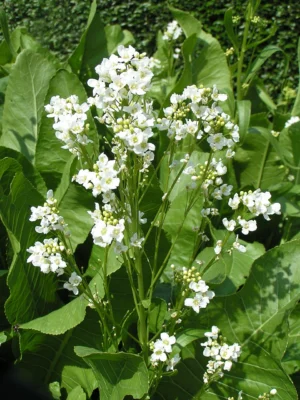
Common green horseradish
The familiar Armoracia rusticana grown for its pungent roots. It makes a vigorous perennial clump with green leaves and is the usual choice for a productive kitchen container.
Common horseradish flowering above its broad green leaves.
Photo: Pethan, CC BY-SA 3.0. Resized and optimised; cropped for display. Adapted image under the same licence.
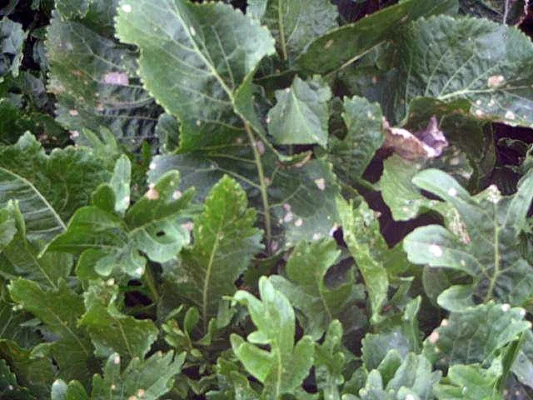
Variegata
This named form has cream marked green foliage, giving it an ornamental role as well as edible roots. Its attractive leaves do not remove the need to contain spreading growth.
Foliage of a plant identified as Armoracia rusticana Variegata.
Photo: Photo by David J. Stang, CC BY-SA 4.0. Resized and optimised; cropped for display. Adapted image under the same licence.
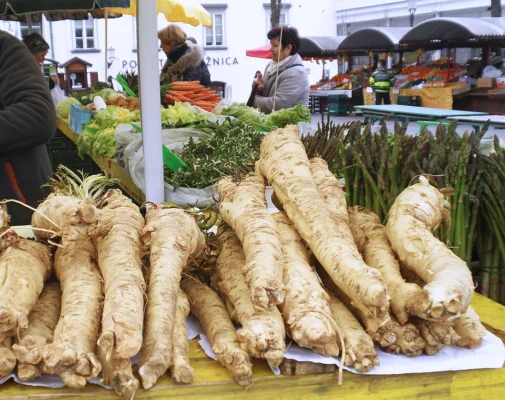
Root cuttings or thongs
A way of buying the plant, rather than a separate variety. Choose firm, healthy planting material and follow the supplier’s guidance, especially if the cuttings have already begun to shoot.
Harvested horseradish roots illustrate the crop, not prepared planting thongs.
Photo: Amanda Slater from Coventry, West Midlands, UK, CC BY-SA 2.0. Resized and optimised; cropped for display. Adapted image under the same licence.
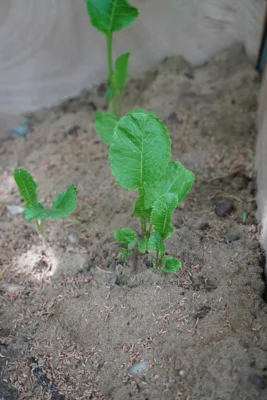
Young potted plants
Another buying option for the common species or a named form. A labelled young plant makes it easy to see active growth, but it still needs a larger permanent pot and time to establish.
Illustrative young horseradish foliage growing in soil, not a retail pot.
Photo: Darijanus, CC BY-SA 4.0. Resized and optimised; cropped for display. Adapted image under the same licence.
Choose a young plant or purpose sold root cuttings, and have the final container ready before they arrive. Check whether the label describes the common species or Variegata; the type of packaging does not indicate a different cultivar.
A healthy plant can usually tolerate modest leaf damage. Look closely at any visitors before acting, and keep a range of flowering plants nearby to support insects through the growing season.
Keep unwanted roots out of ordinary cold compost heaps where viable pieces might survive and later spread. Responsible containment protects neighbouring planting and prevents a useful crop becoming a persistent garden weed.
Published by Buy From Farmers Direct. Sources checked 6 October 2026. Growing references: RHS horseradish growing guide; RHS Armoracia rusticana profile; Jekka’s variegated horseradish; Tamar Organics horseradish growing and preparation advice; Otter Farm horseradish; Love the Garden UK horseradish guide; RHS true wasabi profile. The seasonal timeline uses the shared BFFD Growers Calendar record; adjust timings to your variety and local conditions.
Yes. A deep, drained pot is usually the most manageable option. Give the roots plenty of space, water during active growth and inspect drainage holes for escaping roots.
Allow the first year for establishment, then harvest lightly in the second autumn. A small plant may need longer. Autumn and early winter are convenient times to lift established clumps and replant the retained roots.
Wash and peel a sound root, then grate what you need in a ventilated space because the fumes are strong. Use grated root promptly. Whole roots keep in cool, frost free conditions; refrigerate prepared sauces and follow a reliable recipe’s storage instructions.
Young leaves can be used in small amounts in salads or cooked dishes. Take only a few so plenty remain to support root growth, and wash them before use.
No. Horseradish is Armoracia rusticana, while true wasabi is Eutrema japonicum. They belong to the same family, but have different growing requirements and are not interchangeable plants.
It often does if live root pieces remain. Lift carefully and monitor regrowth over time. A contained plant is much easier to manage than one allowed to spread through a permanent border.
Give horseradish a deep pot, steady summer moisture and time to establish. Careful annual harvesting will provide useful roots while keeping this vigorous perennial manageable.
Explore more growing guides: Carrot, Celeriac, Chives (Garlic).