Garlic chives provide flat, garlicky leaves and a late display of white flowers. They are a useful perennial for cooks who want small fresh harvests from a pot or herb bed. Start with a labelled plant or seed, let the clump establish, and manage the flower heads if you do not want seedlings appearing nearby.
Perennial kitchen herb
Flat garlic flavoured leaves
White late summer flowers
Suitable for pots
Divide established clumps
| Botanical name | Allium tuberosum |
| Other name | Chinese chives |
| Family | Amaryllidaceae |
| Plant type | Clump forming herbaceous perennial |
| Typical flowering height | Around 40 to 60cm, depending on conditions |
| Leaves | Flat, narrow and solid |
| Flavour | Garlic rather than onion |
| Flowers | White, star shaped blooms in clusters |
| Usual flowering season | Late summer into autumn |
| Position | Sun or light partial shade |
| Soil | Fertile, moist and well drained |
| Indoor sowing | March to May |
| Outdoor sowing | May onwards, following the packet |
| Planning spacing | 30cm between clumps |
| Planting window used | April to June or early autumn |
| Harvest window used | May to October once established |
| Winter behaviour | Growth usually slows or dies back |
| Propagation | Seed or division |
| Self seeding | Can be prolific if flower heads ripen |
| Wildlife value | Flowers attract a range of visiting insects |
| Plant name | Crop type | Spacing |
Sow indoors
Plant outdoors
Harvest
Polytunnel | |||||||||||
|---|---|---|---|---|---|---|---|---|---|---|---|---|---|---|
| Jan | Feb | Mar | Apr | May | Jun | Jul | Aug | Sep | Oct | Nov | Dec | |||
| Chives (Garlic) | Herbs | Single 30cm, In row 30cm, Row gap 30cm | No activity recorded | No activity recorded | Sow indoors, Polytunnel | Sow indoors, Plant outdoors, Polytunnel | Sow indoors, Plant outdoors, Harvest | Sow indoors, Plant outdoors, Harvest | Harvest | Harvest | Plant outdoors, Harvest | Harvest, Polytunnel | No activity recorded | No activity recorded |
Sow indoors: March, April, May, June. Plant outdoors: April, May, June, September. Harvest: May, June, July, August, September, October. Polytunnel: March, April, October.
The calendar uses March to June for a practical spring and early summer sowing programme, April to June and September for planting, and May to October for established leaf crops. Some seed suppliers offer a longer outdoor sowing window; later seedlings may be better treated as plants for the following year. Tunnel use is optional for spring establishment and autumn shelter, not a requirement for a healthy outdoor clump.
Garlic chives suit a small kitchen garden where a handful of fresh leaves is more useful than a large seasonal crop of bulbs. Keep several clumps if you cook with them often so one can recover while you harvest another.
They are worth growing for their flowers as well as their leaves. Allow room for the taller flower stems and decide whether to remove spent heads. This plant can produce many seedlings when seed is allowed to scatter.
Photo: Camila EsBa, CC BY 4.0. Resized and optimised; cropped for display.
Choose a bright, accessible position with soil that holds some moisture but drains after rain. Avoid the dry root competition immediately beneath large shrubs if your priority is tender leaves.
Prepare a permanent spot by removing persistent weeds before planting. A perennial herb is harder to keep clean once invasive grass roots have grown through its dense base.
A drained container is a useful option on a patio or where the ground stays wet. Provide enough compost for the roots to expand and check that neighbouring plants do not shade the pot as summer progresses.
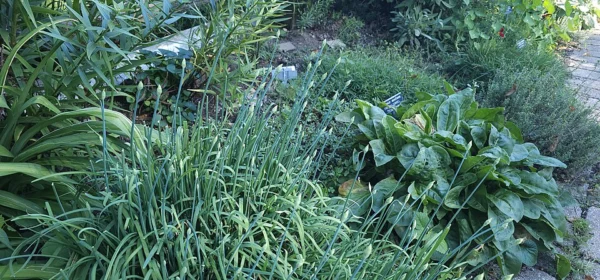
In a herb border, give garlic chives their own labelled space. Their broad leaves and later white flowers complement common chives, but the two plants have different flavours and should not be treated as interchangeable labels.
Photo: TheTechnician27, CC0. Resized and optimised; cropped for display.
A healthy potted plant or division is the simplest route to a small harvest. Seed takes longer to form a substantial clump, so avoid expecting a full kitchen supply from the first few shoots.
1.
Choose seed or plants labelled Allium tuberosum. Keep the label with the planting, especially if other ornamental alliums grow nearby.
2.
Prepare a weed free position or a pot with free drainage and suitable peat free compost. Moisten a dry root ball before planting.
3.
Sow seed in spring using the packet depth and germination instructions. Modules make it easier to handle a small group of seedlings without disturbing the roots.
4.
Keep seedlings in good light with evenly moist compost. Thin excessive crowding so the young plants can develop sturdy roots.
5.
Acclimatise indoor raised plants before planting outside. Avoid moving soft growth directly from a warm room into a cold, exposed bed.
6.
Plant at the previous soil level, allowing around 30cm between clumps. Leave space to reach the plants for cutting and flower stem removal.
7.
Water the surrounding soil after planting and inspect during the settling period. Keep weeds from covering the young leaves.
8.
Allow a new clump to gain strength before taking repeated cuts. Begin with a few leaves and increase harvesting only as growth supports it.

Watering
Water new plantings during dry spells and check container compost regularly. An established outdoor clump needs less attention, but tender leaf production is better when growth is not repeatedly stopped by drought.
Check below the surface before watering again. Persistent saturation is a drainage problem; do not respond to wilted leaves by automatically adding more water to already wet compost.

Feeding
Improve poor soil before planting with mature garden compost. A modest top dressing around an established clump can maintain the growing area without burying the crown.
For pots, use an appropriate feed during active growth according to the label. If a plant fills its container with roots, divide or repot it instead of trying to solve lack of space with extra fertiliser.

Pruning
Cut leaves cleanly a few centimetres above the base, leaving the growing point intact. Allow a harvested clump to replenish its leaves before another substantial cut. Fresh young growth is the useful kitchen crop.
Remove old flower stems before ripe seed drops if you want a tidy, contained planting. Alternatively, retain a few heads for seed collection and check neighbouring pots for volunteer seedlings.

Winter care
Outdoor growth generally slows as temperatures fall, and leaves may die back. Clear dead foliage when convenient while leaving the healthy base undisturbed. A dormant clump should not be kept constantly wet.
Shelter containers from prolonged saturation and check drainage holes. A bright protected position may extend picking, but winter warmth without sufficient light usually produces disappointing growth.
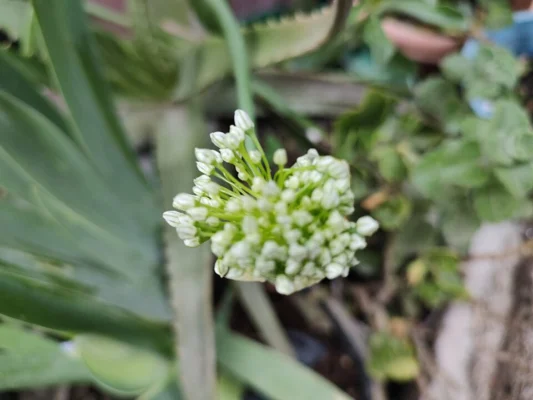
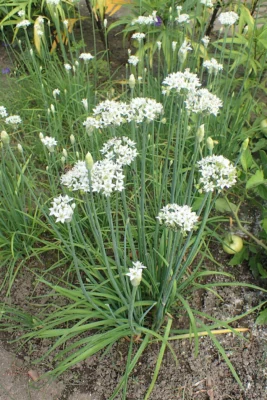
Garlic chives have flat, solid leaves rather than the hollow tubes of common chives. Their white star shaped flowers are held in loose rounded clusters, usually later in the season than ordinary chive flowers.
Grow from a reliable labelled source for culinary use. Do not use these photographs to identify an unknown wild or ornamental plant for eating. Leaf shape, scent and flowers together still need a secure plant identity.
Photo: Krzysztof Ziarnek, Kenraiz, CC BY-SA 4.0. Resized and optimised; cropped for display. Adapted image under the same licence.
In mild southern gardens, established clumps may offer a longer season of leaves. Keep an eye on pots during warm dry weather, particularly against a sunny wall where rain may not reach them.
In cooler northern or upland sites, spring growth and flowering can be later. Give new plants a useful establishment period before winter rather than taking heavy cuts from a small late planted clump.
Garlic chives can scatter seed readily. Remove flower heads before they mature, and lift correctly identified unwanted seedlings while small. A pot does not prevent seed from reaching the surrounding garden.
A young, dry or depleted clump may need a longer recovery. Pause harvesting, check moisture and root space, and allow enough healthy leaf to rebuild the plant.
Check watering, exposure and the age of the foliage. Remove tired leaves from an otherwise healthy clump and look for good new growth before deciding that feeding is needed.
Inspect the damage closely and remove badly affected foliage. Improve spacing and airflow around congested plants. Keep tools clean when moving between allium crops.
Lift and divide a congested clump during a mild growing period. Replant healthy sections with roots and shoots, discard deteriorated material and give each division room to develop.
Divide healthy established clumps in spring, or in early autumn where conditions allow roots to settle before winter. Separate manageable rooted sections and replant promptly, then water until new growth is established.
You can also sow fresh seed. Collect it only from correctly identified plants and label it with the harvest year. Named selections may vary when raised from seed, so division is preferable when preserving a particular plant.
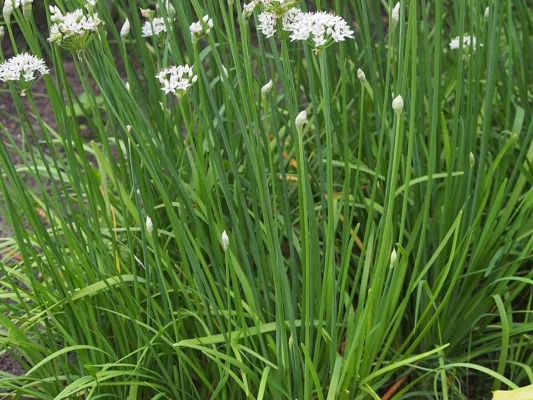
Standard garlic chives
Ordinary Allium tuberosum is a useful starting point for edible leaves and white flowers. A healthy labelled plant matters more than a special cultivar when you are learning the crop.
Flowering garlic chives; no named cultivar is claimed.
Photo: Agnieszka Kwiecień, Nova, CC BY-SA 4.0. Resized and optimised; cropped for display. Adapted image under the same licence.
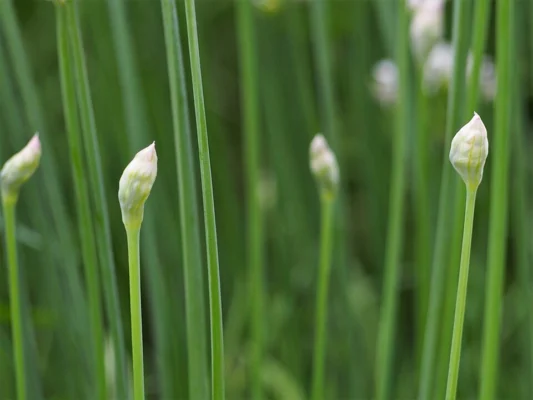
Fat Leaf
A named selection grown for broader leaves. Check the nursery description and mature size when buying, and retain its label if you later divide it for more plants.
Illustrative garlic chive buds; the photographed cultivar is not confirmed.
Photo: Agnieszka Kwiecień, Nova, CC BY-SA 4.0. Resized and optimised; cropped for display. Adapted image under the same licence.
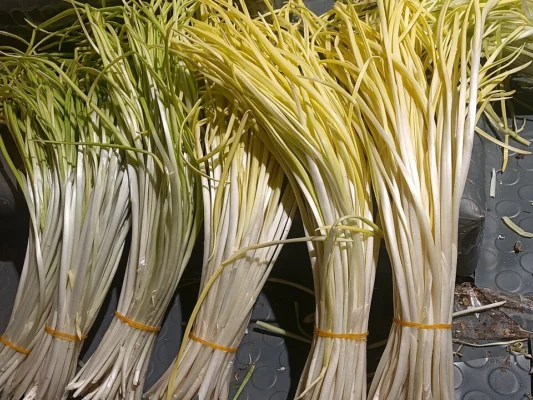
Blanched garlic chives
The pale yellow crop sold in some markets is produced by excluding light during growth. This is a growing method, not a separate species. Begin with ordinary green leaf production before experimenting with a spare established clump.
Blanched garlic chive leaves offered for sale.
Photo: Fumikas Sagisavas, CC0. Resized and optimised; cropped for display.
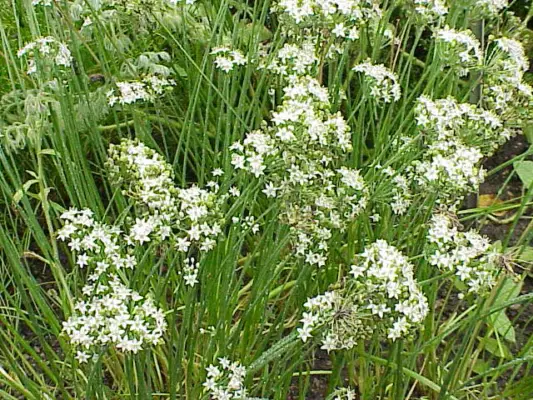
Wagners Kobold
A named selection described for its finer aromatic leaves. Buy from a supplier that identifies the plant clearly; do not assume an unlabelled seedling will retain a named selection’s habit.
Illustrative flowering Allium tuberosum, not a confirmed Wagners Kobold plant.
Photo: Kurt Stüber, CC BY-SA 3.0. Resized and optimised; cropped for display. Adapted image under the same licence.
Look for Allium tuberosum on the label and choose healthy roots and leaves. A young plant is practical for one kitchen pot; seed is useful for a larger planting. Check named selection details with the nursery and allow enough space for a permanent clump.
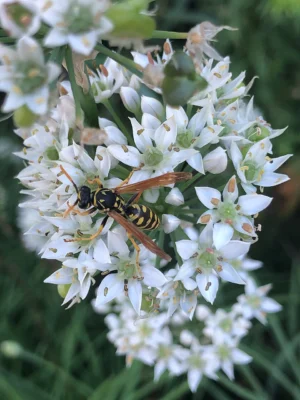
White late season flowers draw visiting insects to the herb bed. The photograph shows a paper wasp on garlic chive flowers, illustrating that flower visitors include more than bees.
Keep some flowering stems if you value this display, then remove spent heads before seed dispersal where needed. A small managed patch can provide flowers without allowing the herb to spread through every nearby bed.
Published by Buy From Farmers Direct. Sources checked 6 October 2026. Growing references: RHS Allium tuberosum; Jekka’s garlic chives; Kitchen Garden Plant Centre garlic chives; University of New Hampshire garlic chives; Plantura garlic chive varieties; J Parker’s garlic chive sowing guide. The seasonal timeline uses the shared BFFD Growers Calendar record; adjust timings to your variety and local conditions.
No. Garlic chives are Allium tuberosum, with flat leaves, a garlic flavour and white flowers. Common chives are Allium schoenoprasum, with hollow leaves and usually purple flowers.
Yes. Established plants are hardy perennials when their growing conditions are suitable. Provide free drainage, allow new plants to establish and expect growth to slow or die back in winter.
Yes. Use a pot with drainage and space for the clump to expand. Water during dry weather, feed appropriately during active growth and divide when the roots become crowded.
Use clean scissors to cut leaves a few centimetres above the base. Take light harvests from young plants and allow the clump to regrow between larger cuts.
Flowers from correctly identified cultivated garlic chives are used as an edible garnish. Keep some for visiting insects and remove the remaining heads before ripe seed scatters if you want to limit seedlings.
Pale yellow garlic chives sold as a crop have usually been blanched by excluding light. Yellowing on an ordinary garden plant can instead indicate old foliage, seasonal dieback or a growing problem, so check the conditions.
Give garlic chives a permanent labelled home, harvest at a pace the clump can sustain and manage the seed heads. A few plants can provide useful leaves while bringing a late flush of white flowers to the herb garden.
Want to get food independence, support your local grower, get better prices and shop more privately?
Local food isn’t just something you find. It’s something you protect. A free account helps keep local supply visible, supported, and resilient.

….it takes 30 seconds for food lovers and 5 minutes for suppliers
We built this for people who care where their food comes from. For people who want to remain food secure. For Farmers to get to the local people, who deserve a better income and to deliver a better price for you. For the environmentally conscious and the privacy-conscious. An account simply helps us make the map and supplier reach more useful to you, without changing how open it is. You’re always in control.


Find local food. Stay connected to it. Create a free account to support local producers and be part of a growing food network.


