Hostas bring patterned leaves and summer flowers to shady pots and borders. A polytunnel can provide useful temporary shelter for a collection, especially small pots in wet weather, but it must stay cool and airy. These hardy perennials need shade, steady root moisture and a proper winter rest, not tropical treatment.
Hardy foliage perennial
Partial shade
Cool, ventilated shelter
Winter dormancy
Ornamental growing guide
| Botanical group | Hosta species and garden cultivars |
| Family | Asparagaceae |
| Plant type | Clump-forming herbaceous perennial |
| Main interest | Foliage from spring to autumn |
| Flowers | White, lilac or purple, depending on cultivar |
| Flower season | Summer; timing varies by cultivar |
| Usual garden position | Partial shade and shelter |
| Polytunnel role | Optional temporary shelter for pots |
| Heating requirement | No routine winter heating |
| Winter behaviour | Leaves die back; crowns remain dormant |
| Spring frost risk | New leaves can be damaged |
| Growing medium | Fertile, moist and well drained |
| Container choice | Drainage holes and room for the rootball |
| Typical medium plant pot | About 30–45cm across; adjust to cultivar |
| Mature spacing | About 30–90cm or more, according to spread |
| Planting season | Spring or early autumn preferred |
| Routine propagation | Division of established healthy clumps |
| Cultivar fidelity | Division retains the parent’s characteristics |
| Common pests | Slugs, snails and vine weevil |
| Harvest calendar | No food harvest included in this guide |
| Plant name | Crop type | Spacing |
Sow indoors
Plant outdoors
Harvest
Polytunnel | |||||||||||
|---|---|---|---|---|---|---|---|---|---|---|---|---|---|---|
| Jan | Feb | Mar | Apr | May | Jun | Jul | Aug | Sep | Oct | Nov | Dec | |||
| Hosta (Polytunnel) | Not recorded | Single 60cm, In row 60cm, Row gap 60cm; illustrative medium hosta, allow 30–90cm or more by cultivar | Polytunnel | Polytunnel | Plant outdoors, Polytunnel | Plant outdoors, Polytunnel | Plant outdoors | No activity recorded | No activity recorded | No activity recorded | Plant outdoors | Plant outdoors | Polytunnel | Polytunnel |
Sow indoors: no months recorded. Plant outdoors: March, April, May, September, October. Harvest: no months recorded. Polytunnel: January, February, March, April, November, December.
This is an ornamental guide using bought plants or divisions, so the sowing and food-harvest bands are intentionally empty. March–May and September–October show useful planting windows, avoiding frozen or saturated conditions. The protected band, November–April, means optional cool, ventilated shelter for vulnerable pots and fresh spring growth. It is not a requirement for all hostas, and does not mean keeping them warm or evergreen through winter.
A hosta collection suits a gardener who enjoys comparing leaf shape, colour and texture. Containers make it easier to move plants into shade and inspect them, but they need more attention to watering and drainage than established border clumps.
Use a polytunnel when it solves a specific problem, such as excessive winter rain around miniature pots. If the structure is hot, dry and devoted to sun-loving summer crops, a shaded outdoor position will usually suit hostas better.
Photo: Ivan Radic, CC BY 2.0. Resized and optimised; cropped for display.
Choose bright shade rather than a dark shed or an exposed sunny bench. Blue-leaved forms generally retain their colour best away from strong sun; some yellow-leaved cultivars accept more light when moisture is adequate.
Inside a tunnel, provide shade and open ventilation before sunny weather heats the air. Stand pots with gaps between leaves so you can inspect them and air can circulate. Monitor conditions at plant level.
Use a free-draining surface and containers with unobstructed holes. Keep pots out of trays of standing water during wet, cold weather, and avoid crowding a small hosta inside a much larger pot of persistently wet compost.
Buy a clearly labelled, healthy plant with firm roots and normal leaf markings. Named cultivars are best obtained as plants or divisions. Seedlings can be interesting, but they are not a dependable way to reproduce a particular named hosta.
1.
Choose a cultivar that fits the eventual display space. A miniature for a bowl and a large architectural hosta are not interchangeable, even when both arrive in small nursery pots.
2.
Prepare a suitable pot with drainage holes, or a moist, sheltered border in partial shade. For container growing, use a good peat free multipurpose or loam-based potting compost.
3.
Give miniature hostas a particularly airy, well-drained mix. Ask a specialist supplier about the needs of an unusually small or heavily white-variegated cultivar rather than treating every mini identically.
4.
Water a dry rootball before planting. Remove the pot carefully, loosen congested outer roots gently and avoid snapping the pointed spring buds around the crown.
5.
Set the top of the rootball at its previous level. Firm compost around the roots without burying the crown deeply, leaving enough space below the pot rim for watering.
6.
Water thoroughly to settle the compost, then let excess drain. Label the cultivar and leave room for the leaves to expand without rubbing against neighbouring plants.
7.
If the plant has been growing in soft protected conditions, gradually introduce it to its outdoor display position. Shade and shelter matter while fresh leaves adjust.
8.
Check moisture, drainage and pests regularly through the first season. Move pots or adjust ventilation promptly if leaves wilt in heat, rather than waiting for permanent brown edges to appear.

Watering
Keep the root zone evenly moist while leaves are growing. Check pots by the compost condition and weight rather than watering every container on the same fixed schedule. Small pots can dry surprisingly quickly.
Water thoroughly when needed and allow drainage. Dormant plants use much less water, but sheltered pots still need checking; aim for a lightly moist rootball without leaving the crown wet and stagnant.

Feeding
A fertile border usually needs an annual compost mulch rather than repeated feeding. Keep mulch clear of the crown and water established plants during dry spells.
Container hostas benefit from a general-purpose liquid feed about monthly during active growth, following the product rate. Avoid encouraging soft growth late in the season or feeding dormant pots as though they were summer bedding.

Pruning
Hostas need no routine shaping. Remove badly damaged leaves if necessary, taking care not to wound healthy crowns, and leave enough healthy foliage to sustain the plant.
Flower stems can remain until the autumn tidy-up, or be removed after flowering if seed is not wanted. Clear foliage once it has naturally died back; do not cut a healthy green plant down simply because the calendar says autumn.

Winter care
Allow the plant to become dormant and stay cold. Most established hostas overwinter outdoors without special measures; a tunnel is optional shelter for pots, particularly miniatures vulnerable to prolonged wetness.
Keep any winter shelter unheated and well ventilated. Remove water-holding saucers and check drainage. When spring leaves emerge, protect them during a late frost; a hardy dormant crown and a tender new leaf do not have the same tolerance.
A hosta develops a crown of separate leaf stalks, often with strongly marked veins and broad, heart-shaped or oval blades. Leaves may be green, blue-green, yellow or variegated, depending on the cultivar and growing conditions.
In summer, flower stalks rise above the foliage with a sequence of tubular or bell-shaped blooms. The whole leafy display dies back in autumn; an empty-looking pot in winter is not proof that the plant has died.
Photo: Ron Clausen, CC BY-SA 4.0. Resized and optimised; cropped for display. Adapted image under the same licence.
In wet western gardens, reliable drainage is especially useful for miniature hostas in pots. A roof or open, cold shelter can keep rain off without removing the winter conditions they need.
In drier eastern gardens and during summer heat, shade and watering become the priority. A polytunnel can intensify both heat and drying, so move the display outside if you cannot maintain suitable conditions.
In frost-prone districts, expect a later spring emergence and watch forecasts when fresh shoots appear. Brief protection can preserve the first leaves, but growing plants warmer throughout winter is not the answer.
Photo: Ron Clausen, CC BY-SA 4.0. Resized and optimised; cropped for display. Adapted image under the same licence.
Slugs and snails are frequent visitors. Inspect pots, nearby hiding places and young shoots, especially after dark in damp weather. Protect vulnerable new growth and use targeted controls; no hosta or simple barrier is completely slug proof.
Check for dry compost, strong sun and excessive tunnel heat. Restore steady moisture, add appropriate shade and improve ventilation. Damaged areas will not turn green again, so judge recovery by healthy new growth.
Vine weevil adults notch edges, while larvae can eat roots in pots. Inspect the rootball if a watered plant collapses. Suitable biological controls depend on conditions and timing; follow current supplier instructions.
Prolonged waterlogging can cause rotting, particularly in miniature pots. Check the crown and roots before discarding a late-emerging plant. Improve drainage and avoid keeping dormant compost saturated.
Normal variegation should match the cultivar. New irregular mottling, puckering or colour bleeding may indicate a virus, including Hosta Virus X. Separate the plant, do not divide it, clean tools between plants and seek a reliable diagnosis.
Divide a mature, healthy clump in spring or early autumn when conditions are suitable. Make sturdy pieces with several sound buds and roots, replant at the original depth and water them in. Clean cutting tools between plants.
Miniatures deserve extra patience: wait for a strong root system and several growth points before dividing, often using late spring or early summer. Tiny fragments are easily lost. Seed-raised plants usually vary from their named parent and should not inherit its cultivar label.
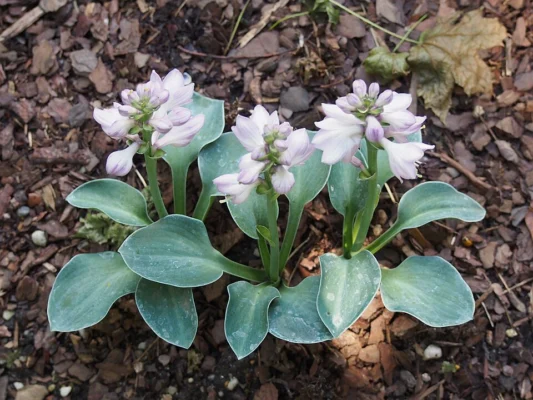
Blue Mouse Ears
A small mound of thick, rounded blue-green leaves with pale purple flowers. A useful starting point for a miniature collection, with careful drainage and enough room for its eventual spread.
Hosta Blue Mouse Ears.
Photo: Agnieszka Kwiecień, Nova, CC BY-SA 4.0. Resized and optimised; cropped for display. Adapted image under the same licence.
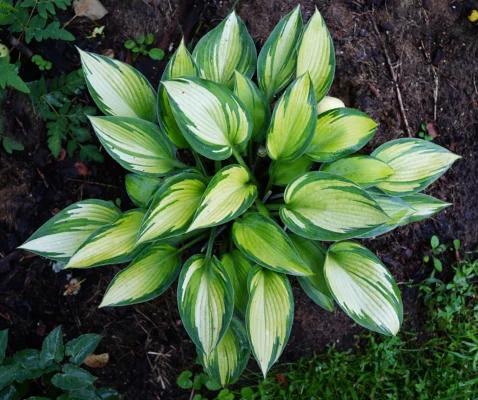
June
A compact variegated hosta with golden centres and blue-green margins. Its colouring changes with light and season, making bright shade a useful place to compare the developing leaves.
Hosta June.
Photo: Dmitriy Konstantinov, CC BY-SA 4.0. Resized and optimised; cropped for display. Adapted image under the same licence.
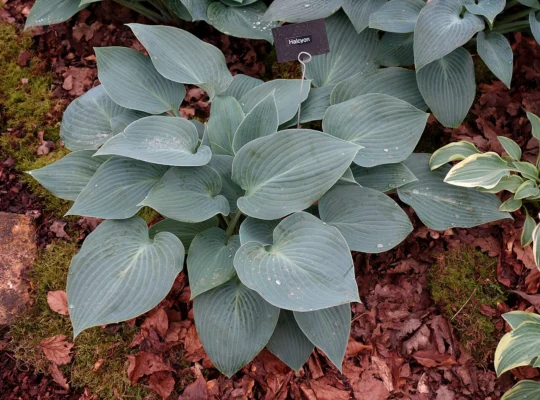
Halcyon
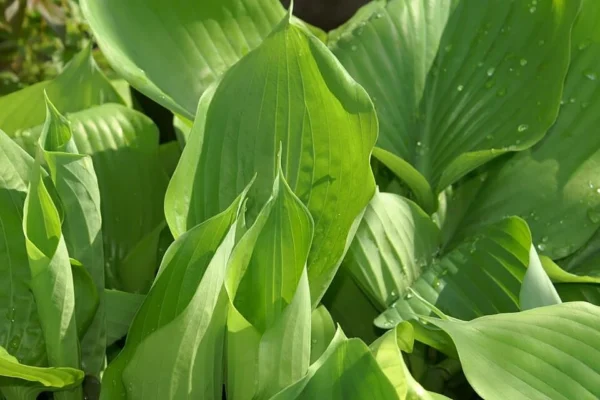
Sum and Substance
A much larger choice with broad yellow-green leaves. Allow a generous pot or border position and check mature dimensions before adding it to a display designed for small hostas.
Hosta Sum and Substance foliage.
Photo: Photo by David J. Stang, CC BY-SA 4.0. Resized and optimised; cropped for display. Adapted image under the same licence.
Choose a named plant for its mature spread, leaf colour and preferred light. Healthy roots, a clear cultivar label and specialist advice on miniature forms are more useful than a promise of completely pest-free foliage.
Hosta flowers can attract visiting bees, so leave blooms in place if you enjoy their activity. Where flowering pots remain under cover, provide insect access whenever the weather and ventilation allow.
Slugs and snails are also part of garden food webs. Focus protection on vulnerable pots and fresh shoots, and support a varied garden with shelter for their natural predators rather than trying to remove every invertebrate.
Published by Buy From Farmers Direct. Growing guidance reviewed 6 October 2026. The seasonal timeline uses the shared BFFD Growers Calendar record; adjust timings to your variety and local conditions.
No. They are hardy outdoor perennials. A cool, ventilated tunnel can provide optional shelter for pots, but heat and strong sun may make it unsuitable in summer.
Not for ordinary garden hostas. Let them become dormant and keep their shelter cold and airy, with compost lightly moist rather than waterlogged.
Yes. Match the pot to the rootball and eventual cultivar size, use drainage holes and suitable compost, and check moisture regularly while leaves are growing.
Leaves naturally die back in autumn and growth resumes in spring. Keep the pot labelled and check the crown and roots if it fails to emerge when conditions improve.
Wait until it has a substantial root system and several growth points. Very small fragments are vulnerable; divide established plants into sturdy pieces rather than as many pieces as possible.
No. This page covers ornamental plants, foliage display and cultivation. Its calendar intentionally contains no food-harvest period.
Use shelter to control wetness and protect a display, while keeping the plant’s ordinary needs in view: shade, healthy roots, summer moisture and winter rest. A well-chosen hosta can then return with fresh foliage for many years.