Astrantia adds fine detail to a border: small flower clusters sit inside papery, star shaped bracts above divided green leaves. These hardy perennials are useful in softer planting schemes, among roses or beside grasses. Give them soil that retains moisture and a position with sun or light shade. Their quiet colours reward a place near a path, where the flowers can be seen closely.
Hardy perennial
Sun or light shade
Summer flowers
Useful for cutting
Moist fertile soil
| Botanical name | Astrantia species and cultivars |
| Family | Apiaceae |
| Common name | Masterwort |
| Plant type | Herbaceous perennial |
| Foliage | Deciduous |
| Typical height | About 30 to 90 cm, by selection |
| Typical spread | About 30 to 50 cm |
| Position | Sun or light partial shade |
| Soil | Fertile and moisture retentive |
| Drainage | Avoid prolonged waterlogging |
| Soil reaction | Usually adaptable |
| Main flowering | Early to midsummer |
| Later flowering | Possible after deadheading or cutting back |
| Flower colours | White, green, pink and deep red |
| Planting | Spring or autumn |
| Container suitability | Possible with careful moisture management |
| Propagation | Division or fresh species seed |
| Division season | Spring |
| Common pest | Astrantia leaf miner |
| Flower use | Ornamental display and cutting |
| Plant name | Crop type | Spacing |
Sow indoors
Plant outdoors
Harvest
Polytunnel | |||||||||||
|---|---|---|---|---|---|---|---|---|---|---|---|---|---|---|
| Jan | Feb | Mar | Apr | May | Jun | Jul | Aug | Sep | Oct | Nov | Dec | |||
| Astrantia | Unusual & exotic | Single 0.45m, In row 0.45m, Row gap 0.45m; check cultivar spread | No activity recorded | No activity recorded | Plant outdoors | Plant outdoors | Plant outdoors | Harvest | Sow indoors, Harvest | Sow indoors, Harvest | Sow indoors, Plant outdoors, Harvest | Plant outdoors | No activity recorded | No activity recorded |
Sow indoors: July, August, September. Plant outdoors: March, April, May, September, October. Harvest: June, July, August, September. Polytunnel: no months recorded.
March to May and September to October are practical planting windows in workable soil. June to September covers the main display and possible later flowers after cutting back; the calendar calls this Harvest, but it means ornamental cutting, not food. July to September sowing applies to fresh seed collected when ripe, not a guarantee that every packet should be sown then. Established plants need no routine polytunnel season. Follow specific packet guidance for purchased seed.
Astrantias suit mixed borders where their fine flower heads can weave between larger blooms. They are especially useful when you want repeated small accents rather than a solid block of colour. Choose a variety that remains visible among its neighbours.
Avoid unattended hot patios or very dry soil beneath established trees. A pot works only with regular moisture checks. Choose the growing position before the flower colour.
Photo: Wouter Hagens, Public domain, released by author. Resized and optimised; cropped for display.
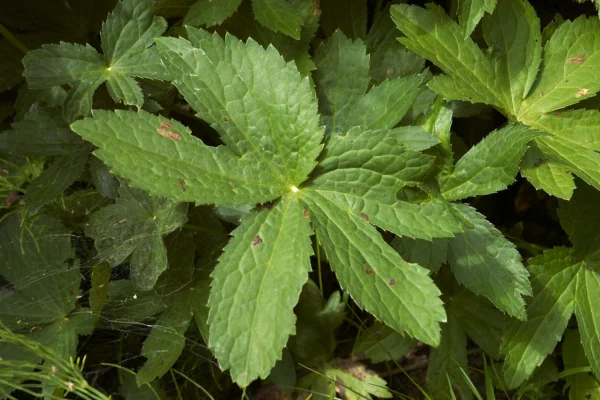
Light partial shade suits warm gardens. Sun is possible where roots retain enough moisture. Deep shade may keep foliage alive while reducing flowers; a lightly shaded border is different from a dark corner.
Prepare fertile soil with organic matter where needed. Astrantia tolerates different soil reactions but dislikes repeated severe drying. Check the site after a dry week, particularly beside walls or tree roots.
Balance drainage and moisture. Damp soil is different from standing water. In heavy ground, avoid a compacted planting basin and improve the wider area first.
For containers, use compost without peat and a pot with drainage holes. Choose a position that avoids the hottest afternoon sun if drying is difficult to manage. Leave enough room to water the compost without constantly soaking the flowers.
Photo: Wouter Hagens, Public domain, released by author. Resized and optimised; cropped for display.
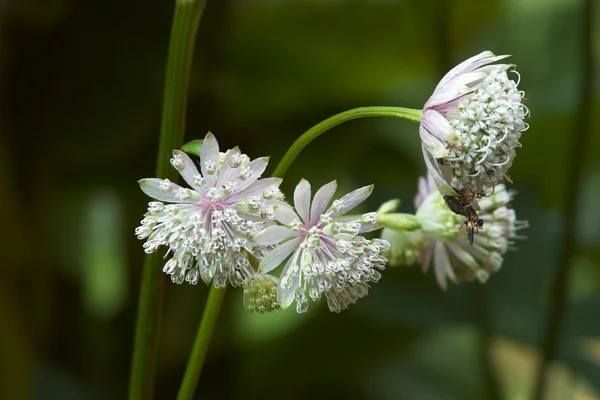
Plant healthy potted astrantia at its existing level. Spring and autumn are useful seasons when the soil is workable.
1.
Choose a named plant if a particular colour or habit matters.
2.
Water the rootball before removing the pot.
3.
Clear weeds and prepare enough ground for the eventual clump.
4.
Space plants around 40 to 50 cm apart, adjusting for the chosen selection.
5.
Dig a hole that accommodates the rootball without forcing it into a narrow gap.
6.
Set the crown at its original level and backfill gently around the roots.
7.
Water thoroughly and apply a surrounding mulch, leaving the crown uncovered.
8.
Label the plant and check it during dry weather until growth is established.

Watering
Keep newly planted astrantia evenly supplied with water while roots settle. Check the original rootball during dry weather because a small potted plant can dry faster than the surrounding border. Water the root area thoroughly when needed.
Established plants cope with more variation, but prolonged dryness can spoil leaves and shorten flowering. Containers need particularly close attention. Do not leave a pot standing in water as a substitute for regular checks.

Feeding
A spring mulch of garden compost helps maintain the soil around border plants. Astrantia does not need constant strong feeding. If growth disappoints, examine light, moisture and competition before treating the problem as a simple shortage of nutrients.
For pots, follow the compost and fertiliser instructions, feeding moderately once the initial nutrient supply is used. Do not apply a concentrated feed to a very dry rootball; restore suitable moisture first.

Pruning
Remove a finished flower stem at its base once its flowers have faded. This encourages further display and limits unwanted seedlings. Work between emerging stems so useful new growth is not cut off with the old stalk.
After the first flush, a tired established plant can be cut back to encourage fresh leaves and possibly more flowers. Water if conditions are dry. The second display depends on weather and vigour, so it is an opportunity rather than a promise.

Winter care
Astrantia naturally dies down in autumn and returns in spring. Leave a visible label beside the crown so winter tidying does not disturb it. Clear collapsed or diseased foliage when needed, keeping the crown free of dense wet debris.
Potted plants should remain outdoors in a suitable sheltered position. Check that water drains after prolonged rain and protect the container itself where repeated freezing is severe. Avoid keeping dormant roots permanently saturated.
The apparent star shaped flower includes a ring of showy bracts surrounding many tiny flowers. Wiry branching stems rise above a basal clump of lobed leaves. Colour and bract shape vary markedly between species and named selections.
Astrantia major is an important parent of garden forms, but not every cultivar belongs neatly within that species. For example, Roma is a hybrid. Masterwort is also used for other plants, so keep the botanical label rather than relying on the common name alone.
Photo: Averater, CC BY-SA 3.0. Resized and optimised; cropped for display. Adapted image under the same licence.
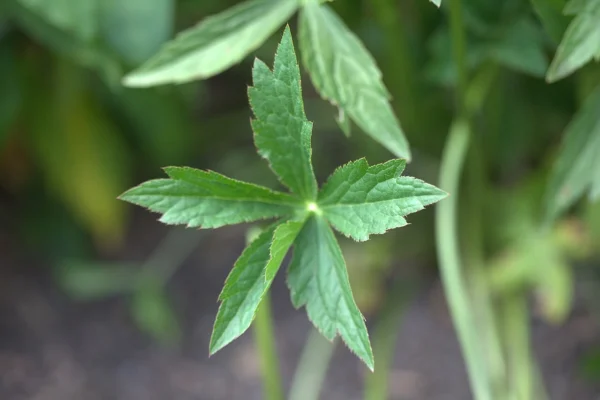
Cooler, moist British summers often suit astrantia well. In warmer districts, light shade and careful watering can preserve its appearance. Avoid interpreting a drought scorched summer clump as proof that the plant is not winter hardy.
In exposed gardens, assess the effect of drying wind as well as sunshine. A sheltered border with open air around the plants can be easier to manage than a windswept container. Do not crowd them tightly against other vigorous perennials.
For a cutting patch, grow a few labelled plants and compare stem length, colour and repeat flowering. Cut in the cooler part of the day, place stems promptly in clean water and leave enough healthy foliage to sustain the clump.
Photo: H. Zell, CC BY-SA 3.0. Resized and optimised; cropped for display. Adapted image under the same licence.
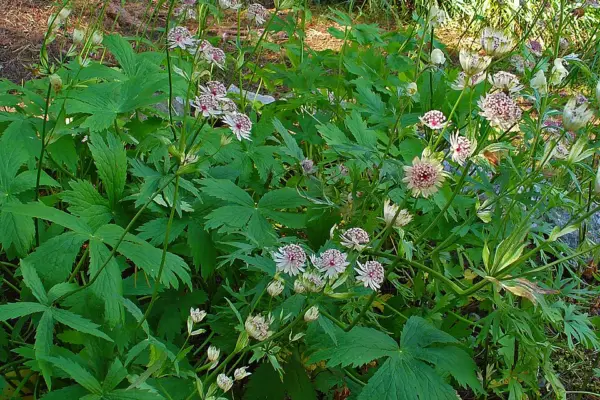
Astrantia leaf miner larvae feed within leaves and can create conspicuous pale patches. Established plants usually tolerate the damage. Avoid stripping all foliage from an otherwise healthy clump simply to remove every marked leaf.
Hot sun and dry roots can scorch foliage. Check moisture, especially around a newly planted rootball or in a pot. Restore steady watering and consider a less exposed position if the problem repeats.
Powdery mildew can affect astrantia. Reduce drought stress and overcrowding, remove badly affected material where practical and review the growing position. Diagnose the problem before applying any treatment.
Deep shade, competition or a recently divided plant can explain a weak display. Give the clump time to establish and assess its light. Avoid adding fertiliser repeatedly without identifying the limiting factor.
Some plants seed readily. Remove finished stems before seed ripens unless you want seedlings, and lift unwanted young plants while small. Keep seedlings separate from named cultivars because their flowers may differ.
Divide an established clump in spring when you can identify healthy growth. Lift carefully and separate rooted sections, then replant promptly. A useful division needs roots and growing points, not merely a detached leaf or flower stem.
Species can be raised from seed sown fresh in pots in a cold frame. Germination can be uneven, so keep labels and avoid throwing pots away prematurely. Seedlings from named selections are not automatically the same cultivar; use division when preserving identity matters.
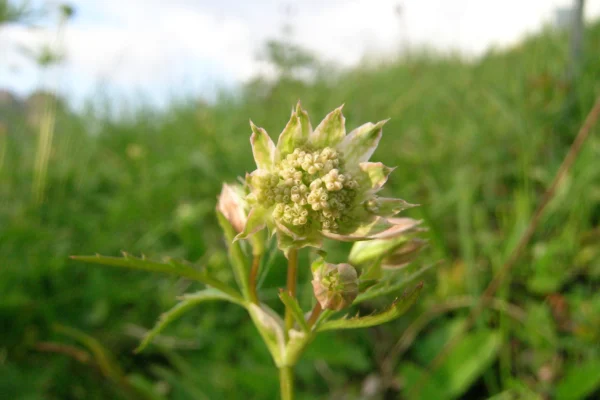
Astrantia major
The species has pale flowers and veined bracts often tinged green or pink, with stems around 60 cm. Useful for an informal effect where exact seedling colour is less important. Its appearance explains the pincushion description often used for astrantia.
Photo: Thomas Mathis, CC BY-SA 3.0. Resized and optimised; cropped for display. Adapted image under the same licence.
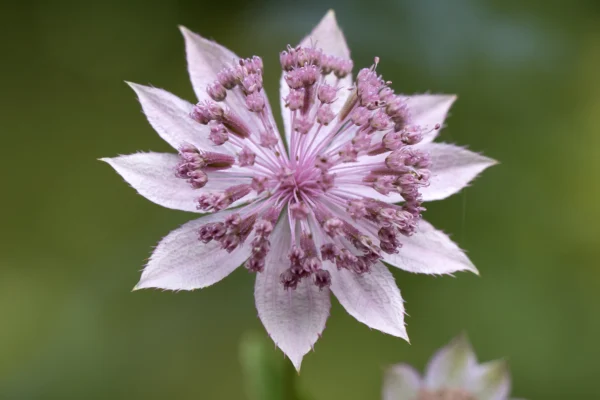
Astrantia maxima
A distinct species with broad pinkish bracts around tiny pink flowers and typically three lobed foliage. Often around 60 cm in flower. Choose it for the shape and softer pink display rather than assuming maxima means the tallest astrantia.
Photo: Zeynel Cebeci, CC BY-SA 4.0. Resized and optimised; cropped for display. Adapted image under the same licence.
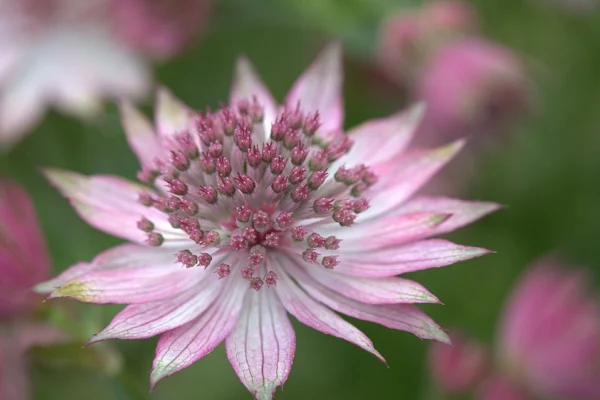
Astrantia ‘Roma’
A pink flowered hybrid with a potentially long season, commonly June to September. It resembles its A. maxima parent in some features but grows more quickly. Buy a labelled plant when its particular colouring is central to the planting scheme.
Photo: Averater, CC BY-SA 3.0. Resized and optimised; cropped for display. Adapted image under the same licence.
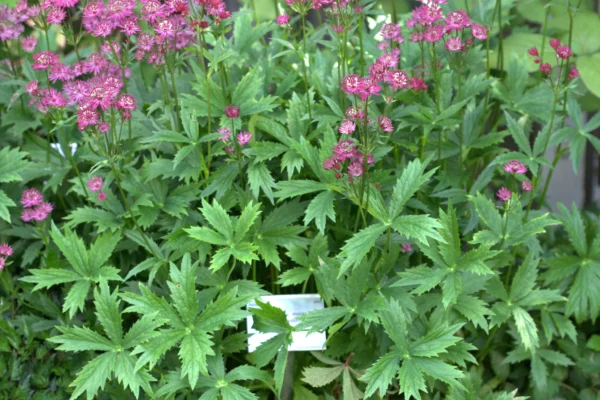
Astrantia major ‘Ruby Wedding’
A deeper coloured option carrying purplish red flower heads in summer. It makes a useful contrast with paler astrantias. Maintain the named selection by division rather than assuming all self sown offspring will retain its colour.
Photo: Averater, CC BY-SA 3.0. Resized and optimised; cropped for display. Adapted image under the same licence.
Use the BFFD map to find local growers and plant suppliers. Ask about named astrantias suited to your light and soil moisture, and confirm availability before visiting.
Astrantia flower heads are visited by a range of insects, including hoverflies, beetles and small bumblebees. A long display can extend feeding opportunities, particularly where plants receive enough light to flower well.
Balance seed saving with keeping plants within the garden. Astrantia major can establish beyond cultivated borders. Prevent unwanted escape near natural habitats, and dispose of divisions and seed heads responsibly.
Published by Buy From Farmers Direct. Sources checked 4 October 2026. Growing references: RHS: astrantia genus guide; RHS: Astrantia major; RHS: Astrantia maxima; RHS: Astrantia Roma; RHS: Ruby Wedding; Beth Chatto: astrantia care and wildlife; RHS: astrantia leaf miner; RHS: planting perennials; RHS: cutting back perennials; RHS: powdery mildew. The seasonal timeline uses the shared BFFD Growers Calendar record; adjust timings to your variety and local conditions.
Light partial shade is suitable, especially in warm gardens. Deep shade usually gives fewer flowers. Moisture also matters: a shady position beneath thirsty tree roots can still be too dry.
Yes, with sufficient root space, drainage and consistent watering. Keep containers from baking dry and feed moderately as needed. A border is usually less demanding if you cannot check pots regularly.
Remove spent stems at their bases. An established plant can also be cut back after its first display to encourage fresh foliage and possible later flowers, provided growing conditions remain suitable.
Yes. It is a hardy herbaceous perennial that dies down for winter. Leave the crown undisturbed and labelled, then look for fresh growth in spring.
Spring is a useful time. Replant healthy rooted pieces promptly and keep them watered while they settle. Division preserves a named plant more reliably than collecting seed.
Dry roots and hot exposure are common causes of crisp foliage. Check the soil before watering. Pale internal leaf patches may instead be leaf miner damage, so look closely at the pattern.
Give astrantia suitable moisture and light. Use the Growers Calendar for seasonal care and explore BFFD for local growers who may offer plants.
Explore more growing guides: Aster (New York), Azalea, Begonia.
Want to get food independence, support your local grower, get better prices and shop more privately?
Local food isn’t just something you find. It’s something you protect. A free account helps keep local supply visible, supported, and resilient.

….it takes 30 seconds for food lovers and 5 minutes for suppliers
We built this for people who care where their food comes from. For people who want to remain food secure. For Farmers to get to the local people, who deserve a better income and to deliver a better price for you. For the environmentally conscious and the privacy-conscious. An account simply helps us make the map and supplier reach more useful to you, without changing how open it is. You’re always in control.


Find local food. Stay connected to it. Create a free account to support local producers and be part of a growing food network.


