Azaleas bring concentrated spring colour to borders and containers, from low evergreen cushions to taller deciduous shrubs. They belong to the genus Rhododendron, and their needs vary between groups. This guide covers outdoor garden azaleas. Choose a hardy named plant for your location, provide acidic growing conditions and protect its shallow roots from both drying and prolonged waterlogging.
Spring flowers
Acid soil
Dappled shade
Evergreen or deciduous
Ornamental only
| Botanical group | Rhododendron species and azalea hybrids |
| Family | Ericaceae |
| Plant type | Woody shrub |
| Foliage | Evergreen or deciduous, by selection |
| Typical height | About 60 cm to over 2 m, by selection |
| Typical spread | Check the named plant’s mature width |
| Position | Usually light dappled shade |
| Exposure | Shelter from drying winds |
| Soil reaction | Acid, commonly pH 5 to 6 |
| Soil moisture | Moist but well drained |
| Root habit | Shallow and fibrous |
| Main planting | Spring or autumn |
| Main flowering | Spring to early summer |
| Containers | Compact selections in ericaceous compost |
| Preferred water | Collected rainwater |
| Routine pruning | Light and usually after flowering |
| Propagation | Cuttings or layering for named plants |
| Seedlings | May differ from a named parent |
| Indoor azaleas | Separate, generally frost tender plants |
| Edibility | Harmful if eaten; not a food crop |
| Plant name | Crop type | Spacing |
Sow indoors
Plant outdoors
Harvest
Polytunnel | |||||||||||
|---|---|---|---|---|---|---|---|---|---|---|---|---|---|---|
| Jan | Feb | Mar | Apr | May | Jun | Jul | Aug | Sep | Oct | Nov | Dec | |||
| Azalea | Unusual & exotic | Single 1.00m, In row 1.00m, Row gap 1.00m; adjust to cultivar spread | No activity recorded | No activity recorded | Plant outdoors | Plant outdoors, Harvest | Harvest | Harvest | No activity recorded | No activity recorded | Plant outdoors | Plant outdoors | No activity recorded | No activity recorded |
Sow indoors: no months recorded. Plant outdoors: March, April, September, October. Harvest: April, May, June. Polytunnel: no months recorded.
March and April or September and October are useful outdoor planting windows when soil is workable. April to June covers many garden azaleas’ flowering periods, although exact timing varies. The calendar’s Harvest label means ornamental flowering here, never edible harvesting. No general sowing or polytunnel months are assigned: named garden plants are usually bought ready grown, and hardy outdoor azaleas do not require routine tunnel cultivation.
Compact evergreen azaleas suit the front of a border or a generously sized patio container. Deciduous kinds can become taller shrubs with a more open outline and, in some selections, autumn leaf colour. Match the eventual dimensions to the space before choosing flowers.
A garden on chalk is often better served by a container of ericaceous compost than repeated attempts to change the whole border. Containers bring extra watering responsibilities. Azaleas are ornamental and harmful if eaten, so keep them separate from edible planting and food decorations.
Photo: KENPEI, CC BY-SA 2.1 JP. Resized and optimised; cropped for display. Adapted image under the same licence.
Light dappled shade is a useful starting point, with shelter from cold, drying winds. Dense shade can reduce flowering. Some selections tolerate more sun if moisture is reliable, but a hot reflective patio can be demanding.
Test soil acidity rather than relying on the colour or texture of the ground. Most garden azaleas need acidic conditions. A small pocket of ericaceous compost in otherwise chalky soil does not create a lasting suitable root environment.
Look for soil that retains moisture while allowing surplus water to drain. Avoid places where winter rain stands around the roots. Shallow rooted azaleas also struggle beside thirsty hedges or mature trees, even if the overhead shade looks attractive.
Keep the rootball moist and plant shallowly in a suitable site.
1.
Confirm that the plant is an outdoor azalea with suitable hardiness, not an indoor flowering gift plant.
2.
Check its expected spread and allow enough room for the mature shrub.
3.
Water the rootball thoroughly before removing the nursery pot.
4.
Clear weeds and prepare a broad planting area without damaging neighbouring tree roots.
5.
Set the rootball with its top at the surrounding soil surface, never buried deeply.
6.
Backfill gently, keeping the shrub upright and avoiding a compacted basin.
7.
Water around the roots and add an airy mulch such as composted bark or leaf mould, clear of the stem.
8.
Label the selection and check moisture frequently through its first growing season.

Watering
Water new plants carefully while roots establish. Check the original rootball as well as nearby soil because they can dry at different rates. A thorough watering when needed is more useful than a token splash that only darkens the surface.
Collected rainwater is preferable, especially in hard water areas. If it runs out, temporary use of tap water is better than allowing the plant to wilt. Containers need closer monitoring than established border plants, including after light rain.

Feeding
Established azaleas in suitable fertile soil may need little extra feed. Maintain the mulch and inspect growth before adding fertiliser. Poor colour can reflect unsuitable pH or struggling roots, so feeding alone does not solve every problem.
For containers, use a feed formulated for ericaceous plants at its stated rate. Avoid several overlapping products. Refresh exhausted compost and review drainage as part of pot care rather than expecting fertiliser to repair a deteriorated growing medium.

Pruning
Most azaleas need little routine pruning. Remove dead or damaged wood and shorten an awkward vigorous shoot after flowering. Work with the natural outline instead of repeatedly shearing the plant into a tight shape.
Light trimming soon after the display gives new shoots time to develop. Cutting later can remove next year’s flower buds. Major renovation is a separate job, and recovery varies by group and plant condition; seek advice for a valuable old specimen.

Winter care
Deciduous azaleas naturally lose their leaves. Evergreen selections retain foliage but may change colour or shed some older leaves. Check the label before treating seasonal changes as disease. Hardy garden plants normally remain outdoors.
Pots expose roots to more severe temperature changes than border soil. Place vulnerable containers in a sheltered position, maintain drainage and check moisture during mild dry spells. A polytunnel is not automatically frost free and is unnecessary for most established hardy selections.
Azalea is a horticultural name used for several groups within Rhododendron. Evergreen garden forms often have smaller leaves and a compact habit. Deciduous forms lose their foliage in winter and may carry flowers before or alongside new leaves.
Keep the full nursery label. A name such as Japanese azalea can cover different garden material, while indoor azaleas are generally tender plants associated with Rhododendron simsii. Flower colour alone cannot identify a cultivar or establish its winter hardiness.
Photo: Lorenzarius, CC BY-SA 3.0. Resized and optimised; cropped for display. Adapted image under the same licence.
In wetter western gardens, suitable acidic soil can make azaleas straightforward to establish, provided drainage remains good. In drier eastern districts, pay particular attention to summer water and root competition. Rainfall totals alone do not describe conditions beside a wall.
Spring frost can spoil flowers even when the shrub itself survives winter well. Avoid frost pockets and choose a sheltered position for an early flowering selection. Local gardens and specialist nurseries can help you judge realistic flowering dates.
Summer care influences the following spring’s display because flower buds form in advance. Keep a note of drought, pruning and flowering dates if a plant disappoints. This is more informative than changing fertiliser every time a season is poor.
Photo: FidelIvanS, CC BY-SA 3.0. Resized and optimised; cropped for display. Adapted image under the same licence.
Iron or manganese may be unavailable in unsuitable alkaline conditions. Check soil or compost pH, water source and root health. An appropriate ericaceous feed may help a container, but persistent chalky soil calls for a better growing arrangement.
Consider deep shade, late pruning and summer dryness while buds formed. Compare the plant’s treatment with the previous season. More feed is not automatically the answer, especially if leaves and shoots are already vigorous.
Azalea gall is a fungal problem that distorts leaves or flowers. Remove affected galls before they develop a white spore coating. It is generally disfiguring rather than fatal, so avoid discarding an otherwise healthy shrub unnecessarily.
Adult vine weevils can notch leaves, while their larvae damage roots, particularly in pots. Check a wilting container plant’s roots. Suitable nematode controls are available; follow the supplier’s temperature and moisture instructions.
Both severe dryness and root damage in saturated compost can cause decline. Check moisture beneath the surface and whether the pot drains. Do not add more water to an already waterlogged rootball; investigate persistent dieback.
Named evergreen azaleas can be propagated from suitable cuttings in midsummer to late summer. Deciduous kinds are often more difficult from cuttings, and layering can be a useful alternative where a low flexible branch is available. Keep any layered branch attached until rooted.
Seed raising is a longer project and seedlings from garden hybrids may differ from the parent. For a particular flower colour, habit or named cultivar, buy a correctly labelled plant or use an appropriate vegetative method. Keep propagation labels throughout the process.
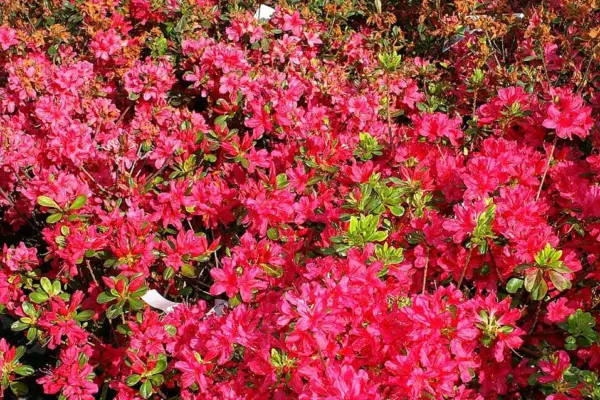
Rhododendron ‘Hinode-giri’
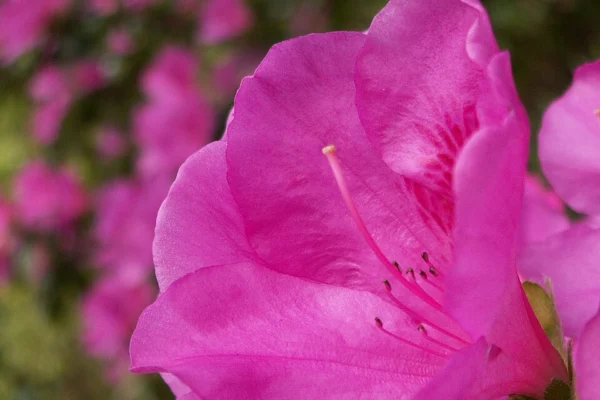
A compact evergreen azalea, often around 60 cm, carrying bright crimson flowers in spring. Also encountered as Hinodegiri or Red Hussar. Its small dark leaves and modest outline make it useful near a path or at the front of a suitable border.
Photo: David J. Stang, CC BY-SA 4.0. Resized and optimised; cropped for display. Adapted image under the same licence.
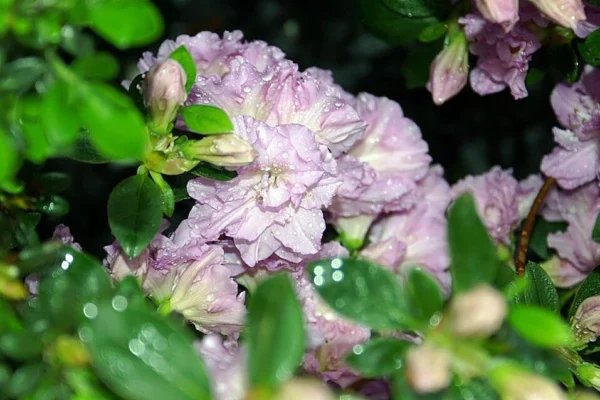
Rhododendron ‘Elsie Lee’
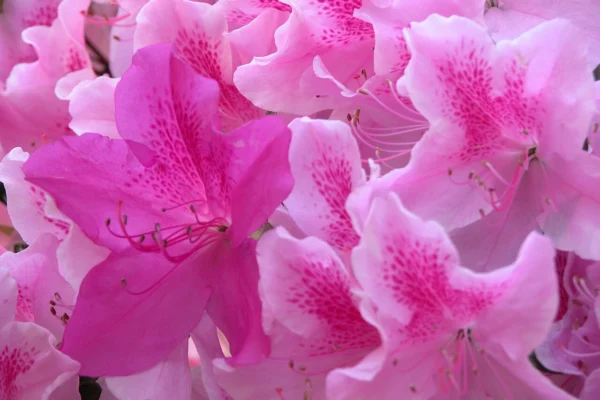
An evergreen selection with pale reddish purple, semi double flowers and a spotted flare in late spring. Usually around 50 cm to 1 m in the RHS profile. Choose it where the layered flowers can be appreciated closely.
Photo: David J. Stang, CC BY-SA 4.0. Resized and optimised; cropped for display. Adapted image under the same licence.
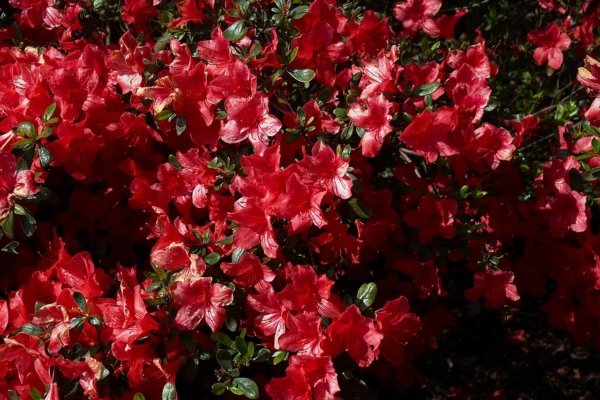
Rhododendron ‘Aladdin’
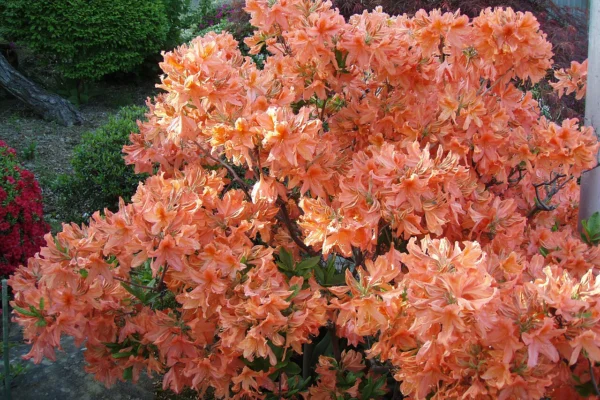
An evergreen azalea reaching around 1 m, with coral red spring flowers that fade towards salmon pink. Its small leaves can take on red tints in winter. A useful comparison with deeper crimson selections when planning a coordinated group.
Photo: Wouter Hagens, Public domain. Resized and optimised; cropped for display.
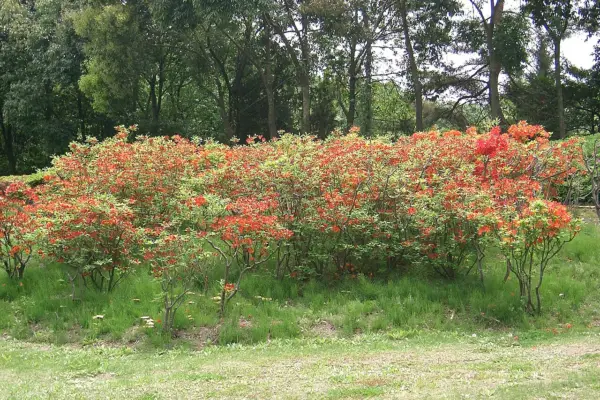
Rhododendron molle subsp. japonicum
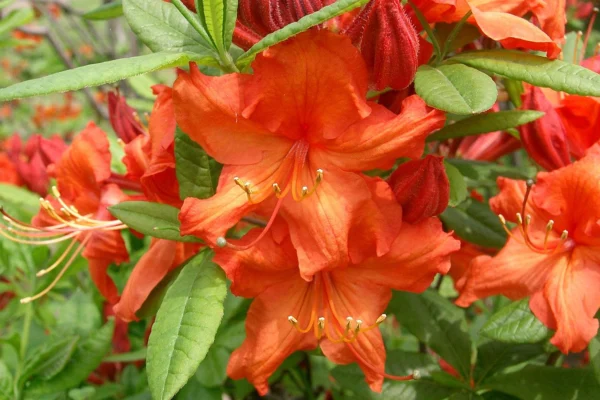
A deciduous Japanese azalea also encountered under the name Rhododendron japonicum. Larger than the compact evergreen choices, with showy flowers in salmon, orange or reddish tones, often in May. Allow room for a rounded shrub rather than treating it as a miniature.
Photo: KENPEI, CC BY-SA 3.0. Resized and optimised; cropped for display. Adapted image under the same licence.
Use the BFFD map to find local growers and plant suppliers. Ask for a named outdoor azalea suited to your soil, available space and winter conditions. Check availability and mature size before visiting.
Choose plants as part of a varied garden with flowers across the seasons. Watch which blooms insects use locally; dense double flowers and more open forms do not offer identical access. Avoid assuming every ornamental selection has equal wildlife value.
Tolerating minor leaf damage and encouraging predators can reduce unnecessary treatment. Keep borders diverse and inspect plants before acting. Dispose of unwanted shrubs responsibly rather than dumping garden material beyond the garden.
Published by Buy From Farmers Direct. Sources checked 4 October 2026. Growing references: RHS rhododendron and azalea growing guide; RHS indoor azaleas; Millais Nurseries site advice; Millais Nurseries care advice; RHS Hinode-giri profile; RHS Elsie Lee profile; RHS Aladdin profile; Trees and Shrubs Online Japanese azalea; RHS nutrient deficiencies; RHS azalea gall; RHS vine weevil. The seasonal timeline uses the shared BFFD Growers Calendar record; adjust timings to your variety and local conditions.
Lightly trim garden azaleas soon after flowering if needed. Most require little routine pruning. Later trimming can remove developing flower buds, while major renovation needs advice specific to the plant and its condition.
Yes. Choose a compact hardy selection, drainage holes and ericaceous compost without peat. Monitor water carefully and refresh compost as it deteriorates. A pot is useful where the garden soil is alkaline.
Unsuitable soil pH can make nutrients unavailable, but wet or dry roots also cause problems. Examine the pattern, test the growing medium and check drainage before repeatedly adding fertiliser.
Light dappled shade suits many garden selections. Deep shade can reduce flowers. Some tolerate sun when roots stay moist, but avoid combining strong sun, drying wind and an unattended pot.
Some are evergreen and others deciduous. Both groups include garden plants, and the label should identify the type. Normal autumn leaf loss in a deciduous azalea does not mean the plant has died.
Do not assume it is hardy. Florist azaleas are generally frost tender and need different care from outdoor garden selections. Check the plant’s identity before leaving it outside permanently.
Use the growers calendar to plan planting and flowering, then adapt care to your site. Explore local growers through the BFFD directory when choosing an azalea.
Explore more growing guides: Beautyberry, Astrantia, Banksia.
Want to get food independence, support your local grower, get better prices and shop more privately?
Local food isn’t just something you find. It’s something you protect. A free account helps keep local supply visible, supported, and resilient.

….it takes 30 seconds for food lovers and 5 minutes for suppliers
We built this for people who care where their food comes from. For people who want to remain food secure. For Farmers to get to the local people, who deserve a better income and to deliver a better price for you. For the environmentally conscious and the privacy-conscious. An account simply helps us make the map and supplier reach more useful to you, without changing how open it is. You’re always in control.


Find local food. Stay connected to it. Create a free account to support local producers and be part of a growing food network.


