Leeks turn a spring sowing into useful autumn and winter meals. They take time to fill out, but hardy varieties can wait in the ground until the kitchen needs them. Choose varieties for different harvest dates, transplant carefully and protect the crop where allium pests are troublesome.
Sow in spring
Sun and fertile soil
Transplant into deep holes
Choose varieties by season
Winter harvests outdoors
| Botanical name | Allium porrum |
| Family | Amaryllidaceae, the onion family |
| Growing cycle | Usually biennial; harvested before flowering |
| Edible crop | The thick leaf bases and usable green leaves |
| Typical plant height | Around 45 to 60cm; varieties differ |
| Position | Full sun |
| Soil | Fertile, able to hold moisture and well drained |
| Main outdoor sowing | March to May |
| Optional early sowing | February under cover |
| Sowing depth | About 1 to 1.5cm; follow the packet |
| Germination | Often around 2 to 3 weeks, depending on temperature |
| Transplanting stage | About 20cm tall and pencil thick |
| Usual planting period | May to July, depending on sowing date |
| Plant spacing | 15 to 20cm for mature leeks |
| Row spacing | About 30cm |
| Planting hole | About 15cm deep for the traditional method |
| Main harvest | Late summer to the following spring |
| Time for a mature crop | Often 6 months or more |
| Winter standing | Choose a variety bred for winter hardiness |
| Container option | A large deep pot; baby leeks are particularly useful |
| Plant name | Crop type | Spacing |
Sow indoors
Plant outdoors
Harvest
Polytunnel | |||||||||||
|---|---|---|---|---|---|---|---|---|---|---|---|---|---|---|
| Jan | Feb | Mar | Apr | May | Jun | Jul | Aug | Sep | Oct | Nov | Dec | |||
| Leek | Alliums | Single 15 to 20cm, In row 15 to 20cm, Row gap 30cm | Harvest | Sow indoors, Harvest | Sow indoors, Harvest | Sow indoors, Harvest | Sow indoors, Plant outdoors | Plant outdoors | Plant outdoors | Harvest | Harvest | Harvest | Harvest | Harvest |
Sow indoors: February, March, April, May. Plant outdoors: May, June, July. Harvest: January, February, March, April, August, September, October, November, December. Polytunnel: no months recorded.
February sowing is an optional start under cover; March to May is the main outdoor window. Transplant when seedlings are ready, commonly May to July. Harvest dates combine early, winter and late varieties, so one sowing does not guarantee the whole season. Established winter leeks need no polytunnel.
Leeks suit gardeners planning ahead for the colder months. A small seedbed or tray holds many seedlings while the final bed carries an earlier crop.
They are useful where harvesting a little at a time is preferable to storing a large crop. Match winter hardiness to your location rather than expecting a summer variety to stand through severe frost.
Photo: Karen and Brad Emerson, CC BY 2.0. Resized and optimised; cropped for display.
Choose an open sunny bed with fertile soil. Improve poor ground with mature compost or well rotted manure before planting, or use an established no dig bed.
Avoid saturated winter ground. Raised beds can help where drainage is difficult, provided there is enough root depth and water during dry weather.
Rotate leeks with other crop groups, avoiding ground recently used for alliums. Known white rot needs more than a normal rotation gap.
For a small container crop, use a deep drained pot and peat free multipurpose compost. Four or five mature plants can fit a pot around 40cm wide, while closer spacing suits smaller baby leeks.
Photo: Maurice Pullin, CC BY-SA 2.0. Resized and optimised; cropped for display. Maurice Pullin
The traditional method places individual seedlings into deep holes. This keeps light off the lower leaf bases so they develop a longer white shank.
1.
Choose an early, winter or late variety for the intended harvest, and record its sowing and planting dates.
2.
Sow thinly in a prepared seedbed or pots, around 1 to 1.5cm deep. Keep the surface moist until seedlings emerge.
3.
Grow the young plants in good light. Thin crowded seedlings and maintain moisture so growth is steady rather than checked by drought.
4.
Prepare the final bed and acclimatise plants raised under cover. Aim to transplant when seedlings are roughly 20cm tall and pencil thick.
5.
Water before lifting and separate seedlings carefully. Keep roots moist; shorten overlong roots if needed to let them sit straight in the holes.
6.
Make holes about 15cm deep, 15 to 20cm apart, with 30cm between rows. Check that the leaves will remain above ground.
7.
Lower one leek into each hole and fill it with water to settle soil around the roots. Do not ram the hole closed.
8.
Water during establishment and check that exposed roots do not dry out. Fit suitable insect mesh promptly where protection is needed, securing the edges.

Watering
Keep seedlings and freshly transplanted leeks supplied with moisture. Established plants usually need extra water mainly during prolonged dry spells.
Water at soil level where practical and check containers frequently. A narrow pot can dry out while the surrounding garden still looks damp.

Feeding
Improve soil with well rotted organic matter, supporting roots through the long growing season.
If growth suggests feeding is necessary, use an appropriate vegetable fertiliser at its stated rate. Avoid excessive nitrogen, which can increase susceptibility to leek rust.

Pruning
Leeks need no routine clipping. Keep weeds under control because their upright leaves leave plenty of light for competing seedlings.
For a longer white shank, draw a little soil around the lower stems as they grow, keeping it out of the leaf folds. Harvest promptly if a flower stalk starts developing.

Winter care
Leave suitable hardy varieties in the ground and lift them as needed. Harvest less hardy autumn types first, before the worst weather arrives.
Take a few leeks before a forecast hard freeze if the ground may become difficult to work. Check winter drainage and keep protective mesh securely supported.
Leeks make upright fans of flat green or blue green leaves. Overlapping leaf bases form the pale edible shank, unlike the rounded storage bulb of a typical onion.
Keep variety labels through the season: appearance alone does not reliably tell you when a leek should be harvested or how much cold it tolerates. A central flower stalk signals a change from leafy crop to seed production.
Photo: Netha Hussain, CC BY-SA 4.0. Resized and optimised; cropped for display. Adapted image under the same licence.
In milder gardens, a suitable early variety can be ready in late summer. Winter and late varieties extend the supply, with some remaining useful well into the following spring.
In colder districts, give seedlings a good start and choose reliably hardy varieties. A bright protected nursery space can help, but the established winter crop normally grows outside.
Loosen soil with a fork before lifting rather than pulling hard on the leaves. Remove damaged outer layers and wash between the leaf folds, where soil can collect. Lift only what you need while the remaining crop is sound.
Photo: Schlaghecken Josef, CC BY-SA 4.0. Resized and optimised; cropped for display. Adapted image under the same licence.
Rows of pale puncture marks, twisting leaves and small brown pupae inside stems suggest this fly. Protect plants with insect mesh during adult activity, especially spring and autumn. Rotate the crop so flies cannot emerge beneath the covering.
Its caterpillars tunnel in foliage and stems, leaving pale patches and sometimes rot. Caterpillars have a brown head and legs, unlike leaf miner maggots. Where it is a problem, keep insect mesh in place through the growing season.
Leek rust produces raised orange pustules. Avoid overcrowding and excessive nitrogen, and clear crop debris after harvest. Resistant varieties can help, although resistance does not mean complete immunity.
White rot may produce fluffy white growth and tiny black resting bodies around the base. Avoid transferring contaminated soil on tools or footwear. The disease can persist for many years; ordinary crop rotation will not clear it.
Cold spells or other growing stresses can encourage bolting. Protect early sowings appropriately and keep growth steady. Use affected leeks promptly before the central stalk becomes tough; removing it does not restart a normal season.
Raise each eating crop from seed or bought young plants. Seedlings can be moved from a temporary nursery area to the final bed, making good use of limited spring space.
Seed saving requires selected healthy plants to remain for flowering in their second season. Different leek varieties can cross, so follow isolation guidance and save from several plants. Seed from an F1 hybrid will not reliably reproduce its parent.
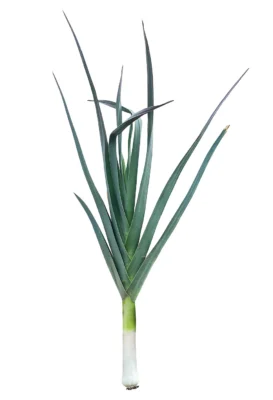
Pandora
An early variety with long white shanks for late summer harvests. It supplies the kitchen before the main winter crop.
Illustrative leek; not a verified Pandora plant.
Photo: Amada44, CC BY-SA 4.0. Resized and optimised; cropped for display. Adapted image under the same licence.
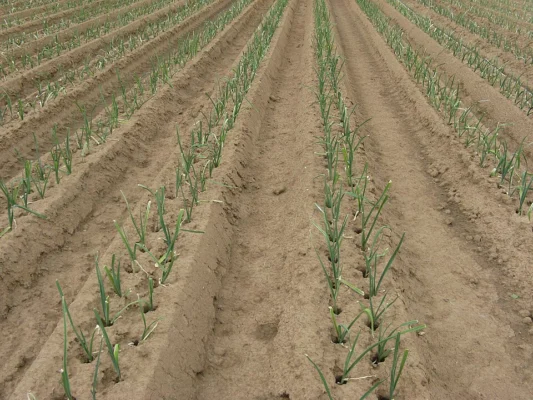
Porvite
A selection in the Autumn Giant 2 Group for autumn and early winter, before the later varieties are ready.
Young leeks in rows; Porvite is not confirmed.
Photo: Schlaghecken Josef, CC BY-SA 4.0. Resized and optimised; cropped for display. Adapted image under the same licence.
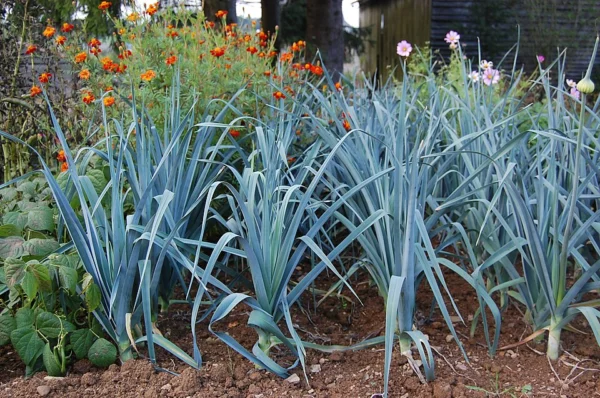
Winter Giant
A hardy traditional option for lifting through winter. Check the supplier’s strain and harvest guidance when comparing packets.
Mature garden leeks; not confirmed Winter Giant.
Photo: Lucyin, CC BY-SA 4.0. Resized and optimised; cropped for display. Adapted image under the same licence.
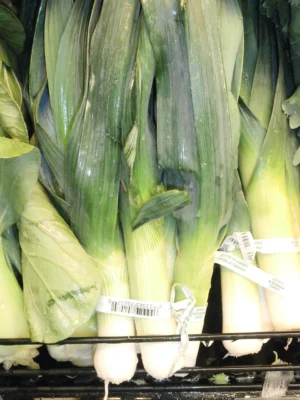
Bandit
A hardy late selection with blue green foliage for winter into spring. Grow it alongside earlier leeks to extend the season.
A bundle of harvested leeks; Bandit is not verified.
Photo: Jeffery Martin, CC0. Resized and optimised; cropped for display.
Combine an early variety with a hardy winter or late one. Check expected size, rust resistance and recommended sowing dates before planning the bed.
Leeks grown for their shanks do not need insects to pollinate them, so mesh can remain over the crop. Secure it without trapping birds or other animals.
A few healthy leeks left to flower can provide summer flowers for visiting bees. Keep that seed or wildlife patch separate from plants you still expect to harvest as tender leeks.
Published by Buy From Farmers Direct. Growing guidance reviewed 6 October 2026. The seasonal timeline uses the shared BFFD Growers Calendar record; adjust timings to your variety and local conditions.
March and April are the main sowing months. Some varieties suit May or a protected February start; follow the packet.
Usually when roughly 20cm tall and pencil thick. Water first, handle roots carefully and acclimatise plants raised under cover.
Water settles soil around the roots and the holes gradually fill. Do not ram them closed; check for drying roots in hot weather.
Hardy winter varieties generally stand outdoors in drained soil. Harvest less hardy early varieties first.
Allium leaf miner or leek moth may be responsible. Identify the larvae and use suitable mesh plus rotation to protect future crops.
Yes, in a large deep container with regular watering. Baby leeks are practical where space is limited.
Give leeks a steady start and match the variety to the harvest season. A labelled, well spaced bed can keep supplying the kitchen long after summer crops finish.