A lime tree offers glossy foliage, scented blossom and the possibility of fresh citrus fruit from a container. In Britain, plan a bright protected winter home before choosing a plant. Tahiti or Persian lime is a practical starting choice; smaller Key limes and aromatic Makrut limes have different qualities and care priorities.
Tender evergreen citrus
Container growing suits UK gardens
Bright warm winter accommodation
Tahiti is a useful starting choice
Fruit timing depends on conditions
| Main fruiting type | Tahiti or Persian lime, Citrus × latifolia |
| Key or Mexican lime | Citrus × aurantiifolia |
| Related culinary type | Makrut lime, Citrus hystrix |
| Family | Rutaceae |
| Plant type | Evergreen shrub or small tree |
| UK growing method | Movable container with winter protection |
| Eventual size | Varies with type, rootstock, pot and pruning |
| Light | Bright light; sunny sheltered summer position |
| Winter guidance | RHS recommends keeping limes above 10°C |
| More demanding type | Key lime needs greater winter warmth |
| Compost | Free draining citrus or suitable loam based mix |
| Repotting | Spring when the roots need more space |
| Pollination | A single tree can produce fruit |
| Tahiti fruit | Usually seedless; can turn yellow if left |
| Key lime fruit | Smaller aromatic fruit, often containing seeds |
| Makrut crop | Primarily aromatic leaves; fruit is different |
| Fruit development | Many months, depending on conditions |
| Harvest timing | Variable; no fixed UK picking month |
| Feeding | Use a suitable citrus feed as directed |
| Outdoor lime trees | Garden Tilia trees are unrelated to citrus limes |
| Plant name | Crop type | Spacing |
Sow indoors
Plant outdoors
Harvest
Polytunnel | |||||||||||
|---|---|---|---|---|---|---|---|---|---|---|---|---|---|---|
| Jan | Feb | Mar | Apr | May | Jun | Jul | Aug | Sep | Oct | Nov | Dec | |||
| Lime | Orchard fruit | Single allow 100cm canopy room initially, In row 100cm initially, Row gap 120cm for access; increase with growth | Polytunnel | Polytunnel | Plant outdoors, Polytunnel | Plant outdoors, Polytunnel | Plant outdoors, Polytunnel | Polytunnel | Polytunnel | Polytunnel | Polytunnel | Polytunnel | Polytunnel | Polytunnel |
Sow indoors: no months recorded. Plant outdoors: March, April, May. Harvest: no months recorded. Polytunnel: January, February, March, April, May, June, July, August, September, October, November, December.
Spring planting means potting or repotting nursery stock, not planting a lime permanently outdoors. No fixed harvest band is shown because UK fruit set and maturity vary between types and growing conditions. Leaf picking from Makrut is a separate, modest harvest from a healthy established plant. The year round protected band means a bright growing space with heating to maintain the required winter temperature, not an unheated polytunnel.
Provide a bright conservatory or heated greenhouse, with room for the canopy and seasonal moves.
Choose Tahiti for juice limes or Makrut for aromatic cooking leaves.
Photo: Forest and Kim Starr, CC BY 3.0 us. Resized and optimised; cropped for display. Forest & Kim Starr
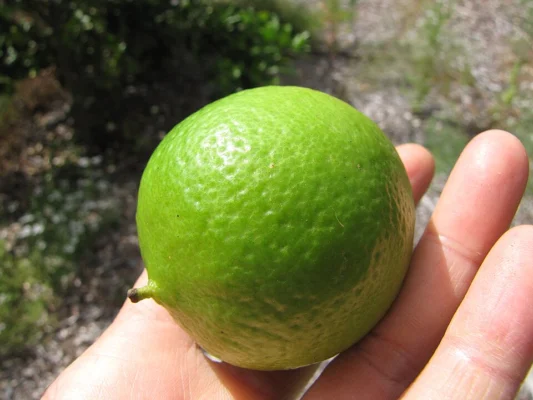
Provide plenty of light and shelter from drying winds. A summer patio can be useful once nights are reliably warm enough for the supplied plant.
Introduce outdoor conditions gradually to avoid damaging foliage with sudden intense sun or exposure.
Ventilate under glass in warm weather, adding temporary shade if necessary to prevent scorching heat.
Use a stable container with drainage holes, leaving room for inspection and seasonal moves.
Photo: Mark Marathon, CC BY 3.0. Resized and optimised; cropped for display.
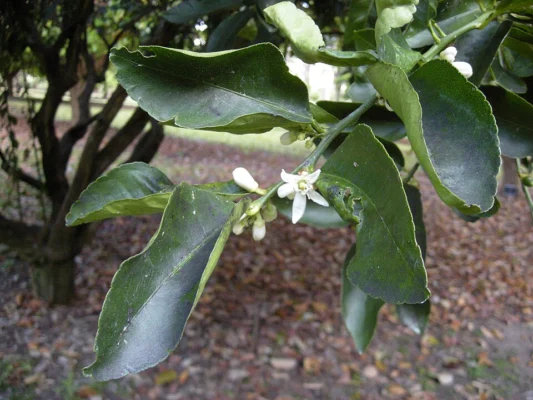
Start with a correctly labelled nursery plant. Ask about the type, rootstock, age and winter conditions it has been accustomed to.
1.
Check foliage and stems for pests before introducing the tree to your collection.
2.
Prepare the winter space, checking minimum temperatures and light beside the plant.
3.
Keep a new tree in its pot if it has sufficient root space.
4.
When roots need more room, repot in spring into a container only slightly larger than the rootball. Make sure water can leave freely.
5.
Use peat free citrus compost or an appropriate loam based container mix with improved drainage. Dense wet garden soil is unsuitable in a small citrus pot.
6.
Retain the old planting depth and keep the graft union clear of compost. Settle the rootball firmly enough for stability without crushing the surrounding mix.
7.
Water thoroughly, drain well and empty any water retained in the outer container.
8.
Keep the label and record flowering and fruit development to guide future harvests.

Watering
Water thoroughly when the compost needs it, preferably using rainwater, and allow surplus to escape. Check more often during warm weather or while a tree carries developing fruit.
Reduce watering frequency in winter, allowing the surface to dry partly. Avoid fixed intervals: a warm leafy tree and a cooler resting plant may use water at very different rates.

Feeding
Use citrus fertiliser according to its dilution and seasonal instructions. Feed supports growth and fruit development, but stronger mixtures will not correct a lack of light or warmth.
If growth looks weak or leaves yellow, check root conditions and pests as well as nutrition. Repeated feeding into saturated compost can add to the problem.

Pruning
Remove dead or damaged growth and lightly shape wayward branches. Repeatedly trimming every new shoot can reduce flowering, so keep routine pruning restrained.
Remove shoots arising below the graft union. Wear gloves around thorny stems, and keep a manageable canopy rather than letting the tree become impossible to move.

Winter care
The RHS recommends keeping limes above 10°C in winter. Provide bright conditions and heating as needed; a space described only as frost free may be too cold for successful lime growing.
Key lime is more demanding of winter warmth than Tahiti, so confirm requirements for the supplied type. Keep plants away from radiators and cold draughts, with steady care through the darker months.
Fruiting citrus limes are evergreen, with aromatic leaves and fragrant pale flowers. Tahiti fruit is generally larger and usually seedless; Key lime has smaller aromatic fruit and is often thornier.
The word lime also describes unrelated Tilia shade trees. Among citrus, Makrut is distinct again: it has prominently winged leaf stalks that give the leaves a double outline, and knobbly fruit rather than the usual smooth juice lime.
Photo: Vinayaraj, CC BY-SA 3.0. Resized and optimised; cropped for display. Adapted image under the same licence.
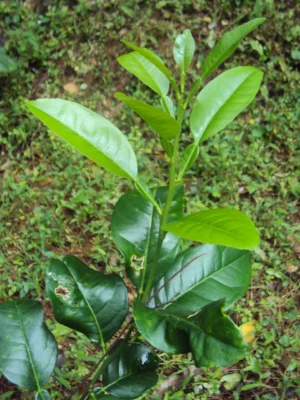
A sheltered southern patio can improve summer conditions, but reliable winter protection remains central to the growing plan. In cooler districts, a well managed conservatory may offer the longer warm season the tree needs.
Allow fruit to reach useful size and develop juice. Tahiti limes are commonly picked green but can turn yellow on the tree; green colour by itself does not prove that a small hard fruit is ready.
Cut mature fruit with a short piece of stem and wash before use. For Makrut, take only a few healthy established leaves at a time, leaving plenty of foliage to support continued growth.
Photo: Jpbrigand, CC BY-SA 4.0. Resized and optimised; cropped for display. Adapted image under the same licence.
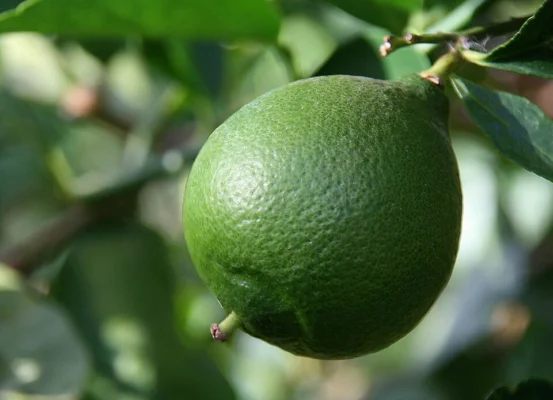
Check age, light, temperature and care. One tree is sufficient, but an immature or stressed plant may not crop. Key lime can be less forgiving of cool conditions than Tahiti.
Inspect compost moisture, drainage, recent temperature changes and pests. Both overwatering and drought can contribute; avoid assuming that more feed is the answer.
Some shedding is normal, but water stress and very dry air can add to losses. Keep conditions steady and avoid letting an already small tree carry an excessive crop.
Look for scale insects or mealybugs on stems and leaf undersides. Identify the pest before choosing a treatment appropriate for an edible container plant.
Check for glasshouse red spider mite, particularly in warm dry conditions. Inspect nearby plants and consider suitable biological or other greenhouse control.
A named nursery plant, often grafted or budded, is the practical route to a known fruiting type. The rootstock can influence vigour, so ask what has been supplied.
Semi ripe cuttings are possible as a propagation project. Seedlings take years to mature and are not a dependable way to reproduce a chosen cultivar; seedless Tahiti fruit is not a useful seed source.
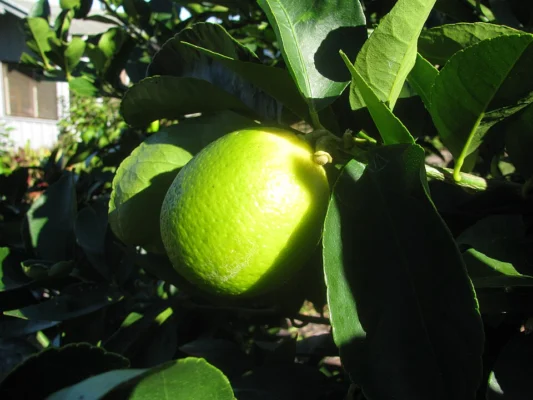
Tahiti or Persian lime
Citrus × latifolia produces the familiar, usually seedless juice lime. UK specialist growers recommend it as an easier starting point than Key lime.
Tahiti lime fruit and foliage photographed by Forest and Kim Starr.
Photo: Forest and Kim Starr, CC BY 3.0 us. Resized and optimised; cropped for display. Forest & Kim Starr
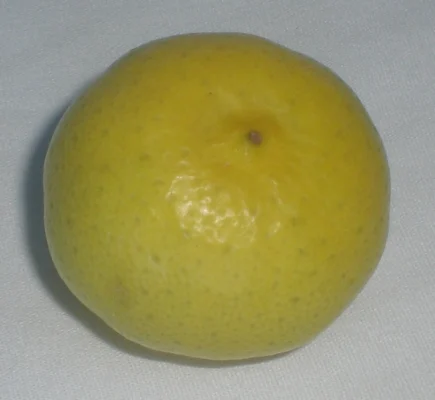
Key, Mexican or West Indian lime
Citrus × aurantiifolia has small, strongly aromatic fruits. It needs more winter warmth than Tahiti and is a choice for gardeners able to provide suitable protected conditions.
A fully ripened yellow Key lime, showing that mature fruit need not remain green.
Photo: Marc Averette, CC BY 3.0. Resized and optimised; cropped for display. Averette at English Wikipedia
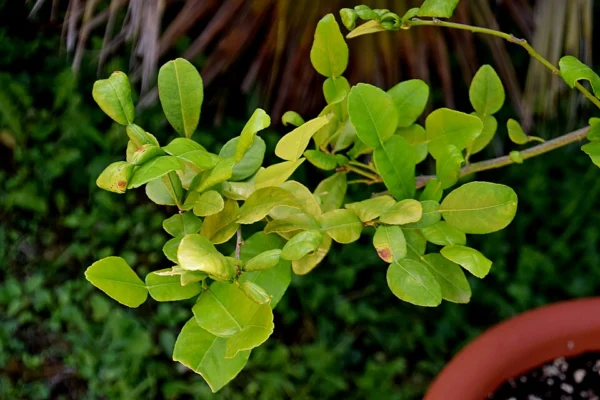
Makrut lime
Citrus hystrix is grown mainly for aromatic cooking leaves. Choose it for that use rather than expecting the same fruit and juice as a Tahiti lime.
Makrut lime foliage with its distinctive winged leaf stalks.
Photo: Krzysztof Golik, CC BY-SA 4.0. Resized and optimised; cropped for display. Adapted image under the same licence.
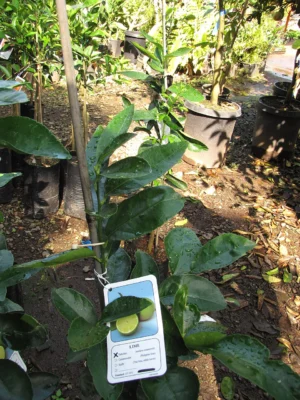
Compact bush or standard
A bush branches lower down; a standard has a clear stem beneath its canopy. These describe training forms, not separate lime varieties. Choose one that fits your space and can be moved safely.
Illustrative young Tahiti lime in a nursery pot; size and form vary between plants.
Photo: Forest and Kim Starr, CC BY 3.0 us. Resized and optimised; cropped for display. Forest & Kim Starr
Ask for the botanical type, likely mature size and winter requirements. Choose fruiting Tahiti or a leaf crop such as Makrut deliberately.
Citrus flowers may attract visiting insects where they can reach the tree. A second pollination partner is not normally required for a useful lime plant.
Inspect regularly and target identified pests, protecting visiting insects and existing biological controls.
Published by Buy From Farmers Direct. Growing guidance reviewed 6 October 2026. The seasonal timeline uses the shared BFFD Growers Calendar record; adjust timings to your variety and local conditions.
Yes, as protected container citrus with enough light and warmth. Tahiti is a practical starting choice, but fruiting depends on the plant’s maturity and growing conditions.
RHS citrus guidance recommends above 10°C. Key lime is particularly demanding, so check the nursery’s requirements and provide a bright heated space when necessary.
No, one tree can produce fruit. A second plant will not compensate for a young tree, insufficient light or unsuitable temperatures.
Tahiti and Key limes can become yellow as they mature. They are commonly sold or picked green, but colour alone is not a complete guide to size, juice content or readiness.
There is no dependable single harvest period. Fruit takes many months to develop, and timing varies with type, flowering and protected growing conditions. Some plants may not crop in a given year.
No. Makrut, Citrus hystrix, is a different citrus valued mainly for aromatic leaves and its distinctive rind. Tahiti or Persian lime is the usual choice for familiar lime juice.
Choose the lime type to match your intended crop, then plan light and winter warmth. Stable container care gives the tree the best chance to grow well and produce useful fruit or leaves.
Explore more growing guides: Apple (Dwarf), Apricot (Dwarf), Blueberry.
Want to get food independence, support your local grower, get better prices and shop more privately?
Local food isn’t just something you find. It’s something you protect. A free account helps keep local supply visible, supported, and resilient.

….it takes 30 seconds for food lovers and 5 minutes for suppliers
We built this for people who care where their food comes from. For people who want to remain food secure. For Farmers to get to the local people, who deserve a better income and to deliver a better price for you. For the environmentally conscious and the privacy-conscious. An account simply helps us make the map and supplier reach more useful to you, without changing how open it is. You’re always in control.


Find local food. Stay connected to it. Create a free account to support local producers and be part of a growing food network.


