A marrow plant needs a generous patch of sunny ground, but its fast growing fruits can repay that space through summer and early autumn. Choose a compact bush variety for a smaller plot, keep the roots well watered and pick useful kitchen sized fruits before they become unwieldy.
Tender summer crop
Bush or trailing varieties
Large yellow flowers
Harvest July to October
Needs sun and steady water
| Botanical name | Cucurbita pepo, marrow cultivars |
| Family | Cucurbitaceae |
| Life cycle | Tender annual |
| Crop | Large fruits used as a cooked vegetable |
| Growth habit | Bush or trailing, depending on variety |
| Typical height | Around 45 to 60cm before any support |
| Spread | About 1m for bushes; several metres for trailers |
| Position | Full sun and shelter |
| Soil | Fertile, moisture retentive and well drained |
| Indoor sowing | Mid April to May |
| Outdoor sowing | Late May to early June after frost |
| Planting out | Late May to June after frost |
| Indoor sowing depth | About 1.5cm, seed on its edge |
| Germination warmth | Around 18 to 21°C |
| Germination time | Often 5 to 8 days in warmth |
| Bush spacing | At least 90cm, subject to variety |
| Trailing spacing | About 1.5m, with room for stems to spread |
| Container size | At least 45cm wide for one compact plant |
| Main harvest | July to October, before the first frost |
| Kitchen picking size | Usually 20 to 30cm; smaller for mini varieties |
| Plant name | Crop type | Spacing |
Sow indoors
Plant outdoors
Harvest
Polytunnel | |||||||||||
|---|---|---|---|---|---|---|---|---|---|---|---|---|---|---|
| Jan | Feb | Mar | Apr | May | Jun | Jul | Aug | Sep | Oct | Nov | Dec | |||
| Marrow | Cucurbits | Bush: Single 90cm, In row 90cm, Row gap 90cm; trailing varieties about 150cm with spreading room | No activity recorded | No activity recorded | No activity recorded | Sow indoors, Polytunnel | Sow indoors, Plant outdoors, Polytunnel | Sow indoors, Plant outdoors | Harvest | Harvest | Harvest | Harvest | No activity recorded | No activity recorded |
Sow indoors: April, May, June. Plant outdoors: May, June. Harvest: July, August, September, October. Polytunnel: April, May.
Sowing begins under cover in April. Outdoor sowing and planting wait until frost has passed and the soil has warmed, usually late May or June. The polytunnel band shows optional spring propagation. October harvests depend on local frost dates; this is not a winter growing crop.
Marrows suit allotments, roomy vegetable beds and gardeners who enjoy roasting, stuffing or sharing a substantial harvest. One or two well cared for plants can be more useful than a crowded row.
Choose a sunny, sheltered position where the leaves will not shade out smaller vegetables. Leave access for watering and harvesting once the foliage spreads.
Add well rotted compost or manure before planting if the soil needs improvement. Good drainage matters: rich soil should hold moisture without leaving the stem base permanently wet.
Allow at least 90cm between bush plants and around 1.5m for trailing varieties. Read the packet because final spread varies, and keep trailing stems away from busy paths.
For a patio crop, choose a compact variety and a pot at least 45cm wide with drainage holes. Use peat free multipurpose or a suitable loam based potting compost and allow space beyond the rim for leaves.
Photo: Sheila Russell, CC BY-SA 2.0. Resized and optimised; cropped for display. Sheila Russell
Raise plants shortly before the outdoor season. Very early sowings often become large and difficult to manage while the garden is still too cold.
1.
Choose fresh seed of a named marrow variety. Check whether its habit is bushy or trailing before deciding how many plants will fit.
2.
From mid April to May, fill individual 7.5cm pots with moist peat free seed compost. Sow one seed on its edge about 1.5cm deep.
3.
Keep the pots around 18 to 21°C for germination, with good light once shoots appear. Water enough to keep the compost moist, never saturated.
4.
Grow seedlings steadily and pot on if roots fill their container before planting weather arrives. Do not leave them cramped for weeks.
5.
Alternatively, direct sow in late May or early June after frost, once the soil is warm. Sow two or three seeds per position, following the packet depth, then retain the strongest seedling.
6.
Harden off indoor raised plants gradually. Plant in late May or June only when local frost risk has passed; colder areas may need the later date.
7.
Set plants at their previous growing depth, using the spacing appropriate to their habit. Water in well and protect vulnerable young growth from slugs.
8.
Mulch the damp soil, leaving a clear gap around each stem. Remove temporary covers when flowers need access to pollinating insects.

Watering
Water deeply during dry spells, particularly as flowers open and fruits swell. Aim for steady moisture at root level rather than repeated small splashes on the leaves.
Check pots frequently in warm weather. A large plant can use water quickly, but drainage holes must remain clear. Mulch established plants to slow drying without burying the crown.

Feeding
Plants in well prepared fertile soil may need no extra fertiliser. Poor growth first warrants a check of temperature, water and root conditions.
For containers or poor soil, use a high potassium liquid feed such as tomato feed once fruits start swelling. Follow the product rate, commonly feeding every 10 to 14 days rather than adding concentrated feed.

Pruning
Bush marrows need no routine pruning. Remove damaged or badly diseased leaves selectively and guide trailing stems into free space without snapping them.
Put developing fruits on a tile or board to keep them off damp soil. Cut marrows from the plant when they reach a useful size, leaving a short stalk; regular picking encourages further production.

Winter care
Harvest the remaining sound fruits before frost. For storage, allow selected fruits to mature and harden their skins in the sun while the weather remains suitable.
Store mature, undamaged marrows in a cool, dark, frost free place and inspect regularly. They may keep for a month or two; discard any fruit showing rot. The plants themselves will not overwinter outdoors.
Marrows have large, rough, lobed leaves and conspicuous yellow flowers. Female flowers sit above a small developing fruit; male flowers grow on a slimmer stalk without that swelling.
Fruits are often elongated and green, sometimes with pale stripes, but size and colour vary. A photograph alone does not establish a cultivar or prove that an unknown squash is edible. Grow clearly labelled culinary seed.
Photo: Oleg Bor, CC BY-SA 4.0. Resized and optimised; cropped for display. Adapted image under the same licence.
A sheltered plot and well timed planting are more valuable than an excessively early start. In northern or exposed gardens, keep young plants protected until conditions settle.
During cool, wet early summer weather, fruit set can be patchy. Improve insect access under covers and wait for warmer weather before assuming every small fruit indicates a disease.
In warm weather, check plants every few days because hidden fruits enlarge quickly. Start choosing storage fruits towards the end of summer, while continuing to pick smaller ones for the kitchen.
Image from the BFFD media library.
Poor pollination is common in cool weather or beneath closed covers. Remove failed fruits, let insects reach flowers and maintain watering. If necessary, transfer pollen from a freshly opened male flower to a female flower with a soft brush.
Stop eating it and discard the fruit. Bitter cucurbitacins can make the crop unsafe; do not try to use it up in a cooked dish or feed it to pets. Remove the affected plant and do not save its seed.
Powdery mildew often appears later in summer, particularly on drought stressed plants. Keep roots evenly moist, allow airflow and remove badly affected leaves selectively. Natural pale leaf markings are not always mildew.
Slugs and snails can damage seedlings and tender flowers. Inspect regularly, including after dark, and protect newly planted marrows while they establish. A stronger replacement plant may be more productive than a badly damaged one.
Damp contact can encourage rot. Support sound fruits on tiles or boards and remove rotting ones. Do not store damaged or frost affected marrows with healthy fruits.
Sowing bought seed each spring is the simplest reliable approach. Seed saved from an F1 hybrid may produce different plants, and open pollinated marrows can cross with other compatible Cucurbita pepo crops.
For deliberate seed saving, use a recognised isolation and hand pollination method. Cross-pollination affects the next generation grown from seed, not the identity of the current fruit. Do not keep seed from bitter fruits or unidentified ornamental gourds.
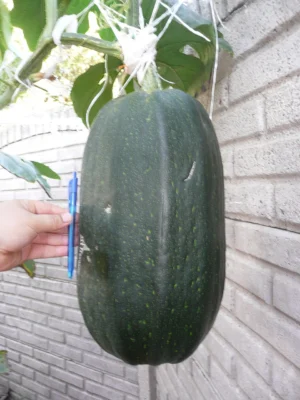
Tiger Cross F1
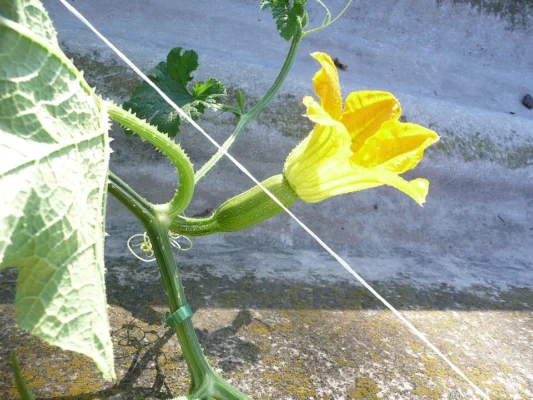
Bush Baby
A compact choice for a large container or smaller garden. Its striped fruits are intended to be picked smaller, around 15 to 20cm, rather than grown into giant marrows.
Illustrative female marrow flower and young fruit; not confirmed as Bush Baby.
Photo: RoRo, CC0. Resized and optimised; cropped for display.
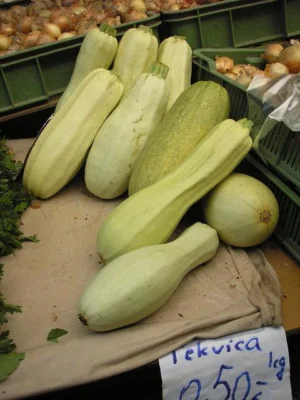
Long Green Bush 4
A traditional green marrow with a bush habit, useful where trailing stems would be inconvenient. It still needs generous leaf space, moisture and room to reach the fruits.
Illustrative pale marrows at a market; not Long Green Bush 4.
Photo: Maciarka, CC BY-SA 3.0. Resized and optimised; cropped for display. Adapted image under the same licence.
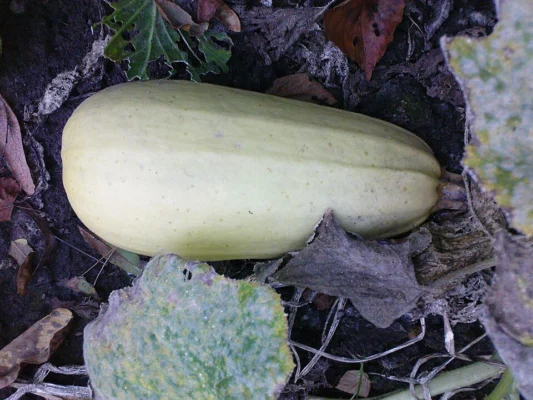
Badger Cross F1
A compact British bred marrow with distinct dark and pale green stripes. It offers a manageable plant habit and is noted by the RHS for resistance to cucumber mosaic virus.
Illustrative pale marrow; not the striped Badger Cross F1.
Photo: Jolanta Dyr, CC BY-SA 3.0 pl. Resized and optimised; cropped for display. Adapted image under the same licence.
Compare compact bush varieties for beds and containers, or allow a larger area for a trailing plant. Buy labelled culinary seed and check the packet’s planting distances before filling the plot.
Bees and other flower visitors help pollinate marrows. Keep flowers accessible, grow a range of other flowering plants nearby and avoid routine insecticide use around visiting pollinators.
Temporary protection is useful while plants are small. Once they flower, remove or open covers for insect access, checking that any netting is secured and does not leave loose loops.
Published by Buy From Farmers Direct. Growing guidance reviewed 6 October 2026. The seasonal timeline uses the shared BFFD Growers Calendar record; adjust timings to your variety and local conditions.
An unpicked courgette can become marrow sized because both are Cucurbita pepo. Named marrow varieties are selected for the larger crop, and some produce skins better suited to storage once mature.
Usually in late May or June after hardening off, once frost risk has passed. Local conditions matter more than a fixed date; cold, exposed gardens often need to wait longer.
Yes. Choose a compact bush variety, a container at least 45cm wide, good drainage and dependable watering. Feed container plants once fruits start swelling according to the fertiliser instructions.
Male flowers naturally fall without producing fruit. Female flowers have a small fruit underneath, but this may fail if pollination is poor, the weather is cold or the plant is stressed.
For immediate use, around 20 to 30cm is practical, or smaller for mini varieties. Leave only the fruits intended for storage to mature fully and harden their skins before frost.
Stop eating it, discard the fruit and remove the affected plant. Do not cook it to try to make it usable, feed it to pets or save its seed.
Give marrows space, warmth and steady water, then harvest at the size you can use. A few carefully managed plants are easier to pick and look after than a crowded patch of oversized fruits.