Radishes are a quick way to put something crisp and peppery on the table from a small patch of soil. Sow a short row, keep it growing steadily and pull the roots while they are tender. The familiar little salad radish is only one option: larger winter radishes and daikon need a different timetable and more space. Choose the type first, then follow its sowing window rather than treating every packet alike.
Quick salad crop
Direct sow in small batches
Suitable for containers
Keep evenly moist
Winter varieties available
| Botanical name | Raphanus sativus |
| Family | Brassicaceae |
| Main crop | Swollen roots; leaves are also edible |
| Other crop types | Winter, daikon and edible-podded radishes |
| Life cycle in the garden | Usually grown as an annual vegetable |
| Preferred conditions | Mild weather with steady moisture |
| Position | Sun; light shade can help in summer |
| Soil | Fine textured, fertile and well drained |
| Routine salad sowing | March to September, variety and weather permitting |
| Earliest protected sowing | February in pre-warmed soil |
| Winter radish sowing | Usually July and August |
| Salad sowing depth | About 1cm |
| Winter sowing depth | About 2cm, or follow the packet |
| Typical germination | About four to ten days in suitable conditions |
| Salad spacing | About 2.5 to 5cm between plants |
| Winter and daikon spacing | Usually 15 to 20cm; check the variety |
| Salad row spacing | About 15cm |
| Salad harvest | Often four to six weeks; early crops take longer |
| Winter and daikon harvest | Usually eight to twelve weeks or more |
| Key harvest rule | Lift salad roots young; do not wait for maximum size |
| Plant name | Crop type | Spacing |
Sow indoors
Plant outdoors
Harvest
Polytunnel | |||||||||||
|---|---|---|---|---|---|---|---|---|---|---|---|---|---|---|
| Jan | Feb | Mar | Apr | May | Jun | Jul | Aug | Sep | Oct | Nov | Dec | |||
| Radish | Root vegetables | Single 5cm, In row 5cm, Row gap 15cm for salad radishes; winter and daikon usually 15-20cm apart | No activity recorded | Sow indoors, Polytunnel | Sow indoors, Polytunnel | Sow indoors, Harvest | Sow indoors, Harvest | Sow indoors, Harvest | Sow indoors, Harvest | Sow indoors, Harvest | Sow indoors, Harvest, Polytunnel | Harvest, Polytunnel | Harvest | Harvest |
Sow indoors: February, March, April, May, June, July, August, September. Plant outdoors: no months recorded. Harvest: April, May, June, July, August, September, October, November, December. Polytunnel: February, March, September, October.
February sowing requires pre-warmed soil and protection; March to September is the broader salad-radish window, avoiding hot dry spells and using suitable varieties at the margins. Winter types are normally sown in July or August, while daikon dates depend on the packet. April to December harvest combines salad crops with later winter varieties, not one continuous sowing. The February-March and September-October polytunnel bands show optional season extension with ventilation. Suitable winter roots may stand beyond December where conditions allow.
Salad radishes suit beginners, children and gardeners with little space because the crop develops quickly and can fit between slower vegetables. A short row is easier to eat at its best than a whole packet sown at once.
Choose winter radishes when you want larger roots for autumn meals and storage. They occupy the bed longer and need more room, so plan them as a separate crop rather than expecting a giant version of a four-week salad radish.
Photo: Acabashi, CC BY-SA 4.0. Resized and optimised; cropped for display. Adapted image under the same licence.
Use an open sunny bed in spring and autumn. In warm summer weather, a little shade during the hottest part of the day can help, but dense shade is not a solution to poor root growth.
Prepare a fine seedbed without hard clods, weeds or large stones. Long daikon need deep workable soil so their roots can extend; a shallow trough suits short salad varieties better.
For container growing, choose a drained pot or trough with enough volume to stay evenly moist. A container around 30cm wide and deep is a useful starting point for salad radishes, filled with peat free multipurpose compost.
Include radishes in your brassica rotation, particularly where clubroot or root fly has been troublesome. A gap between other vegetables is useful only if the radishes will still receive light and water until harvest.
Photo: Oledd, CC BY-SA 3.0. Resized and optimised; cropped for display. Adapted image under the same licence.
Direct sow into the place where the crop will grow. Radish seed is large enough to place reasonably accurately, so taking a little care at sowing reduces thinning and avoids unnecessary root disturbance later.
1.
Choose a salad, winter or daikon variety and read its sowing dates. Winter types sown in spring can flower before forming useful roots.
2.
Clear the growing area and rake the surface level. If the soil is dry, water the shallow drill before sowing rather than trying to soak a dry seedbed afterwards.
3.
Sow salad radish seed about 1cm deep, leaving roughly 2.5 to 5cm between seeds and 15cm between rows. Make only enough row for a manageable harvest.
4.
For winter and larger daikon types, follow the packet for depth and wider spacing. A common guide is 2cm deep and 15 to 20cm between plants, with sufficient row space for their larger leaves.
5.
Cover lightly, firm gently and label the variety and date. Keep the surface moist while germination takes place, without turning it into a puddle.
6.
Thin crowded seedlings promptly. Remove the weaker plants carefully so the remaining roots have room to swell, then hand weed close to the row.
7.
Check moisture frequently and sow another short salad row after roughly two or three weeks if conditions remain suitable. Pause during intense heat rather than repeating a failing sowing.
8.
Inspect salad roots as they approach the packet’s expected harvest time. Pull a sample and taste it, then lift the rest promptly as they reach a tender useful size.

Watering
Aim for even moisture from sowing to harvest. Roots that repeatedly dry out may stay small, become harsh or split when heavy watering or rain finally arrives.
Containers and newly emerged seedlings need particular attention. Water at soil level when necessary, allowing excess to drain; a calendar reminder cannot replace checking how moist the compost actually is.

Feeding
A reasonably fertile bed normally supports a quick salad crop without repeated liquid feeds. Prepare the soil sensibly before sowing, then concentrate on spacing, water and timely picking.
If a container has already carried several crops, refresh the compost or follow its feeding guidance before another sowing. Avoid trying to solve every leafy, small-rooted crop by adding more fertiliser.

Pruning
Root radishes do not need routine pruning. Remove competing weeds carefully and harvest the whole plant when ready, rather than stripping the leaves that support root development.
A flowering stem usually marks the end of a salad root’s useful stage. A few plants can be kept for flowers or young pods, but give them separate space and do not expect tender roots from the same plants.

Winter care
Small salad radishes are best eaten fresh. Slower winter types can remain in suitable ground for lifting as needed, with protection during freezing weather, or be lifted in late autumn before conditions deteriorate.
For stored winter roots, remove the tops, retain sound undamaged roots and keep them cool, checking regularly. Wet soil, severe frost or slug damage can make lifting more sensible than leaving the crop outside.
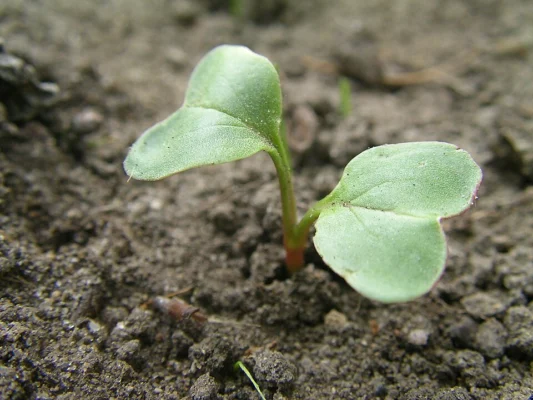
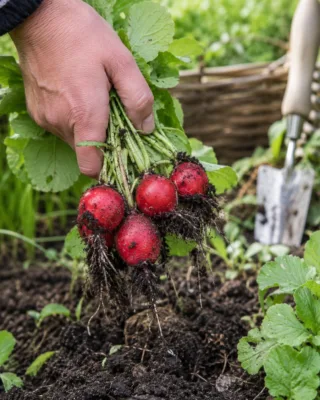
Young radishes first show paired rounded seed leaves, followed by rougher true leaves that may be lobed. The coloured shoulder of a developing root often appears at the soil surface before harvest.
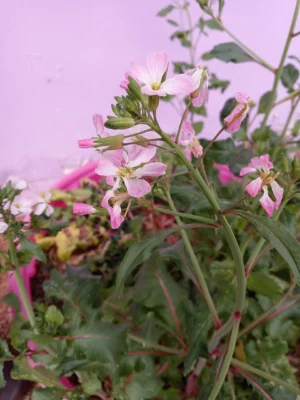
Root shape varies from round red globes to long white daikon and black-skinned winter forms. A flowering plant produces four-petalled flowers and seed pods. Keep the label: the root’s colour alone does not establish a cultivar or its best sowing season.
Photo: Rivervictorlauramarie, CC0. Resized and optimised; cropped for display.
Spring and late summer are often easier than the hottest part of the year. Mild conditions allow salad roots to swell quickly without the combined pressure of heat, dry soil and rapid flowering.
In cold districts, begin outdoors once soil is workable and warming. An early protected row can be worthwhile, but expect slower growth than a seed packet’s fastest summer estimate. Ventilate cloches or tunnels on warm days.
For an autumn and winter supply, reserve a July or August sowing of a suitable winter variety. In a short season, give those roots enough time to size up before light and temperatures decline. Late salad sowings are a separate, more weather-dependent option.
Image from the BFFD media library.
Bolting can follow heat, dryness or sowing the wrong type at the wrong time. Keep moisture steady, use the packet’s dates and sow a fresh batch when conditions improve. Cutting off the flower stem will not reliably restore a good salad root.
Check crowding, shade and water supply. Thin early and give the leaf rosette room to grow. A dense row squeezed beneath another crop may struggle even when the surrounding bed looks productive.
Splitting often follows uneven moisture, while old or slow-growing salad roots can become pithy and harsh. Harvest promptly and keep the next batch growing steadily. An otherwise sound split root may still be usable after careful washing and trimming.
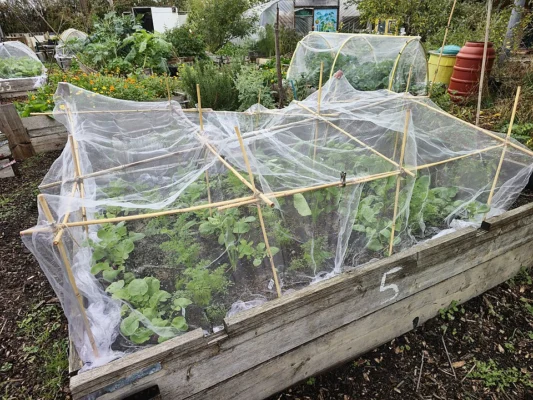
Flea beetles commonly make small pits and holes in brassica leaves. Light damage is often tolerable. Keep seedlings growing strongly and use fine insect mesh where needed, securing its edges without overheating the crop.
Cabbage root fly larvae can damage radishes, especially slower winter and daikon crops. Fine insect-proof mesh from sowing can reduce egg laying, provided pests are not already emerging beneath it. Rotate the crop and discard badly damaged roots.
Grow radishes from fresh seed, sowing directly into the bed or container. Saving part of the packet for several sowings is usually more useful than raising a large batch of transplants.
Seed saving needs several healthy plants, room for flowering and measures to avoid unwanted crossing with other radishes. Do not select only the first plants to bolt if you want future root crops. Let selected pods mature and dry before collecting seed.
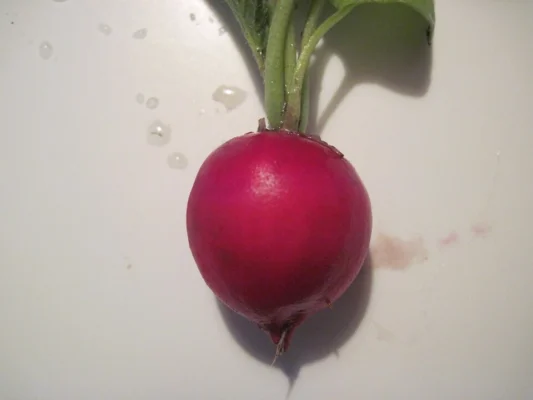
Raxe
A round red salad radish sold by UK organic seed suppliers for quick, crisp crops. It can reach a useful size without rapidly becoming fibrous, but still benefits from timely picking. Use small successive sowings and avoid letting the row dry out.
Raxe radishes, identified by the photograph’s source.
Photo: Rob Duval, CC BY-SA 3.0. Resized and optimised; cropped for display. Adapted image under the same licence.
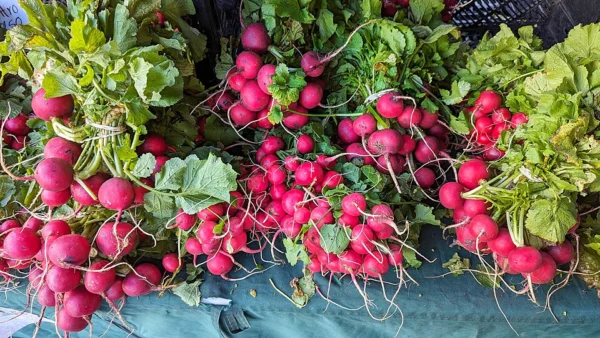
French Breakfast 4 Francis
A salad selection with elongated red roots and white tips. Its shape makes a contrast to round radishes. Grow it during suitable mild conditions and pull while young and crisp rather than allowing the roots to become old and pithy.
Illustrative salad radishes; this photograph is not verified as French Breakfast 4 Francis.
Photo: Daderot, CC0. Resized and optimised; cropped for display.
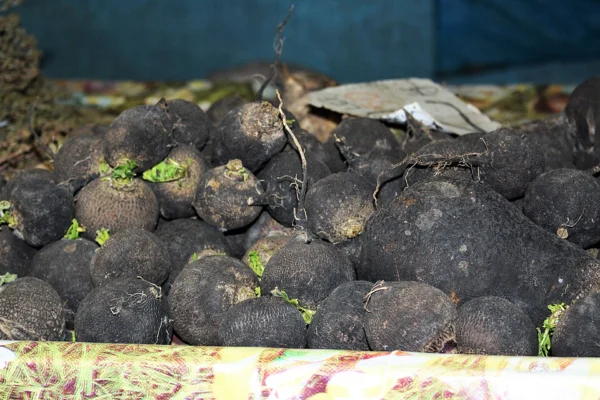
Black Spanish Round
A winter radish with black skin and white flesh. Sow in its summer window for larger autumn roots, allowing more space and time than salad types. Its assertive raw flavour becomes a different kitchen experience when used in cooked dishes.
Illustrative black winter radishes; the exact Black Spanish Round cultivar is not verified.
Photo: Emőke Dénes, CC BY-SA 4.0. Resized and optimised; cropped for display. Adapted image under the same licence.
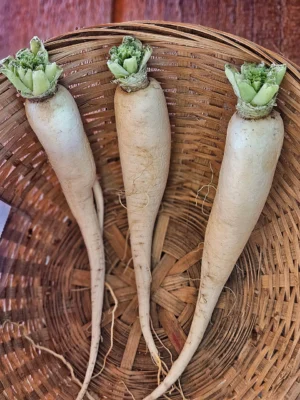
Minowase
A daikon or mooli type grown for long white roots. Give it deep soil and follow the supplier’s sowing window. It takes longer than salad radishes and can be sliced raw or cooked; there is no need to chase the largest possible root.
Minowase daikon, identified by the photograph’s source.
Photo: Eric Polk, CC BY-SA 4.0. Resized and optimised; cropped for display. Adapted image under the same licence.
Check whether a packet contains a quick salad type, a winter root or a daikon, then compare its sowing window and spacing. Buying two contrasting types can extend the season, provided each receives the conditions it needs.
A few radishes left to flower can provide food for visiting insects, but they need considerably more room than a harvested salad row. Keep a small separate flowering patch if you want both tidy cropping and flowers.
Inspect damage before treating it. A handful of flea beetle holes does not necessarily spoil the crop, and physical barriers plus steady growth are useful first responses where young plants need protection.
Published by Buy From Farmers Direct. Growing guidance reviewed 6 October 2026. The seasonal timeline uses the shared BFFD Growers Calendar record; adjust timings to your variety and local conditions.
Salad varieties often take around four to six weeks in good conditions, while early cold-season sowings may need six to eight. Winter and daikon types take longer, often eight to twelve weeks or more. Judge the actual roots as well as the date.
No. Many winter varieties need July or August sowing and may bolt if started in spring. Daikon varieties also differ in their sowing windows. Follow the packet rather than the broad calendar alone.
Common causes include close spacing, shade, heat and dry soil. Give seedlings enough room early and keep growth steady. Adding more feed without checking these conditions is unlikely to solve the problem.
Yes. Short salad varieties are a good starting point in a drained container that holds enough compost to remain evenly moist. Long daikon need much greater root depth. Sow directly and keep the plants properly spaced.
Yes, healthy leaves can be washed and used, especially when young, or cooked if coarse. Harvest leaves with the roots rather than repeatedly stripping a root crop. Discard decaying or badly damaged material.
Usually no. Direct sowing is simpler and avoids disturbing developing roots. Space the seeds carefully or thin soon after emergence, then leave the remaining plants in place until harvest.
A small, well timed sowing is the best start with radishes. Keep the plants uncrowded and evenly moist, pick salad roots promptly, and give winter varieties their own summer sowing plan.
Want to get food independence, support your local grower, get better prices and shop more privately?
Local food isn’t just something you find. It’s something you protect. A free account helps keep local supply visible, supported, and resilient.

….it takes 30 seconds for food lovers and 5 minutes for suppliers
We built this for people who care where their food comes from. For people who want to remain food secure. For Farmers to get to the local people, who deserve a better income and to deliver a better price for you. For the environmentally conscious and the privacy-conscious. An account simply helps us make the map and supplier reach more useful to you, without changing how open it is. You’re always in control.


Find local food. Stay connected to it. Create a free account to support local producers and be part of a growing food network.


