Rhubarb earns its place in a British kitchen garden with generous leaves and tangy stalks for crumbles, compotes and savoury sauces. It is a hardy perennial vegetable, even though it is usually cooked like fruit. Give a young crown time to establish, keep its roots moist without waterlogging and leave enough foliage after picking. A healthy clump can then return for many seasons with relatively little work.
Hardy perennial crop
Spring and early summer picking
Needs generous space
Cook the stalks only
Rest young crowns
| Botanical name | Rheum × hybridum, culinary rhubarb |
| Family | Polygonaceae |
| Plant type | Herbaceous perennial vegetable |
| Edible crop | The fleshy leaf stalks, cooked |
| Leaves | Not edible; remove before preparing stalks |
| RHS hardiness | H5 |
| Typical foliage height | About 60cm to 1.5m, depending on variety |
| Clump spread | Often 1m to 1.5m or more |
| Light | Sun or light shade |
| Soil | Fertile, moisture retentive and well drained |
| Main crown planting season | November to March |
| Potted plant season | Spring or autumn is convenient |
| Planting depth | Crown tip just above the soil surface |
| Typical spacing | 90cm to 1.2m; more for vigorous varieties |
| First year after planting | Do not harvest |
| Second year | Pick only a few stalks |
| Normal main picking season | April to June |
| Amount per picking | No more than about a third of the stalks |
| Container size | At least 50cm deep and wide |
| Division | About every five years, or when overcrowded |
| Plant name | Crop type | Spacing |
Sow indoors
Plant outdoors
Harvest
Polytunnel | |||||||||||
|---|---|---|---|---|---|---|---|---|---|---|---|---|---|---|
| Jan | Feb | Mar | Apr | May | Jun | Jul | Aug | Sep | Oct | Nov | Dec | |||
| Rhubarb | Soft fruit | Single 120cm, In row 120cm, Row gap 120cm | Plant outdoors | Sow indoors, Plant outdoors | Sow indoors, Plant outdoors | Sow indoors, Plant outdoors, Harvest | Harvest | Harvest | No activity recorded | No activity recorded | No activity recorded | Plant outdoors | Plant outdoors | Plant outdoors |
Sow indoors: February, March, April. Plant outdoors: January, February, March, April, October, November, December. Harvest: April, May, June. Polytunnel: no months recorded.
The calendar shows the ordinary outdoor harvest from established plants in April to June. Early varieties and optional forcing can bring picking forward, but that is not a harvest from a newly planted crown. February to April sowing is an optional seed route, with late winter sowing indoors and later spring sowing outdoors. Planting includes dormant crowns in winter and suitable potted plants in spring or autumn. The 1.2m spacing gives an ordinary clump room; particularly vigorous varieties need more. No routine polytunnel season is shown because rhubarb is an outdoor perennial and forcing uses darkness over a mature crown.
Rhubarb suits a permanent edge of a vegetable plot, a roomy raised bed or a productive garden border. Its broad leaves can overshadow smaller neighbours, so do not tuck a young crown into a space that will soon be too narrow.
It is a good crop for gardeners who can wait through the establishment period. Two or more clumps allow you to compare seasons and rest one after forcing without losing the whole normal harvest.
Photo: Øyvind Holmstad, CC BY-SA 4.0. Resized and optimised; cropped for display. Adapted image under the same licence.
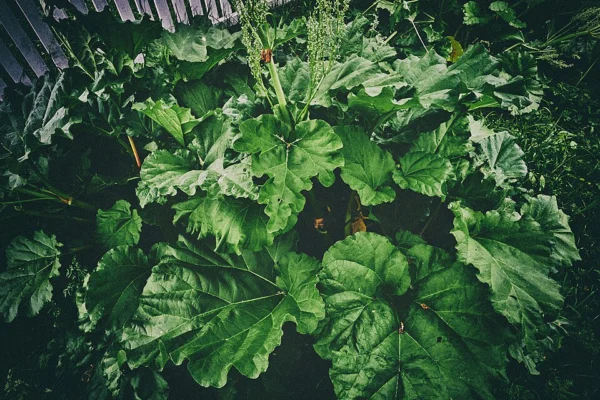
Choose an open sunny position or light shade with fertile soil. A site that holds useful moisture through summer is helpful, provided rain can drain away in winter.
Clear persistent weeds before planting. Once the crown has grown large, digging out deep roots of bindweed or couch grass among it is much more difficult.
Avoid a low pocket where late frost repeatedly catches early shoots. A later cropping variety can be useful in a cold garden, although established dormant crowns withstand normal British winter conditions well.
Use a container at least 50cm wide and deep if ground space or drainage is a problem. Choose a compact variety, peat free loam based compost and ample drainage holes; a small decorative pot is too restrictive.
Photo: DeFacto, CC BY-SA 4.0. Resized and optimised; cropped for display. Adapted image under the same licence.
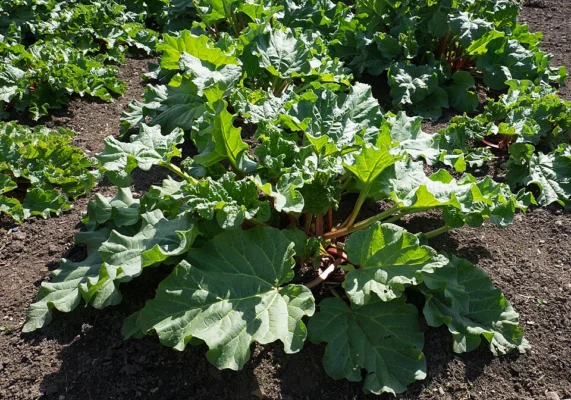
A healthy named crown or potted plant is the simplest starting point. Division preserves a variety, while seedlings are slower and can vary in quality and growth.
1.
Choose a healthy culinary rhubarb plant from a reliable source. Check its eventual spread and whether you want an early variety for possible forcing or a later main crop.
2.
Clear the planting area thoroughly and improve poor soil with well rotted compost. Prepare a broad growing area rather than a small rich pocket in otherwise unsuitable ground.
3.
Plant dormant crowns from November to March when soil is workable. If frozen or very wet conditions prevent planting, temporarily pot the crown and keep it sheltered until the ground improves.
4.
Water a potted plant before removing its container. Rehydrate a dry bare root crown before planting, taking care not to damage its visible buds.
5.
Dig a hole wide enough for the roots and position the growing tip just above the surrounding surface. Do not bury the central crown deeply.
6.
Backfill, firm gently and water in. Space ordinary plants around 90cm to 1.2m apart, allowing more for vigorous selections and leaving access for picking.
7.
Spread mulch around the plant to help retain moisture, but leave the crown uncovered. Keep the young plant free from competing weeds.
8.
Label the variety and planting year, then leave the first season's stalks unpicked. A record makes it easier to resist harvesting before the crown has built strong reserves.

Watering
Water through dry spells in the first growing season while roots establish. Mature plants in good soil need help mainly during prolonged drought; heat and dryness can slow growth markedly.
Check container compost regularly in spring and summer. Water thoroughly and let excess drain away. A permanently wet saucer or blocked drainage can cause trouble even when the leaves look thirsty.

Feeding
A spring mulch of well rotted compost or manure improves moisture retention and supplies nutrients. Spread it around the clump, keeping the growing buds free of material.
If growth is weak in poor soil, a suitable spring feed can help at the labelled rate. Avoid repeated heavy feeding as a substitute for correcting drought, crowding or drainage, and check container plants more often.

Pruning
Remove flowering stems close to the base as they appear if your priority is stalk production. They are different from the ordinary edible leaf stalks, and allowing them to develop takes energy from the crown.
Keep healthy leaves after the main picking period so the plant can rebuild reserves. Let foliage die naturally in autumn, then remove the collapsed remains rather than cutting a green clump flat in midsummer.

Winter care
Rhubarb is hardy and benefits from winter cold during dormancy. It normally needs no warm indoor accommodation. Keep drainage clear and protect tender new shoots temporarily if a damaging late frost is forecast.
For an early crop, cover a strong established crown with a tall opaque forcing pot or bucket in midwinter. Pick the first flush when ready, uncover it and take no more that season. Do not force the same crown in consecutive years; give it longer recovery if growth is weak.
Culinary rhubarb forms a clump of large green leaves on thick fleshy stalks emerging from a crown at soil level. Stalks may be green, pink, red or a mixture, depending on variety and growing conditions.
Grow a labelled culinary plant rather than relying on resemblance to large leaved ornamentals. The crop is the leaf stalk, not the leaf blade, flower stem or root. Remove the leaves before taking stalks into the kitchen.
Photo: User:Amada44, Public domain. Resized and optimised; cropped for display.
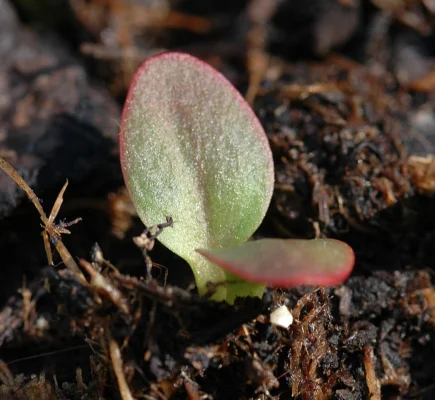
Leave a newly planted crown completely unpicked in its first year and take only a few stalks in the second. From the third season, choose firm young stalks around 30cm long, keeping at least two thirds of the plant's stalks after each picking.
Grip a stalk near the base and gently pull and twist it free. Avoid snapping it and leaving a stump. For ordinary varieties, finish the main harvest by late June or early July so plenty of leaves can replenish the crown.
Wash the stalks and cook them for your chosen dish; never eat the leaves. Colour is not a test of maturity, because some varieties remain partly green. Use fresh stalks promptly or freeze a prepared surplus for later cooking.
Photo: Marathon, CC BY-SA 2.0. Resized and optimised; cropped for display. Growing rhubarb in the Walled Garden at Chartwell by Marathon
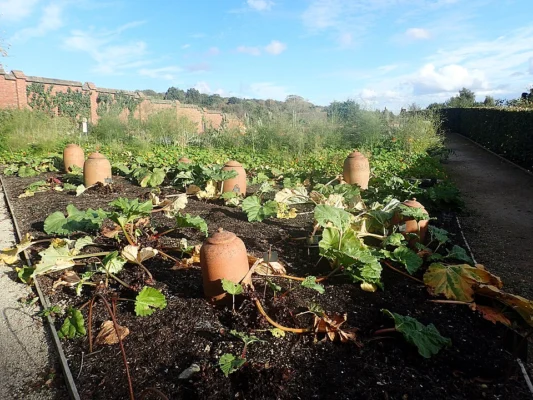
Poor drainage and a deeply buried crown can encourage rot. Check for saturated soil, remove clearly rotting material and correct the cause. Replace a badly affected plant with healthy stock in a better position rather than dividing diseased tissue.
Overpicking, drought, shade or an overcrowded old crown can all contribute. Stop harvesting, check the growing conditions and consider dormant division of a healthy crowded clump. New plants need time, not extra picking.
Slugs and snails may feed on soft shoots, especially under forcing pots. Inspect sheltered growth after damp weather and use targeted hand removal where needed; older established foliage often tolerates some damage.
Some varieties and seed raised plants flower more readily, and old crowded crowns can also be prone to it. Remove the flower stems promptly and review division and feeding rather than assuming the plant is dying.
Late frost or abrupt changes between cold, dry and warmer moist weather can damage growth. Remove badly damaged stalks, keep moisture steadier and protect vulnerable new shoots when frost is forecast.
Divide a healthy mature crown while dormant, from late autumn to early spring. Lift it and cut into sections with sound roots and at least one strong growing bud. Use vigorous outer sections, discard decayed portions and replant promptly.
Seed is an alternative for patient gardeners. Sow about 2.5cm deep in peat free compost in late winter under cover, or outdoors in spring. Grow seedlings on, harden off protected plants before planting out and allow them extra time to reach useful cropping size.
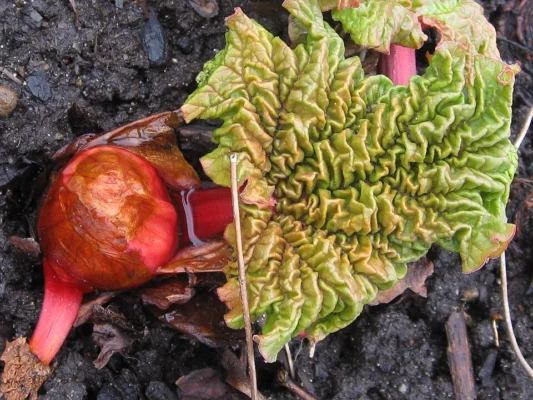
Timperley Early
An early vigorous choice suitable for forcing once established. Outdoor stalks are red near the base with greener upper portions. Give its large mature clump more room than a compact variety.
An unfolding rhubarb shoot illustrating spring growth; not a verified photograph of Timperley Early.
Photo: Ruth Hartnup from Vancouver, Canada, CC BY 2.0. Resized and optimised; cropped for display.
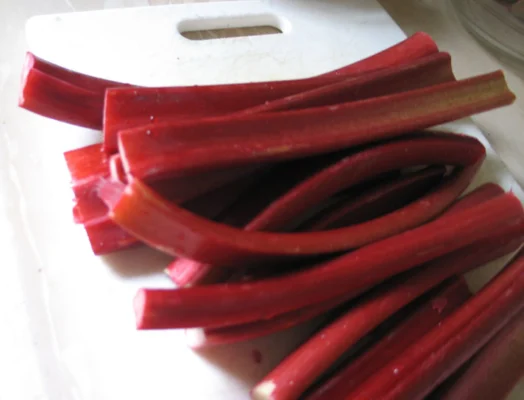
Fulton's Strawberry Surprise
A maincrop selection with bright red stalks and a balanced flavour. Its usual May and June harvest fits well after earlier rhubarb, provided the clump is established and growing strongly.
Cleaned red rhubarb stalks illustrating the harvested crop; the cultivar is not identified.
Photo: Photographer: Kellen, CC BY-SA 3.0. Resized and optimised; cropped for display. Adapted image under the same licence.
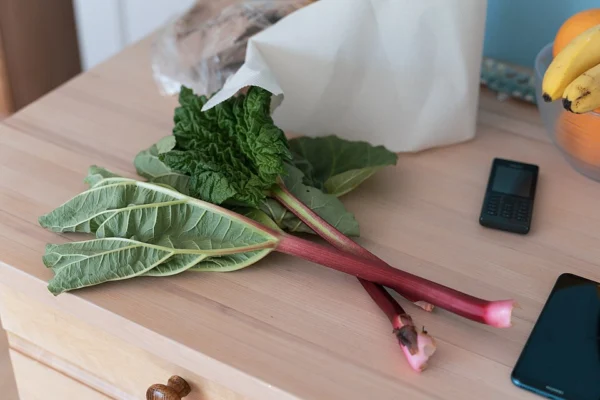
Raspberry Red
An early selection producing rich red stalks, commonly ready from April to June. It can be grown for an ordinary outdoor crop and is also suitable for forcing a mature crown.
Freshly pulled rhubarb on a kitchen worktop; an illustration of harvesting, not verified Raspberry Red.
Photo: Øyvind Holmstad, CC BY-SA 4.0. Resized and optimised; cropped for display. Adapted image under the same licence.
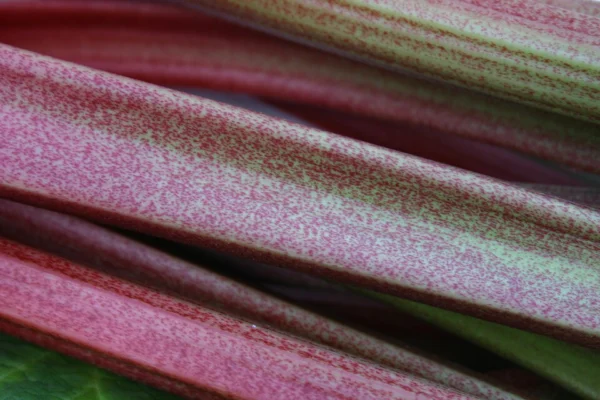
Victoria
A long established later maincrop variety with green stalks flushed red and a robust flavour. It is often ready from late May; green colour does not mean the stalks need to turn fully red before picking.
Pink speckled and green rhubarb stalks illustrating colour variation; not confirmed Victoria.
Photo: mako from Kangasala, Suomi (Finland), CC BY 2.0. Resized and optimised; cropped for display.
Compare early and maincrop varieties, eventual spread and suitability for forcing. Buy a healthy labelled crown, and plan its permanent space before expecting a harvest.
A permanent rhubarb bed needs relatively little soil disturbance once established. Use compost around the plants and tolerate modest leaf damage where the crown remains healthy and productive.
Slugs and snails are also food for garden wildlife, so focus protection on vulnerable young growth rather than trying to clear every animal from the garden. Nearby flowering plants can supply insect forage while crop flower stems are removed.
Published by Buy From Farmers Direct. Growing guidance reviewed 6 October 2026. The seasonal timeline uses the shared BFFD Growers Calendar record; adjust timings to your variety and local conditions.
Leave a newly planted crown unpicked for its first growing season. Take only a few stalks in the second year, then begin normal harvesting once the plant is strong and established.
For ordinary varieties, finish the main harvest by late June or early July and let foliage rebuild the crown. A forced plant should rest for the remainder of that season after its first flush is picked.
No. Remove the leaves and use only the culinary plant's stalks for cooking. Healthy discarded leaves can go into a normal compost heap; they should never be treated as another leafy vegetable.
No. Colour varies by variety. Pick suitable young stalks by their size and condition rather than waiting for a green or partly green cultivar to turn red.
Cover a strong crown that has been established for several years with a tall light excluding pot in midwinter. Pick the early flush, remove the cover and rest the plant. Rotate crowns rather than forcing one every year.
Yes, with a compact variety and a pot at least 50cm deep and wide. Keep the compost moist and draining freely, feed as needed and expect the available root space to limit the crop.
The best rhubarb routine is patient establishment followed by careful picking and a proper summer rest. Give the crown space, moisture and winter cold, and it can become a dependable part of the kitchen garden.
Explore more growing guides: Asparagus, Blackberry, Blackcurrant.
Want to get food independence, support your local grower, get better prices and shop more privately?
Local food isn’t just something you find. It’s something you protect. A free account helps keep local supply visible, supported, and resilient.

….it takes 30 seconds for food lovers and 5 minutes for suppliers
We built this for people who care where their food comes from. For people who want to remain food secure. For Farmers to get to the local people, who deserve a better income and to deliver a better price for you. For the environmentally conscious and the privacy-conscious. An account simply helps us make the map and supplier reach more useful to you, without changing how open it is. You’re always in control.


Find local food. Stay connected to it. Create a free account to support local producers and be part of a growing food network.


