Scorzonera is a slow-growing root vegetable worth making room for in a winter kitchen garden. Beneath its dark skin is pale flesh with a gentle, distinctive flavour. Sow directly into a deep bed in spring, let the roots develop through summer, then lift a few at a time from autumn.
Also called black salsify
Direct sow in spring
Deep soil suits long roots
Autumn and winter harvest
Hardy perennial crop
| Botanical name | Pseudopodospermum hispanicum; usually sold as Scorzonera hispanica |
| Family | Asteraceae |
| Other name | Black salsify |
| Main edible crop | Long roots with dark skin and pale flesh |
| Growing cycle | Perennial, usually harvested after one growing season |
| Position | Full sun |
| Soil | Deep, crumbly and well drained |
| Main sowing | April and May |
| Sowing method | Directly into the final growing position |
| Sowing depth | About 1cm |
| Plant spacing | About 15cm |
| Row spacing | 20–30cm |
| Germination | Often two to three weeks; conditions can extend this |
| Time to harvest | Allow a full growing season; roughly five months or more |
| Main lifting season | October to February |
| Later lifting | Into early spring where roots remain sound and accessible |
| Winter hardiness | Established roots can remain in suitable ground |
| Flowers | Yellow flowers on plants retained to flower |
| Container suitability | Possible only with generous depth; beds are simpler |
| Harvesting tool | A fork or spade, used well away from the root |
| Plant name | Crop type | Spacing |
Sow indoors
Plant outdoors
Harvest
Polytunnel | |||||||||||
|---|---|---|---|---|---|---|---|---|---|---|---|---|---|---|
| Jan | Feb | Mar | Apr | May | Jun | Jul | Aug | Sep | Oct | Nov | Dec | |||
| Scorzonera | Root vegetables | Single 15cm, In row 15cm, Row gap 20–30cm | Harvest | Harvest | Harvest | Sow indoors | Sow indoors | No activity recorded | No activity recorded | No activity recorded | No activity recorded | Harvest | Harvest | Harvest |
Sow indoors: April, May. Plant outdoors: no months recorded. Harvest: January, February, March, October, November, December. Polytunnel: no months recorded.
April and May are the main direct-sowing months. October to February is the usual lifting period, with March included for sound roots left in suitable ground into early spring. There is no routine transplanting stage and no polytunnel requirement, so those bands are empty. Frozen, saturated or damaged roots may need a different harvesting decision from the printed calendar.
This is a useful choice if you enjoy less familiar winter vegetables and can leave a row occupied for much of the year. It is a slower commitment than radishes, so begin with a modest length of bed and find out how often you cook with it.
Scorzonera particularly rewards careful soil preparation and patient harvesting. Gardeners with shallow, stony ground may find a deep raised bed easier than trying to pull straight roots from an unsuitable plot.
Photo: Popo le Chien, CC0. Resized and optimised; cropped for display.
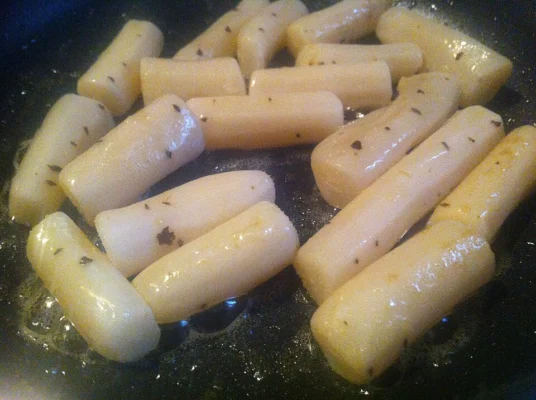
Choose a sunny position with enough usable soil depth for the roots to lengthen. A thin layer of good compost over a hard compacted base will not remove the obstruction underneath.
Remove large stones and persistent weeds before sowing. Work heavy soil only when its condition allows it to crumble; forcing cultivation while it is wet can leave the bed cloddy and compacted.
Use ground improved previously with mature organic matter. Avoid sowing into freshly manured soil, and make the surface fine enough for long, narrow seeds to sit at a consistent depth.
If a container is your only option, choose a deep, stable vessel with drainage rather than a shallow salad tray. Leave space between plants and accept that root size and shape depend on the actual depth available.
Photo: H. Zell, CC BY-SA 3.0. Resized and optimised; cropped for display. Adapted image under the same licence.
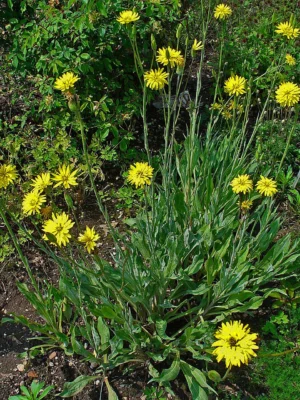
Scorzonera establishes best where it will finish growing. Direct sowing avoids disturbing the long taproot, while a labelled row helps prevent its grass-like seedlings being mistaken for weeds.
1.
Buy seed labelled as scorzonera or black salsify. Check the botanical name and variety so it is not confused with pale-rooted salsify.
2.
Prepare the final bed before sowing. Remove weeds, break down surface clods and check that there is useful depth below the seedbed.
3.
Sow during April or May when the soil is workable. In a cold spring, wait for a suitable spell rather than sowing into saturated ground simply because April has arrived.
4.
Make drills about 1cm deep and 20–30cm apart. Sow a few seeds at roughly 15cm intervals, or sow thinly along the row for later thinning.
5.
Cover gently, water if the soil is dry and label both ends of the row. Keep the surface moist during germination without turning it into a puddle.
6.
Allow time for emergence. Seedlings often take a few weeks, and their narrow early leaves deserve a close look before any hand weeding.
7.
Thin to one strong plant about every 15cm. Remove unwanted seedlings carefully; transplanting those thinnings is unlikely to produce the same straight roots as undisturbed plants.
8.
Keep weeds small and maintain growth through dry spells. There is no need to pot on the plants or move them again before harvesting.

Watering
Aim for steady moisture while seeds germinate and young plants establish. A dry surface can interrupt this stage even when deeper soil still feels damp.
Water established plants during prolonged dry weather, checking the root zone rather than sprinkling the leaves every day. Container plants need closer attention because their available soil volume is limited.

Feeding
Start with a reasonably fertile, prepared bed. Scorzonera is not a crop that needs a complicated feeding programme to produce useful roots.
If growth is poor, first check crowding, weeds, moisture and the depth of workable soil. Extra feed cannot straighten a root that has already met a stone or been damaged.

Pruning
Leave the healthy leaf rosette in place while roots develop. Routine clipping of the foliage removes the plant’s means of supporting its underground crop.
When lifting, loosen the surrounding soil deeply before raising the root. Work from the side of the row and use the tool to free the soil, rather than levering directly against the root or pulling hard on its leaves.

Winter care
Established roots can stay in well-drained ground and be lifted as required. Mark the row clearly before foliage becomes less obvious, especially if nearby beds will be cleared or mulched.
Lift a small supply before a forecast period of frozen ground if you will need it for cooking. In very cold gardens a loose mulch can help protect the soil surface, but avoid burying the crowns under a wet, compacted layer.
Cultivated scorzonera has elongated leaves, a dark brown to almost black root skin and cream-coloured flesh. Plants kept beyond the normal root harvest can produce yellow flowers. The modern botanical name is Pseudopodospermum hispanicum, although seed packets commonly retain Scorzonera hispanica.
True salsify, Tragopogon porrifolius, is a different vegetable with paler roots and purple flowers. The shared names and similar uses can be confusing, so use labelled cultivated seed rather than identifying an unknown wild plant for the kitchen.
Photo: Krzysztof Ziarnek, Kenraiz, CC BY-SA 4.0. Resized and optimised; cropped for display. Adapted image under the same licence.
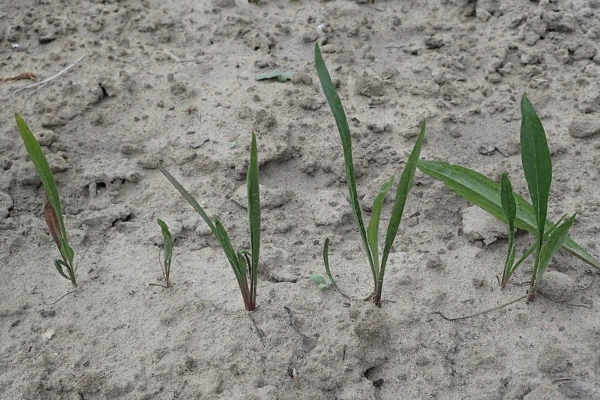
A spring sowing gives this relatively slow root crop a useful UK growing season. May is still a normal option for many selections, but late summer sowing should not be expected to provide large roots that autumn.
Good drainage is especially valuable if you intend to store the crop in the ground. In a persistently wet winter bed, lifting sound roots for prompt use may be more practical than following an idealised winter schedule.
Wash away soil before preparing the roots. Peeling after some cooking can make the skin easier to handle and reduce the nuisance of sticky sap; if peeling raw, place the peeled pieces in water with a little lemon juice to limit browning.
Photo: Agnieszka Kwiecień, Nova, CC BY-SA 4.0. Resized and optimised; cropped for display. Adapted image under the same licence.
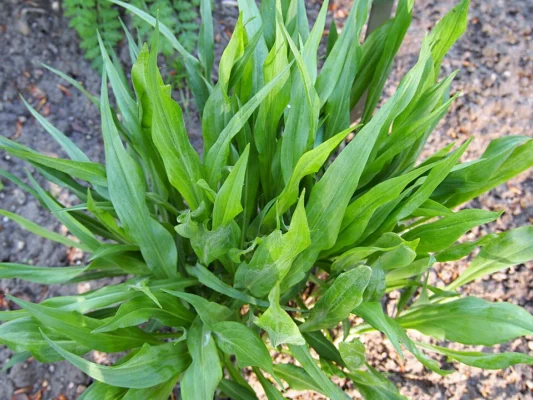
Emergence can take several weeks, especially in less favourable conditions. Check the sowing depth, moisture and seed packet before re-sowing. Mark the row and inspect closely: the first narrow leaves can easily be overlooked among grass seedlings.
Root damage and obstacles in the soil can affect their shape. Sow directly into a deep, prepared bed, thin carefully and avoid cultivating close to established roots. A forked but otherwise sound root is still usable, although harder to clean.
Long roots are brittle and cannot reliably be pulled out like small radishes. Start digging beside the row, loosen downwards and work patiently around the root. Use broken sound roots promptly rather than expecting them to store as well as intact ones.
Check how long it has been growing and how tightly the plants are packed. Late sowing, shade, weeds and repeated dry spells can limit root development. Give the next sowing a full season, adequate room and a sunny position.
Slugs and snails can damage newly emerged vegetables. Check the row after dark and protect vulnerable seedlings where needed. Keep monitoring rather than assuming every missing seedling failed to germinate.
Seed is the straightforward way to establish an even row for harvesting. Although the plant is perennial, digging up its main root removes the part you wanted to keep for future growth, so sow another row for the following winter.
For seed saving, retain several healthy plants separately from the harvest row and let them flower. Keep different scorzonera varieties isolated if their identity matters; collect mature seed in dry weather and label it carefully.
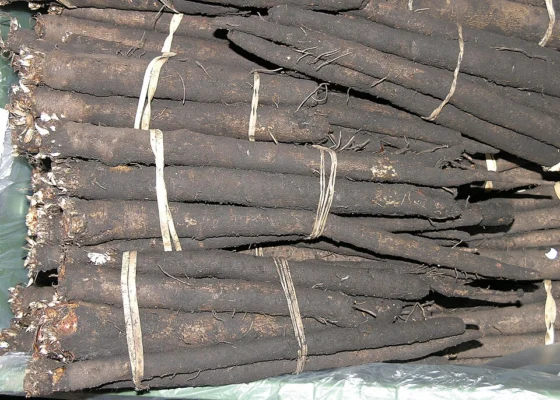
Duplex
A familiar selection with long, dark roots and a mild flavour. It suits the straightforward April or May sowing followed by lifting from October, provided the soil has enough depth.
Illustrative scorzonera root bundles; not identified as Duplex.
Photo: Goldlocki, CC BY-SA 3.0. Resized and optimised; cropped for display. Adapted image under the same licence.
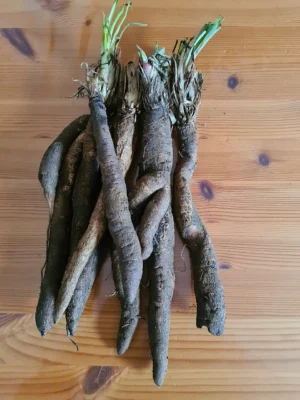
Russian Giant
Sold by UK growers as a traditional black-rooted scorzonera. It is an option for roasting and other cooked dishes; the name should not be taken as a guarantee of exceptionally large roots in every garden.
Illustrative freshly lifted scorzonera; not identified as Russian Giant.
Photo: Benreis, CC BY-SA 4.0. Resized and optimised; cropped for display. Adapted image under the same licence.
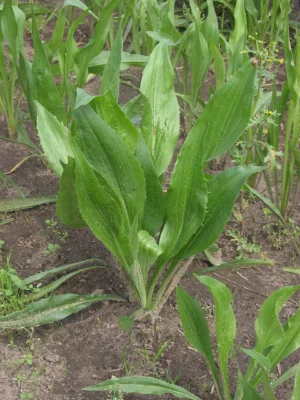
VRN Enorma
A selection with relatively smooth, dark roots. Its supplier describes useful resistance to bolting, although good timing and steady growth still matter. Thin generously and loosen the soil deeply at harvest.
Illustrative scorzonera foliage; not identified as VRN Enorma.
Photo: Rasbak, CC BY-SA 3.0. Resized and optimised; cropped for display. Adapted image under the same licence.
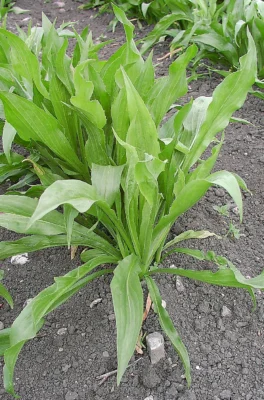
Long Rooted Maxima
A tapering, long-rooted selection for deep, stone-free soil. It can remain in the ground through winter where conditions allow. Choose it for a suitable root bed rather than a shallow container.
Illustrative scorzonera plant; not identified as Long Rooted Maxima.
Photo: Goldlocki, CC BY-SA 3.0. Resized and optimised; cropped for display. Adapted image under the same licence.
Choose a labelled scorzonera variety and plan its bed before ordering. A small, well-spaced row in good ground is more useful than a large packet sown into a site where the roots cannot develop or be lifted intact.
Plants reserved for seed can produce yellow flowers visited by bees. Keep this flowering patch separate from the roots you plan to lift, so both purposes have enough space.
The ordinary root crop does not need to flower before harvest. Encourage a varied garden around it and use local protection when seedlings are vulnerable, while leaving beneficial garden wildlife room elsewhere.
Published by Buy From Farmers Direct. Growing guidance reviewed 6 October 2026. The seasonal timeline uses the shared BFFD Growers Calendar record; adjust timings to your variety and local conditions.
No. Scorzonera is often called black salsify, but it is a different plant from true salsify. Scorzonera has dark roots and yellow flowers; true salsify has paler roots and purple flowers.
April and May are useful main months. Sow directly into the final bed once the soil is workable, allowing the crop to grow through summer for autumn and winter lifting.
Direct sowing is preferable for a root harvest. Disturbance of the taproot can spoil its shape, and thinnings do not transplant well. A deep, prepared outdoor bed is the simplest approach.
Yes, established roots are hardy and can be lifted as needed from suitable, well-drained ground. Frozen soil can make harvesting impossible temporarily, while very wet ground can make lifting or keeping roots sound more difficult.
They are long and fragile. Dig down beside them and loosen the surrounding soil before lifting, instead of pulling on the leaves. Take particular care in compacted or heavy ground.
The tough outer skin is normally removed. You can peel it raw and keep the pieces in lemon water, or partly cook the washed roots first and remove the skin afterwards to make the sticky sap less troublesome.
Give scorzonera time, sunlight and a deep root run. The main skill comes at harvest: loosen the soil patiently, lift only what you need and let the remaining sound roots provide later winter meals.
Want to get food independence, support your local grower, get better prices and shop more privately?
Local food isn’t just something you find. It’s something you protect. A free account helps keep local supply visible, supported, and resilient.

….it takes 30 seconds for food lovers and 5 minutes for suppliers
We built this for people who care where their food comes from. For people who want to remain food secure. For Farmers to get to the local people, who deserve a better income and to deliver a better price for you. For the environmentally conscious and the privacy-conscious. An account simply helps us make the map and supplier reach more useful to you, without changing how open it is. You’re always in control.


Find local food. Stay connected to it. Create a free account to support local producers and be part of a growing food network.


