Perennial wallflowers offer months of small flowers above grey-green or green foliage, making them useful in sunny borders and pots. They are shrubby plants with a woody base, but many are short-lived and become bare if left untrimmed. Choose a sheltered drained position, trim lightly within living growth and take replacement cuttings while a favourite plant is still healthy. They need a different routine from spring bedding wallflowers.
Long flowering season
Sunny sheltered position
Avoid winter wet
Trim within leafy growth
Take replacement cuttings
| Botanical identity | Erysimum linifolium and shrubby perennial hybrids |
| Family | Brassicaceae |
| Plant type | Short-lived evergreen subshrub |
| Typical height | 30 to 90cm, by cultivar |
| Typical spread | 30 to 90cm |
| Main flowering season | Spring to summer, often longer in mild conditions |
| Light | Full sun |
| Soil | Free-draining, moderately fertile |
| Soil reaction | Neutral to alkaline generally suitable |
| Winter behaviour | Varies; many need sheltered drained sites |
| Main planting window | April to May or early September |
| Seed route | Not the usual route for named hybrids |
| Pruning approach | Deadhead and trim within leafy growth |
| Propagation | Non-flowering shoot cuttings |
| Container suitability | Good for a sunny drained pot |
| Watering priority | Water until established; avoid winter saturation |
| Feeding priority | Modest feeding only |
| Wildlife value | Long flowering period for insects |
| Main use | Border colour and occasional ornamental cutting |
| Important distinction | Perennial shrubby Erysimum, including Bowles’s Mauve, is distinct from traditional biennial E. cheiri bedding. Plants are often short-lived and named hybrids are best preserved by cuttings. |
| Plant name | Crop type | Spacing |
Sow indoors
Plant outdoors
Harvest
Polytunnel | |||||||||||
|---|---|---|---|---|---|---|---|---|---|---|---|---|---|---|
| Jan | Feb | Mar | Apr | May | Jun | Jul | Aug | Sep | Oct | Nov | Dec | |||
| Wallflower (Perennial) | Not recorded | Single 50cm, In row 50cm, Row gap 60cm | Polytunnel | Polytunnel | Polytunnel | Plant outdoors, Harvest | Plant outdoors, Harvest | Harvest | Harvest | Harvest | Plant outdoors, Harvest | Polytunnel | Polytunnel | Polytunnel |
Sow indoors: no months recorded. Plant outdoors: April, May, September. Harvest: April, May, June, July, August, September. Polytunnel: January, February, March, October, November, December.
April to May is the main planting window, with early September possible in mild, well-drained sites. April to September harvest means optional ornamental flower cutting, varying by cultivar and weather. The October to March cover band is conditional protection for rooted cuttings or less hardy potted selections, not a blanket requirement for established shrubs. Seed is omitted because named hybrids are normally maintained by cuttings. These month bands are planning windows for a typical UK garden; local frost, altitude, exposure and the season can move the work. Check the plant or seed label before using an optional route.
Perennial wallflowers suit sunny mixed borders, gravel-style planting and patio pots where their long display is useful close to a path. They combine well with plants needing similar drainage.
They are less suitable for a permanently wet shaded bed or a scheme that depends on every original plant lasting decades. Keeping young replacements makes their shorter lifespan easier to manage.
Photo: peganum from Small Dole, England, CC BY-SA 2.0. Resized and optimised; cropped for display. Adapted image under the same licence.
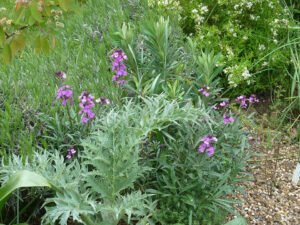
Choose full sun and some shelter from cold drying winds. The plant’s hardiness label matters, particularly in northern, inland or exposed gardens.
Provide free drainage without excessive fertility. Wet winter roots can shorten life even where the air temperature is not exceptionally low. If winter losses recur, compare the site’s exposure and drainage with a successful plant elsewhere nearby. Replacing the same cultivar repeatedly in the same wet position is unlikely to solve the underlying problem.
Allow about 50cm for a medium cultivar, widening for vigorous forms. Give foliage enough room to dry after rain rather than crowding it into dense neighbours.
Use a drained stable container and a suitable peat-free compost. Pots make winter relocation possible, but also expose roots more strongly to drought and cold.
Photo: Dominicus Johannes Bergsma, CC BY-SA 3.0. Resized and optimised; cropped for display. Adapted image under the same licence.
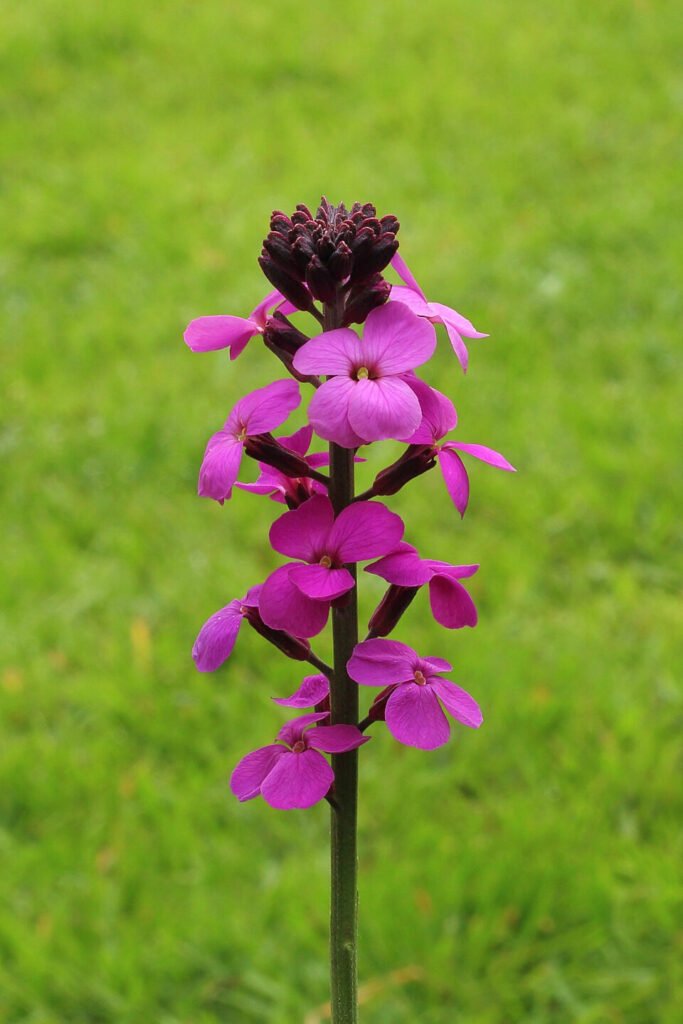
Begin with correctly labelled perennial wallflower and decide where the mature plant will fit. Preparing the growing space before buying makes the first season easier, especially when young plants need prompt attention.
1.
Choose a labelled perennial Erysimum and check its hardiness, mature size and flowering season.
2.
Plant mainly in spring so roots have time to establish before their first winter.
3.
Prepare a drained root area, removing persistent weeds and avoiding a rich manure-filled planting pocket.
4.
Position plants about 50cm apart for a medium cultivar, with access for trimming and cutting material.
5.
Keep the crown at its previous soil level and ease the plant from its pot without breaking the rootball.
6.
Water in thoroughly and check moisture through the first summer, particularly during dry windy weather.
7.
Remove exhausted flower stems and lightly shape leafy shoots while the plant remains vigorous.
8.
Take healthy non-flowering cuttings in good time so a favourite can be replaced before its base becomes exhausted.

Watering
Water newly planted shrubs until roots have established. Mature plants in appropriate ground tolerate some dryness, but severe repeated drought can shorten flowering.
Containers need regular summer checks and restrained winter watering. A plant wilting in saturated compost needs a drainage assessment, not another automatic soak.

Feeding
Moderately fertile soil is usually sufficient. Strong repeated nitrogen feeds encourage soft growth and do not prevent the natural ageing of a short-lived shrub.
Potted plants may need modest feeding as compost nutrients decline. Refresh the growing medium or replace ageing plants when root and stem condition justify it.

Pruning
Remove spent flower stems and trim lightly to encourage a compact leafy outline. Time substantial tidying to a quieter flowering period while growth remains active. A long-flowering plant may never have a completely flowerless moment. Tidy in stages if needed, removing exhausted stems while leaving active ones, rather than waiting indefinitely and allowing the whole framework to become bare.
Keep cuts within living leafy growth and avoid a severe chop into an old bare framework. Regular small trims and replacement cuttings are more reliable than drastic rescue pruning.

Winter care
Match protection to the cultivar and local climate. Established suitable plants may remain outdoors in a sheltered drained position, while less hardy pots need additional shelter.
Keep young rooted cuttings in bright cool protected conditions, frost free when required. An unheated tunnel is not automatically sufficient during a severe cold spell.
Perennial wallflowers form a woody base with narrow leaves and repeated clusters of four-petalled flowers. Colours and foliage vary substantially between cultivars.
Bowles’s Mauve is a familiar example, but not every purple wallflower is that cultivar. Traditional biennial bedding E. cheiri has a different planned replacement cycle.
Photo: Didier Descouens, CC BY-SA 4.0. Resized and optimised; cropped for display. Adapted image under the same licence.
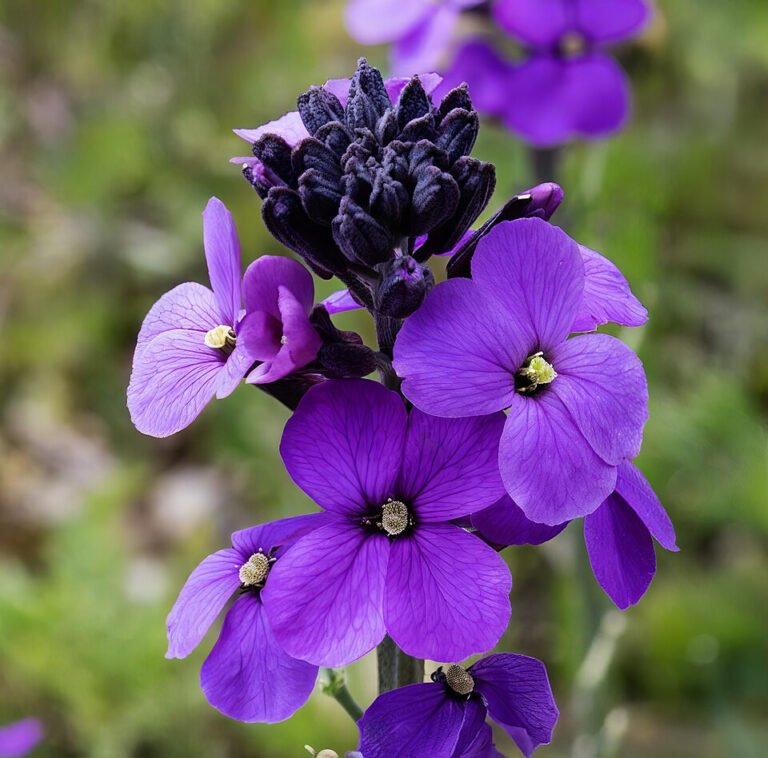
Spring planting is safer than late autumn establishment on many cold wet sites. A nursery plant in full flower still needs time to root into its permanent position.
Take a few stems for an informal vase if wanted, but leave plenty of open flowers for insects. The harvest band is entirely ornamental.
Review older plants each spring. A healthy leafy replacement often gives a better display than repeatedly feeding and hard-pruning a bare woody specimen.
Photo: Jonathan Billinger, CC BY-SA 2.0. Resized and optimised; cropped for display. Adapted image under the same licence.
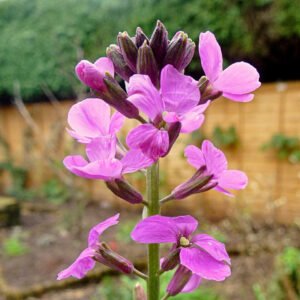
Age and missed trimming can leave foliage only at stem tips. Take cuttings while healthy shoots remain and plan replacement rather than relying on a severe cutback.
Check drainage and the cultivar’s hardiness. Improve the position before replanting, or use a movable container for less dependable selections.
A natural pause, drought or poor light may contribute. Remove exhausted stems and correct growing conditions without cutting all fresh buds away.
Erysimum belongs to the brassica family. Inspect affected roots and seek a diagnosis if clubroot or another persistent soil problem is suspected.
Overwet compost, stale air or unsuitable material can cause failure. Use healthy non-flowering shoots, clean equipment and a drained propagation medium.
Take healthy non-flowering softwood or semi-ripe shoots in the growing season, removing lower leaves and rooting in suitable drained cutting compost with appropriate humidity. Take several cuttings rather than relying on a single piece, but use only enough to maintain realistic replacement needs. Keep the parent label with them so a successful young plant is not confused with a different Erysimum selection.
Pot on after roots form and gradually increase ventilation. Named hybrids may be sterile or variable from seed, so cuttings are the dependable route to the same flower colour and habit.
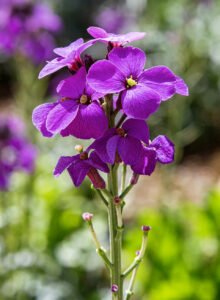
Bowles’s Mauve
A familiar grey-green-leaved perennial wallflower with purple flowers over a long period. It is often short-lived, so maintain replacements from healthy cuttings.
Source identified Erysimum Bowles Mauve.
Photo: Didier Descouens, CC BY-SA 4.0. Resized and optimised; cropped for display. Adapted image under the same licence.
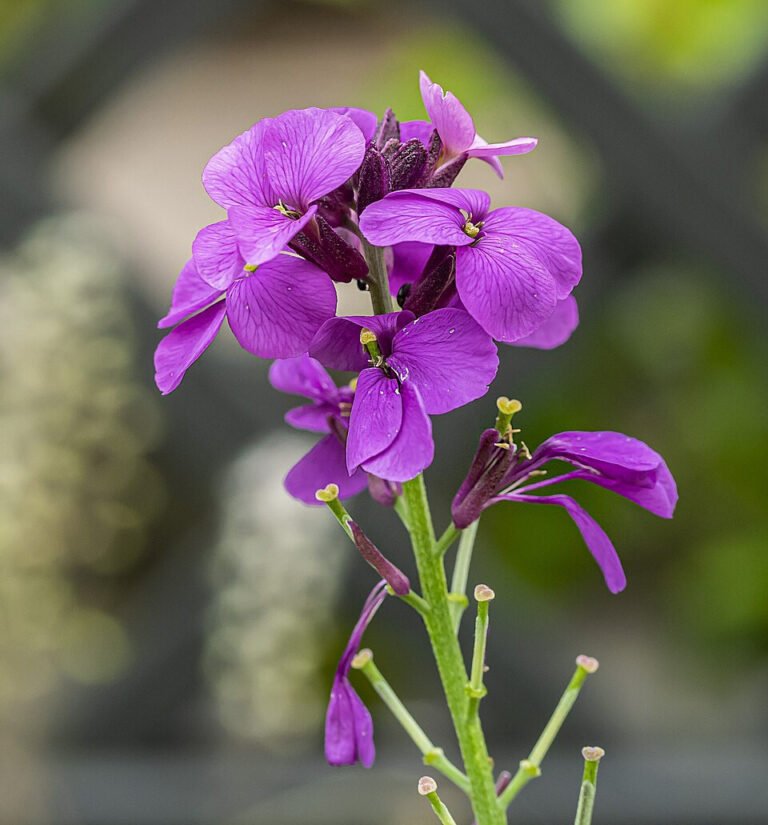
Apricot-flowered perennial selections
Useful for warmer colour combinations. Buy a named labelled cultivar and check its hardiness rather than assuming all perennial wallflowers are equivalent.
Mauve flowered perennial wallflower shown for comparison; this is not a photograph of an apricot flowered selection.
Photo: Jonathan Billinger, CC BY-SA 2.0. Resized and optimised; cropped for display. Adapted image under the same licence.
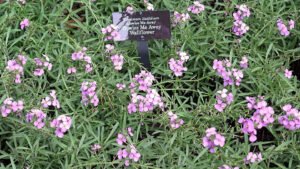
Compact perennial selections
Smaller forms can suit pots and border fronts. Compare actual mature dimensions, since a small plant in a sales pot does not prove compact habit.
Source identified Erysimum Bowles Me Away; check the nursery label for its mature height and spread.
Photo: cultivar413, CC BY 2.0. Resized and optimised; cropped for display.
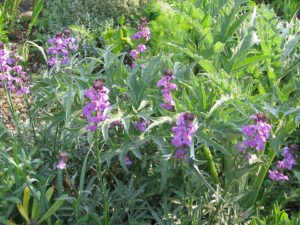
Variegated perennial selections
Foliage adds interest between flower flushes. Remove reverted plain shoots if appropriate and preserve the chosen form through correctly identified cuttings.
Green leaved Bowles Mauve shown for comparison; this does not illustrate a variegated selection.
Photo: peganum from Small Dole, England, CC BY-SA 2.0. Resized and optimised; cropped for display. Adapted image under the same licence.
Compare the mature size, growing requirements and season of interest before choosing perennial wallflower. Buy clearly labelled, healthy stock and prepare its position in advance. A plant suited to the available light and soil is easier to establish and maintain.
The long flowering season can supply visiting insects over several months. Leave plenty of open flowers and combine with plants that cover any seasonal gaps.
Avoid unnecessary spraying of flowering shoots. Minor leaf damage can be tolerated when plants remain healthy, while replacing exhausted shrubs maintains future flowering value.
Published by Buy From Farmers Direct. Growing guidance reviewed 11 October 2026. The seasonal timeline uses the shared BFFD Growers Calendar record; adjust timings to your variety and local conditions.
Many are short-lived shrubs rather than permanent fixtures. Conditions and cultivar matter, so keep replacement cuttings.
A severe cut into a leafless framework is unreliable. Trim within leafy growth and replace badly exhausted plants.
Check its rating and your site. Shelter and drainage matter, especially in cold wet or exposed gardens.
Named hybrids may be sterile or variable. Cuttings preserve the selected plant more reliably.
No. Traditional E. cheiri bedding is usually raised as a biennial for one spring display.
It is optional protection for young cuttings or less hardy potted selections, adjusted to actual local frost risk.
Give perennial wallflower an appropriate position, establish it carefully and adjust care to the weather. Keep a simple note of flowering and any problems so that next year’s planting decisions reflect what actually succeeds in your garden.
Explore more growing guides: Wallflower, Stonecrop, Verbena (Perennial).
Want to get food independence, support your local grower, get better prices and shop more privately?
Local food isn’t just something you find. It’s something you protect. A free account helps keep local supply visible, supported, and resilient.

….it takes 30 seconds for food lovers and 5 minutes for suppliers
We built this for people who care where their food comes from. For people who want to remain food secure. For Farmers to get to the local people, who deserve a better income and to deliver a better price for you. For the environmentally conscious and the privacy-conscious. An account simply helps us make the map and supplier reach more useful to you, without changing how open it is. You’re always in control.


Find local food. Stay connected to it. Create a free account to support local producers and be part of a growing food network.


