Traditional bedding wallflowers are sown in early summer, planted out in autumn and enjoyed for scented flowers the following spring. Their warm reds, yellows and oranges combine well with tulips and other spring bulbs. Although botanically short-lived perennials, they are usually renewed as biennial bedding. That planned replacement cycle is different from keeping a shrubby perennial wallflower in a border for several years.
Scented spring flowers
Sow one year, flower next
Autumn planting
Sunny drained ground
Separate from perennial wallflowers
| Botanical identity | Erysimum cheiri and bedding selections |
| Family | Brassicaceae |
| Plant type | Short-lived perennial usually grown as a biennial |
| Typical height | 20 to 50cm |
| Typical spread | 20 to 30cm |
| Main flowering season | Spring to early summer |
| Light | Full sun |
| Soil | Well-drained, moderately fertile |
| Soil reaction | Neutral to alkaline preferred |
| Winter behaviour | Hardy traditional bedding types in suitable ground |
| Main planting window | September to October |
| Seed route | May to June for following spring |
| Pruning approach | Pinch young plants if needed; remove spent heads |
| Propagation | Seed |
| Container suitability | Suitable for spring container displays |
| Watering priority | Water during establishment |
| Feeding priority | Modest fertility; avoid excessive nitrogen |
| Wildlife value | Spring flowers attract insects |
| Main use | Scented spring bedding and cut flowers |
| Important distinction | This is the traditional biennial bedding wallflower Erysimum cheiri. Long-flowering shrubby perennial Erysimum such as Bowles’s Mauve has a separate guide. |
| Plant name | Crop type | Spacing |
Sow indoors
Plant outdoors
Harvest
Polytunnel | |||||||||||
|---|---|---|---|---|---|---|---|---|---|---|---|---|---|---|
| Jan | Feb | Mar | Apr | May | Jun | Jul | Aug | Sep | Oct | Nov | Dec | |||
| Wallflower | Not recorded | Single 25cm, In row 25cm, Row gap 30cm | No activity recorded | No activity recorded | No activity recorded | Harvest | Sow indoors, Harvest | Sow indoors, Harvest | No activity recorded | No activity recorded | Plant outdoors | Plant outdoors | No activity recorded | No activity recorded |
Sow indoors: May, June. Plant outdoors: September, October. Harvest: April, May, June. Polytunnel: no months recorded.
May to June sowing produces young plants for September to October planting and flowers the following spring. April to June harvest means optional ornamental flower cutting. No routine cover band is needed for established hardy bedding plants. Ready-grown potted plants can fill gaps in spring, but that is different from the main seed-to-autumn-planting cycle. These month bands are planning windows for a typical UK garden; local frost, altitude, exposure and the season can move the work. Check the plant or seed label before using an optional route.
Bedding wallflowers suit spring borders, pots and traditional bedding around tulips. Their scent is especially useful near a path or seat used on mild spring days.
They are a practical choice where the space will be replanted for summer. Plan replacement seedlings or plugs rather than relying on old plants to produce the same tidy display indefinitely.
Photo: David Monniaux, CC BY-SA 3.0. Resized and optimised; cropped for display. Adapted image under the same licence.

Choose full sun to encourage compact growth and generous flowering. Avoid a damp shaded corner merely because the common name suggests a wall is always suitable.
Use well-drained soil of moderate fertility, usually neutral to alkaline. Constant wetness around young roots is a greater problem than a modestly lean bed.
Allow about 25cm between plants, adjusting for the stated strain. Their autumn size should leave room for roots and branching before the spring display. Plan the spring combination using mature flowering heights, not the low autumn rosettes. A wallflower that looks unobtrusive when planted can become the dominant layer and obscure short early tulips or small narcissi.
Pots work well if they drain freely and have enough root space. Combine with bulbs only when their moisture needs and planting depths can be accommodated sensibly.
Photo: Agnieszka Kwiecień, Nova, CC BY-SA 4.0. Resized and optimised; cropped for display. Adapted image under the same licence.
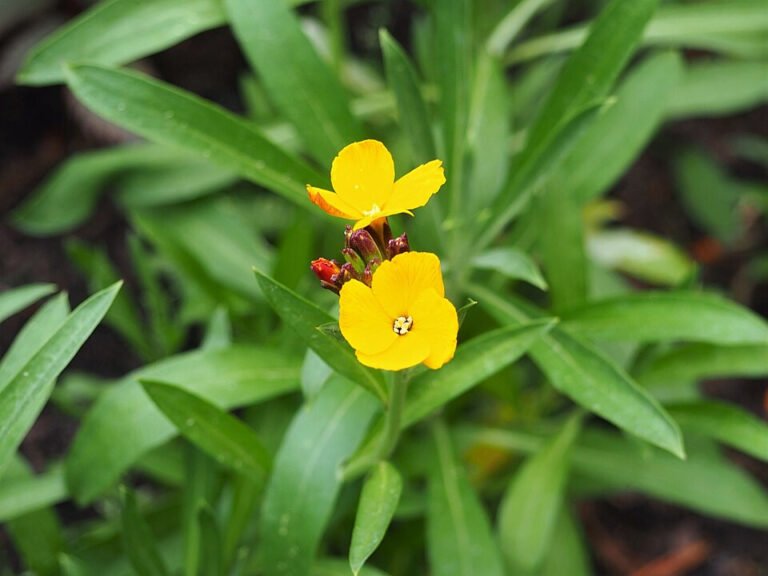
Begin with correctly labelled bedding wallflower and decide where the mature plant will fit. Preparing the growing space before buying makes the first season easier, especially when young plants need prompt attention.
1.
Choose a traditional bedding strain and check its expected height and flowering colours.
2.
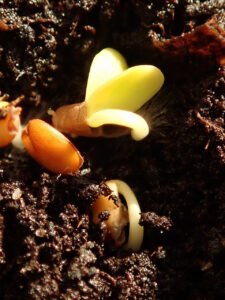
Sow in May or June in a prepared seedbed or suitable modules, keeping seed and seedlings labelled.
3.
Thin or pot on young plants so they develop sturdy roots rather than remaining in a crowded tray.
4.
Pinch a young growing tip if needed to encourage branching, following the strain’s habit.
5.
Prepare the final spring-display area before autumn planting, removing weeds and exhausted summer bedding.
6.
Plant healthy young stock in September or October at its previous soil level.
7.
Water in and keep bare-root plants from drying while waiting to be planted. Open a bare-root bundle gently and plant without leaving roots exposed while the rest of the bed is prepared. If soil is unsuitable on arrival, hold plants temporarily with their roots protected until planting is practical.
8.
Check winter establishment, then enjoy or cut flowers the following spring before refreshing the bed.

Watering
Water young plants after sowing and transplanting until established. Bare-root autumn plants are particularly vulnerable if left exposed to drying wind before planting.
Potted wallflowers need moisture during spring growth and flowering. Check compost beneath bulb foliage in mixed containers rather than judging only the surface.

Feeding
Moderately fertile ground usually produces satisfactory bedding plants. Avoid high-nitrogen feeding that encourages soft leafy growth at the expense of a compact plant.
Container displays may need a modest feed as nutrients decline. Check root health and drainage before treating every pale leaf as a fertiliser shortage.

Pruning
A light pinch of young plants can encourage branching where needed. Do not repeatedly cut away growth late in the establishment period and expect the same spring display.
Remove faded flowers if keeping plants for a little longer, or clear exhausted bedding after flowering. Long-term severe renovation is less reliable than raising fresh plants.

Winter care
Traditional bedding wallflowers are usually left outside through winter after autumn establishment. Firm any plants loosened by frost or wind without burying their crowns.
On persistently wet sites, improve drainage or use pots. Small late-raised plugs may need sheltered growing-on rather than immediate exposure in cold saturated soil.
Erysimum cheiri has narrow leaves and clusters of four-petalled, often strongly scented flowers. Traditional colour strains range from cream and yellow to orange and dark red.
A woody base does not automatically make a bedding wallflower equivalent to a long-flowering shrubby perennial cultivar. Keep the exact nursery or seed name with the planting.
Photo: Salicyna, CC BY-SA 4.0. Resized and optimised; cropped for display. Adapted image under the same licence.
Bare-root bundles are a traditional autumn purchase. Plant promptly; if delayed briefly, keep the roots protected and moist rather than leaving the bundle on a sunny doorstep. Choose compact, healthy young plants with a balanced root system. Very tall, crowded or dried-out bundles may take longer to establish and will not necessarily produce a better display simply because the stems are already long.
Match wallflower height to the tulips or other bulbs planted through it. A very tall strain can hide shorter bulbs even when the colour combination is attractive.
Cut a few fresh stems for a vase, leaving enough flowers for the outdoor display. This is an ornamental harvest, and wallflower material is not a kitchen herb.
Photo: Industrees, CC0. Resized and optimised; cropped for display.

Dried bare roots, buried crowns or saturated soil may be responsible. Inspect roots and conditions before replacing them in the same way.
Crowding, shade or too much nitrogen can produce poor structure. Give seedlings room and choose a sunnier final position.
Wallflowers are brassicas and can be affected by clubroot. Avoid contaminated ground and review crop rotation where ornamental and vegetable brassicas share space.
Flea beetles can damage seedlings. Encourage steady growth and protect vulnerable young plants where necessary.
Bedding plants can become woody and lose vigour. Renew with young stock rather than expecting every short-lived plant to remain productive for years.
Sow a fresh batch in late spring or early summer for the next spring’s display. A small nursery row is useful while the final bed remains occupied by summer plants. Do not let the nursery row become a forgotten corner during summer. Steady water, weed control and timely spacing there determine the quality of the plants available for the final autumn display.
Saved seed may differ from a named colour strain, particularly where several types flower together. Buy labelled seed when a coordinated bedding scheme matters.

Persian Carpet
A traditional mixed bedding choice offering a range of warm colours. Use it where variation is welcome rather than a single-colour block is essential.
Wallflowers shown for comparison; Persian Carpet strain identity is not authenticated.
Photo: No machine-readable author provided. Hans B.~commonswiki assumed (based on copyright claims)., Public domain. Resized and optimised; cropped for display.

Fire King
A named warm-toned bedding selection to compare for spring combinations. Check the supplier’s height and colour description.
Orange wallflowers shown for comparison; Fire King identity is not authenticated.
Photo: পাপৰি বৰা, CC BY-SA 4.0. Resized and optimised; cropped for display. Adapted image under the same licence.

Vulcan
A dark-flowered selection useful beside pale bulbs. A generic dark-red wallflower photograph cannot verify the cultivar.
Red and amber wallflower shown for comparison; Vulcan identity is not authenticated.
Photo: Irrmam, CC BY-SA 4.0. Resized and optimised; cropped for display. Adapted image under the same licence.

Sunset Series
Compact bedding selections with named colours. Follow the particular strain’s timetable and size guidance rather than assuming every wallflower grows equally tall.
Yellow wallflowers shown for comparison; Sunset Series identity is not authenticated.
Photo: Agnieszka Kwiecień, Nova, CC BY-SA 4.0. Resized and optimised; cropped for display. Adapted image under the same licence.
Compare the mature size, growing requirements and season of interest before choosing bedding wallflower. Buy clearly labelled, healthy stock and prepare its position in advance. A plant suited to the available light and soil is easier to establish and maintain.
Spring wallflowers provide flowers while many summer perennials are still developing. Leave some open heads when taking stems for the house.
Combine with other early and later flowers for continuity. Avoid unnecessary insect treatments, and inspect small problems before acting across a whole scented display.
Published by Buy From Farmers Direct. Growing guidance reviewed 11 October 2026. The seasonal timeline uses the shared BFFD Growers Calendar record; adjust timings to your variety and local conditions.
It is a short-lived perennial usually managed as a biennial: sow one year and flower the next.
May or June is a useful window for plants to set out in autumn.
Usually September or October, planting promptly and protecting roots from drying.
No. Long-flowering shrubby perennial wallflowers are covered separately and have different maintenance expectations.
Sometimes, but fresh young stock gives a more dependable tidy bedding display.
Yes, they are brassicas. Avoid known contaminated ground and review the planting history if roots become swollen.
Give bedding wallflower an appropriate position, establish it carefully and adjust care to the weather. Keep a simple note of flowering and any problems so that next year’s planting decisions reflect what actually succeeds in your garden.
Explore more growing guides: Tulip, Viola, Wallflower (Perennial).
Want to get food independence, support your local grower, get better prices and shop more privately?
Local food isn’t just something you find. It’s something you protect. A free account helps keep local supply visible, supported, and resilient.

….it takes 30 seconds for food lovers and 5 minutes for suppliers
We built this for people who care where their food comes from. For people who want to remain food secure. For Farmers to get to the local people, who deserve a better income and to deliver a better price for you. For the environmentally conscious and the privacy-conscious. An account simply helps us make the map and supplier reach more useful to you, without changing how open it is. You’re always in control.


Find local food. Stay connected to it. Create a free account to support local producers and be part of a growing food network.


