Whitecurrants bring translucent berries to the summer garden. Their refreshing flavour suits fresh eating, desserts and preserves. They are pale fruited forms of redcurrant, grown as bushes or trained into compact shapes. Give them a permanent home, protect their fruit when needed and preserve the older framework that carries much of the crop.
Hardy perennial fruit bush
Sun or light shade
Self fertile flowers
Keep productive fruiting spurs
Pick pale berries in summer
| Botanical name | Ribes rubrum, white fruited cultivars |
| Family | Grossulariaceae, the currant family |
| Plant type | Deciduous fruiting shrub |
| Relationship to redcurrants | A pale fruited form with similar cultivation |
| Relationship to blackcurrants | A different crop with different pruning needs |
| Preferred light | Full sun |
| Alternative position | Light shade, with later or less sweet fruit |
| Soil | Moisture retentive and well drained |
| Typical bush size | Around 1 to 1.5m for many varieties; some grow taller |
| Pollination | Self fertile, with insect visits helping fruit set |
| Main planting season | November to March while dormant |
| Bush spacing | About 1.5m between plants |
| Row spacing | Around 1.8m for access |
| Single cordon spacing | Roughly 40 to 45cm, depending on the training system |
| Minimum container width | 45cm |
| Flowering season | Spring |
| Main picking season | July and August, depending on variety |
| Name for a fruit cluster | A strig |
| Fruiting wood | Spurs on older wood and the base of last year's growth |
| Main propagation method | Hardwood cuttings from healthy young shoots |
| Plant name | Crop type | Spacing |
Sow indoors
Plant outdoors
Harvest
Polytunnel | |||||||||||
|---|---|---|---|---|---|---|---|---|---|---|---|---|---|---|
| Jan | Feb | Mar | Apr | May | Jun | Jul | Aug | Sep | Oct | Nov | Dec | |||
| White currant | Soft fruit | Single 150cm, In row 150cm, Row gap 180cm | Plant outdoors | Plant outdoors | Plant outdoors | No activity recorded | No activity recorded | No activity recorded | Harvest | Harvest | No activity recorded | No activity recorded | Plant outdoors | Plant outdoors |
Sow indoors: no months recorded. Plant outdoors: January, February, March, November, December. Harvest: July, August. Polytunnel: no months recorded.
The planting band shows the preferred dormant season, November to March, avoiding frozen or waterlogged soil. Container plants can be planted at other times with extra care, but the main band keeps the simplest establishment window clear. July and August harvest combines varieties and local conditions; one bush may crop for a shorter period. There is no routine seed sowing band because named whitecurrants are normally bought as plants or propagated by cuttings. They are outdoor hardy shrubs and do not need a polytunnel. The calendar uses bush spacing of 1.5m, with 1.8m between rows; supported single cordons need a much narrower layout.
Whitecurrants suit a permanent summer fruit bed. Established plants in good soil need less daily attention than many annual crops, with pruning and picking as useful seasonal jobs.
A trained cordon can fit a smaller garden, while a large pot offers another option. Containers need dependable watering and feeding, so choose a form you can look after.
Photo: GT1976, CC BY-SA 4.0. Resized and optimised; cropped for display. Adapted image under the same licence.
Choose sheltered full sun for good ripening and flavour. Whitecurrants also tolerate light shade, where other fruit struggles, but expect later ripening and sharper berries.
Avoid a frost pocket where cold air collects around spring flowers. The dormant shrub is hardy, yet a late frost can still damage blossom and reduce the crop. A sheltered site makes temporary protection easier.
Use soil that holds some moisture without remaining saturated. Remove perennial weeds before planting and improve poor soil with well rotted organic matter where needed. Do not routinely add lime or fertiliser without considering the existing soil.
For a container, choose at least 45cm width with drainage holes and a suitable peat free loam based compost. A trained plant can make good use of the space. Place it where you can water easily and check ripening berries.
Photo: Calle Eklund/ V-wolf, CC BY-SA 3.0. Resized and optimised; cropped for display. Adapted image under the same licence.
Choose the form before buying: a bush needs a short clear stem and well placed branches, while a cordon needs a strong leader. Nursery training saves some early shaping.
1.
Buy a healthy labelled variety and confirm whether it is supplied as a bush, cordon or standard. A self fertile plant can crop alone, so a second variety is optional.
2.
Plant during the dormant season when the soil is workable. If bare root plants arrive during frost or very wet weather, keep their roots protected and temporarily heel them in rather than leaving them exposed.
3.
Clear a generous planting area and mark enough space for the mature form. About 1.5m between bushes and 1.8m between rows allows useful access for pruning and picking.
4.
Water a potted plant before removing its container. Briefly soak dry bare roots as the supplier advises, and make a hole wide enough to spread them without folding them into a tight bundle.
5.
Set the plant at the depth it previously grew, using the old soil mark as a guide. Keep a bush's short clear stem above ground; whitecurrants are not planted deeply to encourage basal shoots like blackcurrants.
6.
Refill with the removed soil, working it gently around roots, then firm and water in. Add an organic mulch, leaving a clear ring immediately around the stem.
7.
Install support at planting for a cordon, fan or standard and attach stems with soft ties. A standard needs lasting support for its trunk and head, rather than a temporary seedling cane.
8.
Check the nursery's formative pruning instructions for the plant's age and shape. Keep the centre of a bush open and its short stem clear, then monitor watering through its first growing seasons.

Watering
Water new plants in dry spells during their first couple of years. Established bushes in suitable garden soil usually need little routine watering, but prolonged drought while fruit is swelling deserves attention.
Pots need a steady supply of moisture through active growth. Check the compost rather than relying on rain reaching a leafy container. Keep drainage holes open, and avoid alternating severe drying with a sudden prolonged soaking.

Feeding
An annual spring mulch of well rotted compost helps retain moisture and suppress weeds. Bushes in regularly mulched, reasonably fertile soil often need no additional feed; investigate weak growth before adding more fertiliser.
Container plants have limited reserves and benefit from a suitable feed during the growing season, following its label. Refresh the surface compost annually and repot every few years as needed, rather than letting the roots remain congested indefinitely.

Pruning
Prune an established bush in late winter before growth starts. Remove dead, damaged, crossing and badly placed low branches. Shorten new growth on main branches by about a quarter to a half and shorten side shoots to one or two buds, retaining useful replacement branches.
Keep a permanent, open framework with up to eight or ten main branches and renew an occasional ageing, unproductive branch. Cordons also need summer shortening of leafy side shoots to maintain fruiting spurs. Do not routinely cut the entire bush to ground level as though it were a different currant crop.

Winter care
Established whitecurrants are hardy outdoor shrubs and normally remain in place through winter. Check that pots drain freely and that supports and ties are secure. Dormant planting and pruning should wait if conditions are frozen or saturated.
If frost is forecast when flowers open in spring, protect them overnight with fleece supported above the branches. Remove the cover during the day to let insects visit. Flower protection is a temporary response, not a need to enclose the bush all year.
Whitecurrants carry lobed, toothed leaves on woody branches. Small pale green flowers appear in hanging clusters in spring, followed by soft berries that become cream, pale yellow or almost translucent as they ripen.
They are grown much like redcurrants and fruit on similar spur systems. Blackcurrants are a different species and require a different renewal approach. Buy a named fruiting plant rather than using pale berry colour alone to identify an unfamiliar shrub for eating.
Photo: Егор Журавлёв from Smarde, Latvia, CC BY-SA 2.0. Resized and optimised; cropped for display. Adapted image under the same licence.
Start checking fruit in July, allowing for the variety and local weather. Ripeness is judged by the cultivar's pale colour, juiciness and flavour, not by waiting for a red colour change. A sour early berry may simply need longer on the bush.
On varieties that ripen evenly, snip or pick complete strigs and strip the berries off in the kitchen. Older varieties may ripen progressively down each strig, making selective picking more useful. Handle the fruit gently to avoid crushing its thin skin.
Use clean ripe berries fresh with other fruit or follow a suitable recipe for puddings, jelly or jam. Chill short term surplus promptly, or freeze sound berries for later cooking. Remove stalks and discard any berries showing mould or rot.
Photo: Karelj, Public domain. Resized and optimised; cropped for display.
Pale berries can still attract birds. Protect the crop as it ripens with a fruit cage or firmly secured taut netting, checking it frequently. Avoid loose folds that can entangle wildlife and remove temporary protection when it is no longer needed.
A late frost, poor establishment or unsuitable conditions can reduce fruit set. Check whether flowers were damaged before buying another pollinator: whitecurrants are self fertile. Choose a less exposed position and use temporary overnight blossom protection when practical.
Gooseberry sawfly larvae also feed on red and whitecurrants. Inspect the centre and undersides of the bush from spring onwards, and remove damaging groups by hand where practical. Some feeding can be tolerated, but a young plant benefits from early attention.
Currant aphids can distort leaves, sometimes with red or yellow patches. Check underneath before assuming disease. Established bushes often crop normally despite blister aphid damage, so tolerate minor symptoms and encourage natural predators rather than stripping the foliage.
Currant leaf spot can cause numerous dark spots and premature shedding in summer. Clear affected fallen leaves and support the plant with sensible watering and mulching. Severe or recurring symptoms warrant closer diagnosis rather than repeated indiscriminate feeding.
Take hardwood cuttings from vigorous, healthy young shoots after leaf fall and before spring growth. Sections around 20cm long are suitable; mark the top by making its cut sloping and keep the lower end the right way up.
Insert cuttings into a sheltered nursery bed or suitable pot with roughly two thirds below the surface. Keep them from drying out and allow time to root before moving them. Avoid propagating from a sickly old bush, which can pass problems into the new planting.
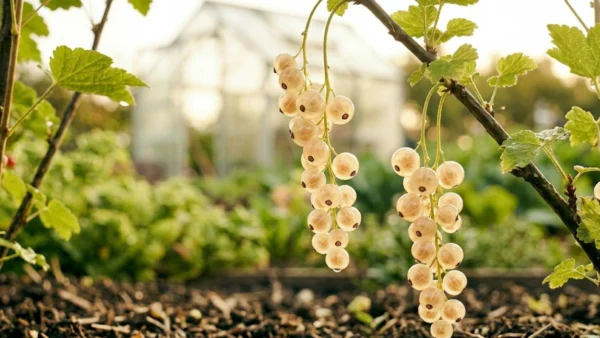
White Versailles
Also sold as Versailles Blanche, this familiar upright variety produces pale yellow white berries on long strigs. It is a useful traditional starting point for a summer fruit garden, with timing varying by district.
BFFD whitecurrant illustration; the pictured plant is not verified as White Versailles.
Image from the BFFD media library.
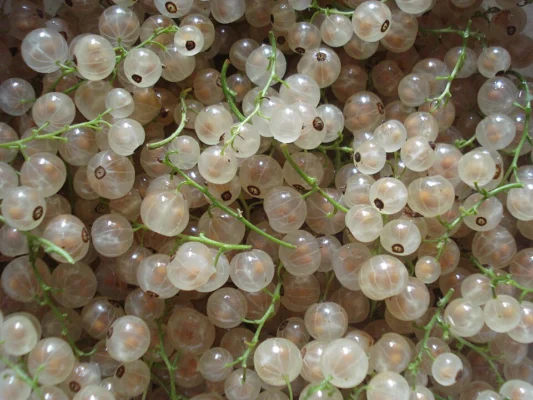
Blanka
A heavy cropping later variety with translucent ivory berries. Its more even ripening makes whole strigs convenient to pick. Allow the fruit to develop its flavour before harvesting simply because it has turned pale.
Harvested whitecurrants illustrating the crop; Blanka identity is not established.
Photo: Silverije, CC BY-SA 4.0. Resized and optimised; cropped for display. Adapted image under the same licence.
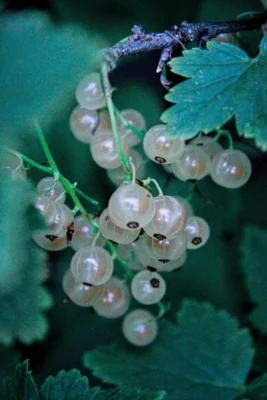
White Grape
A mid season variety with long strigs of pale fruit for fresh use or cooking. It can be a vigorous plant, so allow enough space or buy it in a trained form appropriate to your garden.
Whitecurrant berries on a branch; the source does not identify White Grape.
Photo: OtsoTA, CC BY-SA 4.0. Resized and optimised; cropped for display. Adapted image under the same licence.
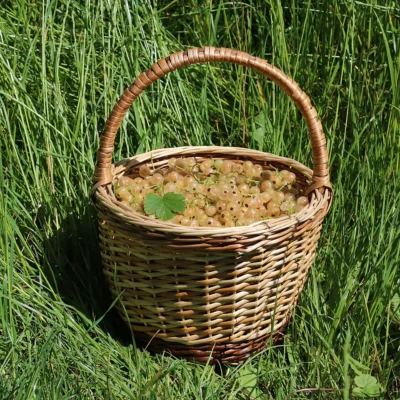
White Pearl
A relatively compact choice with creamy berries that can carry a pink flush. It is described as an early July cropper in favourable conditions, though weather and location will shift the actual picking date.
A basket of whitecurrants illustrating harvest; these are not verified White Pearl berries.
Photo: George Chernilevsky, Public domain. Resized and optimised; cropped for display.
Compare cropping season and mature size, then decide between a free standing bush and a supported trained plant. Look for a healthy named variety and remember that White Versailles and Versailles Blanche are names for the same familiar selection.
Spring flowers provide nectar and pollen for visiting insects. Even with a self fertile crop, keep access open while flowers are out and uncover frost protection during the day. A nearby variety is not a substitute for healthy flowers and suitable weather.
A little aphid or sawfly activity can be part of a healthy garden. Inspect before intervening and retain useful predator habitat elsewhere, while protecting young plants from heavy defoliation and keeping crop netting safe and taut.
Published by Buy From Farmers Direct. Growing guidance reviewed 6 October 2026. The seasonal timeline uses the shared BFFD Growers Calendar record; adjust timings to your variety and local conditions.
No. Named whitecurrants are pale fruited forms of Ribes rubrum and remain pale when ripe. Judge them by their normal colour, juiciness and flavour rather than waiting for them to turn red.
No. Their flowers are self fertile, so one plant can crop. Insect visits, healthy blossom and suitable growing conditions still help a good harvest.
They tolerate light shade and can be useful against a less sunny wall. Full sun generally gives better ripening and sweeter berries; a heavily shaded site is a poorer choice.
No. Keep a permanent framework and productive fruiting spurs, renewing older branches selectively. Routine removal of large amounts of framework wood can reduce the whitecurrant crop.
Yes. Choose a container at least 45cm wide with good drainage, suitable loam based compost and regular watering. A cordon can use the space well, but needs a support and seasonal pruning.
Most ripen during July or August, depending on the variety and location. Some varieties ripen their strigs evenly; others are better picked selectively as individual berries become ready.
Plan the shape and space for your whitecurrant, preserve its productive framework and look after new roots. Taste the pale berries as summer progresses.
Explore more growing guides: Blackberry, Blackcurrant, Fig.