Agastache brings upright flower spikes, aromatic leaves and a steady hum of bees to sunny borders. The secret to growing it in the UK is choosing the right plant for your winter conditions. A hardy selection such as ‘Blue Fortune’ is a different proposition from the more tender orange flowered species. Start with a named plant, give its roots somewhere that drains freely, and let its summer colour earn its place.
Sunny borders
Summer flowers
Aromatic leaves
Bee friendly
Check hardiness
| Botanical name | Agastache species and hybrids |
| Family | Lamiaceae |
| Plant type | Herbaceous perennial |
| Common names | Giant hyssop; anise hyssop |
| Main use | Ornamental borders and pollinator planting |
| Height | Usually 50cm to 1.5m, depending on selection |
| Spread | Usually 30cm to 60cm |
| Light | Full sun preferred |
| Soil | Freely draining soil |
| Soil reaction | Most tolerate a range of pH |
| Flowering | Usually July to September |
| Flower colour | Blue, purple, pink, orange or white |
| Foliage | Aromatic; usually deciduous |
| Planting | April to June after hardening off |
| Seed sowing | March to April under cover |
| Spacing | About 60cm; check mature spread |
| Hardiness | Varies markedly by species and cultivar |
| Container growing | Suitable with careful watering and drainage |
| Propagation | Seed, division or cuttings, depending on selection |
| Main risk | Winter wet and unsuitable hardiness |
| Plant name | Crop type | Spacing |
Sow indoors
Plant outdoors
Harvest
Polytunnel | |||||||||||
|---|---|---|---|---|---|---|---|---|---|---|---|---|---|---|
| Jan | Feb | Mar | Apr | May | Jun | Jul | Aug | Sep | Oct | Nov | Dec | |||
| Agastache | Herbs | Single 0.60m, In row 0.60m, Row gap 0.60m | Polytunnel | Polytunnel | Sow indoors, Polytunnel | Sow indoors, Plant outdoors, Polytunnel | Plant outdoors | Plant outdoors | Harvest | Harvest | Harvest | Polytunnel | Polytunnel | Polytunnel |
Sow indoors: March, April. Plant outdoors: April, May, June. Harvest: July, August, September. Polytunnel: January, February, March, April, October, November, December.
These dates suit a general UK ornamental planting. Sow seed under cover in March or April and plant established young plants from April to June when local conditions allow. July to September is the main flowering and cutting window, shown as Harvest in the shared calendar. Under cover means propagation or winter shelter, not a requirement to grow mature plants in a tunnel. An unheated polytunnel is not frost free; tender selections need protection appropriate to their hardiness.
Choose agastache where you want summer flowers at roughly waist height without a heavy, solid mass of foliage. Its vertical spikes work between softer flowering plants and light grasses. Leave a route to reach the plant for deadheading rather than burying it behind a dense front row.
It is less suitable for a permanently damp bed or a shaded corner that stays cold in spring. Before buying, look beyond flower colour: the label should name the species or cultivar. In a colder garden, that information is more useful than a general promise that agastache is perennial.
Photo: David J. Stang, CC BY-SA 4.0. Resized and optimised; cropped for display. Adapted image under the same licence.
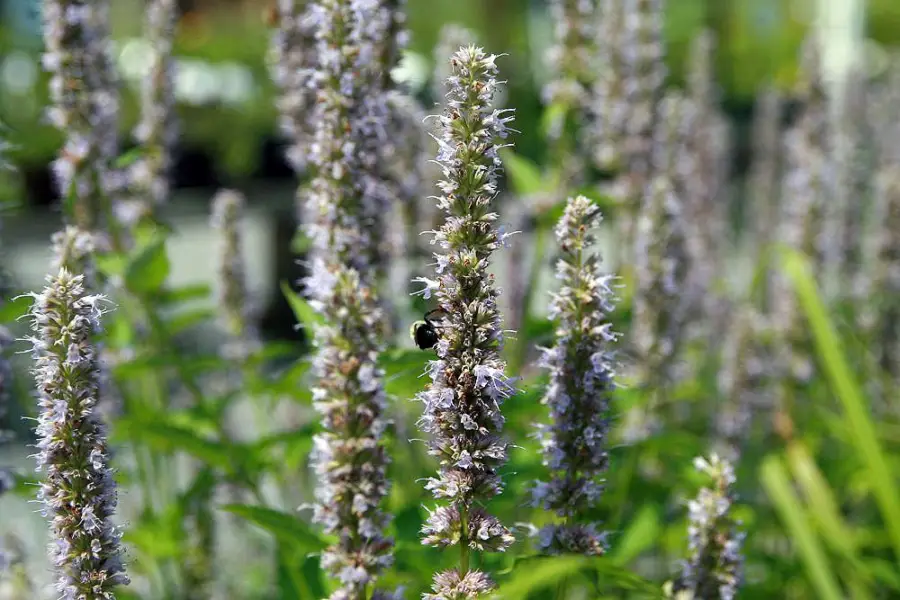
A sunny border with open air around the stems is the simplest setting. Position taller selections where neighbouring plants can provide a little shelter without taking their light. Check the whole bed after heavy rain, not just the surface on planting day.
On heavy ground, choose a raised bed or a naturally better drained position. A handful of grit beneath one rootball does not repair a wider drainage problem. Avoid creating a small planting pocket that collects water from the surrounding clay.
For containers, use a substantial pot with unobstructed drainage holes and compost intended for outdoor plants. Stand it where surplus water can escape. Compact selections are easier to manage in pots than tall plants that become top heavy in summer wind.
In mixed planting, repeat a small group rather than scattering isolated plants through the garden. Keep access to neighbouring crops clear. Agastache can contribute flowers to a productive garden without replacing the vegetables and herbs you actually intend to harvest.
Photo: David J. Stang, CC BY-SA 4.0. Resized and optimised; cropped for display. Adapted image under the same licence.
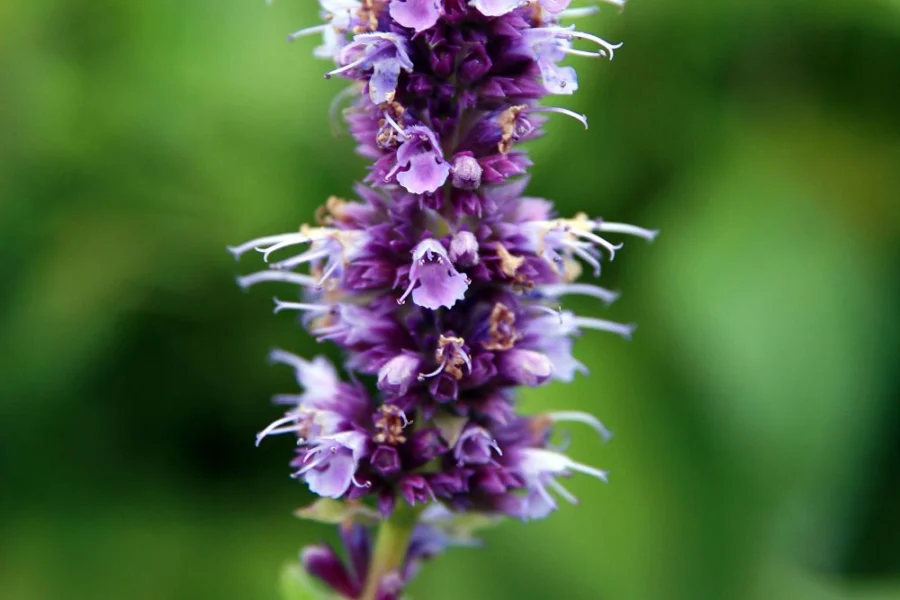
Spring planting gives agastache time to establish before its first wet winter. Buy healthy plants with firm crowns and roots that hold the compost together without forming a solid, congested mat.
1.
Read the label and record the full botanical name, expected spread and hardiness.
2.
Choose a sunny position where winter rain drains away rather than collecting.
3.
Remove perennial weeds across the planting area before making the hole.
4.
Water the nursery pot and let it drain so the rootball is evenly moist.
5.
Dig a hole wider than the rootball and about the same depth.
6.
Slide the plant from its pot and gently loosen any circling outer roots.
7.
Set the crown at its previous soil level, backfill and firm lightly by hand.
8.
Water thoroughly, label the plant and check moisture regularly while new roots establish.

Watering
Water newly planted agastache into the surrounding soil, not just onto the crown. During dry weather, check below the surface before watering again. A small nursery rootball can dry out while the rest of the bed still looks damp.
Established plants generally cope better with short dry spells than constant wetness. Containers need closer attention because they have a limited reserve. Do not leave a summer pot standing in a water filled saucer, particularly as growth slows in autumn.

Feeding
In a reasonably fertile garden bed, begin with modest soil improvement rather than repeated strong feeds. Watch the plant: vigorous foliage with weak flowering is a reason to review light and feeding, not automatically add more fertiliser.
Potted plants depend on the nutrients in their compost. Follow the compost and fertiliser instructions for an outdoor flowering perennial, avoiding extra doses on dry roots. Stop trying to force fresh growth as winter approaches.

Pruning
Remove fading flower spikes through summer if you want a tidier display and further flowering. Cut back to a healthy pair of leaves rather than leaving a long bare stalk. Leave some later spikes on seed producing species if seed collection is the aim.
Delay the main clearance until late winter or spring, then remove dead stems before strong new shoots develop. Check the base carefully so that emerging growth is not cut away. A dead top in winter is normal for these deciduous perennials.

Winter care
Winter survival depends on the exact selection as well as temperature. ‘Blue Fortune’ has an RHS H6 rating, while the RHS rates A. rugosa H4 and A. rupestris H3. These ratings do not make a waterlogged site suitable.
Move vulnerable container plants to a bright, sheltered space before severe weather. Keep compost only lightly moist during dormancy and ventilate covered growing spaces. A spare cutting of a favourite short lived plant can be more dependable than repeatedly replacing a large specimen.
Look for upright stems, opposite leaves and clusters of small tubular flowers arranged into spikes. Broad leaved species often release an aniseed or mint like scent when a leaf is gently rubbed. Agastache belongs to the mint family, but anise hyssop is not the same plant as culinary anise or true hyssop.
Species and hybrids overlap in appearance, so retain the original label. A. foeniculum has noticeably pale leaf undersides; A. rupestris is finer textured with narrow leaves and pinkish orange flowers. A photograph alone is not a reliable way to confirm a named cultivar or suitability for eating.
Photo: Karelj, Public domain, released worldwide by author. Resized and optimised; cropped for display.
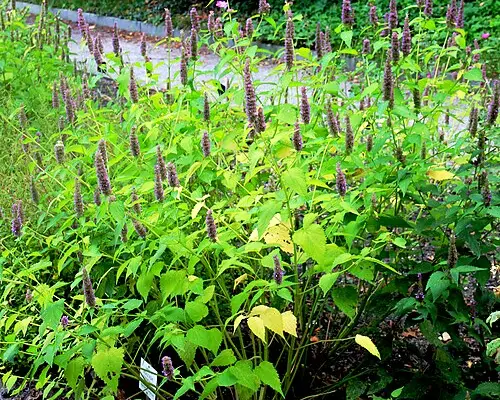
In a warm southern or sheltered urban garden, you may have a wider choice of selections. In a colder inland garden, start with a clearly identified hardy cultivar and plant in spring. Local exposure and drainage matter more than a county name alone.
Wet western gardens need particular attention to winter soil conditions. A plant that tolerates low temperatures in dry ground can still fail with saturated roots. Containers offer control over position, but their roots are also more exposed to cold than those in the ground.
The calendar is a planning guide, not a fixed deadline. Delay planting small, soft plants during a cold spring. If plants have been grown under cover, introduce them gradually to outdoor conditions before leaving them outside permanently.
Photo: David J. Stang, CC BY-SA 4.0. Resized and optimised; cropped for display. Adapted image under the same licence.
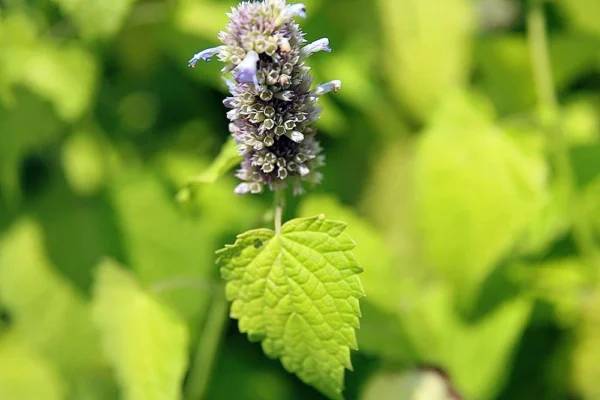
Check for a soft or rotted crown and review drainage alongside the cultivar’s hardiness. Replace into a better position only after correcting the cause. Do not assume every agastache has the same cold tolerance.
Powdery mildew can affect agastache. Improve spacing and keep the roots from becoming severely stressed by drought. Remove badly affected material and avoid crowding fresh growth with neighbouring plants.
Shade, competition or excessive feeding can encourage unbalanced growth. Review how much direct sun reaches the plant once surrounding foliage has developed. Relocate at a suitable time if the site is consistently too dark.
Inspect the crown and rootball before adding more water. Persistent saturation can damage roots, while a newly planted rootball can also remain dry inside. Treat the actual moisture problem rather than relying on surface appearance.
Some hybrids, including ‘Blue Fortune’, are sterile. Others produce seedlings that differ from the parent. Use division or suitable cuttings when keeping the named cultivar is the priority.
Species can be raised from seed. Sow thinly into clean seed compost and follow the packet’s temperature and pretreatment instructions. A. foeniculum seed benefits from light during germination, so avoid burying it deeply. Pot seedlings individually before their roots become tangled.
For named plants, divide suitable established clumps in spring or take cuttings appropriate to the selection. ‘Blue Fortune’ can be increased by division or late summer semi ripe cuttings. Keep newly rooted material protected while it establishes and label each batch immediately.
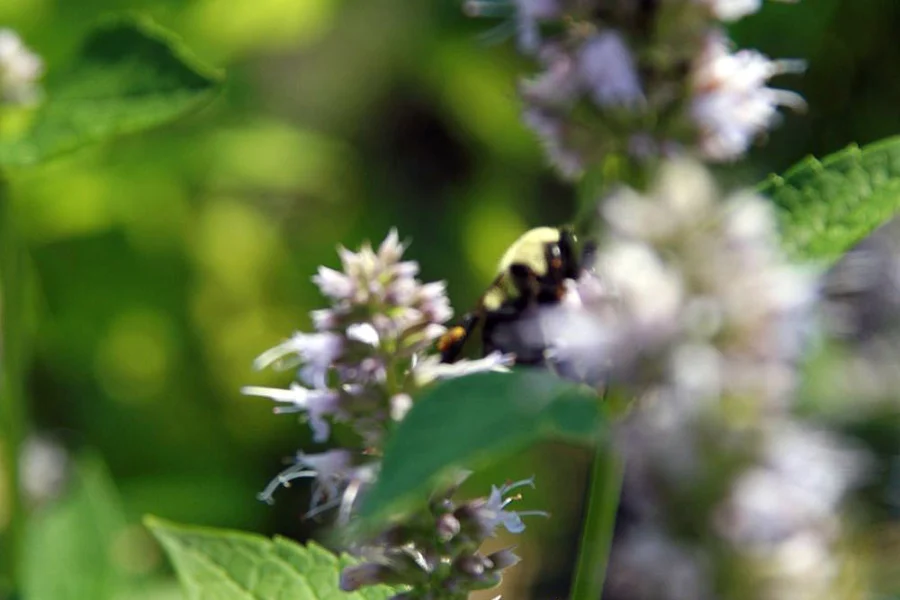
Agastache ‘Blue Fortune’
A useful blue flowered hybrid for sunny borders, usually around 50cm to 1m high. Its dense spikes and sterile flowers make it a good choice when you want a named plant without seedling variation. RHS hardiness H6.
Photo: David J. Stang, CC BY-SA 4.0. Resized and optimised; cropped for display. Adapted image under the same licence.
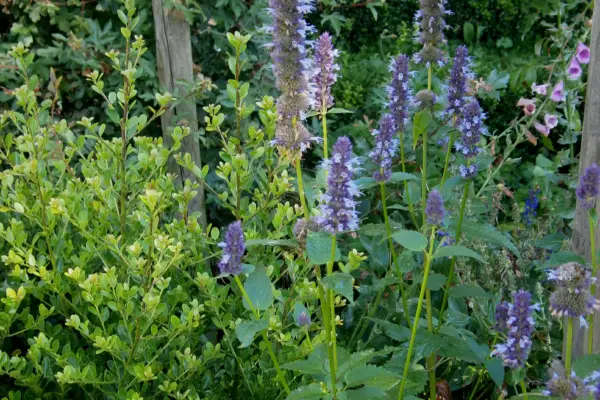
Agastache foeniculum
Anise hyssop has aromatic broad leaves with pale undersides and violet blue flower spikes. Species seed offers a way to raise several plants economically. UK winter performance needs careful attention to provenance, shelter and very good drainage.
Photo: Meneerke bloem, CC BY-SA 3.0. Resized and optimised; cropped for display. Adapted image under the same licence.
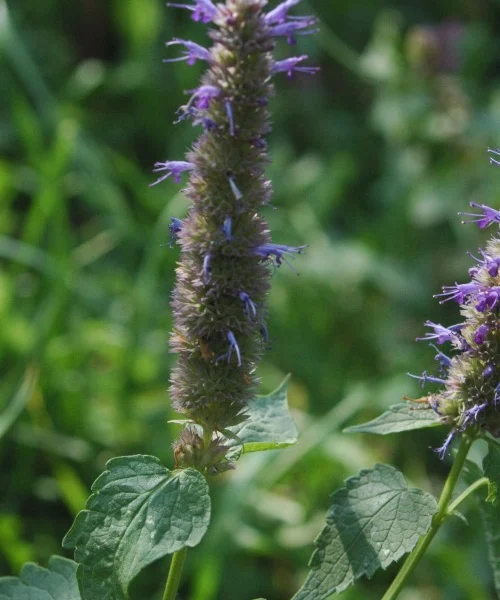
Agastache rugosa
Korean mint is an upright species with purple summer flowers and strongly scented foliage. It can grow taller than compact hybrids, so allow room rather than treating it as a small edging plant. The RHS rates it H4.
Photo: Stanislav Doronenko, CC BY 2.5. Resized and optimised; cropped for display.
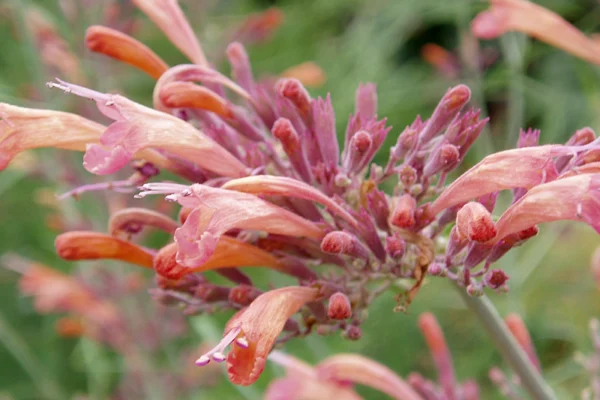
Agastache rupestris
Narrow silvery green leaves and pinkish orange tubular flowers give this species a lighter appearance. It suits a warm, sunny position with sharp drainage. Its RHS H3 rating makes winter protection a serious consideration outside mild sites.
Photo: Charlie McDonald, US Forest Service, Public domain, US federal government work. Resized and optimised; cropped for display.
Explore the BFFD map for local growers and relevant suppliers, then ask about the exact agastache species or cultivar before travelling. Availability varies, and a listing does not confirm current plant stock.
Agastache can provide accessible summer flowers for bees and other visiting insects. Flower choice matters: different species and hybrids do not necessarily attract the same visitors. A few well grown plants with a long flowering season are a useful addition to a varied garden.
Combine it with plants flowering earlier and later in the year so the garden offers more than a brief summer peak. Avoid spraying open flowers. When tidying, leave some safe, undisturbed areas nearby rather than clearing every stem and corner at once.
Published by Buy From Farmers Direct. Sources checked 4 October 2026. Growing references: RHS: Agastache genus guide; RHS: Agastache ‘Blue Fortune’; RHS: Agastache foeniculum; RHS: Agastache rugosa; RHS: Agastache rupestris; University of Wisconsin: Anise hyssop; NC State Extension: Agastache foeniculum; RHS: Growing perennial plants; RHS: Softwood cuttings. The seasonal timeline uses the shared BFFD Growers Calendar record; adjust timings to your variety and local conditions.
Yes, agastache plants are generally perennial, but survival varies between species and cultivars. Choose a named plant with suitable hardiness and provide freely draining soil. Some tender selections are more practical as seasonal plants.
Full sun is the best starting point for a UK garden. Some species tolerate partial shade, but deep shade usually gives poorer flowering. Check how much sunlight reaches the plant after neighbouring growth fills out.
Remove spent flower spikes during summer, then clear dead main stems in late winter or spring as new growth begins. Look at the base before cutting so you preserve emerging shoots.
Yes. Choose a pot with good drainage, allow space for the selected cultivar and monitor watering. Move vulnerable selections into suitable winter shelter; an unheated greenhouse or tunnel still experiences frost.
Winter wet, unsuitable cold tolerance or the natural short life of some selections are possible causes. Check the crown and planting position before buying a replacement, and use the full cultivar name to review hardiness.
No. ‘Blue Fortune’ is a sterile hybrid. Propagate it by division or suitable cuttings if you want to keep the same named plant.
Use the Growers Calendar to plan sowing and flowering alongside the rest of your garden, then return to this guide when choosing a plant or checking seasonal care. For agastache, the most useful first decision is the exact variety and the place it will spend winter.
Explore more growing guides: Allium (Ornamental), Alstroemeria, Alyssum.
Want to get food independence, support your local grower, get better prices and shop more privately?
Local food isn’t just something you find. It’s something you protect. A free account helps keep local supply visible, supported, and resilient.

….it takes 30 seconds for food lovers and 5 minutes for suppliers
We built this for people who care where their food comes from. For people who want to remain food secure. For Farmers to get to the local people, who deserve a better income and to deliver a better price for you. For the environmentally conscious and the privacy-conscious. An account simply helps us make the map and supplier reach more useful to you, without changing how open it is. You’re always in control.


Find local food. Stay connected to it. Create a free account to support local producers and be part of a growing food network.


