Blueberries reward careful soil preparation with spring blossom, summer fruit and vivid autumn leaves. The deciding factor is acidity. Give them the right root environment first, then plan for steady moisture and another compatible variety nearby. This guide covers garden highbush blueberries and related hardy hybrids, rather than wild bilberries.
Hardy fruit shrub
Acid soil essential
Suitable for pots
Summer harvest
Pollinator flowers
| Botanical name | Vaccinium corymbosum and garden hybrids |
| Family | Ericaceae |
| Plant type | Deciduous fruit shrub |
| Typical height | About 0.5 to 2m, depending on variety |
| Typical spread | About 0.5 to 1.5m, depending on variety |
| Position | Sun or light partial shade |
| Soil | Moist, well drained and rich in organic matter |
| Soil pH | Acid, ideally 4.5 to 5.5 |
| Main planting season | Mid autumn to early spring |
| Planting depth | Just cover the roots at the previous soil level |
| Spacing | Usually 1 to 2m, according to mature size |
| Young container size | At least 30cm diameter |
| Mature container size | About 45 to 50cm diameter |
| Container compost | Peat free ericaceous compost |
| Flowering | Spring |
| Harvest | Summer into early autumn, depending on variety |
| Pollination | Another variety usually improves cropping |
| Pruning | Dormant season, often late February or March |
| Propagation | Softwood or semi ripe cuttings |
| Key challenge | Maintaining moisture and acidity |
| Plant name | Crop type | Spacing |
Sow indoors
Plant outdoors
Harvest
Polytunnel | |||||||||||
|---|---|---|---|---|---|---|---|---|---|---|---|---|---|---|
| Jan | Feb | Mar | Apr | May | Jun | Jul | Aug | Sep | Oct | Nov | Dec | |||
| Blueberry | Soft fruit | Single 1.50m, In row 1.50m, Row gap 2.00m | Plant outdoors | Plant outdoors | Plant outdoors | No activity recorded | No activity recorded | No activity recorded | Harvest | Harvest | Harvest | Plant outdoors | Plant outdoors | Plant outdoors |
Sow indoors: no months recorded. Plant outdoors: January, February, March, October, November, December. Harvest: July, August, September. Polytunnel: no months recorded.
The planting window describes dormant bushes in workable soil. Container plants can be planted at other times with careful watering, avoiding frozen ground and hot, dry spells. July to September is an indicative outdoor harvest window across varieties, not three months of fruit from every bush. Blueberries normally live outdoors all year.
A blueberry is a good choice for a patio because a container lets you control compost acidity independently of the garden soil. Choose the eventual pot position before filling it. Access for summer watering matters.
For ground planting, check the soil before buying several bushes. Chalky or alkaline ground is a poor starting point. A contained ericaceous bed or separate pots are more dependable than repeatedly treating one small planting hole while roots spread into unsuitable soil.
Photo: Meggar, CC BY-SA 3.0. Resized and optimised; cropped for display. Adapted image under the same licence.
Choose a bright, sheltered position with room to walk around the crop. Full sun generally gives the best fruiting, although light partial shade is useful where afternoon heat makes containers dry rapidly.
Avoid competition from tree roots. Blueberries have a shallow root system, so competition from lawn and established shrubs can undermine otherwise regular watering. Leave an accessible mulched circle around ground grown plants.
Use a pot with unobstructed drainage holes and peat free ericaceous compost. Ordinary multipurpose compost is not a reliable substitute. Avoid adding lime, mushroom compost or manure that could raise the pH.
Group two different varieties near one another when their flowers open at the same time. Their berries need not ripen together. Matching flowering dates supports cross pollination, while different ripening dates can spread your picking season.
Photo: Sten, CC BY-SA 3.0. Resized and optimised; cropped for display. Adapted image under the same licence.
Start with a healthy, labelled bush and confirm its mature dimensions. Prepare suitable soil or compost before removing the plant from its nursery pot.
1.
Test garden soil pH, or choose container growing if acidity is unsuitable.
2.
Select a sunny, sheltered site and allow about 1 to 2m between ground grown bushes according to variety.
3.
Water the nursery pot thoroughly and allow surplus water to drain.
4.
Prepare a broad planting hole, or a container at least 30cm wide with clear drainage holes.
5.
Ease out the rootball and gently loosen congested outer roots without tearing the centre apart.
6.
Set the bush so the upper roots are just covered, keeping the previous compost level close to the finished surface.
7.
Backfill, settle gently and water slowly so moisture reaches the whole rootball.
8.
Add a suitable bark or leafmould mulch, leaving space around the stems, and keep the variety label.

Watering
Check moisture beneath the mulch rather than judging only the surface. Water before the rootball dries hard, particularly while berries swell. Water slowly and check drainage.
Collect rainwater for containers where possible. Repeated hard tap water can gradually raise compost pH. During a dry spell, use tap water rather than allowing a bush to wilt, then return to rainwater when available.

Feeding
Avoid treating slow blueberry growth as a reason for repeated strong feeds. Check acidity, drainage and moisture first. Roots in unsuitable conditions cannot make good use of added fertiliser.
For containers, use a feed intended for ericaceous plants according to its label. Replace a little exhausted surface compost without disturbing shallow roots. Ground grown bushes need modest feeding only where growth and soil conditions indicate a need.

Pruning
Young plants need little pruning beyond removing damaged, dead or badly placed shoots. Once established, prune while dormant. Late February or early March makes the fat flower buds easier to distinguish from the slimmer growth buds.
Remove weak, crossing and ground touching growth first. On older bushes, take out up to a quarter of the oldest stems at the base or above a strong low replacement. Keep a mixture of stem ages instead of clipping every shoot tip.

Winter care
Hardy blueberries normally stay outdoors. Container roots are more exposed than roots in the ground, so protect the pot during severe cold and place it where excess winter rain can drain freely.
Spring flowers are more vulnerable than dormant wood. If frost threatens blossom, use temporary fleece overnight and remove it during the day for visiting insects. A warm indoor room is unsuitable as a winter home.
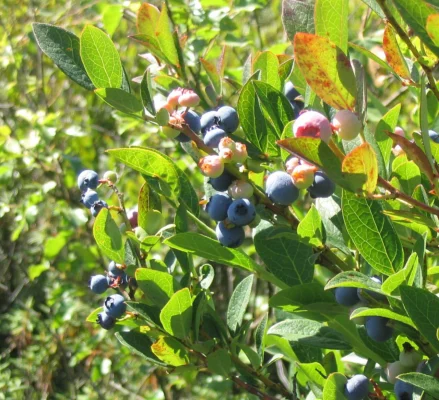
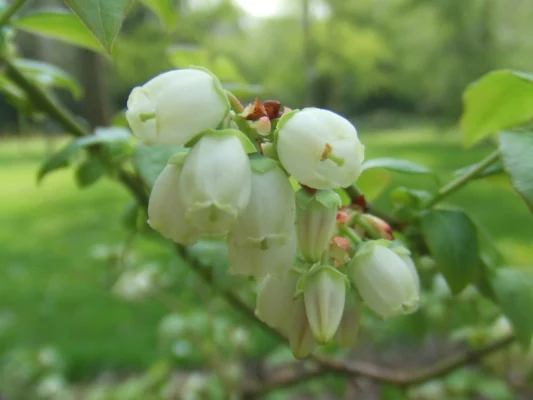
Garden blueberries carry oval leaves on branching woody stems. Their small spring flowers are white or pinkish bells, followed by berries with a conspicuous crown at the opposite end from the stalk. Ripening fruit changes colour before developing its full sweetness.
Many deciduous varieties turn orange or red in autumn. Retain nursery labels to identify varieties. This page does not provide a guide to identifying wild berries for eating.
Photo: Rob Hille, CC BY-SA 3.0. Resized and optimised; cropped for display. Adapted image under the same licence.
The UK climate suits many northern highbush varieties and hardy hybrids, provided their roots have suitable conditions. In a cold garden, favour a sheltered site and consider a variety that flowers relatively late, such as Duke, to reduce blossom exposure.
In wetter western gardens, drainage deserves as much attention as watering. Lift container bases clear of blocked paving and check that saucers do not trap winter rainfall. In drier eastern gardens, reserve enough rainwater storage for summer pots.
Wait for berries to become evenly blue and detach easily. Colour alone can precede good flavour. Pick small amounts regularly, leave resistant berries in place and refrigerate ripe fruit promptly. A mixed cluster will need several visits.
Photo: Hans B. (Commons contributor HansB.~commonswiki), Public domain. Resized and optimised; cropped for display.
This can indicate iron chlorosis where pH is too high. Test the root environment and check watering history before feeding. Correct the underlying conditions; a temporary iron treatment does not make alkaline soil suitable.
Frost, poor insect activity or limited cross pollination may be responsible. Compare flowering dates, provide another compatible variety and keep frost covers off during mild daylight hours.
Check for dry compost, particularly in a pot sheltered from rain. Rewet gradually and restore a consistent routine. Mulch helps reduce fluctuations, but cannot replace watering.
Inspect drainage and the rootball. Vine weevil larvae can damage roots in pots, while prolonged saturation can also cause collapse. Identify the cause before choosing a targeted treatment.
Birds readily take blueberries. Where protection is needed, use a secure, taut fruit cage or wildlife safe netting, check it regularly and remove it when picking finishes.
Softwood cuttings in late spring or semi ripe cuttings in summer can preserve a variety. Use healthy shoots, clean tools and a suitable moist propagation medium. Keep cuttings out of strong direct sun while they establish roots.
Seed raised plants vary and take time to reach cropping size. A labelled nursery plant gives a predictable variety. Do not collect propagation material from diseased bushes.
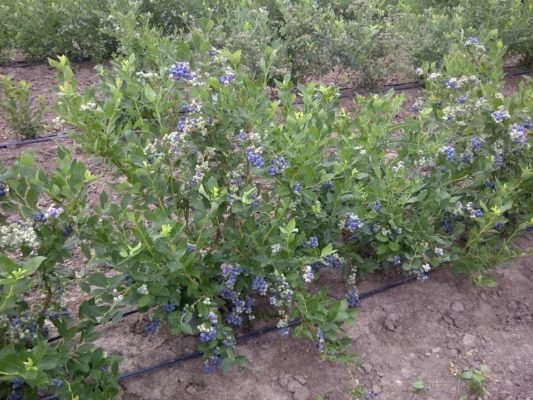
Duke
An upright northern highbush variety that flowers relatively late yet ripens early. Useful where avoiding early blossom frost matters, although flowering still needs protection when frost is forecast. Allow room for a substantial bush.
Duke blueberry, identified in the original photograph record.
Photo: Oleg Bosyy, CC BY-SA 3.0. Resized and optimised; cropped for display. Adapted image under the same licence.
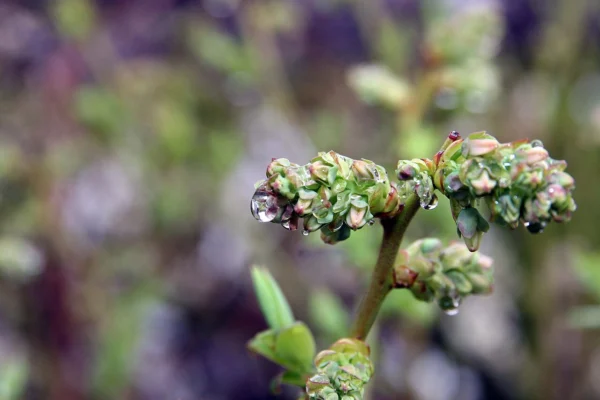
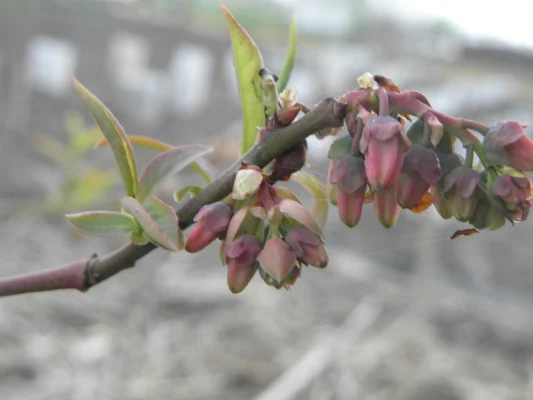
Bluecrop
A vigorous, spreading variety, generally around 1.5m tall, with large, firm berries. Compare its flowering season with a potential pollination partner.
Bluecrop blueberry flower buds, identified in the original photograph record.
Photo: Photo by David J. Stang, CC BY-SA 4.0. Resized and optimised; cropped for display. Adapted image under the same licence.
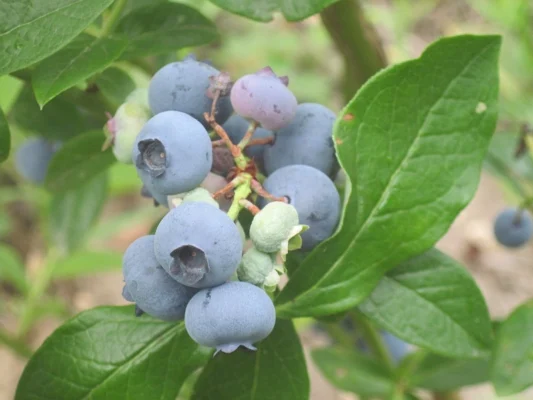
Patriot
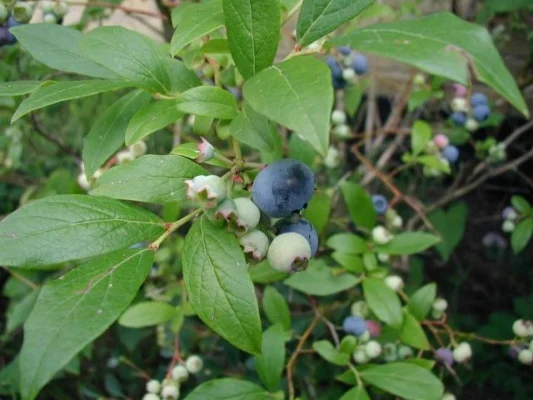
A vigorous deciduous variety with large fruit and red autumn foliage. Give it adequate rooting space rather than assuming a young nursery pot indicates its eventual size. Harvest timing varies with local conditions.
Ripe Patriot blueberries, identified in the original photograph record.
Photo: Rob Duval, CC BY-SA 3.0. Resized and optimised; cropped for display. Adapted image under the same licence.
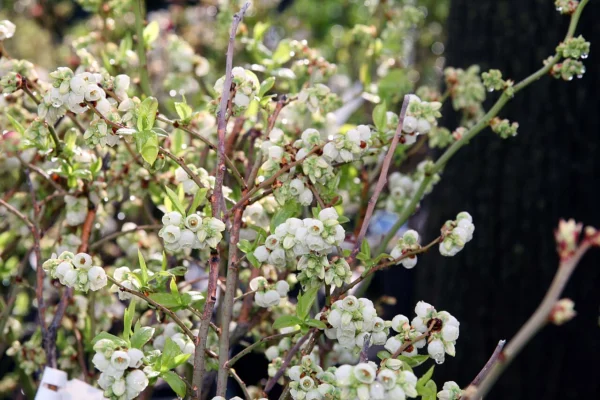
Northland
A smaller garden blueberry hybrid with white spring flowers and orange autumn leaves. RHS lists an eventual height of about 0.5 to 1m, making it worth considering where container space is limited.
Northland blueberry flowers, identified in the original photograph record.
Photo: Photo by David J. Stang, CC BY-SA 4.0. Resized and optimised; cropped for display. Adapted image under the same licence.
Explore the BFFD map to find nearby growers and nurseries, then ask about current availability, variety names and overlapping flowering times before travelling.
The bell shaped flowers attract pollinating insects, including bumblebees. A sequence of other flowering plants nearby can keep the growing area useful to insects beyond the short blueberry blossom season.
Protect fruit only when necessary and keep barriers away from the branches. Check for trapped wildlife daily. Picking ripe berries promptly also reduces the time a heavily laden bush needs protection.
Published by Buy From Farmers Direct. Sources checked 4 October 2026. Growing references: RHS: How to grow blueberries; University of Minnesota Extension: Growing blueberries in the home garden; University of Maryland Extension: Growing blueberries in a home garden; RHS: Duke blueberry; RHS: Bluecrop blueberry; RHS: Patriot blueberry; RHS: Northland blueberry. The seasonal timeline uses the shared BFFD Growers Calendar record; adjust timings to your variety and local conditions.
Yes. Use peat free ericaceous compost and a freely draining container. Begin with at least 30cm diameter and provide roughly 45 to 50cm for a mature bush, choosing a compact variety where space is restricted.
Mid autumn to early spring is a useful dormant planting window. Avoid frozen or waterlogged soil. Container plants can go in at other times if you can keep their roots evenly moist.
Prune established bushes during dormancy, often in late February or March. Remove weak and damaged growth, then renew some of the oldest stems. Young bushes usually need much less cutting.
Many varieties can crop alone, but another different variety with overlapping flowers commonly improves yield and berry size. Two plants of the same variety do not provide the same cross pollination benefit.
They need moist, well drained acid soil, ideally pH 4.5 to 5.5. Test first. Where the garden is alkaline, containers of ericaceous compost offer a more manageable root environment.
Berries can colour before they are fully sweet. Leave them until evenly ripe and easy to detach. Taste a few before picking a whole cluster, since neighbouring berries mature at different speeds.
Use the BFFD growers calendar to plan planting and picking, then compare your own notes with the weather and varieties in your garden. Record which bushes flower together.
Explore more growing guides: Blackcurrant, Boysenberry, Blackberry.
Want to get food independence, support your local grower, get better prices and shop more privately?
Local food isn’t just something you find. It’s something you protect. A free account helps keep local supply visible, supported, and resilient.

….it takes 30 seconds for food lovers and 5 minutes for suppliers
We built this for people who care where their food comes from. For people who want to remain food secure. For Farmers to get to the local people, who deserve a better income and to deliver a better price for you. For the environmentally conscious and the privacy-conscious. An account simply helps us make the map and supplier reach more useful to you, without changing how open it is. You’re always in control.


Find local food. Stay connected to it. Create a free account to support local producers and be part of a growing food network.


