Borage brings loose clusters of blue stars to a herb bed, vegetable patch or sunny border. This guide covers annual Borago officinalis, a self seeder that flowers in its first season. Give each plant room, sow where it will grow and leave plenty of flowers for visiting bees.
Annual herb
Summer flowers
Sun or light shade
Bee friendly
Read food use guidance
| Botanical name | Borago officinalis |
| Family | Boraginaceae |
| Common name | Borage or starflower |
| Plant type | Annual |
| Typical height | 50 to 70cm |
| Planting distance | About 50cm |
| Light | Sun or light shade |
| Soil | Most soils with good drainage |
| Moisture | Moist but never waterlogged |
| Outdoor sowing | Usually March to May |
| Most reliable sowing | April and May |
| Seed depth | About 5mm |
| Germination | Usually 10 to 20 days |
| Young plants | Plant in spring |
| Flowering | Summer into autumn |
| Flower colour | Usually blue |
| Container size | At least 30cm wide |
| Propagation | Seed |
| Wildlife value | Flowers attract bees |
| Food use | Contains pyrrolizidine alkaloids; see FAQ |
| Plant name | Crop type | Spacing |
Sow indoors
Plant outdoors
Harvest
Polytunnel | |||||||||||
|---|---|---|---|---|---|---|---|---|---|---|---|---|---|---|
| Jan | Feb | Mar | Apr | May | Jun | Jul | Aug | Sep | Oct | Nov | Dec | |||
| Borage | Herbs | Single 0.50m, In row 0.50m, Row gap 0.50m | No activity recorded | No activity recorded | Sow indoors | Sow indoors, Plant outdoors, Polytunnel | Sow indoors, Plant outdoors | Harvest | Harvest | Harvest | Harvest | Harvest | No activity recorded | No activity recorded |
Sow indoors: March, April, May. Plant outdoors: April, May. Harvest: June, July, August, September, October. Polytunnel: April.
Dates describe annual borage outdoors. March sowing suits warming, workable soil; April and May are a safer starting point in cooler gardens. The Harvest band means flowering and occasional flower picking, not unrestricted culinary use. Protected April sowing is optional, and an unheated polytunnel can still freeze.
Choose borage when you want an informal plant that moves around a garden from seed. A few plants can soften the edge of a vegetable bed, but seedlings need thinning before they compete with crops. It is less suitable where every plant must stay in an exact position.
A single spacious pot is a useful choice for a patio. Put it where bees can reach the flowers and where coarse foliage will not brush bare legs. Wear gloves when handling mature stems if their bristles irritate your skin.
Photo: Marco Bernardini, CC BY-SA 3.0. Resized and optimised; cropped for display. Adapted image under the same licence.
Give borage an open position with sun for much of the day. Light shade is acceptable, but a cramped corner behind tall crops makes inspecting and supporting the stems awkward. Allow for the mature spread when planning paths and neighbouring plants.
Drainage matters more than rich soil. If rain leaves puddles in the planting area, choose another bed or a container. Working wet clay into a fine seedbed can leave a hard surface when it dries, so wait until it breaks apart readily.
For a pot, choose one at least 30cm wide with clear drainage holes and peat free multipurpose compost. One plant is enough at that size. Stand the container where you can water it easily during dry weather.
Mark a patch of bare ground for sowing so emerging seedlings are not weeded out accidentally. Keep a label in mixed borders where several self sown plants may appear together.
Photo: Sciencia58, CC0 1.0. Resized and optimised; cropped for display.
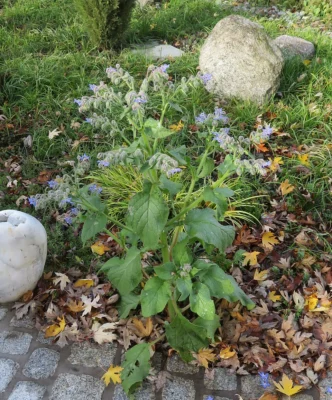
Direct sowing avoids disturbing the developing taproot. Young pot grown plants can also succeed if moved before their roots become crowded. Prepare the final position first so seedlings spend as little time out of their pots as possible.
1.
Choose a sunny, drained position and remove perennial weeds before sowing.
2.
Rake the surface gently to produce small crumbs rather than a compacted crust.
3.
Make shallow drills or marked stations and sow seed about 5mm deep.
4.
Cover lightly, water gently and label with the name and sowing date.
5.
Keep the seedbed moist while germination begins; avoid washing seed into piles.
6.
Thin established seedlings progressively, leaving about 50cm between the final plants.
7.
If planting young plants, preserve the rootball and keep the original compost surface level with the soil.
8.
Water after planting and check nearby weeds regularly while the young plants establish.

Watering
Check young plants and seedlings first in dry weather. Water the root area slowly enough to soak in, then check the soil before repeating. A brief shower may wet the leaves without reaching the roots.
Pots dry faster than borders. Lift a small pot or feel the compost beneath its surface rather than watering by the calendar. Empty standing water from saucers so roots are not left submerged.

Feeding
Established plants usually need little extra fertiliser in ordinary garden soil. Feeding heavily is not a substitute for adequate spacing, light and water. Observe growth before adding anything.
Container compost has a limited nutrient supply. Follow the compost and fertiliser instructions if growth becomes weak after that supply is exhausted. Apply feed to moist compost and avoid repeatedly increasing the dose to chase more flowers.

Pruning
Routine pruning is unnecessary. If a plant leans across a path, add a discreet support while its stems are still flexible. Loose ties allow movement and avoid cutting into the stem.
Remove tired annual plants when their display is over. To restrict volunteers, act before the earliest seeds fall; the final flowers can still be open when lower seed clusters have already ripened.

Winter care
Annual borage completes its life cycle and is usually cleared after flowering. New plants appearing the following year are seedlings, rather than the original plant returning from its crown.
Save only dry, ripe seed and label the packet before storing it somewhere cool and dry. The related perennial Borago pygmaea behaves differently and should not be treated as an annual during winter tidying.
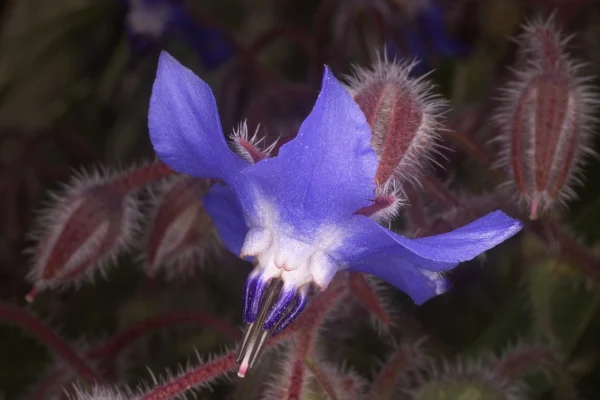
Common borage has rough, hairy leaves and branching stems bearing pointed blue flowers. Dark central anthers contrast with the petals. Look at several features together, because a blue flower alone is not enough to identify a plant.
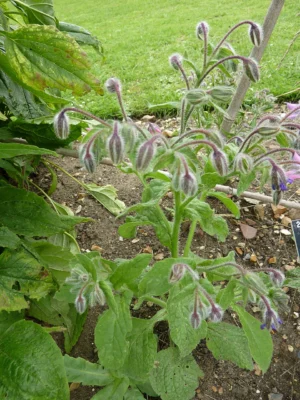
The foliage is broad and wrinkled, especially towards the base. White flowering forms exist. Seedlings without flowers can be confusing in a mixed herb bed, so retain labels and never identify something for eating from a photograph alone.
Photo: Magnus Manske, CC BY-SA 3.0. Resized and optimised; cropped for display. Adapted image under the same licence.
Use soil conditions to choose your sowing date. A sheltered southern bed may be ready in March, while a colder or higher garden benefits from waiting. Sowing into cold mud rarely gives a useful head start.
For a longer display, retain a few well placed seedlings that appear after the first plants mature. Water them during establishment and remove surplus plants while small. Late plants may remain shorter and their flowering depends on autumn weather.
Protected sowing is useful where outdoor seedbeds are repeatedly damaged, but borage does not need permanent greenhouse space. Give young plants bright light, introduce them gradually to outdoor conditions and plant promptly without teasing their roots apart.
Photo: Ysabel, Public domain. Resized and optimised; cropped for display.
Powdery mildew can appear on older foliage. Improve space and airflow, avoid drought stress and clear exhausted annual plants rather than trying to preserve a declining specimen indefinitely.
Crowding, lush growth and weather can leave stems leaning. Support them without strangling ties, and allow more room for the next sowing. Do not pack extra plants into a small container.
Self seeding is normal. Keep only useful, well placed plants and remove the rest young. Removing seed heads late will not retrieve seed already shed into the soil.
Root disturbance can check growth. Water carefully and avoid repeated lifting. Next time, sow directly or move smaller plants with their rootballs intact.
Check at dusk for slugs and look for damaged leaves or stems. Reduce nearby hiding places and protect young growth. Confirm the cause before applying a treatment.
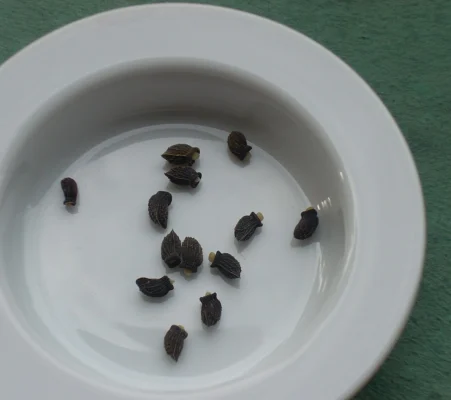
Collect mature, dark seeds from old flower clusters into a paper bag. Allow any surface moisture to dry before storage. Keep the label with the seeds throughout cleaning so varieties and sowing years remain traceable.
Seed is the normal route for annual borage. If maintaining a named form matters, obtain seed or plants from a reliable supplier rather than assuming every volunteer will match. Established perennial B. pygmaea can instead be divided in early spring.
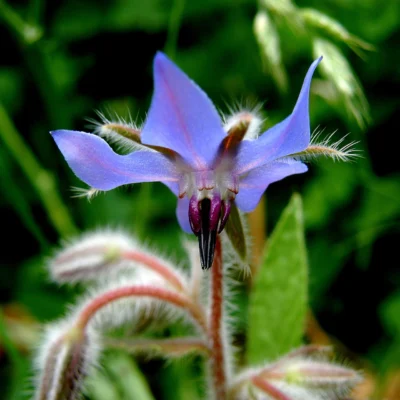
Borago officinalis
The familiar annual with blue flowers. Choose it for a simple seed grown planting and allow a little room for volunteers. Its loose habit works well among other informal summer flowers.
Common borage flower; no named cultivar identified.
Photo: Olivier, CC BY 2.0. Resized and optimised; cropped for display.
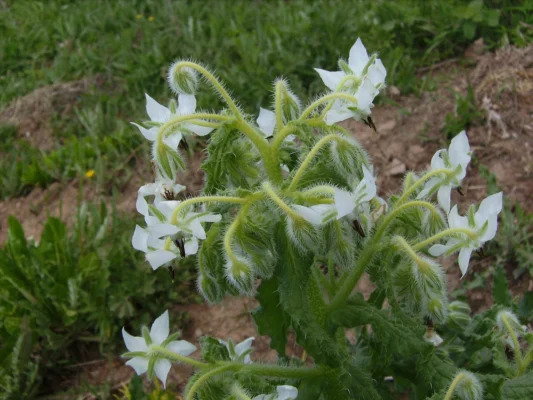
Borago officinalis 'Alba'
A white flowering annual form with the same need for space and drainage. It suits pale planting schemes. Buy labelled seed or plants when the white colour is essential.
Illustrative white flowering borage; the photograph does not verify the cultivar 'Alba'.
Photo: Victor M. Vicente Selvas, Public domain. Resized and optimised; cropped for display.
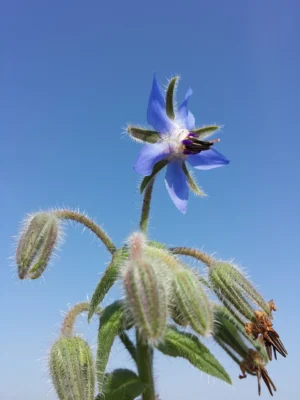
Borago officinalis 'Bill Archer'
A named form valued for cream variegation in its leaves. Check the foliage and label when buying. Its leaf pattern is the reason to choose it over ordinary green leaved borage.
Illustrative Borago officinalis photograph; cultivar unidentified and not a verified image of 'Bill Archer'.
Photo: Stefan.lefnaer, CC BY-SA 4.0. Resized and optimised; cropped for display. Adapted image under the same licence.
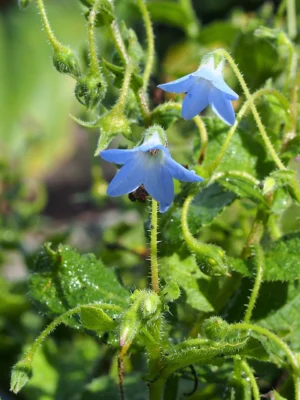
Borago pygmaea
A separate, lower growing perennial with a creeping habit, reaching around 30cm. Choose it for a lasting planting rather than expecting annual borage to behave as a permanent clump.
Borago pygmaea flowering in a botanic garden.
Photo: Agnieszka Kwiecień, Nova, CC BY-SA 4.0. Resized and optimised; cropped for display. Adapted image under the same licence.
Use the BFFD map to find nearby nurseries and growing suppliers. Ask about labelled borage seed, young plants and current availability before travelling.
Borage flowers are attractive to bees. Leave a generous share open, especially if you pick occasional flowers. Place the plants where you can watch visitors without repeatedly walking through the stems.
Combine it with flowers that bloom earlier and later so the garden offers a longer season of forage. Borage beside a vegetable crop is not a guarantee of higher yields or a replacement for appropriate pest protection.
Published by Buy From Farmers Direct. Sources checked 4 October 2026. Growing references: RHS: growing borage; Garden Organic: borage; NC State Extension: Borago officinalis; Food Standards Agency: pyrrolizidine alkaloids; RHS: Borago officinalis Alba; RHS: Borago officinalis Bill Archer; RHS: Borago pygmaea; RHS: powdery mildews; RHS: dividing perennials; Johnny’s Selected Seeds: borage growing information. The seasonal timeline uses the shared BFFD Growers Calendar record; adjust timings to your variety and local conditions.
April and May are dependable months for direct sowing. March can work in mild conditions when the soil is ready. Avoid saturated ground and follow the instructions supplied with your seed.
Common borage is annual, but its fallen seed can produce new plants. The similar sounding perennial borage, Borago pygmaea, is a different species with a lasting root system.
Yes. Give one plant a pot at least 30cm wide, drainage holes and suitable compost. Check moisture frequently because a large leafy plant can use water quickly in summer.
RHS guidance describes flowers as a garnish, but borage contains pyrrolizidine alkaloids. NC State advises only sparing use because of potential liver harm. Do not treat it as an unrestricted salad crop or make home herbal remedies. Growing it for flowers and bees avoids the need for culinary use.
A spring sown annual may be approaching the end of its display. Remove exhausted plants and retain healthy younger seedlings where wanted. Feeding an old plant heavily will not restart its life cycle.
Remove unwanted seedlings early and clear flowering plants before mature seeds drop. Check surrounding soil regularly, as seeds may already have fallen while later flowers were still opening.
Use the BFFD calendar to plan borage as an annual flower and bee plant. Keep observations about volunteers in your own growing notes, and explore the directory for local seed and plant suppliers.
Explore more growing guides: Buckwheat, Blackcurrant, Blueberry.
Want to get food independence, support your local grower, get better prices and shop more privately?
Local food isn’t just something you find. It’s something you protect. A free account helps keep local supply visible, supported, and resilient.

….it takes 30 seconds for food lovers and 5 minutes for suppliers
We built this for people who care where their food comes from. For people who want to remain food secure. For Farmers to get to the local people, who deserve a better income and to deliver a better price for you. For the environmentally conscious and the privacy-conscious. An account simply helps us make the map and supplier reach more useful to you, without changing how open it is. You’re always in control.


Find local food. Stay connected to it. Create a free account to support local producers and be part of a growing food network.


