Autumn red cabbage produces dense purple heads for shredding, braising and pickling. The plants build their leaves through spring and summer, so autumn describes the harvest rather than the sowing season. Choose an autumn variety, protect young plants and maintain steady growth. A few sound heads are more useful than a crowded row that matures together.
Autumn harvest
Spring sowing
Full sun
Edible heads
Protect from caterpillars
| Botanical name | Brassica oleracea, Capitata Group |
| Family | Brassicaceae |
| Crop type | Biennial usually harvested in its first year |
| Edible part | Firm leafy head |
| Colour | Red to deep purple |
| Position | Full sun |
| Soil | Fertile, firm and freely drained |
| Moisture | Consistent moisture during growth |
| Sowing | Usually March to May, variety dependent |
| Planting out | Usually May to June |
| Harvest | September to November for autumn types |
| Seed depth | About 1cm |
| Plant spacing | Usually 45cm, wider for large varieties |
| Row spacing | Usually 60cm, check the seed packet |
| Container suitability | Compact varieties in large pots |
| Protection | Secure insect mesh from planting |
| Pollination | Not needed to produce the edible head |
| Harvest sign | Head feels firm and full |
| Storage | Sound heads only, in suitable cool conditions |
| Winter suitability | Depends on the named variety |
| Plant name | Crop type | Spacing |
Sow indoors
Plant outdoors
Harvest
Polytunnel | |||||||||||
|---|---|---|---|---|---|---|---|---|---|---|---|---|---|---|
| Jan | Feb | Mar | Apr | May | Jun | Jul | Aug | Sep | Oct | Nov | Dec | |||
| Cabbage (Autumn Red) | Brassicas | Single 0.45m, In row 0.45m, Row gap 0.60m | No activity recorded | No activity recorded | Sow indoors, Polytunnel | Sow indoors, Polytunnel | Sow indoors, Plant outdoors, Polytunnel | Plant outdoors | No activity recorded | No activity recorded | Harvest | Harvest | Harvest | No activity recorded |
Sow indoors: March, April, May. Plant outdoors: May, June. Harvest: September, October, November. Polytunnel: March, April, May.
This calendar covers spring sown red cabbages selected for an autumn harvest. March sowing is protected; outdoor sowing is normally later. Use the variety packet to refine these dates. A polytunnel is useful for raising seedlings, not essential for the mature crop. Late storage varieties need an early enough start to finish before growth slows.
Grow autumn red cabbage if you can reserve a sunny patch through summer and check covers and watering regularly. Decide how many whole heads your household will use before sowing a full packet.
A trial of two varieties can spread the harvest and reveal which head size suits you. Narrow pots and deeply shaded corners are unsuitable. Compact selections offer flexibility but still need substantial root space.
Photo: Jamain, CC BY-SA 3.0. Resized and optimised; cropped for display. Adapted image under the same licence.
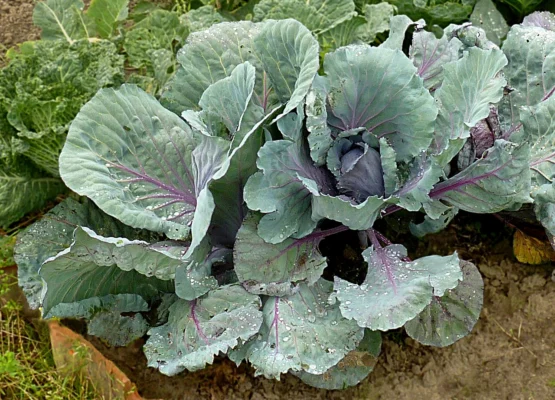
Choose a bright bed with harvesting access. Outer leaves occupy more room than the finished head suggests. Leave a path so you can reach the centre without standing on the growing area.
Build fertility with mature garden compost and allow freshly prepared ground to settle. Firm means a stable planting surface, not soil compressed into an airless mass. Avoid working wet clay into a smooth, sticky pan.
Plan brassica rotation before ordering plants. Cabbages share problems with broccoli, cauliflower and other relatives. Record previous crops and any clubroot symptoms rather than relying on memory.
For pots, choose a compact variety and a deep container at least 30cm across for one plant. Use suitable potting compost and drainage holes. A large head in a small pot quickly becomes a watering problem.
Photo: Jamain, CC BY-SA 3.0. Resized and optimised; cropped for display. Adapted image under the same licence.
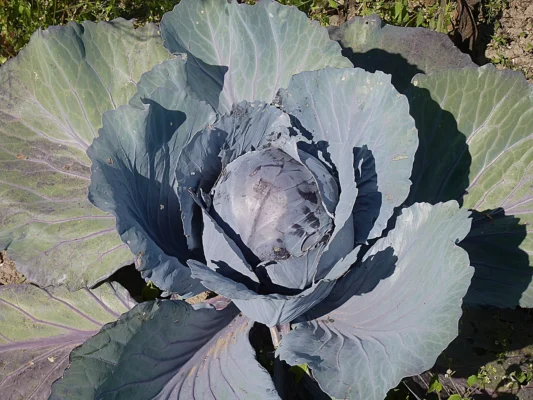
Start with healthy seed or sturdy young plants of a named autumn red variety. Keep their labels throughout the season, especially when comparing an early head with a later storage selection.
1.
Read the packet for sowing dates and mature spacing. Work backwards from the intended autumn harvest before deciding how many plants to raise.
2.
Fill clean modules with seed compost, water it and sow about 1cm deep. Label with the variety and sowing date.
3.
Keep seedlings in bright conditions. Thin to one strong plant per module before neighbours become tangled.
4.
Prepare the final bed while the plants grow. Remove perennial weeds and have the protective mesh ready before planting day.
5.
Harden off protected seedlings gradually. Transplant once they have a healthy root system and several true leaves, before they become cramped.
6.
Set plants about 45cm apart in rows 60cm apart unless the variety needs more room. Firm around each rootball and water thoroughly.
7.
Cover immediately with insect mesh, leaving room for expanding leaves. Secure every edge and inspect the plants before enclosing them.
8.
Check establishment over the following week. Replace failed plants promptly, weed while weeds are small and retain the variety labels.

Watering
Check beneath the surface during summer dry spells. Soak the root area when needed rather than repeatedly dampening the top layer. Water needs increase as the plants and their leaf area expand.
Avoid repeated wilting while heads develop. Rain reaching mesh does not necessarily reach the roots sufficiently. Check containers separately even when a nearby bed remains moist.

Feeding
Base feeding on soil condition and fertiliser instructions. Well prepared ground provides a better foundation than trying to rescue hungry plants with concentrated doses.
Avoid heavy feeding to enlarge an almost mature head. First check moisture, roots and crowding if growth disappoints. More nutrients will not correct root damage or shade.

Pruning
No routine pruning is needed. Keep healthy outer leaves, which support head development. Remove badly damaged or decaying material selectively.
Cut a ready head cleanly with a sharp knife, retaining protective wrapper leaves if it will be stored. Handle it gently and keep cut heads away from muddy ground.

Winter care
Harvest autumn varieties before quality declines. Red colouring does not prove winter hardiness. Check the named variety rather than using colour as a guide.
Inspect stored heads regularly. Use damaged ones promptly if otherwise sound, and discard rotten material. Long storage needs suitable cool, humid conditions; a warm kitchen or fluctuating shed will not reproduce commercial storage.
A developing red cabbage has broad, often waxy purple or grey purple leaves surrounding a central head. The tightly overlapping inner leaves become much firmer as maturity approaches. Different varieties make round, oval or pointed heads.
Colour cannot identify a cultivar or its harvest season. Retain labels. Decorative cabbages, red kale and heading red cabbages have different uses and habits despite similar foliage.
Photo: Rick Heath, CC BY 2.0. Resized and optimised; cropped for display.
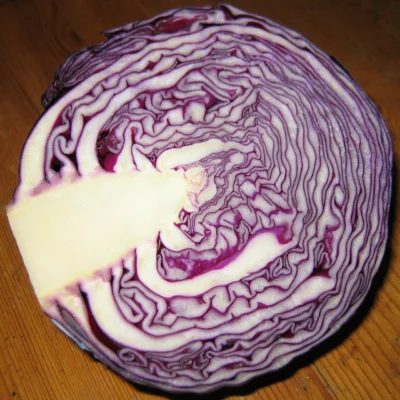
In cooler or exposed gardens, shelter seedlings and avoid late sowings of slow storage varieties. The variety and local growing season determine whether a head finishes.
In warmer, drier districts, maintaining summer moisture may be the main challenge. Arrange irrigation and mulch around established plants before a prolonged dry spell leaves the soil difficult to rewet.
Wet autumns favour prompt picking of mature heads. Walk the row after heavy rain and check for splitting or decay. Harvest the heads that are ready rather than waiting for every plant to match its neighbour.
Photo: Red cabbage in a field by Evelyn Simak, CC BY-SA 2.0. Resized and optimised; cropped for display. Adapted image under the same licence.
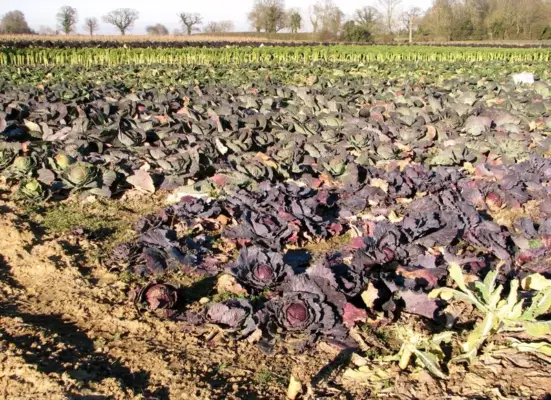
Inspect both leaf surfaces and the developing centre. Remove caterpillars by hand where practical and repair gaps in the mesh. Check before recovering plants so pests are not trapped underneath.
Inspect a failed plant carefully. Swollen, distorted roots suggest clubroot; root feeding pests are another possibility. Avoid moving suspect soil, clean tools and seek a diagnosis before replanting the bed.
Mature heads can split after heavy rain or uneven water supply. Cut ready heads promptly and use split but otherwise sound cabbage quickly rather than placing it in storage.
Check the expected maturity, spacing and growing conditions. Damage to the central growing point can prevent heading. A late sowing may also run out of useful growing time.
Remove affected heads and check the remainder. Only sound, undamaged heads belong in storage. Avoid stagnant, condensation filled bags and inspect regularly instead of leaving the crop unchecked.
Raise a modest surplus from seed for replacements. Thin early and avoid squeezing spare seedlings into the bed at the expense of the intended crop.
Seed saving needs later flowering and control of crossing with related brassicas. F1 offspring are variable. Fresh named seed is simpler when a predictable autumn crop matters.
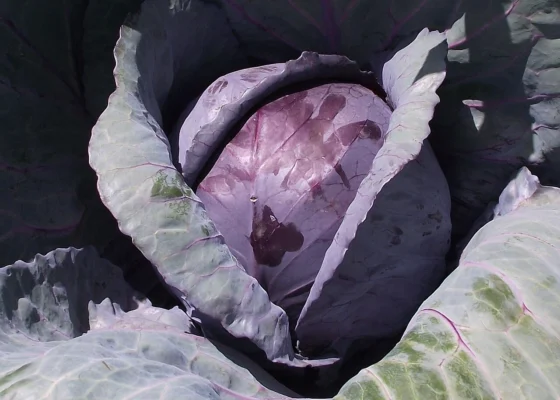
Buscaro F1
An autumn red cabbage with dense, oval to rounded heads and a short core. The RHS places it in the September to November group. Consider it when a conventional firm autumn head is the priority.
Illustrative red cabbage. The photographed cultivar is not identified as Buscaro.
Photo: Stickpen, Public domain. Resized and optimised; cropped for display.
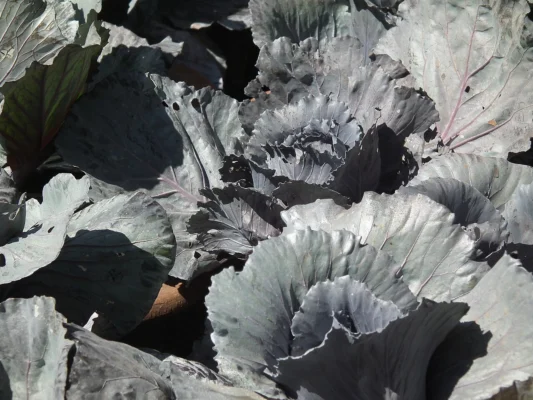
Red Drumhead
A traditional red cabbage producing rounded purple heads for autumn use. Allow space for its outer leaves and compare packet spacing before replacing a compact variety with this larger style of cabbage.
Illustrative red cabbage plants. The photographed cultivar is not identified as Red Drumhead.
Photo: Rameshng, CC BY-SA 3.0. Resized and optimised; cropped for display. Adapted image under the same licence.
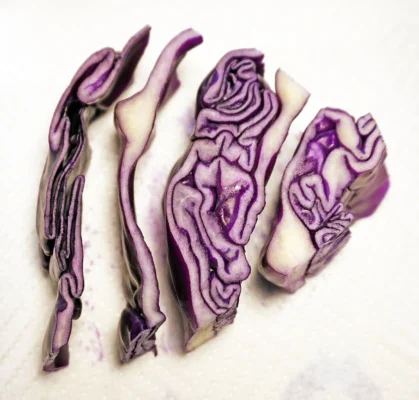
Kalibos
A pointed red cabbage offered for summer and autumn harvesting. Its distinctive shape and sweet flavour suit gardeners wanting something different from a round storage head. Choose the sowing date for the intended harvest.
Illustrative cut red cabbage, not a photograph of the pointed Kalibos variety.
Photo: Tiia Monto, CC BY-SA 4.0. Resized and optimised; cropped for display. Adapted image under the same licence.
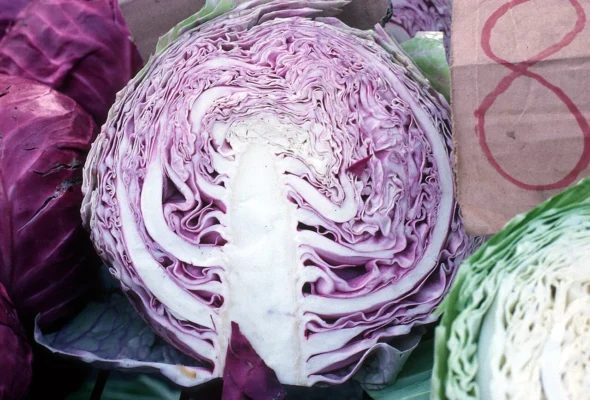
Rodima F1
A later red cabbage bred for dense heads and storage. The breeder gives a relatively long period from planting to maturity, so plan its start carefully. Storage potential still depends on sound heads and suitable conditions.
Illustrative red cabbage at a market. The photographed cultivar is not identified as Rodima.
Photo: Robert Kerton, CSIRO, CC BY 3.0. Resized and optimised; cropped for display.
Explore local growers and plant suppliers on the BFFD map. Ask about red varieties, planting dates and expected maturity, and check availability directly.
Fine insect mesh can protect the crop without routine spraying. Secure it firmly and remove loose folds that could trap wildlife. Check covers after wind and whenever you open them for weeding.
Cabbage heads do not need insects to pollinate them. Keep flowers elsewhere in the garden available to visiting insects while the food crop is covered. A separate flowering patch avoids having to uncover vulnerable cabbages.
Published by Buy From Farmers Direct. Sources checked 4 October 2026. Growing references: RHS: How to grow cabbages; RHS: Buscaro cabbage; RHS: Red Drumhead cabbage; D.T. Brown: Kalibos red cabbage; Kings Seeds: Kalibos cabbage; Rijk Zwaan: Rodima F1; University of Minnesota: Growing cabbage; Utah State University: Cabbage in the garden; RHS: Club root; RHS: Insect proof mesh; RHS: Cabbage caterpillars; University of Minnesota: Harvesting and storing home garden vegetables; RHS: Kalibos red cabbage; RHS: F1 hybrids. The seasonal timeline uses the shared BFFD Growers Calendar record; adjust timings to your variety and local conditions.
Sow in spring according to the variety. March sowings need protection; April and May are common starting months. Autumn sowing will not produce heads that same autumn.
Check the head, not just its colour. It should feel firm and have reached a useful size. Autumn varieties commonly mature from September to November, but inspect individually and cut before splitting or deterioration.
Allow about 45cm between plants and 60cm between rows, adjusting for the variety. Follow the packet and leave room for outer leaves as well as the finished head.
Only if the named variety is suited to that treatment and remains sound. An autumn harvest description is not a promise of winter hardiness. Cut mature autumn heads and reserve winter standing space for appropriate varieties.
Keep healthy outer leaves. They are part of the plant’s working leaf area, not surplus packaging. Remove badly damaged or decaying leaves selectively while checking for pests and avoiding injury to the centre.
Choose a variety described specifically for storage, such as Rodima, and confirm its local sowing requirements. Good genetics cannot compensate for damaged heads or unsuitable storage. Keep some heads for immediate use and store only the sound remainder.
Use the BFFD growers calendar to plan your crop, then record actual sowing and harvest dates in your own growing notes. Local notes make next year’s variety choices more useful.
Explore more growing guides: Cabbage (Autumn), Cabbage (Spring Red), Cabbage (Summer Red).
Want to get food independence, support your local grower, get better prices and shop more privately?
Local food isn’t just something you find. It’s something you protect. A free account helps keep local supply visible, supported, and resilient.

….it takes 30 seconds for food lovers and 5 minutes for suppliers
We built this for people who care where their food comes from. For people who want to remain food secure. For Farmers to get to the local people, who deserve a better income and to deliver a better price for you. For the environmentally conscious and the privacy-conscious. An account simply helps us make the map and supplier reach more useful to you, without changing how open it is. You’re always in control.


Find local food. Stay connected to it. Create a free account to support local producers and be part of a growing food network.


