Cotton makes an unusual greenhouse project, taking the grower from broad leaves and handsome flowers to the seed capsules that can open into familiar white fibre. In Britain, warmth and a long season are the limiting factors. Grow a few labelled plants for interest and observation, with ripe cotton bolls treated as a possible reward rather than a guaranteed outdoor crop.
Tender greenhouse plant
Grown from seed
Full sun
Long warm season
Fibre and ornamental interest
| Botanical group | Gossypium species |
| Species used for these sowing notes | Gossypium herbaceum |
| Family | Malvaceae |
| Common name for G. herbaceum | Levant cotton |
| Plant habit | Tender perennial, often grown for one season |
| Approximate height | Around 1.2m for the featured species; conditions vary |
| Main UK setting | Warm greenhouse or conservatory |
| Outdoor suitability | Temporary warm weather visits only |
| Light | Full sun with good ventilation |
| Compost | Free draining potting compost |
| Sowing window used | March and April indoors with heat |
| Sowing depth | About 1cm |
| Germination temperature | 24 to 30°C for G. herbaceum |
| Typical germination | Around 1 to 2 weeks in suitable warmth |
| Final positioning | Allow roughly 60cm between pot centres initially |
| Possible boll collection | September and October, if fully ripe |
| Winter requirement | Warm, bright and frost free if retained |
| Use of this guide | Ornamental and educational growing, not food production |
| Plant name | Crop type | Spacing |
Sow indoors
Plant outdoors
Harvest
Polytunnel | |||||||||||
|---|---|---|---|---|---|---|---|---|---|---|---|---|---|---|
| Jan | Feb | Mar | Apr | May | Jun | Jul | Aug | Sep | Oct | Nov | Dec | |||
| Cotton | Unusual & exotic | Single 60cm between pots initially, In row 60cm, Row gap 60cm | No activity recorded | No activity recorded | Sow indoors, Polytunnel | Sow indoors, Polytunnel | Plant outdoors, Polytunnel | Plant outdoors, Polytunnel | Polytunnel | Polytunnel | Harvest, Polytunnel | Harvest, Polytunnel | No activity recorded | No activity recorded |
Sow indoors: March, April. Plant outdoors: May, June. Harvest: September, October. Polytunnel: March, April, May, June, July, August, September, October.
Sowing and potting dates refer to protected UK growing. Planting in May and June means moving established plants into their final greenhouse pots, not routine outdoor planting. September and October show a possible collection period for dry, naturally opened bolls; cool conditions can prevent ripening altogether. A tunnel does not provide dependable night warmth by itself, especially in spring and autumn.
A cotton plant suits a grower who enjoys following a plant through its life cycle and has warm, bright protected space available. It also makes a useful labelled display of where a familiar fibre comes from.
Choose another project if you need a dependable outdoor harvest from a cool allotment. Cotton can occupy greenhouse space for months, so decide how much room and heating you are willing to give a small experiment before sowing.
Photo: 小石川人晃, CC BY-SA 4.0. Resized and optimised; cropped for display. Adapted image under the same licence.
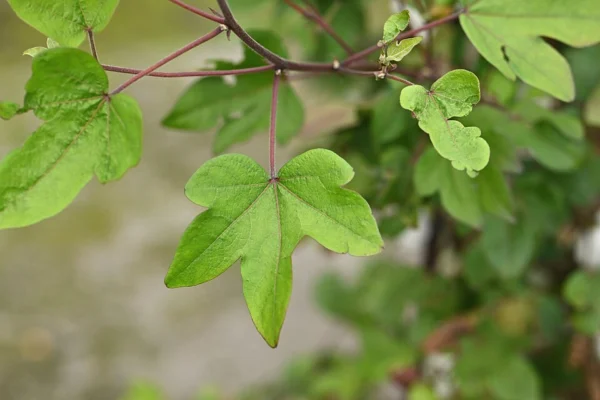
Choose the brightest practical protected position and keep the glazing clean enough to admit good light. Warmth without adequate light produces weak growth and does not create a useful head start.
Use individual pots with unobstructed drainage holes. Increase the pot size as roots fill the compost rather than leaving a small seedling in an oversized, persistently wet container.
Leave space for leaves to expand without pressing against cold glass or neighbouring plants. Around 60cm between pot centres is a starting allowance for this small greenhouse project, not a fixed commercial planting rule. Move pots further apart if needed.
Ventilate on sunny days so the house does not become stagnant or excessively hot. A maximum and minimum thermometer helps distinguish a warm afternoon from the much cooler night that follows it.
Photo: Carl Davies, CSIRO, CC BY 3.0. Resized and optimised; cropped for display. CSIRO
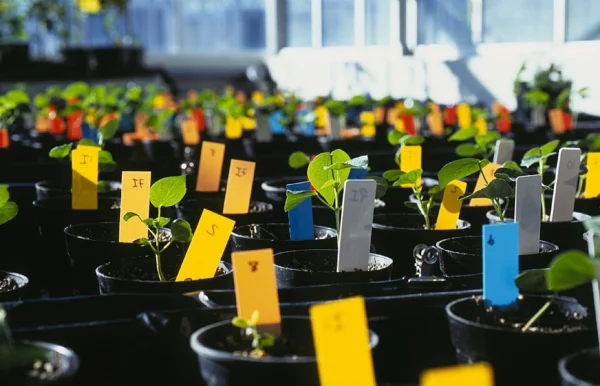
These instructions use Gossypium herbaceum seed sold for ornamental growing. Check the packet because a different species or selection may have different requirements.
1.
Buy clearly labelled seed from a reputable supplier and keep the species name with the plant. Do not assume decorative cotton stems contain viable seed.
2.
Fill small clean pots with moist, free draining seed compost. Prepare a warm propagator and a bright place for seedlings before sowing.
3.
Sow about 1cm deep, then label the pots with the name and date. Follow any additional packet instructions for that seed lot.
4.
Maintain the recommended 24 to 30°C germination conditions. Moist compost should not be saturated or left sitting in a tray of water.
5.
Check for seedlings over the following fortnight. Once they emerge, give them good light and avoid leaving foliage in a closed, dripping propagator.
6.
Move seedlings into individual pots when large enough to handle, keeping root disturbance modest. Continue growing under glass and repot when roots need more space.
7.
Position established plants in their final greenhouse pots during late spring or early summer. Add a discreet cane if a tall stem needs support.
8.
Record flowering and boll development. Keep the plant warm through the ripening period and collect fibre only from mature capsules that open naturally.

Watering
Check the compost regularly during active growth. A large leafy plant can use water quickly in a sunny greenhouse, while a small plant in cool conditions may stay wet for several days.
Water the root zone thoroughly when needed and let excess drain. Repeated drought and permanent saturation are both poor foundations for a healthy container plant. Avoid wetting opened fibre when watering nearby.

Feeding
Start with suitable potting compost and follow its stated feeding period. Once its nutrients are used, use a balanced container feed at the product’s recommended dilution while growth is active.
Judge feeding alongside light, root health and temperature. More feed will not make up for a cold night or a dark growing position, and strong solutions can damage roots.

Pruning
Cotton does not need an elaborate pruning system for this small ornamental project. Remove damaged or dead material and tie supported stems loosely enough to allow expansion.
Avoid repeatedly cutting away developing flower or boll bearing growth when fibre is the aim. If the plant outgrows the space, improve its position and support before making unnecessary cuts.

Winter care
Cotton is not a hardy British garden shrub. Keeping a plant beyond autumn requires bright, warm protected conditions; an unheated greenhouse can become almost as cold as the garden overnight.
Reduce watering as growth slows and inspect regularly for pests. Starting fresh seed in spring may be more practical than maintaining a large plant through a dim winter, particularly where heating space is limited.
Cotton has broad, often lobed leaves and mallow family flowers, followed by rounded capsules called bolls. In Gossypium herbaceum the flowers can show pale yellow petals around a darker centre. Mature capsules split to expose fibre surrounding the seeds.
Flower colour, leaf shape and plant size vary across Gossypium. Use the seed label for the species identity rather than trying to name every cotton plant from a single photograph. The images here show several stages and settings, including examples grown abroad.
Photo: Raju Jangid, CC BY-SA 4.0. Resized and optimised; cropped for display. Adapted image under the same licence.
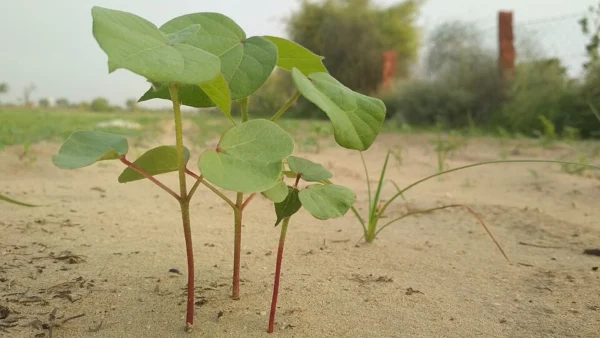
In southern and sheltered urban locations, a bright greenhouse gives the best chance of sustained growth. Moving a pot outside on an especially warm sunny day is different from leaving it outdoors through a cold night.
In northern, exposed or upland gardens, the protected environment matters more than the calendar date. A short cool summer may produce an interesting leafy plant without mature open bolls.
For a school or family project, photograph the same plant at intervals and label each stage. Flowers and developing capsules are useful observations even if the season ends before usable fibre appears. Keep this as a non-food plant project.
Photo: Karthik jeyaraman, CC BY 4.0. Resized and optimised; cropped for display.
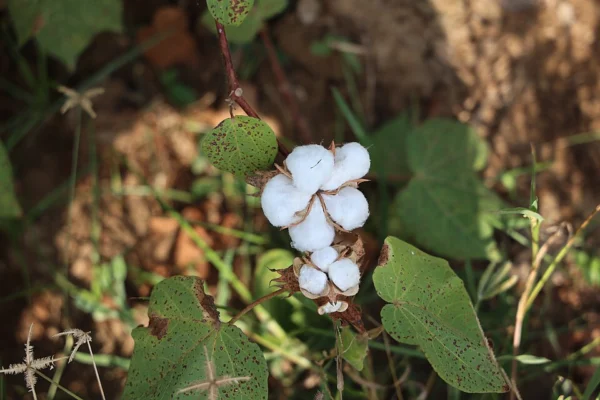
Check that the compost has actually reached the seed supplier’s recommended temperature. A sunny windowsill can still become cold overnight. Also check seed age and avoid keeping the seedbed waterlogged.
Review the whole growing environment: night temperature, available light, compost moisture and roots. Check for overcrowding before adding feed to a plant that may simply be cold or poorly lit.
Glasshouse whitefly can affect protected plants. Inspect leaf undersides and nearby hosts. Identify the pest early and consider a suitable biological control, following its temperature and release instructions.
Red spider mite can cause mottled leaves on greenhouse plants. Look closely at the undersides to confirm the problem. Reduce plant stress and obtain advice on a compatible biological control if damage is building.
The plant may not have had enough warm growing time to mature its seed capsules. Maintain suitable conditions while practical, but do not force open green bolls or promise a harvest from immature material.
Seed is the straightforward starting point for this project. Keep each species or selection labelled and record the sowing temperature, since these details are more useful than a date alone when comparing success between years.
If mature bolls form, seeds can remain among the fibres. Separate fully mature dry seed for a labelled trial sowing, but recognise that germination and the next generation’s characteristics may differ from the original packet. Keep sowing seed separate from household food.
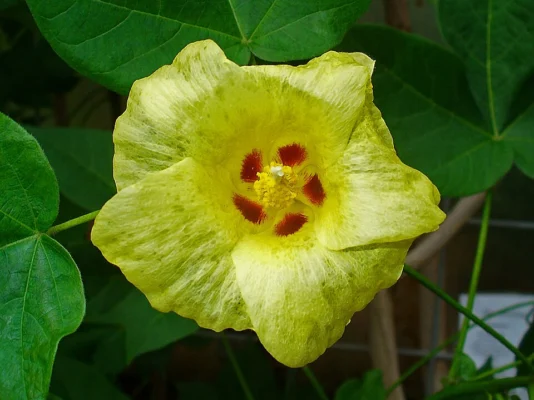
Levant cotton
Gossypium herbaceum is available as ornamental seed and is the basis for this page’s sowing instructions. Its yellow flowers with darker centres provide interest before any fibre develops.
A Gossypium herbaceum flower photographed in a botanical garden.
Photo: H. Zell, CC BY-SA 3.0. Resized and optimised; cropped for display. Adapted image under the same licence.
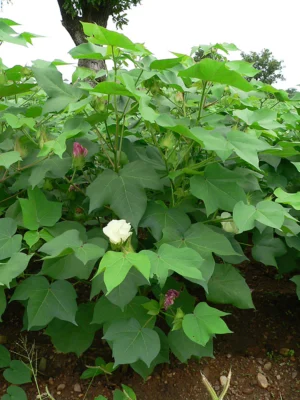
Upland cotton
Gossypium hirsutum is another cultivated fibre species. A plant sold simply as cotton may belong to it, so check the botanical name and the supplier’s growing instructions.
Gossypium hirsutum growing in Benin; this is not a UK outdoor planting example.
Photo: ChriKo, CC BY-SA 3.0. Resized and optimised; cropped for display. Adapted image under the same licence.
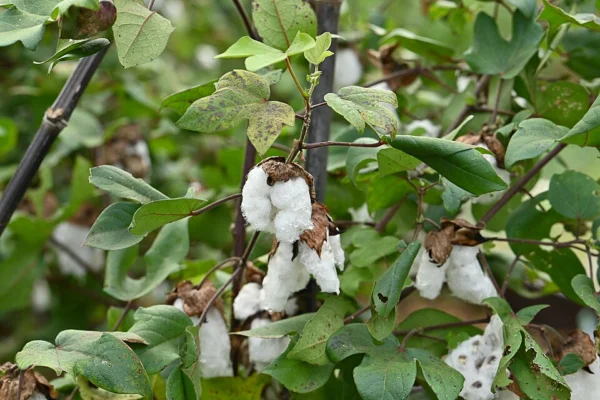
Other fibre species
Gossypium arboreum and Gossypium barbadense also belong to the cultivated cotton group. Their presence in world agriculture does not make them reliable outdoor crops in Britain.
Cotton at Mito Botanical Garden, Japan; the exact species is not confirmed here.
Photo: 小石川人晃, CC BY-SA 4.0. Resized and optimised; cropped for display. Adapted image under the same licence.
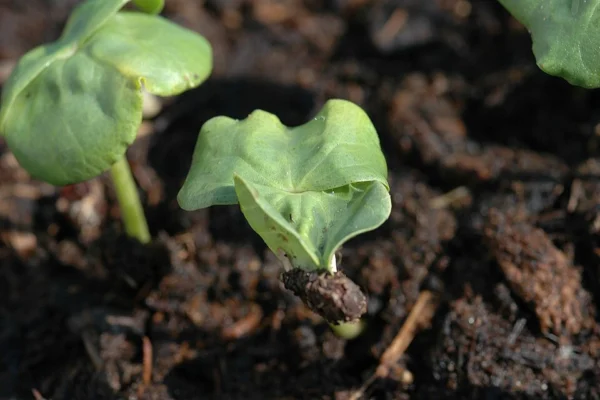
Choosing a seed lot
Prioritise a clear species label and practical UK growing information over promises of a large fibre crop. For a small educational planting, a few well cared for plants are sufficient.
Cotton seeds showing the first stages of germination.
Photo: User:Amada44, Public domain. Resized and optimised; cropped for display.
Look for seed sold for growing, with the botanical name and germination advice included. Plan pots, bright space and reliable warmth before ordering. Decorative dried stems are useful for display but are not a substitute for a labelled seed packet.
A greenhouse project has a different role from a permanent garden habitat. Keep the surrounding garden diverse with suitable flowering plants and avoid assuming cotton alone provides a significant local wildlife resource.
Monitor pests rather than spraying routinely. Where a biological control is appropriate, check its environmental requirements and compatibility with anything previously applied to plants in the same house.
Published by Buy From Farmers Direct. Sources checked 6 October 2026. Growing references: Chiltern Seeds: Gossypium herbaceum growing instructions; Royal Botanic Gardens, Kew: cotton; RHS glasshouse whitefly; RHS glasshouse red spider mite; RHS biological control guidance. The seasonal timeline uses the shared BFFD Growers Calendar record; adjust timings to your variety and local conditions.
It may spend very warm days outside, but dependable growth requires warm protected conditions. Treat it as a greenhouse project rather than a routine outdoor fibre crop.
March or April is a practical protected start if you can provide suitable light and germination heat. These notes use Gossypium herbaceum, for which the supplier recommends 24 to 30°C.
No. Bolls need time and warmth to mature, and a cool or short growing season may end before they open. The calendar shows a possible collection window, not a guarantee.
A few pots can be grown in modest protected space, but plants need room for expanding leaves and stems. Check the species and avoid crowding other crops.
Only where suitable warmth, bright light and protection from frost can be maintained. Raising new plants from seed each spring is often more practical.
Wait for a mature capsule to split naturally and expose dry fibre. Closed green bolls are immature and should not be forced open as a substitute for ripening.
Start with a few labelled seeds and a realistic greenhouse plan. The reward is following a remarkable fibre plant through its stages, with any naturally opened bolls an added achievement.
Explore more growing guides: Chilli Pepper, Basil, Coriander.
Want to get food independence, support your local grower, get better prices and shop more privately?
Local food isn’t just something you find. It’s something you protect. A free account helps keep local supply visible, supported, and resilient.

….it takes 30 seconds for food lovers and 5 minutes for suppliers
We built this for people who care where their food comes from. For people who want to remain food secure. For Farmers to get to the local people, who deserve a better income and to deliver a better price for you. For the environmentally conscious and the privacy-conscious. An account simply helps us make the map and supplier reach more useful to you, without changing how open it is. You’re always in control.


Find local food. Stay connected to it. Create a free account to support local producers and be part of a growing food network.


