Fresh dill brings a distinctive flavour to potatoes, cucumbers and fish, while its yellow flowers earn it a place in the border. Grow this annual herb from seed in successive small batches: one sowing rarely supplies fresh leaves throughout summer.
Annual culinary herb
Leaves and aromatic seed
Sow little and often
Sunny sheltered position
Flowers for pollinators
| Botanical name | Anethum graveolens |
| Family | Apiaceae |
| Common name | Dill or dill weed |
| Life cycle | Annual |
| Main crops | Fresh leaves, flowers and ripe seed |
| Usual mature height | About 60 to 90cm; some selections grow taller |
| Compact option | Fernleaf is listed at about 45cm |
| Position | Full sun, sheltered from strong wind |
| Soil | Fertile and well drained, retaining some moisture |
| Main outdoor sowing window | April to July, once soil has warmed |
| Sowing depth | About 1cm; compare packet instructions |
| Final spacing | About 20cm between plants |
| Row spacing | About 30cm |
| Germination | Often 1 to 3 weeks, depending on conditions |
| First light leaf picking | Usually around 6 to 8 weeks from sowing |
| Main harvest window | June to October from successive crops |
| Propagation | Seed |
| Transplanting | Optional; move young plants with roots intact |
| Container choice | A deep pot with drainage holes |
| Winter routine | Start new plants next season |
| Plant name | Crop type | Spacing |
Sow indoors
Plant outdoors
Harvest
Polytunnel | |||||||||||
|---|---|---|---|---|---|---|---|---|---|---|---|---|---|---|
| Jan | Feb | Mar | Apr | May | Jun | Jul | Aug | Sep | Oct | Nov | Dec | |||
| Dill | Herbs | Single 20cm, In row 20cm, Row gap 30cm | No activity recorded | No activity recorded | No activity recorded | Sow indoors, Plant outdoors | Sow indoors, Plant outdoors | Sow indoors, Plant outdoors, Harvest | Sow indoors, Plant outdoors, Harvest | Harvest | Harvest | Harvest | No activity recorded | No activity recorded |
Sow indoors: April, May, June, July. Plant outdoors: April, May, June, July. Harvest: June, July, August, September, October. Polytunnel: no months recorded.
The calendar describes outdoor growing: sow from April to July and harvest successive crops from June into October, weather permitting. The April to July planting band is optional for bought plants or young modules. Direct sowing avoids transplanting. Indoor crops are possible with enough light, but the calendar does not promise winter harvests or require a polytunnel.
Dill suits a herb bed, vegetable patch or roomy patio pot. Choose a leafy variety for kitchen cuttings or a seed-producing selection for seed harvests.
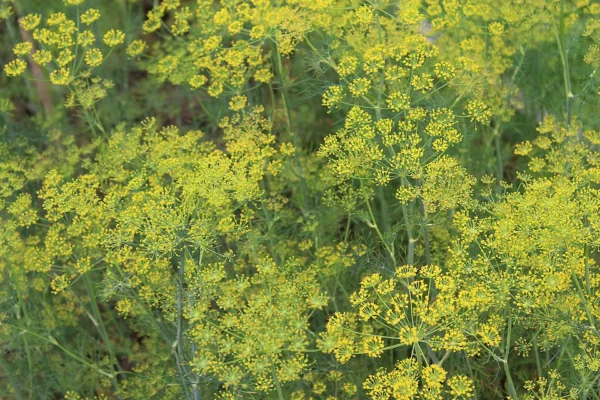
Choose an open sunny position sheltered from strong winds. Keep taller neighbours far enough away that they do not shade young dill as the season progresses.
Prepare a weed-free surface with good drainage. Dill needs moisture for steady growth, but a cold waterlogged patch is a poor place to establish delicate seedlings.
For containers, use peat-free compost and a deep pot with drainage holes. A compact selection is easier to manage on a small patio than a tall seed crop.
Keep space free for later sowings. Separate short rows or pots are easier to label and harvest than seedlings scattered among mature plants.
Photo: Titantoma, CC BY-SA 3.0. Resized and optimised; cropped for display. Adapted image under the same licence.
Sowing directly into the final bed or container is the simplest route. Check the seed packet, especially when growing an unusually compact or tall selection.
1.
Choose a variety for leaves, seed or both. Label the sowing date so the next batch is easy to plan.
2.
Remove weeds and prepare a fine surface once the soil is warm enough for active growth.
3.
Make a shallow drill about 1cm deep. Water its base if dry, then scatter seed thinly and cover gently.
4.
Allow roughly 30cm between rows. In a pot, distribute seeds evenly rather than emptying the packet into one clump.
5.
Keep the seed zone moist during germination. Water gently so the surface and emerging seedlings are not washed away.
6.
Thin established seedlings to about 20cm apart, adjusting for the variety. Remove unwanted plants without disturbing their neighbours.
7.
If using modules, harden plants off and move them at around four weeks old with the root ball intact.
8.
Begin another small sowing after two or three weeks. Protect young growth and pick lightly once plants have enough foliage.

Watering
Water during dry spells, particularly while seedlings establish. Check pots frequently because a small volume of compost can dry before the surrounding garden needs attention.
Aim for consistent moisture with drainage. Repeated drought can shorten the leafy stage, while a pot standing in water leaves roots without suitable growing conditions.

Feeding
Dill usually needs little additional feed in reasonable garden soil. Improving very poor soil before sowing is more useful than repeatedly trying to correct weak growth later.
Container plants eventually exhaust their compost nutrients. Use a suitable liquid feed at its recommended rate when needed, and check moisture and light before assuming pale leaves always mean hunger.

Pruning
Snip small quantities of fresh foliage rather than stripping a young plant bare. Use leaves promptly; their delicate texture makes them less suited to sitting around after picking.
Remove developing flower stems when leaves are the priority, while keeping separate plants for flowers and seed. Cutting helps manage the crop but cannot turn an annual into a permanent herb bush.

Winter care
An outdoor dill crop normally finishes within the season. Clear spent plants after collecting seed and reserve space for fresh spring sowings.
A bright indoor position can support a separate pot crop, but low winter light limits growth. Freeze surplus clean leaves in small portions for cooking instead of expecting summer production from a dim windowsill.
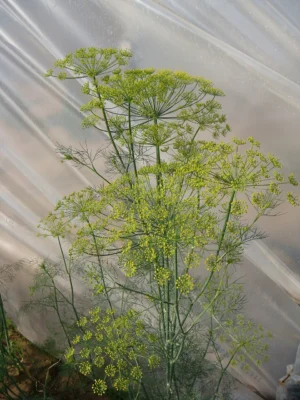
Dill has upright stems, finely divided leaves and branching heads of small yellow flowers. The flower heads later carry flattened seeds that change from green towards brown as they ripen.
It can resemble fennel at a glance, but dill is a different plant. Keep the seed packet or nursery label: this growing guide is for cultivated Anethum graveolens, not identification of unknown wild members of the carrot family.
Photo: Ermell, CC BY-SA 4.0. Resized and optimised; cropped for display. Reinhold Möller
In colder districts, wait for workable soil and warming conditions. A later healthy sowing can be more useful than an early batch struggling in wet ground.
In warm southern gardens, keep summer sowings within watering reach. Check pots during hot spells and start replacements before older plants finish producing leaves.
On exposed allotments or balconies, shelter and support matter as plants gain height. Place unobtrusive supports before stems fall across paths or neighbouring crops.
Photo: Forest & Kim Starr, CC BY 3.0. Resized and optimised; cropped for display. Forest & Kim Starr
Flowering is part of the annual cycle, but heat and drought can bring it forward. Keep moisture steady, choose a leafy selection and maintain younger replacement crops.
Look for slug or snail damage and inspect after dusk. Keep the immediate growing area tidy and protect vulnerable seedlings while they establish.
Inspect tender growth and check for predators before acting. Small colonies can be removed by hand or with a gentle water jet that does not damage the plant.
Root disturbance, drying and an abrupt change of conditions can check young plants. Water carefully and avoid repeated lifting; direct sowing is a useful alternative next time.
Review shade, crowding and wind exposure. Thin seedlings while small, give plants enough light and support taller stems rather than packing more plants into the same space.
Raise new plants from seed. Allow a few healthy plants to finish flowering, then collect seed heads as they turn brown, before loose seed scatters across the bed.
Finish drying heads in an airy place with a paper bag to catch falling seeds. Store fully dry, cleaned seed in a labelled container. Self-sown seedlings may appear, but deliberate sowings make cropping dates easier to manage.
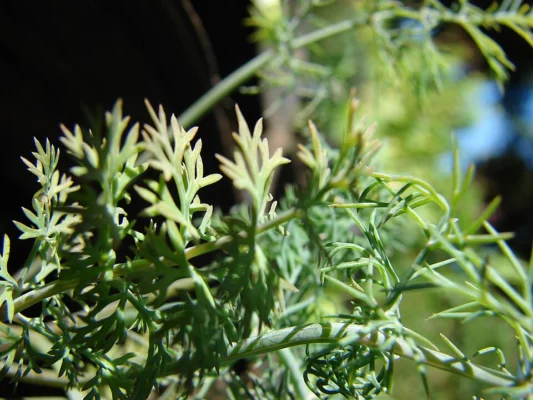
Fernleaf
A dwarf selection listed at around 45cm, with a slow flowering habit. Worth considering for leaf production where taller dill would be awkward.
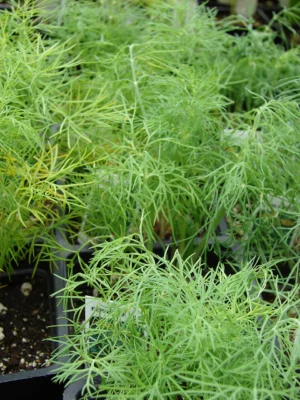
Illustrative dill foliage; this photograph is not confirmed as Fernleaf.
Photo: Forest and Kim Starr, CC BY 3.0 us. Resized and optimised; cropped for display. Forest & Kim Starr
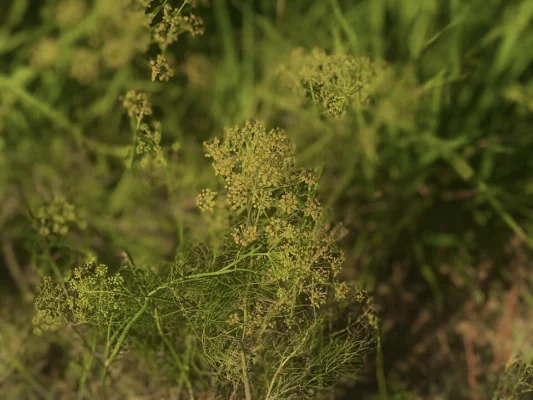
Dukat
A vigorous leafy selection for growers who mainly want fresh kitchen cuttings. Give it room and keep the next sowing underway.
Illustrative mature dill stems and flower heads; not confirmed Dukat.
Photo: Nourrmousa, CC BY-SA 4.0. Resized and optimised; cropped for display. Adapted image under the same licence.
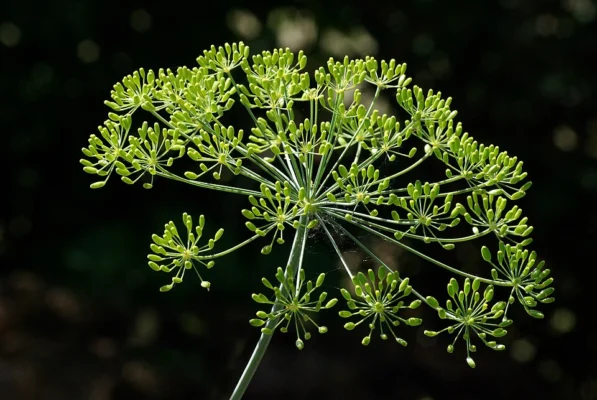
Domino
A compact, bushy option with abundant foliage, suitable for pots or open ground. Its slower flowering habit helps extend the leaf-picking period.
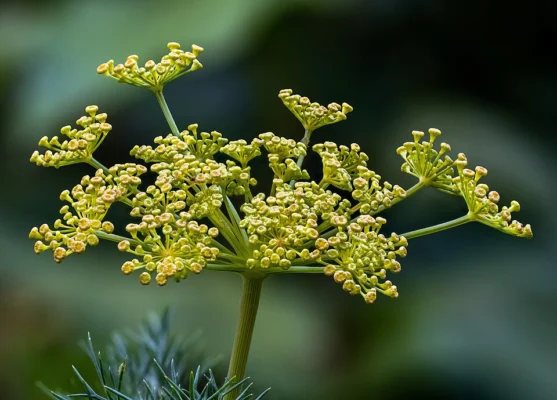
A dill head with developing green seeds; the cultivar is not recorded.
Photo: JLPC, CC BY-SA 3.0. Resized and optimised; cropped for display. Photo: JLPC / Wikimedia Commons
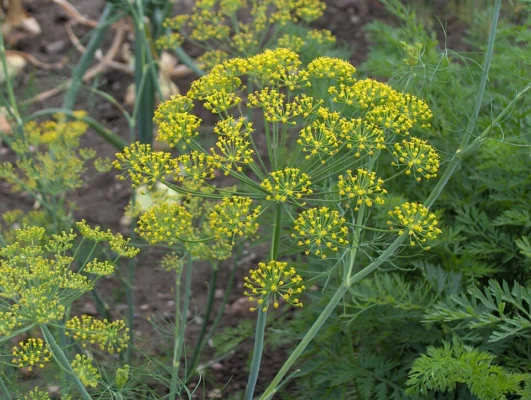
Mammoth
A robust selection that flowers readily and is useful when seed is the intended harvest. Choose a leafier alternative if fresh foliage is your priority.
Illustrative yellow dill flowers; this is not a verified Mammoth plant.
Photo: PatríciaR, CC BY-SA 3.0. Resized and optimised; cropped for display. Adapted image under the same licence.
Compare the stated height and whether a packet emphasises leaves or seed. Buy enough for several modest sowings, keep the remaining seed dry and retain the variety label.
Dill flowers attract visiting insects, including bees. Leaving a few plants to bloom adds a different shape and flowering stage to a kitchen garden while providing seed for later use.
Check stems before treating aphids: predators may already be feeding there. Balance useful flowers with harvesting needs by dedicating separate plants to each purpose.
Published by Buy From Farmers Direct. Sources checked 6 October 2026. Growing references: RHS dill growing guide; RHS dill plant profile; RHS growing and harvesting herbs; RHS herbs in containers; Kings Seeds: Fernleaf dill; RHS Plants: Dukat dill; RHS Domino dill profile; University of Minnesota: growing and harvesting dill; University of Minnesota: herb care and preservation; University of Maryland: dill. The seasonal timeline uses the shared BFFD Growers Calendar record; adjust timings to your variety and local conditions.
April to July is a useful outdoor window once soil has warmed. Repeat small sowings every few weeks and adjust the start to your local conditions.
Yes. Choose a deep container with drainage and a compact variety. Sow directly into the pot, avoid crowding and check moisture frequently.
Dill is normally grown as an annual. Plants may leave self-sown seedlings, but the original plant is not a permanent herb bush. Sow fresh seed for reliable crops.
Dill naturally progresses from leaves to flowers and seed. Heat and dry roots can shorten the leafy stage. Water steadily and keep replacement sowings coming.
Take a few leafy sprigs at a time and leave plenty of healthy growth. Avoid stripping small plants bare, and use fresh leaves soon after cutting.
Direct sowing is easier. If transplanting, use young modules, harden them off and move the whole root ball before long roots develop, usually around four weeks after sowing.
Grow successive short crops for leaves and let a few plants flower. A small patch can provide fresh herbs, flowers for insects and seed for next year.
Want to get food independence, support your local grower, get better prices and shop more privately?
Local food isn’t just something you find. It’s something you protect. A free account helps keep local supply visible, supported, and resilient.

….it takes 30 seconds for food lovers and 5 minutes for suppliers
We built this for people who care where their food comes from. For people who want to remain food secure. For Farmers to get to the local people, who deserve a better income and to deliver a better price for you. For the environmentally conscious and the privacy-conscious. An account simply helps us make the map and supplier reach more useful to you, without changing how open it is. You’re always in control.


Find local food. Stay connected to it. Create a free account to support local producers and be part of a growing food network.


