Sweet marjoram is a compact culinary herb with soft leaves and a gentle aromatic flavour. It grows well in a sunny pot, raised bed or herb border through summer, but needs protection if you want to keep it through a British winter. This guide focuses on sweet marjoram, Origanum majorana, while explaining why other plants sold as marjoram can need different care.
Sweet aromatic leaves
Warm full sun
Excellent in containers
Tender perennial
Pick before flowering
| Main botanical name | Origanum majorana |
| Common names | Sweet marjoram and knotted marjoram |
| Family | Lamiaceae, the mint family |
| Plant type | Tender perennial subshrub |
| Usual UK treatment | Summer annual or protected perennial |
| Typical summer height | Around 30 to 50cm |
| Typical spread | Around 30cm; older plants can spread further |
| Leaves | Small, oval, soft and grey green |
| Flowers | Small white summer flowers |
| RHS hardiness | H2; protect from frost |
| Light | Full sun |
| Best soil | Well drained, light soil |
| Soil reaction | Neutral to alkaline preferred |
| Indoor sowing | March to May |
| Germination warmth | Around 18 to 20°C |
| Germination time | Often one to three weeks |
| Outdoor planting | May to June after local frosts |
| Indicative spacing | 30cm between plants |
| Main UK leaf harvest | June to September |
| Propagation | Seed or softwood cuttings |
| Plant name | Crop type | Spacing |
Sow indoors
Plant outdoors
Harvest
Polytunnel | |||||||||||
|---|---|---|---|---|---|---|---|---|---|---|---|---|---|---|
| Jan | Feb | Mar | Apr | May | Jun | Jul | Aug | Sep | Oct | Nov | Dec | |||
| Marjoram | Herbs | Single 30cm, In row 30cm, Row gap 30cm | No activity recorded | No activity recorded | Sow indoors | Sow indoors | Sow indoors, Plant outdoors | Plant outdoors, Harvest | Harvest | Harvest | Harvest | No activity recorded | No activity recorded | No activity recorded |
Sow indoors: March, April, May. Plant outdoors: May, June. Harvest: June, July, August, September. Polytunnel: no months recorded.
The calendar is for sweet marjoram grown for a summer leaf crop: sow indoors from March to May, plant out after frost in May or June, and pick mainly June to September. Established protected plants can offer a longer season, but winter leaves depend on warmth and light. No general polytunnel band is shown because frost free overwintering is protection, not a guaranteed winter crop. Hardier oregano and French marjoram have different limits.
Sweet marjoram is useful when you want a small herb for regular picking rather than a large permanent shrub. A few plants in separate pots can supply the kitchen while another is left to flower.
Container growing makes winter care easier. If you prefer to start afresh each spring, it is equally reasonable to grow it as a summer annual in a sunny bed.
Photo: Forest & Kim Starr, CC BY 3.0. Resized and optimised; cropped for display. Forest & Kim Starr
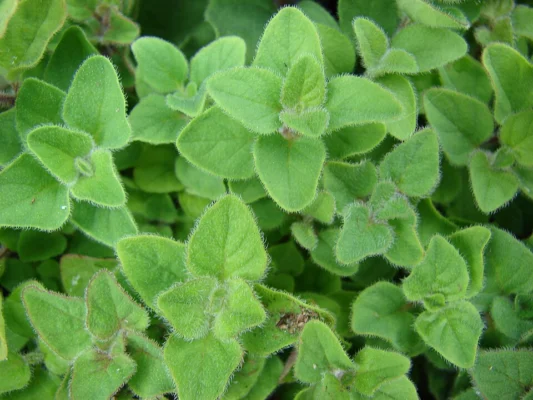
Choose a warm position in full sun. A sheltered patio or open herb bed is better than a damp shaded corner where growth stays soft and sparse.
Drainage matters more than rich soil. Avoid a site that holds winter water, and use a raised bed or pot where the garden soil is persistently heavy and wet.
For one young plant, use a container at least 15cm wide and deep with drainage holes. Pot on as roots fill the space rather than leaving an established plant in its original small nursery pot.
Use peat free loam based compost and add horticultural grit if needed for drainage. Allow around 30cm between summer plants, with additional space for a larger overwintered clump.
Photo: Sten, CC BY-SA 3.0. Resized and optimised; cropped for display. Sten
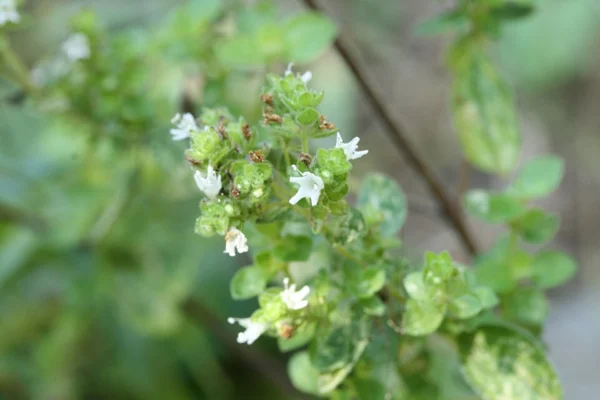
Check the botanical label before choosing care instructions. Sweet marjoram is much more tender than the hardy oregano often called wild marjoram.
1.
Choose fresh seed or a healthy plant labelled Origanum majorana. Decide whether it will be a summer crop or a plant to keep under cover in winter.
2.
Sow thinly into small pots or modules of moist peat free seed compost in spring. The tiny seeds can be surface sown; follow the packet if it specifies a very fine covering.
3.
Keep the sowing warm and bright, around 18 to 20°C. Use a clear cover initially if needed to retain moisture, checking regularly for emerging seedlings.
4.
Once seedlings appear, increase ventilation and provide good light. Keep the compost lightly moist without leaving the tray saturated.
5.
Move seedlings into individual small pots once they have several leaves and can be handled safely. Hold a leaf rather than crushing the delicate stem.
6.
Gradually harden off young plants as the weather warms. Wait until local frost risk has passed before leaving tender plants outdoors.
7.
Plant at the original depth in free draining soil or compost. Firm gently, water in and keep the base clear of soil piled against the stems.
8.
Let the plants establish before taking a harvest. Pinch a few growing tips once growth is strong, leaving plenty of leaves to build a bushy plant.

Watering
Water newly planted marjoram during dry spells while roots establish. Established plants in the ground tolerate drier conditions and usually need less attention than leafy herbs such as parsley.
Check containers regularly in hot weather. Water when needed and allow the excess to escape; a pot standing in water can lose its roots even while the surface foliage looks thirsty.

Feeding
Sweet marjoram is not a demanding feeder. Plants in reasonable garden soil usually need no extra fertiliser, and excessive feeding is unnecessary for a compact culinary herb.
A plant kept in the same container into a second year may benefit from a modest general feed in late spring. Follow the product rate and review repotting if the compost is exhausted or roots are crowded.

Pruning
Light regular picking encourages branching. Snip shoots above a leafy joint rather than removing every leaf from a stem, and leave sufficient growth for the plant to recover.
Trim overwintered plants in late spring once healthy new growth is visible. Remove dead or straggly material and cut back spent flower stems after blooming to keep the plant tidy.

Winter care
Sweet marjoram has an RHS H2 rating and is frost tender. Before cold weather, move plants you want to keep into a bright frost free greenhouse, conservatory or suitable sunny windowsill.
Reduce watering as growth slows and maintain airflow. A greenhouse without heating may still freeze, so check conditions. Growing a fresh batch from seed next spring is a practical alternative to overwintering.
Sweet marjoram has small opposite oval leaves covered in soft hairs. White flowers emerge from rounded clusters of overlapping bracts, giving rise to the common name knotted marjoram.
Wild marjoram is usually Origanum vulgare, better known in the kitchen as oregano. Pot marjoram is commonly O. onites, while French marjoram is a separate garden selection. Labels matter because flavour, size and winter tolerance vary.
Image from the BFFD media library.
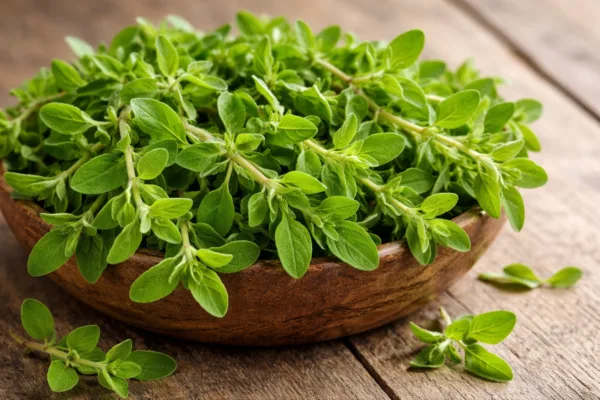
A warm summer position brings the best growth. In cooler regions, start seed indoors and delay outdoor planting rather than trying to make seedlings grow in cold soil. A movable pot allows an earlier autumn retreat under cover.
Pick healthy shoots before most flowers open for a particularly good leaf harvest. Strip washed leaves from the stems and use small amounts in tomato sauces, vegetable dishes, stuffing or eggs, adding fresh leaves near the end of cooking.
For winter cooking, dry a modest harvest in a warm, shaded, airy place. Store completely dry leaves in a labelled airtight container and keep it away from heat and light. Leave some stems uncut if you also want flowers.
Photo: Schlaghecken Josef, CC BY-SA 4.0. Resized and optimised; cropped for display. Adapted image under the same licence.
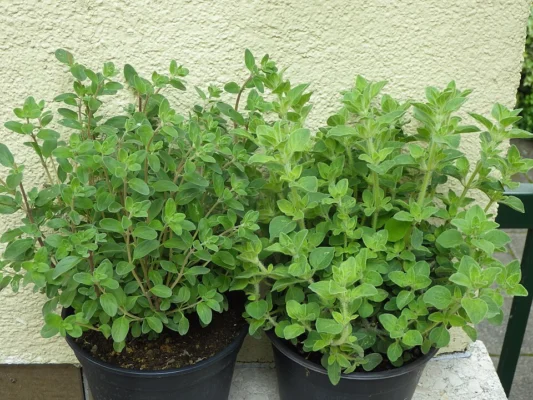
Damping off is encouraged by crowded sowings, wet compost and poor ventilation. Start again in clean pots with fresh seed compost, sow thinly and avoid prolonged saturation.
Persistent wet soil can cause rotting. Improve drainage and review watering; an already saturated pot needs air around its roots rather than another drink.
Sweet marjoram is frost tender. Move surviving plants into protection, then wait to see which parts recover. Replace badly damaged plants and delay the next outdoor planting until conditions improve.
Inspect for aphids. Tolerate a few where the plant is growing well, or remove troublesome colonies by hand. Encourage natural predators and check plants brought under cover.
Glasshouse red spider mite can build up in hot dry shelter. Check beneath leaves with a hand lens, avoid overcrowding and seek suitable biological control if a protected collection is affected.
Seed is the simplest way to raise several sweet marjoram plants each spring. Sow only what you can grow on well; a large packet does not mean every seed needs to be used at once.
Softwood cuttings provide another route. Take short non flowering shoots in late spring or summer, remove the lower leaves and root them in moist cuttings compost under humid, sheltered conditions. Gradually ventilate rooted plants and protect them from frost.
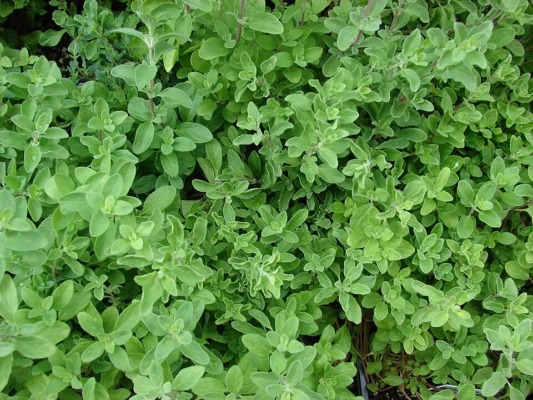
Start with a nursery plant
A labelled young plant offers a quick route to summer picking. Inspect its foliage and root condition, then give it a suitable pot or sunny bed.
Sweet marjoram foliage photographed at a nursery; no named cultivar is claimed.
Photo: Forest & Kim Starr, CC BY 3.0. Resized and optimised; cropped for display. Forest & Kim Starr
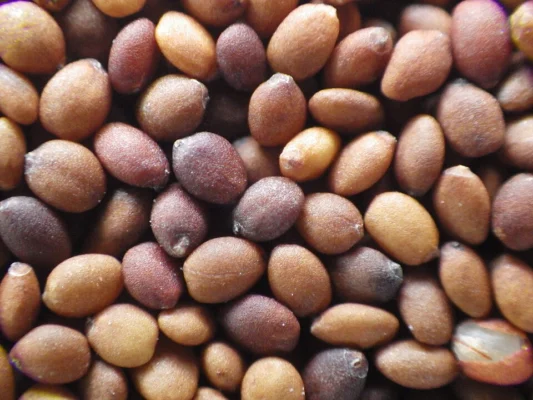
Raise a batch from seed
A good option for several summer plants. Sow the tiny seed thinly indoors and provide enough light and space once seedlings emerge.
Magnified sweet marjoram seeds; these are much smaller than they appear here.
Photo: Schlaghecken Josef, CC BY-SA 4.0. Resized and optimised; cropped for display. Adapted image under the same licence.
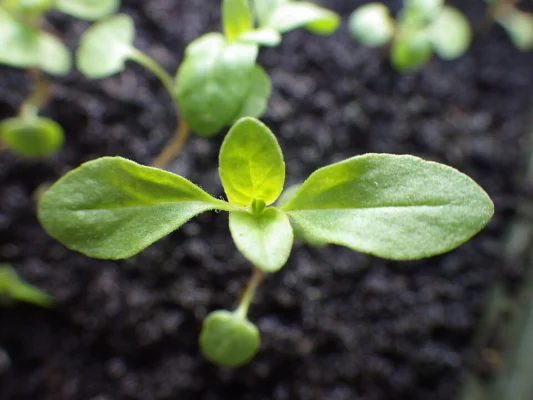
Grow as a summer annual
Plant out after frost and harvest through the warm months. Start again the following spring if winter shelter is limited.
A young sweet marjoram seedling, illustrating the start of a seasonal crop.
Photo: Schlaghecken Josef, CC BY-SA 4.0. Resized and optimised; cropped for display. Adapted image under the same licence.
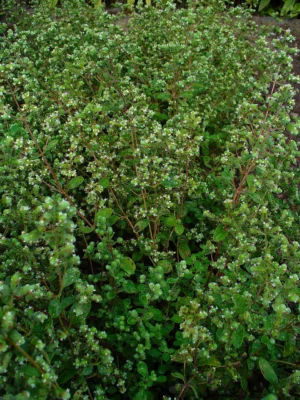
Keep a protected perennial
Retain a healthy plant in a movable pot and provide a bright frost free winter home. Trim and repot as needed when growth resumes.
Established sweet marjoram growing outdoors; the photograph does not show winter protection.
Photo: H. Zell, CC BY-SA 3.0. Resized and optimised; cropped for display. Adapted image under the same licence.
Look for Origanum majorana when you want the soft, sweet culinary herb described here. If a label says pot marjoram, wild marjoram or French marjoram, check the botanical identity and care requirements before buying.
Small marjoram flowers provide food for visiting pollinators. Leave a few plants or shoots to bloom if you have enough leafy growth for cooking.
Aphids also support beneficial insects in the garden. Check for predators before acting and avoid unnecessary sprays, especially while bees are visiting the flowers.
Published by Buy From Farmers Direct. Growing guidance reviewed 6 October 2026. The seasonal timeline uses the shared BFFD Growers Calendar record; adjust timings to your variety and local conditions.
They are related but not identical. Sweet marjoram is Origanum majorana, while oregano is commonly O. vulgare. The common name wild marjoram usually refers to oregano.
It is frost tender and not dependable outdoors in most gardens. Grow it as a summer annual or move a potted plant into bright frost free shelter.
Yes. Choose a pot with drainage holes and free draining peat free compost. A young plant can start in a 15cm pot, but may need a larger one as it develops.
Spring indoor sowing, around March to May, is straightforward. Give the small seeds warmth and light, then harden plants off and move outside after frost.
For a leaf crop, regular light cutting before flowering encourages leafy growth. You can leave some shoots to flower for insects, then trim spent stems once blooming finishes.
Yes. Dry clean shoots in a warm airy place out of strong sunlight. Strip and store the leaves only when thoroughly dry, in a labelled airtight container.
Start with the correct sweet marjoram, give it sun and good drainage, and pick little and often. A simple decision about winter shelter is usually the difference between a summer herb and a plant kept for another year.
Want to get food independence, support your local grower, get better prices and shop more privately?
Local food isn’t just something you find. It’s something you protect. A free account helps keep local supply visible, supported, and resilient.

….it takes 30 seconds for food lovers and 5 minutes for suppliers
We built this for people who care where their food comes from. For people who want to remain food secure. For Farmers to get to the local people, who deserve a better income and to deliver a better price for you. For the environmentally conscious and the privacy-conscious. An account simply helps us make the map and supplier reach more useful to you, without changing how open it is. You’re always in control.


Find local food. Stay connected to it. Create a free account to support local producers and be part of a growing food network.


