Medlar is a small fruit tree with white spring flowers, a spreading crown and warm autumn colour. Its unusual brown fruits are picked late in the year and allowed to soften before eating, a process called bletting. Give this long lived tree room to develop and it can become both an ornamental feature and a source of fruit rarely found in shops.
Hardy deciduous tree
Self fertile fruit
Sun or light shade
Harvest October to November
Blet before eating
| Botanical name | Mespilus germanica |
| Family | Rosaceae |
| Plant type | Deciduous fruit tree |
| Life cycle | Long lived perennial |
| Typical eventual height | About 4 to 6m; rootstock and variety affect size |
| Typical canopy spread | About 4 to 6m |
| Flower colour | White |
| Main flowering time | May to June |
| Pollination | Self fertile; one tree can crop |
| Position | Full sun preferred; light shade tolerated |
| Shelter | Avoid exposed wind and frost pockets |
| Soil | Fertile, moisture retentive and well drained |
| Unsuitable soil | Waterlogged or very chalky ground |
| Main planting season | November to March while dormant |
| Space to allow | Normally at least 5m from other trees or buildings |
| Common rootstocks | Quince A, Quince C and hawthorn |
| Main picking period | Late October and November |
| Eating condition | Soft brown flesh after bletting |
| Pruning season | Winter, while dormant |
| Bearing habit | Fruit forms at tips of short side shoots |
| Plant name | Crop type | Spacing |
Sow indoors
Plant outdoors
Harvest
Polytunnel | |||||||||||
|---|---|---|---|---|---|---|---|---|---|---|---|---|---|---|
| Jan | Feb | Mar | Apr | May | Jun | Jul | Aug | Sep | Oct | Nov | Dec | |||
| Medlar | Orchard fruit | Single allow a 4 to 6m crown, In row at least 5m, Row gap 5 to 6m; check rootstock and mature spread | Plant outdoors | Plant outdoors | Plant outdoors | No activity recorded | No activity recorded | No activity recorded | No activity recorded | No activity recorded | No activity recorded | Harvest | Plant outdoors, Harvest | Plant outdoors |
Sow indoors: no months recorded. Plant outdoors: January, February, March, November, December. Harvest: October, November. Polytunnel: no months recorded.
The November to March planting band is for dormant bare root trees and the preferred season for planting potted trees. Container grown trees can be planted outside that period when soil and weather are suitable. October and November show picking, not a promise that every fruit is ready to eat: bletting continues afterwards. Seed sowing and polytunnel bands are blank because this guide recommends a named grafted outdoor tree.
Choose medlar if you want an attractive garden tree and enjoy trying a less familiar fruit. One self fertile tree is enough, so a second pollination partner is not essential.
Allow for the mature crown rather than judging space by a young nursery tree. Even a medlar described as dwarfing can become several metres across; it is not automatically a suitable tree for a small patio pot.
Photo: Abdossamad Talebpour, CC BY-SA 3.0. Resized and optimised; cropped for display. Adapted image under the same licence.
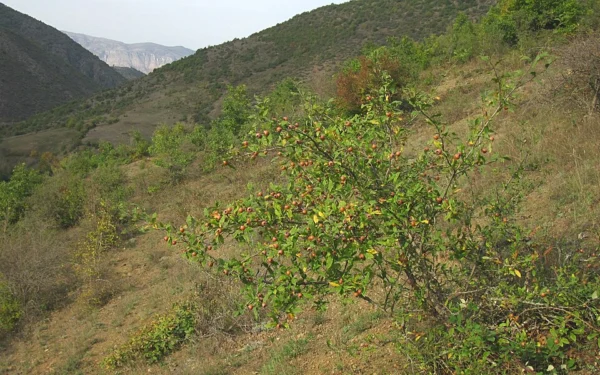
A sunny, sheltered position gives reliable growth and places the spring flowers and autumn foliage where you can enjoy them. Light shade is possible, but avoid deep shade beneath established trees.
Choose soil that holds some moisture without staying saturated. Very chalky ground can cause difficulties, so ask the nursery about rootstock suitability if your soil is strongly alkaline.
A broad lawn edge or open border is often more practical than a narrow strip against a fence. Normally leave at least 5m to other trees or buildings, checking the eventual size of the specific tree offered.
Keep the immediate root area free of grass and vigorous groundcover while the tree establishes. Leave clear access for watering, collecting fallen leaves and picking fruit without squeezing between neighbouring shrubs.
Photo: Rizzipi, CC BY-SA 4.0. Resized and optimised; cropped for display. Adapted image under the same licence.
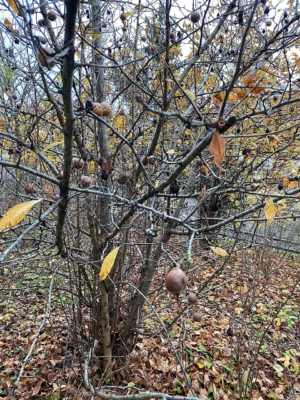
Buy a healthy grafted tree with a named variety and rootstock. Bare root trees are economical in the dormant season; keep their roots moist until planting and avoid frozen or waterlogged ground.
1.
Check the label for the variety, rootstock and eventual dimensions. Decide on the planting position before ordering, including the space needed by the mature branches.
2.
Remove perennial weeds and a circle of turf at least 1m across if planting in a lawn. Do this before digging so grass is not buried around the roots.
3.
Water a container tree thoroughly, or soak bare roots for about half an hour. Keep exposed roots out of drying wind and sunlight while preparing the hole.
4.
Dig a broad hole that comfortably accommodates the roots without bending them upwards. Make it no deeper than necessary to retain the original growing level.
5.
Gently loosen congested outer roots on a potted tree. Position the root flare at soil level and keep the graft union clearly above the finished soil surface.
6.
Fit a suitable short stake without driving through the roots. Backfill with the excavated soil, working it between bare roots and firming gently to remove large air pockets.
7.
Water thoroughly to settle the soil. Attach a flexible tree tie with a spacer so the trunk cannot rub against the stake, and add a guard if rabbits are a local problem.
8.
Spread a generous surface mulch over the cleared area while keeping it away from the trunk. Label the variety and begin checking soil moisture regularly through the first growing season.

Watering
New trees need attention during dry spring and summer weather. Check below the surface and water deeply enough to wet the developing root area, rather than repeatedly dampening only the top layer.
Continue supporting young trees through prolonged dry spells in subsequent seasons. Established medlars in suitable soil usually cope with rainfall, but unusually dry conditions can still affect growth and fruit quality.

Feeding
An annual layer of well rotted garden compost helps maintain soil condition and conserve moisture. Apply in late winter or early spring, leaving a gap around the bark.
Avoid routine heavy feeding. If growth remains weak after moisture, drainage and root competition have been checked, use an appropriate general fertiliser in spring according to its label.

Pruning
Establish an open, balanced framework while the tree is young. Prune in dry, frost free winter weather, removing poorly positioned growth gradually instead of drastically reshaping the crown every year.
Mature trees usually need only light thinning and removal of dead, damaged or crossing branches. Preserve plenty of short shoots with intact tips, where fruit buds form, and remove growth emerging below the graft.

Winter care
Medlar is hardy outdoors in the UK and does not normally require a greenhouse or fleece wrapping. Inspect stakes, ties and guards after storms and loosen ties before they constrict the growing trunk.
Clear diseased fallen fruit and leaves. Keep mulch clear of the trunk and check that winter water is draining away, especially around a newly planted tree on heavier soil.
Medlar has long oval leaves and solitary white flowers that open after the leaves have appeared. Older trees develop a distinctive branching outline rather than the neat narrow shape of a young nursery specimen.
The brown fruits have a conspicuous open end surrounded by persistent pointed sepals. This guide covers Mespilus germanica, not loquat, Eriobotrya japonica, whose evergreen leaves and orange fruits belong to a different tree.
Photo: Rosser1954, CC BY-SA 4.0. Resized and optimised; cropped for display. Adapted image under the same licence.
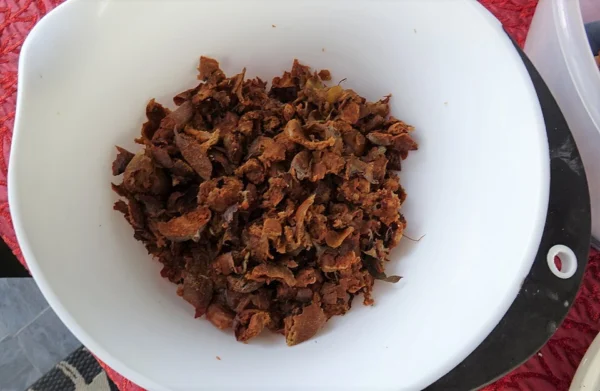
Medlars suit much of the UK, including gardens where more warmth demanding fruit trees struggle. A sheltered site still matters: hardiness of the wood does not prevent wind damage or an occasional late frost affecting blossom.
In cooler districts, ask a specialist nursery about an earlier ripening variety such as Iranian. Local weather changes the picking date, so assess the fruit instead of treating the calendar as a deadline.
In wetter gardens, prioritise drainage and an open canopy. A fruit tree should not sit in a winter puddle, and air moving through the branches helps foliage dry after rain.
Photo: Rosser1954, CC BY-SA 4.0. Resized and optimised; cropped for display. Adapted image under the same licence.
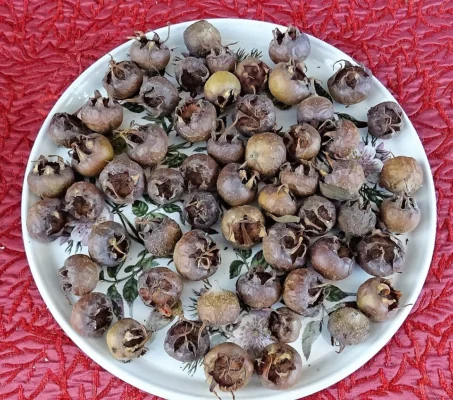
Young trees may need time to settle. On an established tree, consider shade, frost damage and whether pruning has repeatedly removed shoot tips. One medlar does not usually need a pollination partner.
Quince leaf blight can also affect medlar, particularly in wet seasons. Collect affected fallen leaves and remove dead shoots in winter. Maintain good growing conditions; minor spotting does not always need treatment.
Brown rot and other storage rots are separate from normal bletting. Remove damaged or mouldy fruits promptly and dispose of mummified fruit left on the tree. Store sound harvests in clean containers.
Fireblight is an occasional possibility, especially with blackened, wilting shoot tips. Seek a reliable diagnosis and follow current RHS control advice rather than treating every dark leaf as the same problem.
Check moisture at root depth, planting level, drainage and the tie. Dry roots and saturated roots can produce similar distress. Firm loosened soil gently and correct the cause instead of automatically adding more water.
Named medlars are normally propagated by grafting onto a suitable rootstock. Buying a grafted tree gives you a known fruit variety and clearer expectations about size than growing an unidentified seedling.
Seed growing is possible as a patient experiment, but germination can be slow and seedlings vary. They may grow larger and produce different fruit, so seed is not a dependable way to reproduce a favourite named variety.
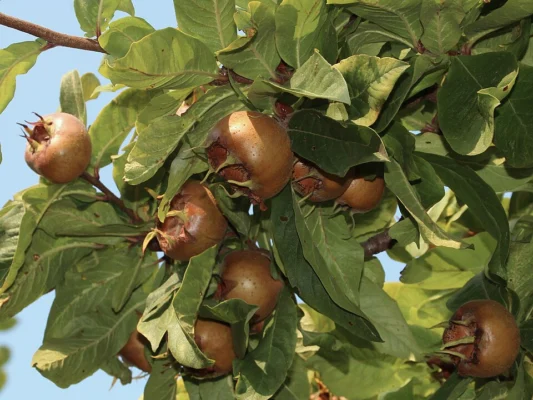
Nottingham
A well known choice with relatively small, well flavoured fruit. It suits gardeners wanting a traditional medlar for eating after bletting or making jelly. Check the rootstock rather than assuming the name guarantees a tiny tree.
Illustrative medlar fruit; the pictured cultivar is not confirmed as Nottingham.
Photo: Stefan Oemisch, CC BY-SA 4.0. Resized and optimised; cropped for display. Adapted image under the same licence.
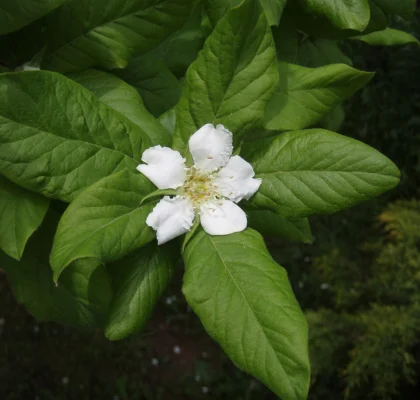
Iranian
An earlier ripening selection with smaller, more conical fruit and soft flesh when fully ripe. It is particularly worth discussing with a nursery when eating quality and the length of your local autumn are priorities.
Illustrative medlar blossom, not a confirmed Iranian cultivar photograph.
Photo: Ranko, CC BY-SA 3.0. Resized and optimised; cropped for display. Adapted image under the same licence.
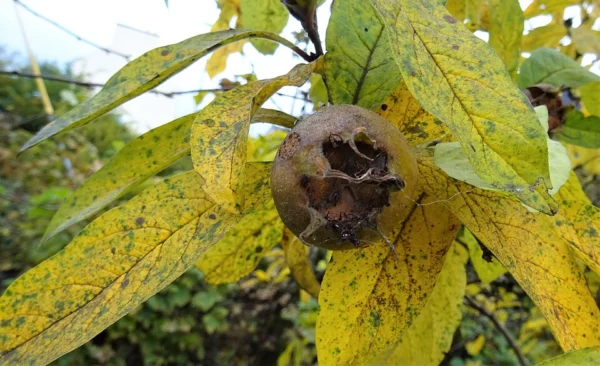
Royal
A self fertile variety valued for sweet, creamy flesh after ripening. Its later season gives another option for gardeners comparing varieties, with fruit commonly used during November and December.
Illustrative medlar fruits and foliage; Royal is not confirmed in this image.
Photo: Rosser1954, CC BY-SA 4.0. Resized and optimised; cropped for display. Adapted image under the same licence.
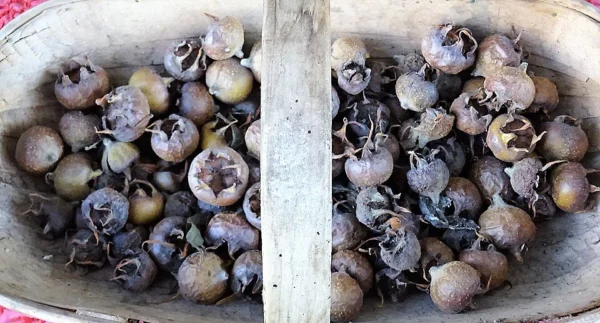
Large Dutch
Choose this for its conspicuously large fruits and culinary use. The flesh is generally coarser than selections favoured for eating fresh, so jelly and other cooked preparations are a sensible main aim.
Illustrative harvested bletted medlars, not confirmed Large Dutch fruit.
Photo: Rosser1954, CC BY-SA 4.0. Resized and optimised; cropped for display. Adapted image under the same licence.
Compare the variety, rootstock and mature spread together. A specialist fruit nursery can advise on local soil and the form of tree supplied. Plan room for the crown and a simple aftercare routine before buying.
The late spring flowers attract visiting pollinators, while an established crown provides shelter and perching places. Self fertility describes fruit setting; it does not make the flowers irrelevant to insects.
A modest amount of harmless leaf damage can be tolerated. Keep flowering plants elsewhere in the garden and avoid unnecessary spraying during blossom, when insects are visiting.
Published by Buy From Farmers Direct. Growing guidance reviewed 6 October 2026. The seasonal timeline uses the shared BFFD Growers Calendar record; adjust timings to your variety and local conditions.
Bletting is the softening and sweetening that makes a hard medlar pleasant to eat. The flesh becomes brown and soft, rather like thick fruit purée. It is a normal ripening change, distinct from fungal decay.
Pick sound fruit in dry weather in late October or November when it detaches readily. Lay it in a single layer in a clean, cool place and inspect regularly. Softening may take days or weeks depending on maturity and conditions.
Brown soft flesh alone is normal for a bletted medlar. Fuzzy mould, an unpleasant spoiled smell or obvious decay are reasons to discard fruit. Do not use mouldy fruit or judge safety solely by its brown colour.
A frost often accompanies the traditional picking season, but softening is the important change, not frost itself. Sound fruit can ripen after picking. Do not leave a ready crop outside indefinitely just waiting for a freeze.
Scoop the soft flesh from the skin and separate the hard pips, or use the pulp in a suitable jelly or dessert recipe. Use fully bletted fruit promptly and discard any that show decay.
Repeated hard cutting removes fruiting tips and can encourage vigorous replacement shoots. Choose an appropriate rootstock and enough space at the outset, then maintain the tree with light, selective winter pruning.
Give a medlar room, support it while young and learn the difference between sound bletted fruit and spoilage. The reward is an attractive tree with a distinctive harvest at the quiet end of the fruit season.
Explore more growing guides: Apple (Dwarf), Blackcurrant, Elderberry.
Want to get food independence, support your local grower, get better prices and shop more privately?
Local food isn’t just something you find. It’s something you protect. A free account helps keep local supply visible, supported, and resilient.

….it takes 30 seconds for food lovers and 5 minutes for suppliers
We built this for people who care where their food comes from. For people who want to remain food secure. For Farmers to get to the local people, who deserve a better income and to deliver a better price for you. For the environmentally conscious and the privacy-conscious. An account simply helps us make the map and supplier reach more useful to you, without changing how open it is. You’re always in control.


Find local food. Stay connected to it. Create a free account to support local producers and be part of a growing food network.


