An elder gives a garden two distinct seasons: fragrant flower heads in early summer and dark berries later in the year. This guide covers common elder, Sambucus nigra, and its cultivars. Allow room for a substantial shrub, leave flowers to set fruit, and use only properly identified flowers and fully ripe berries with appropriate kitchen preparation. Elderberries must be cooked before eating.
Hardy deciduous shrub
Flowers and autumn fruit
Sun or partial shade
Space for a large shrub
Cook ripe berries
| Botanical name | Sambucus nigra |
| Family | Viburnaceae |
| Common names | Elder, black elder, elderberry |
| Origin | Common elder is native to Britain and Ireland |
| Habit | Deciduous shrub or small tree |
| Unpruned common elder height | Often around 4 to 8m in gardens |
| Typical mature spread | About 2.5 to 4m, depending on cultivar |
| Light | Full sun or partial shade |
| Soil | Moisture retentive with adequate drainage |
| Soil pH | Tolerates acid, neutral and alkaline soil |
| Hardiness | RHS H6 for common elder |
| Planting material | Labelled potted plants or dormant bare root plants |
| Useful planting season | Autumn to early spring, when soil is workable |
| Indicative shrub spacing | Allow about 3m, adjusting to mature spread |
| Flower picking | Usually May and June |
| Berry picking | Usually August and September; locality varies |
| Pollination | Insects; compatibility depends on cultivar |
| Main kitchen use | Prepared elderflower drinks and cooked berry preserves |
| Greenhouse requirement | None for established outdoor plants |
| Important preparation | Remove leaves and stems; discard unripe fruit |
| Plant name | Crop type | Spacing |
Sow indoors
Plant outdoors
Harvest
Polytunnel | |||||||||||
|---|---|---|---|---|---|---|---|---|---|---|---|---|---|---|
| Jan | Feb | Mar | Apr | May | Jun | Jul | Aug | Sep | Oct | Nov | Dec | |||
| Elderberry | Soft fruit | Single 300cm, In row 300cm, Row gap 400cm | Plant outdoors | Plant outdoors | Plant outdoors | Plant outdoors | Harvest | Harvest | No activity recorded | Harvest | Harvest | Plant outdoors | Plant outdoors | Plant outdoors |
Sow indoors: no months recorded. Plant outdoors: January, February, March, April, October, November, December. Harvest: May, June, August, September. Polytunnel: no months recorded.
The harvest band combines two different crops: flowers in May and June, then ripe berries in August and September. Haschberg commonly fruits in August and September; local common elders and other cultivars may differ. Picking a flower head removes its future berries. Planting dates cover dormant bare root stock and useful cooler months for pots. There is no routine seed sowing or polytunnel band.
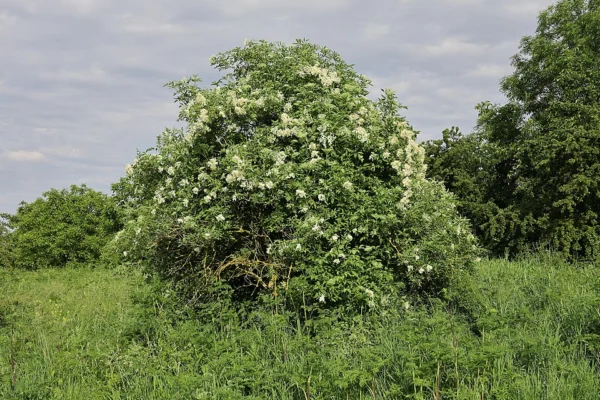
Elder suits an informal boundary, wildlife corner or generously sized fruit garden. Choose its position for the eventual canopy, rather than the size of the nursery pot.
A small patio is less suitable for an unrestricted common elder. Ornamental cultivars offer different foliage and habits, but even these need space and considered pruning.
Photo: grassrootsgroundswell, CC BY 2.0. Resized and optimised; cropped for display.
Use an open position with sun for good growth and a convenient picking height. Partial shade is acceptable, although a deeply shaded corner is a less useful cropping position.
Elder tolerates a broad range of garden soils, including chalk. Aim for ground that holds moisture but drains after rain, rather than a permanently flooded planting hole.
Allow about 3m between managed shrubs as a planning guide, and more for spreading specimens. For a Haschberg hedge, its nursery suggests approximately 1.8m; follow cultivar and hedge advice separately.
Keep access around the plant for watering, selective pruning and gathering fruit. Avoid positioning heavy fruiting branches directly over a favourite seat, where fallen berries can stain surfaces.
Photo: Rosa-Maria Rinkl, CC BY-SA 4.0. Resized and optimised; cropped for display. Adapted image under the same licence.
A labelled young plant is the simplest start. Keep its cultivar name, especially when buying for a predictable fruit crop or a pollination partner.
1.
Choose healthy stock with sound stems and a balanced root system. Reject a plant with damaged roots or a severely congested pot.
2.
Clear a broad area of grass and perennial weeds. Consider nearby tree roots that could compete with the new elder.
3.
Plant during mild autumn or spring conditions. Dormant bare root plants can go in during winter when the soil is neither frozen nor saturated.
4.
Water a dry root ball before planting. Keep exposed bare roots covered and moist while preparing the hole.
5.
Dig a hole no deeper than the root ball and roughly three times as wide. Loosen compacted sides so roots can spread.
6.
Set the plant at its original soil level, with the stem base above the soil. Gently loosen circling roots and refill around them.
7.
Firm the surrounding soil and water thoroughly. Add an organic mulch, leaving a clear gap around the stems.
8.
Label the elder and check moisture through its first growing seasons. Keep the immediate root area free from vigorous competing growth.

Watering
Check the soil around new roots, not just the surface, particularly in dry or windy weather. Water slowly enough to soak the root zone rather than wetting only the mulch.
Established elders are more self reliant, but prolonged drought can still affect foliage and developing fruit. Check moisture before watering a wilted plant because saturated roots can also struggle.

Feeding
An elder growing well in ordinary garden soil seldom needs intensive feeding. Refresh organic mulch when required, keeping it clear of the stem bases.
If growth remains weak, investigate water supply, planting depth and competing roots before adding fertiliser. Where feeding is justified, use a general garden feed at its labelled rate in spring.

Pruning
Let a new plant establish. Thereafter remove dead, damaged and awkwardly crossing branches as needed, retaining a useful framework for flowers and fruit.
Hard pruning in late winter or early spring can control an established ornamental elder and encourage colourful new foliage. It can also compromise flowering and cropping, so avoid treating a fruiting shrub as an annually cut foliage plant.

Winter care
Common elder is hardy outdoors across the UK and naturally loses its leaves. An established plant does not need a heated greenhouse for winter.
Inspect newly planted stock after storms for loosened roots or rubbing ties. Keep mulch away from bark and postpone planting or soil work when the ground is frozen or waterlogged.
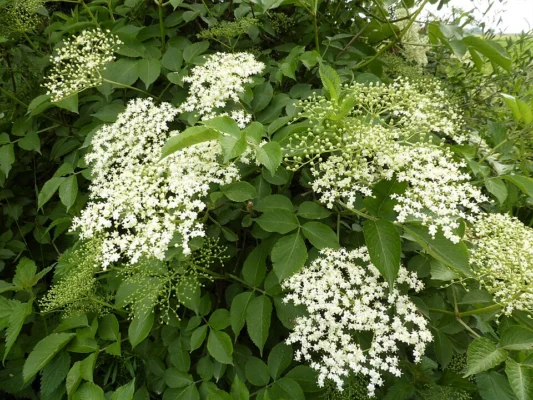
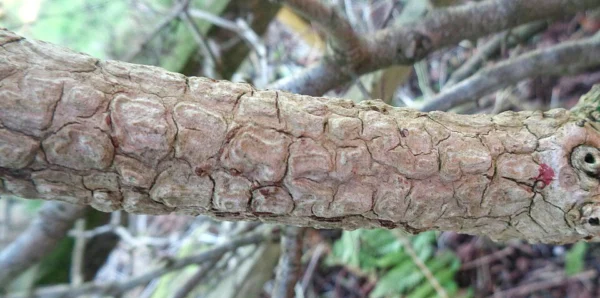
Common elder has opposite leaves divided into usually five to seven toothed leaflets, flat cream flower heads and later clusters of dark fruit. Older bark becomes corky and ridged. Ornamental cultivars may have purple foliage or pink flowers.
These features describe a known garden plant; they are not sufficient instructions for identifying unfamiliar berries to eat. Keep the nursery label. Do not substitute red elder, dwarf elder or an unidentified shrub for Sambucus nigra.
Photo: Rosser1954, CC BY 4.0. Resized and optimised; cropped for display.
Elder grows widely across Britain, but flowering and ripening dates change with altitude, exposure and season. Use your own plant’s development to guide picking, rather than treating calendar colours as a fixed appointment.
In dry eastern gardens, establishment watering deserves particular attention. On heavy western soils, choose a planting spot where rainfall drains away instead of collecting around young roots.
Pick a few fresh flower heads when open, leaving plenty for berries. For fruit, gather fully ripe clusters, remove stalks, leaves and unripe berries, wash and cook using a reliable recipe. Never eat raw elderberries or use leaves, bark or roots in food.
Photo: T. Kebert, CC BY-SA 4.0. Resized and optimised; cropped for display. Adapted image under the same licence.
Aphids can gather on young growth. Inspect their extent and allow natural predators time to work. A healthy established elder often tolerates a limited infestation.
Review pruning first, particularly repeated hard cutting. Also allow young plants time to establish and check whether the canopy is heavily shaded.
Flower picking removes the potential crop. Poor pollination or bird feeding may also contribute. Haschberg is described as partly self fertile, with another suitable elder able to improve yields.
Check root moisture and planting depth. Persistent branch dieback can have other causes, including wilt diseases. Seek a proper diagnosis before assuming extra water or feed will resolve it.
Birds relish the crop. Leave a share or protect an accessible section with securely fitted, wildlife safe netting. Inspect it frequently and remove it after harvest.
Elder can be propagated from softwood cuttings in early summer or hardwood cuttings in winter. Start with healthy identified material and keep cuttings labelled.
Cuttings preserve a cultivar’s identity; seedlings may vary. A bought plant is usually more convenient when the priority is a particular fruiting selection rather than experimenting with propagation.
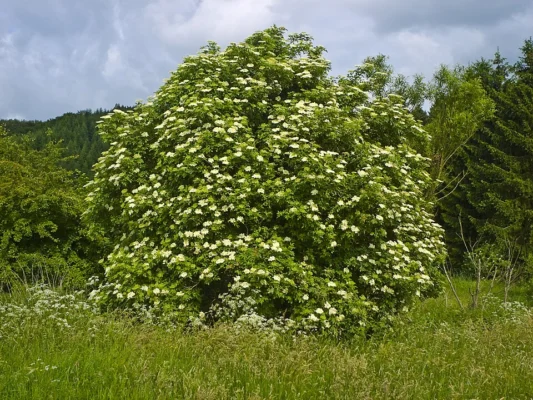
Common elder
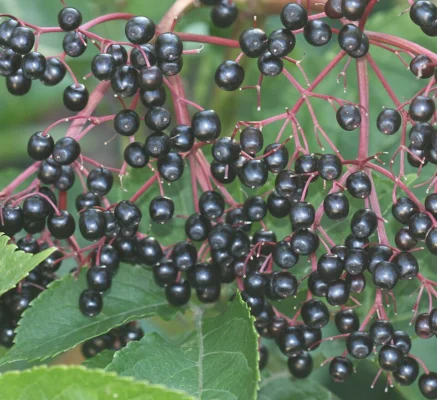
Haschberg
A fruiting selection sold for productive berry clusters. It is partly self fertile; ask the nursery about a compatible companion where yield is the priority.
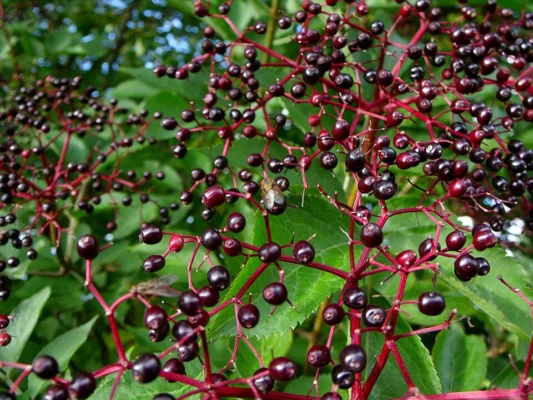
Illustrative common elderberries; this photograph is not confirmed as Haschberg.
Photo: S. Rae from Scotland, UK, CC BY 2.0. Resized and optimised; cropped for display.
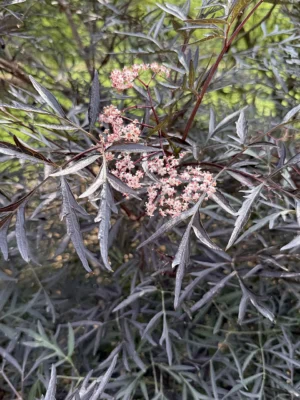
Black Lace, Eva
A decorative choice with finely divided dark leaves and pink flowers. It can still become a broad shrub, so allow space even when buying a small plant.
Black Lace elder, also known by the cultivar name Eva.
Photo: Cossey25, CC BY-SA 4.0. Resized and optimised; cropped for display. Adapted image under the same licence.
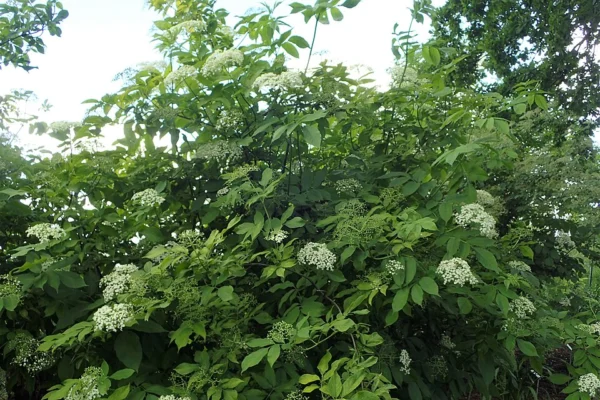
Aurea
Golden foliage makes this a conspicuous garden shrub. It also produces cream flowers and dark berries, combining ornamental interest with the usual elder preparation requirements.
Sambucus nigra Aurea with golden green leaves and flowers.
Photo: Krzysztof Ziarnek, Kenraiz, CC BY-SA 4.0. Resized and optimised; cropped for display. Adapted image under the same licence.
Ask a nursery for Sambucus nigra with a clear cultivar label. Compare mature spread, pollination needs and whether you mainly want flowers, berries or foliage before buying.
Elder flowers attract insects, and the berries feed birds including thrushes and starlings. Its leaves also support moth caterpillars. Retaining some crop makes it a useful wildlife plant.
Check shrubs carefully for active bird nests before pruning and leave occupied areas undisturbed. Plan picking from accessible branches so the rest of the canopy can remain a sheltered feeding place.
Published by Buy From Farmers Direct. Sources checked 6 October 2026. Growing references: RHS growing guide for elder; RHS common elder profile; RHS Black Lace elder profile; RHS golden elder profile; Victoriana Nursery: Haschberg growing details; Woodland Trust: common elder and wildlife; The Conservation Volunteers: elder features and seasons; NCCIH: elderberry safety; RHS shrub planting; RHS watering guidance; RHS tree and shrub establishment. The seasonal timeline uses the shared BFFD Growers Calendar record; adjust timings to your variety and local conditions.
Flowers usually open in May and June. Berries commonly ripen in August and September, sometimes later in cooler sites. These are separate harvests from the same plant.
No. Raw or unripe elderberries can cause illness. Use fully ripe fruit from a correctly identified Sambucus nigra, remove stalks, leaves and unripe berries, then cook according to a reliable recipe.
Yes, on the heads you pick. Leave enough flowers on the shrub if you want a later berry crop and food for birds.
Pollination depends on the cultivar. Haschberg is partly self fertile, but another suitable elder can improve cropping. Ask the supplier to confirm a compatible plant.
Common elder is a large shrub or small tree, often spreading 2.5 to 4m. Allow roughly 3m between managed shrubs, adjusting to the cultivar and pruning plan.
Established elders tolerate hard pruning, especially when grown for foliage. For flowers and berries, preserve more of the framework and prune selectively, because severe cutting can reduce the crop.
Give an elder room, help its roots establish and decide how much flowering growth to keep. A carefully managed shrub can supply both seasonal flowers and berries while supporting garden wildlife.
Explore more growing guides: Blackberry, Blackcurrant, Borage.
Want to get food independence, support your local grower, get better prices and shop more privately?
Local food isn’t just something you find. It’s something you protect. A free account helps keep local supply visible, supported, and resilient.

….it takes 30 seconds for food lovers and 5 minutes for suppliers
We built this for people who care where their food comes from. For people who want to remain food secure. For Farmers to get to the local people, who deserve a better income and to deliver a better price for you. For the environmentally conscious and the privacy-conscious. An account simply helps us make the map and supplier reach more useful to you, without changing how open it is. You’re always in control.


Find local food. Stay connected to it. Create a free account to support local producers and be part of a growing food network.


