Radicchio brings crisp leaves, white ribs and a pleasantly bitter flavour to autumn and winter meals. It is a leaf chicory, grown either for a full head or for young leaves. The most useful starting point is a summer sowing of a variety matched to your intended harvest season.
Colourful leaf chicory
Summer sowing
Autumn and winter varieties
Crisp bitter leaves
Heads or baby leaves
| Botanical name | Cichorium intybus, radicchio selections |
| Family | Asteraceae |
| Crop | Leafy heads or young salad leaves |
| Growing cycle | Usually harvested as a one-season vegetable |
| Flavour | Distinctly bitter; usually milder after cooking |
| Head shapes | Round, elongated or relatively loose, depending on variety |
| Colours | Red and white, or pale leaves with red speckles |
| Position | Sun, with some summer shade tolerated |
| Soil | Fertile, moisture retentive and well drained |
| Main sowing | June and July |
| Later sowing | August only for suitable late or winter selections |
| Sowing depth | About 1cm outdoors; follow packet guidance |
| Head spacing | At least 30cm between plants |
| Row spacing | About 30cm |
| Baby leaf spacing | About 5cm after thinning |
| Container size | At least 30cm wide, with drainage |
| Time to full heads | Often around four months; variety and weather matter |
| Main harvest | Autumn, with selected varieties continuing into winter |
| Colour development | Cooler weather often improves red colouring |
| Blanching | Not normally needed for ordinary heading radicchio |
| Plant name | Crop type | Spacing |
Sow indoors
Plant outdoors
Harvest
Polytunnel | |||||||||||
|---|---|---|---|---|---|---|---|---|---|---|---|---|---|---|
| Jan | Feb | Mar | Apr | May | Jun | Jul | Aug | Sep | Oct | Nov | Dec | |||
| Radicchio | Salad & leaves | Single 30cm, In row 30cm, Row gap 30cm for heads; about 5cm for baby leaves | Harvest, Polytunnel | Harvest, Polytunnel | Harvest, Polytunnel | No activity recorded | No activity recorded | Sow indoors | Sow indoors, Plant outdoors | Sow indoors, Plant outdoors | Plant outdoors, Harvest | Harvest, Polytunnel | Harvest, Polytunnel | Harvest, Polytunnel |
Sow indoors: June, July, August. Plant outdoors: July, August, September. Harvest: January, February, March, September, October, November, December. Polytunnel: January, February, March, October, November, December.
This calendar combines autumn and winter selections. June and July are the main sowing months; August sowing and September transplanting apply only to suitable later varieties. September to December covers autumn crops, while January to March is for winter selections such as Rossa di Verona in suitable conditions. The protected band shows optional autumn and winter shelter, not Belgian chicory forcing or a guarantee that every variety survives outside.
Radicchio suits gardeners who want salad leaves with more bite than lettuce and a crop that becomes colourful as summer ends. Try a short row first if the flavour is new to you; it is useful raw, grilled or lightly cooked.
Choose between full heads and frequent leaf picking before planting. A crowded baby leaf row is productive in a small space, but it will not also produce the large, intact hearts shown on a heading variety’s seed packet.
Photo: Goldlocki, CC BY-SA 3.0. Resized and optimised; cropped for display. Adapted image under the same licence.
Use an open bed with good light and access to water. Some shade can help in hot weather, but a deeply shaded corner is unlikely to produce strong, well formed heads.
Prepare the ground with mature compost and remove weeds before sowing. On a no-dig bed, a settled surface layer of compost can provide a suitable seedbed.
Avoid a winter site that stays saturated. Good drainage and space around plants become particularly useful once autumn growth slows and damp outer leaves lie close to the ground.
Read the named variety’s sowing and harvest instructions. Early, late and winter selections are not interchangeable, even when their packet photographs show similar red heads.
1.
Choose an autumn heading variety for a first attempt, or a clearly described winter selection for later harvesting. Label it with its full name and sowing date.
2.
For the main crop, sow in June or July. A later sowing can suit specific varieties, but do not assume an August packet date applies equally well to every cold or exposed garden.
3.
Sow thinly outdoors in drills about 1cm deep and 30cm apart, or start a few seeds per module in moist peat-free seed compost.
4.
Keep the seedbed evenly moist. Give module trays good light and ventilation, avoiding a scorching greenhouse bench that repeatedly dries the compost.
5.
Thin module seedlings to one strong plant per cell. Thin outdoor seedlings progressively until heading plants stand at least 30cm apart; sound thinnings can be used as leaves.
6.
Plant modules while they are young and growing actively, usually a few weeks after sowing. Acclimatise protected plants, keep the rootball intact and leave the crown at the soil surface.
7.
Water before and after transplanting, and keep checking during the first dry spell. Protect tender plants from slugs and keep competing weeds small.
8.
Leave healthy outer leaves to support developing heads. If the aim is baby leaves instead, pick lightly and regularly while keeping the central growing point intact.

Watering
Water thoroughly during dry spells so plants keep growing steadily. Drought can encourage premature flowering and make the leaves more strongly bitter.
Check containers more often than beds. Water the soil rather than repeatedly soaking the heart, and adjust as autumn temperatures fall so plants are moist without remaining waterlogged.

Feeding
Ground improved with compost usually needs little further feeding during a normal crop. Poor growth can reflect crowding, dry soil or root problems, so check these before adding fertiliser.
Plants in containers may need a general liquid feed during active summer growth, following its label. Extra fertiliser cannot turn a late winter variety into an early autumn head.

Pruning
Do not repeatedly strip the outer leaves from plants intended to form heads. Remove badly damaged or decaying leaves carefully while preserving the healthy centre.
For a whole head, cut at its base once it has reached the shape and firmness expected for the variety. A sound stump may produce a smaller second flush, but this is a possible bonus rather than a planned full replacement crop.

Winter care
Match protection to the variety and weather. Harvest vulnerable autumn heads before damaging frost, or use a cloche or fleece; only suitable established winter selections should be left for later cutting.
Ventilate covered crops on mild days and inspect for slugs and rotting leaves. Growth is slow in short days, so winter picking relies largely on plants established before the cold weather.
Radicchio is a cultivated leaf chicory, not a red cabbage or a lettuce. Many types develop red leaves with broad white ribs, while Castelfranco types have pale, speckled inner leaves.
Belgian chicory produces forced pale chicons, sugarloaf has elongated green heads, and endive belongs to Cichorium endivia. Those related crops have different uses or growing methods; a radicchio head does not need the Belgian forcing routine.
Photo: cyclonebill, CC BY-SA 2.0. Resized and optimised; cropped for display. Adapted image under the same licence.
Summer sowing helps avoid the cold checks that can make an early crop bolt. In short season or northern gardens, use an earlier maturing selection and sow towards the earlier part of its recommended summer window.
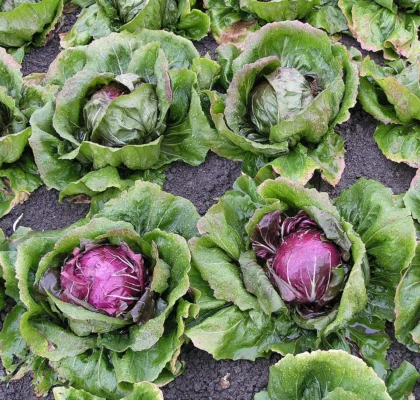
Green outer leaves are normal on many plants. Red colouring often deepens as nights cool and the centre develops, so an early green rosette does not automatically mean the seed was wrong.
Cut autumn heads when ready instead of leaving all of them for winter. Keep a separate labelled row of a suitable winter variety if you want later harvests, and let the actual condition of the plants override a printed month.
Photo: Forest & Kim Starr, CC BY 3.0. Resized and optimised; cropped for display. Forest & Kim Starr
Early cold exposure, unsuitable timing or stress can encourage bolting. Use the correct seasonal variety, avoid growth checks and keep moisture steady. A stem already flowering will not turn back into a tight head.
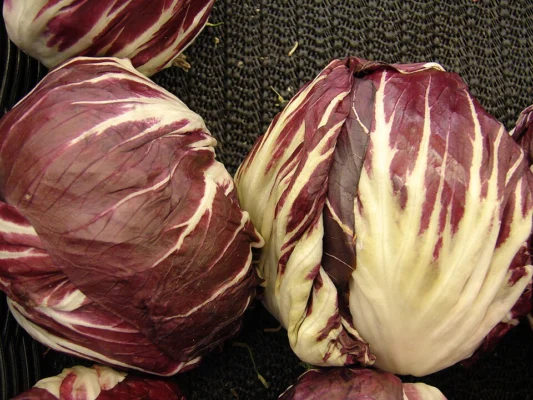
Warm weather, immature growth and variety all affect colour. Check the full variety name and allow autumn selections to develop in cooler conditions. Some radicchios are naturally pale or speckled rather than uniformly red.
Crowding, late sowing, drought or a naturally open type can explain the result. Allow 30cm or more for heads and check the expected maturity. Healthy loose leaves can still be harvested.
Slugs and snails can damage young crops, particularly in damp conditions. Inspect at dusk, protect new plantings and reduce nearby daytime hiding places without removing useful wildlife habitat from the whole garden.
Persistent wetness, crowding and damaged tissue can lead to decay. Remove badly affected plants, improve airflow and avoid leaving mature heads in saturated conditions. Discard rotten material rather than trying to store the head.
Radicchio is normally raised from seed. Both direct sowing and modules work; use the packet’s seasonal instructions rather than treating every chicory as a spring sown salad.
To save seed, retain a group of healthy, true-to-type plants to flower later, and prevent crossing with other flowering Cichorium intybus selections. Do not select premature bolters. Dry ripe seed thoroughly; named F1 hybrids will not reproduce reliably from saved seed.

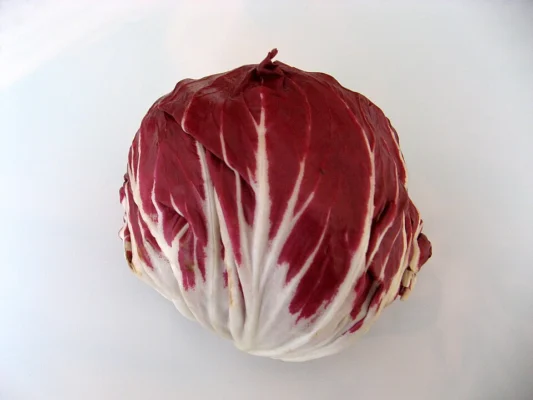
Palla Rossa
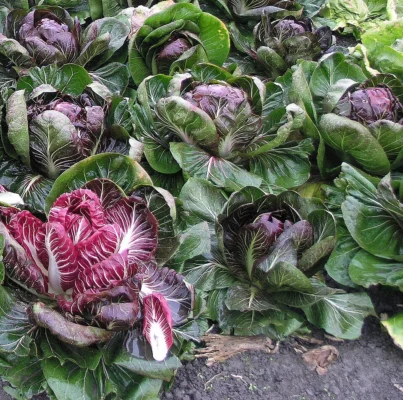
A familiar round red heading type with prominent white ribs. Select an autumn strain for straightforward summer sowing and autumn cutting; different Palla Rossa selections can have quite different maturity dates.
Illustrative red radicchio head; the source does not identify a Palla Rossa strain.
Photo: CostaPPPR, CC BY-SA 4.0. Resized and optimised; cropped for display. Adapted image under the same licence.
Rossa di Treviso Precoce
An early Treviso type with elongated red and white heads. Choose a precoce or early selection for this outdoor heading approach; Treviso tardivo is a distinct late type often grown with additional forcing.
Treviso precoce type radicchio, identified in the source photograph.
Photo: Goldlocki, CC BY-SA 3.0. Resized and optimised; cropped for display. Adapted image under the same licence.
Variegato di Castelfranco
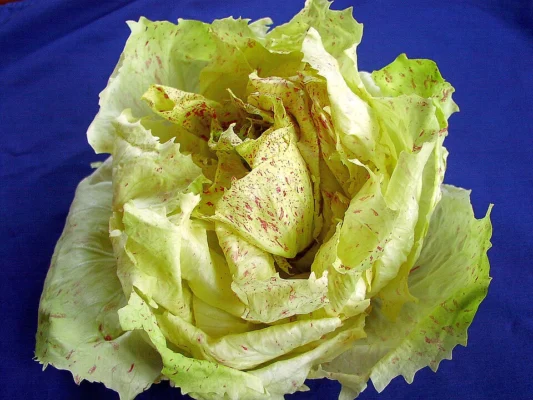
Produces pale inner leaves patterned with red flecks. Early and later selections are available, so follow the seed supplier’s season. Its softer colouring and relatively gentle bitterness make it useful in mixed salads.
A Castelfranco type head, identified in the source; no particular seed strain is claimed.
Photo: Goldlocki, CC BY-SA 3.0. Resized and optimised; cropped for display. Adapted image under the same licence.
Rossa di Verona
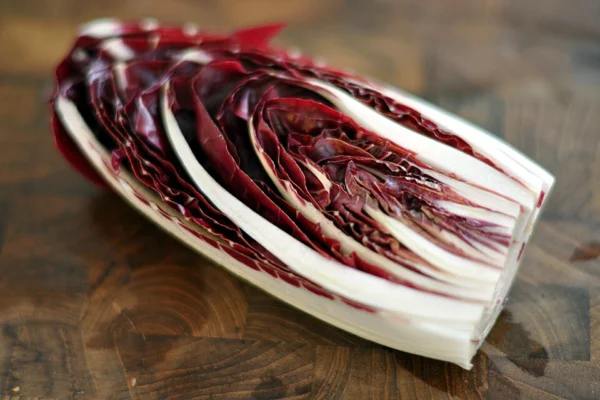
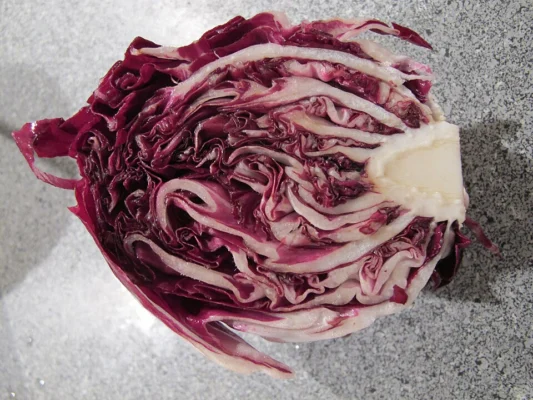
A compact red heading winter type. Franchi’s Palla Rossa of Verona is sown in summer for a January to March harvest, subject to local conditions; it should not be expected to follow the same timetable as an autumn variety.
Illustrative cross-section of red radicchio; not confirmed as Rossa di Verona.
Photo: Xopolino, CC BY-SA 4.0. Resized and optimised; cropped for display. Adapted image under the same licence.
Compare the full variety or strain name, sowing dates and expected cutting season. A packet chosen for your climate and intended harvest is more useful than selecting solely from the colour of a mature head.
Radicchio kept for seed can later produce chicory’s blue flowers, which are visited by insects. Reserve a few deliberate seed plants if wanted, allowing room for their much taller flowering growth.
A crop grown for leaves does not require pollination before harvest. Encourage garden predators and inspect plants regularly, using targeted protection for vulnerable seedlings rather than treating every visitor as a pest.
Published by Buy From Farmers Direct. Growing guidance reviewed 6 October 2026. The seasonal timeline uses the shared BFFD Growers Calendar record; adjust timings to your variety and local conditions.
It is a group of leaf chicories within Cichorium intybus. Belgian forcing chicory and sugarloaf are other crop types, while curly and broad-leaved endive belong to a different species.
June and July are useful main months. Some winter selections can be sown in August, but timing depends on the named strain, your climate and whether you want full heads or baby leaves.
No. Ordinary heading types protect their own inner leaves as the head closes. Some specialist late Treviso or other selections use additional forcing or blanching; follow those instructions only for the appropriate type.
Young leaves and outer foliage may be green, especially in warm weather. Cooler autumn conditions often improve the red colour. Check the variety because variegated and green types will not become uniform red balls.
Only suitable winter varieties in suitable conditions. Autumn types may need harvesting or protection before severe weather. Winter wet, slug damage and decay can spoil a crop even when it tolerates frost.
Yes. Grow a separate close-spaced baby leaf patch and pick lightly above the growing point. Repeatedly removing leaves from your heading plants will reduce their chance of producing good intact heads.
Give radicchio a summer start, enough room and steady moisture. The right seasonal variety makes the difference between an autumn head, a winter crop and a row of plants harvested before they are ready.
Explore more growing guides: Chicory, Endive, Chinese Cabbage.
Want to get food independence, support your local grower, get better prices and shop more privately?
Local food isn’t just something you find. It’s something you protect. A free account helps keep local supply visible, supported, and resilient.

….it takes 30 seconds for food lovers and 5 minutes for suppliers
We built this for people who care where their food comes from. For people who want to remain food secure. For Farmers to get to the local people, who deserve a better income and to deliver a better price for you. For the environmentally conscious and the privacy-conscious. An account simply helps us make the map and supplier reach more useful to you, without changing how open it is. You’re always in control.


Find local food. Stay connected to it. Create a free account to support local producers and be part of a growing food network.


