A home-grown watermelon is a satisfying summer challenge for a warm greenhouse or polytunnel. Give an early, small-fruited variety a protected start, room for its vines and enough time to ripen fully. Warmth helps, but careful watering, pollination and choosing the right picking moment decide the result.
Tender summer annual
Best grown under cover
Choose an early variety
Flowers need pollination
Ripen on the vine
| Botanical name | Citrullus lanatus |
| Family | Cucurbitaceae |
| Crop type | Frost-tender annual vine |
| Main UK setting | Sunny greenhouse or polytunnel |
| Outdoor prospects | An experiment for very warm, sheltered sites |
| Seed sowing | April to May in warmth |
| Sowing depth | About 1–2cm; follow the packet |
| Germination warmth | Usually 21–25°C |
| Root handling | Raise in individual pots and disturb minimally |
| Planting time | May to June, when protected conditions are warm |
| Plant spacing | About 1m; allow extra room for spreading vines |
| Soil | Fertile, moist and freely draining |
| Light | Full sun with ventilation against overheating |
| Container growing | One plant in a large, stable container |
| Training | Trail on the ground or use strong supports |
| Flower types | Separate male and female flowers |
| Pollination | Insects or careful hand pollination |
| Typical UK harvest | August–September, depending on warmth and variety |
| Ripening after picking | Fruit does not become sweeter off the vine |
| Winter treatment | Remove finished vines and start again next spring |
| Plant name | Crop type | Spacing |
Sow indoors
Plant outdoors
Harvest
Polytunnel | |||||||||||
|---|---|---|---|---|---|---|---|---|---|---|---|---|---|---|
| Jan | Feb | Mar | Apr | May | Jun | Jul | Aug | Sep | Oct | Nov | Dec | |||
| Watermelon | Cucurbits | Single 100cm, In row 100cm, Row gap 200cm; allow for variety and training | No activity recorded | No activity recorded | No activity recorded | Sow indoors, Polytunnel | Sow indoors, Plant outdoors, Polytunnel | Plant outdoors, Polytunnel | Polytunnel | Harvest, Polytunnel | Harvest, Polytunnel | No activity recorded | No activity recorded | No activity recorded |
Sow indoors: April, May. Plant outdoors: May, June. Harvest: August, September. Polytunnel: April, May, June, July, August, September.
Sow indoors in April–May and plant into the final protected position in May–June only when nights and soil are reliably warm. A frost-free tunnel can still be too cold for useful growth. August–September is the main potential harvest window, not a promise; a cool summer can prevent ripening. The protected band includes seed raising and the summer crop. Outdoor trials need a particularly warm site and later planting.
Choose watermelon if you can check a warm growing space regularly through summer. The crop needs a long enough run of warmth for fruit to fill and sweeten, so a sunny tunnel offers much better odds than an exposed vegetable bed.
Small-fruited, early cultivars are the sensible starting point. A large shop-bought watermelon is not a useful model for the size, variety or yield you should expect from a first UK crop.
Photo: Forest and Kim Starr, CC BY 3.0 us. Resized and optimised; cropped for display. Forest & Kim Starr
Reserve the brightest practical part of a greenhouse or polytunnel, with opening doors and vents. Aim for warmth with moving air; a closed structure can overheat rapidly even in a British spring.
Prepare a deep, fertile bed that drains freely. Incorporate mature compost before planting and keep roots supplied with moisture rather than relying on a thin layer of dry soil over a hard base.
For pots, choose a substantial container with drainage holes and room for one plant to root well. Fill with suitable peat free growing compost and place it where you can water without soaking the crown repeatedly.
Plan the mature vine before sowing. Leave roughly 1m between compact plants, more room for vigorous trailers, and a clear route along the bed or a strong trellis capable of carrying supported fruit.
Photo: Reaperman, CC BY-SA 3.0. Resized and optimised; cropped for display. Adapted image under the same licence.
Start with labelled watermelon seed or healthy young plants. Dessert melons such as cantaloupe are a different crop, Cucumis melo, so their pruning and harvest instructions should not automatically be applied to watermelon.
1.
Choose an early watermelon variety and decide whether it will trail or climb. Install substantial supports before roots and stems occupy the bed.
2.
In April or May, fill individual pots with seed compost. Sow about 1–2cm deep according to the packet; individual pots reduce root disturbance at planting.
3.
Use a propagator or another reliably warm position, usually 21–25°C. Keep the compost lightly moist, not saturated, and remove a propagation cover once seedlings emerge.
4.
Give seedlings strong light and warmth. Pot on before roots become congested, supporting the rootball rather than pulling the stem or shaking soil away.
5.
Prepare the final bed or container while plants develop. Check actual night temperatures with a thermometer; fleece provides only limited protection during a cold spell.
6.
Plant in May or June when the protected growing space is suitable. Keep the rootball intact, retain its previous soil level and water the surrounding compost thoroughly.
7.
Guide young vines into their allocated space. Tie a climbing plant loosely to its support and prepare broad, soft slings for fruits before they become heavy.
8.
Allow insects access when flowers open, or hand pollinate if access is poor. Transfer fresh pollen from a male flower to the centre of an open female flower, recognised by the small fruit behind it.

Watering
Keep moisture steady through establishment, flowering and fruit swelling. Check containers frequently in warm weather and water the root zone thoroughly when needed, allowing surplus water to drain.
Avoid cycles of severe drought followed by flooding. A mature fruit can split, and stressed roots cannot support steady growth. Keep the base of the stem clear of persistently wet debris.

Feeding
Use fertile soil or a good growing compost from the start. Excess nitrogen is not a substitute for warmth and may encourage more leaves than your space can accommodate.
Once flowers and fruit develop, use a suitable liquid feed at its labelled rate and interval. Adjust to the compost and product rather than combining several fertilisers or feeding a dry rootball.

Pruning
Train the vines as they grow and retain healthy leaves to feed the fruit. Follow any specific supplier instructions for your cultivar; there is no need to copy a cantaloupe pinching routine blindly.
Concentrate on a manageable crop that the plant has time to ripen. Remove damaged growth, and thin surplus late-setting fruits where necessary. Never leave the weight of a climbing watermelon hanging solely from its stalk.

Winter care
Watermelon is grown as a summer annual in the UK. Remove finished vines when the crop is over; trying to overwinter them in a cold tunnel does not provide a dependable second season.
Clear diseased residues, clean supports and record the variety, sowing date and harvest result. If fruit stayed unripe, improve warmth or choose an earlier cultivar next year instead of simply adding more feed.
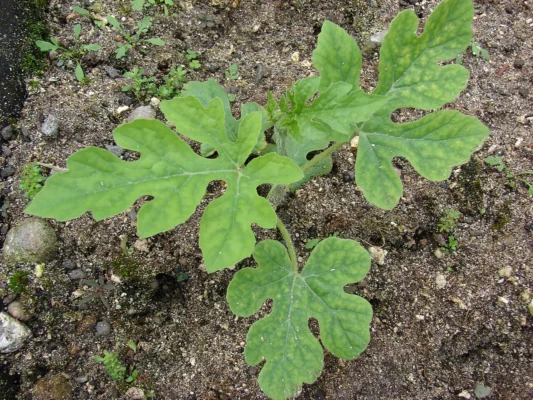
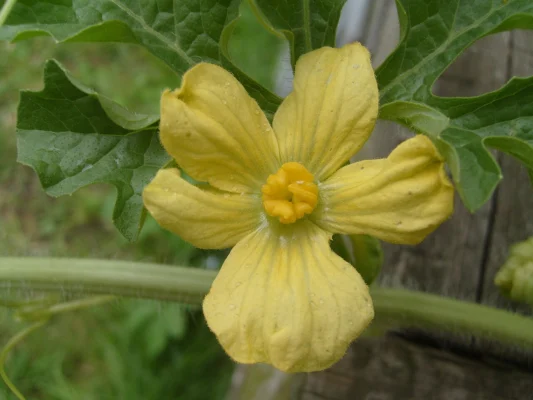
Watermelon has trailing stems, tendrils and deeply lobed leaves. Yellow flowers develop along the vines; female flowers have a swollen base that can become a fruit after successful pollination.
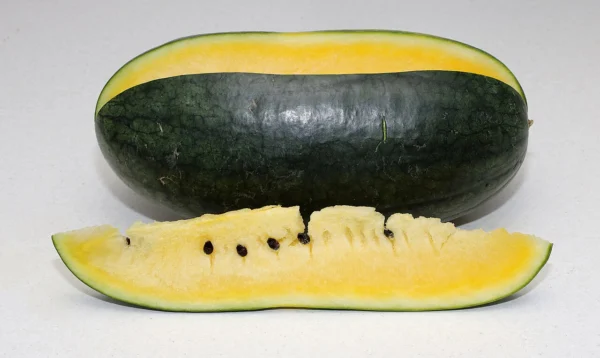
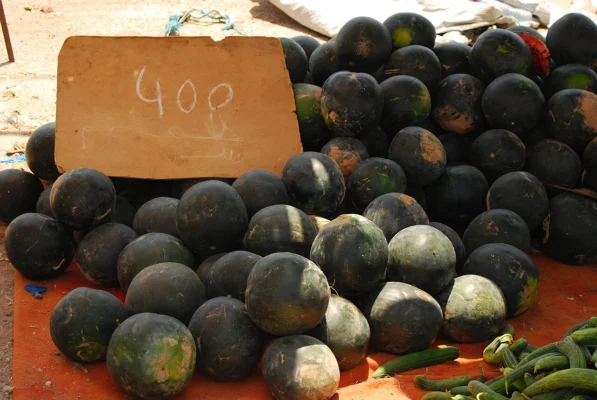
Rind pattern, size and flesh colour vary by cultivar. Some fruits are striped, others very dark green, and ripe flesh need not always be red. Use the variety label and several maturity clues together.
Photo: George Chernilevsky, CC BY 4.0. Resized and optimised; cropped for display.
In cooler or northern districts, protect the whole crop and avoid a late start. Even a compact cultivar needs warm growing conditions; sunny days under cover cannot fully compensate for prolonged cold nights.
As fruit approaches its expected maturity, look for the nearby tendril drying and the ground-facing patch changing from pale to creamy yellow where present. Rind appearance can also change. Use several clues, because tapping alone is an unreliable first-time test.
Cut a fully ripe fruit from the vine with a short stem attached. Watermelon does not ripen further or become sweeter after picking, and it does not slip naturally from the stalk like some dessert melons. Wash the rind before cutting and refrigerate cut fruit promptly.
Photo: HalwaStudio, CC BY-SA 4.0. Resized and optimised; cropped for display. Adapted image under the same licence.
Check compost warmth and watering. Watermelon seed performs poorly in cold, wet conditions; restart in clean compost at the packet’s recommended temperature rather than repeatedly soaking the original pot.
Early flowers may be male. Once female flowers appear, check insect access, heat stress and the availability of fresh pollen. Hand pollination can help in a closed growing space, but cannot overcome persistently unsuitable temperatures.
A late set, cool summer, heavy crop or stressed foliage can limit ripening. Keep plants healthy, prioritise early fruit and wait for maturity; taking an unripe fruit indoors will not make it sweeter.
Inspect leaf undersides and the pattern of damage before choosing a remedy. Improve airflow, avoid drought stress and use a control suitable for an edible protected crop only after identifying the problem.
Keep watering even, lift ground-grown fruit onto a clean support and provide slings on trellises. Remove decaying fruit promptly. A heavy fruit needs its own support, not just a stronger tie around the vine.
Sow fresh, labelled seed each spring. F1 hybrids may not retain their expected qualities in the next generation, and seed from a supermarket fruit gives no reliable indication of suitability for a short UK summer.
Saving seed from an open-pollinated variety requires fully mature fruit and control of crossing with other watermelons. Follow a specialist seed-saving method; growing several varieties together makes the next generation less predictable.
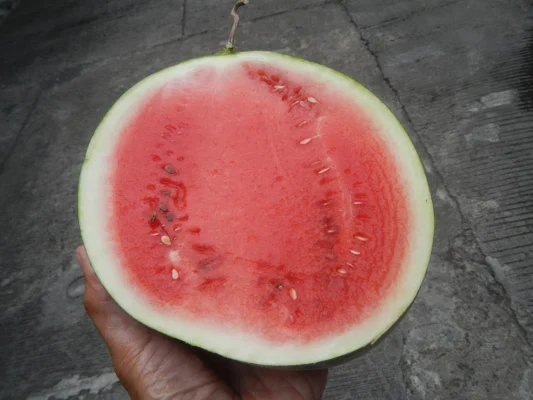
Sugar Baby
A familiar early, small-fruited watermelon with red flesh and dark skin. It is a practical first choice under cover, provided the plant receives a warm enough season.
Sugar Baby watermelon shown in the source photograph.
Photo: JFVelasquez Floro, CC0. Resized and optimised; cropped for display.
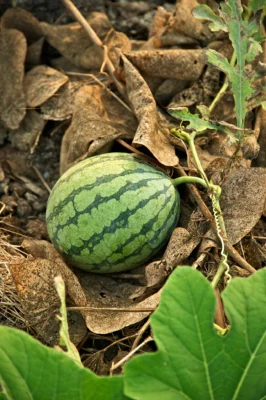
Little Darling F1
A compact hybrid producing small oval fruits, suited to a greenhouse or polytunnel. Allow room for its vines and judge the crop by maturity rather than a fixed fruit count.
Watermelon shown for illustration; Little Darling identity is not verified.
Photo: Fred Hsu ( Wikipedia:User:Fred Hsu on en.wikipedia ), CC BY-SA 3.0. Resized and optimised; cropped for display. Adapted image under the same licence.

Mini Love F1
A compact hybrid selected for northern European growing conditions. Good light, warmth and regular watering still matter; compact growth does not make the plant frost hardy.
Watermelon shown for illustration; Mini Love identity is not verified.
Photo: Gaurav Dhwaj Khadka, CC BY-SA 4.0. Resized and optimised; cropped for display. Adapted image under the same licence.
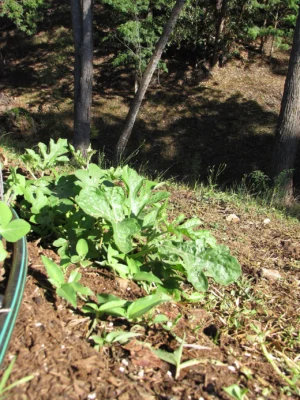
Blacktail Mountain
An early red-fleshed, open-pollinated variety offered for cooler summer conditions. Give it protected warmth in the UK and assess its performance on your own site.
Watermelon growth shown for illustration; Blacktail Mountain identity is not verified.
Photo: Forest and Kim Starr, CC BY 3.0 us. Resized and optimised; cropped for display. Forest & Kim Starr
Look for a named cultivar with clear UK growing instructions. Check its vine size, sowing temperature and pollination requirements, especially if buying a seedless type that needs a separate pollen-producing companion.
Bees and other flower visitors can transfer pollen between male and female flowers. Open suitable ventilation during flowering and avoid spraying open blooms. If insects cannot reach the crop, hand pollination is a practical alternative.
Keep young plants protected from slugs and snails while checking beneath pots and debris. Leave useful habitat elsewhere in the garden so predators can remain nearby without giving pests a hiding place against tender stems.
Published by Buy From Farmers Direct. Growing guidance reviewed 6 October 2026. The seasonal timeline uses the shared BFFD Growers Calendar record; adjust timings to your variety and local conditions.
Yes, especially early, small-fruited varieties in a greenhouse or polytunnel. Results depend on the summer; outdoor growing is much less reliable.
April to May is a useful UK window. Use warmth, usually 21–25°C, and follow the variety’s packet for depth and temperature.
Yes. Give one plant a large container with drainage, good compost, regular watering and enough space or support for its vines and fruit.
Yes. Pollen must reach female flowers. Insects usually do this; hand pollination can help under cover. Seedless varieties have additional polliniser requirements.
Combine the variety’s expected maturity with a drying nearby tendril, a creamy ground spot where present and changes in rind appearance. Do not rely solely on a hollow sound.
No. It will not become sweeter after removal from the vine, so leave it attached until fully mature and harvest before damaging cold.
Give an early variety a warm start, protect its roots from stress and support the fruit as carefully as the vine. Then wait for genuine ripeness: that final patience is what makes the crop worthwhile.
Explore more growing guides: Cantaloupe, Courgette, Cucumber.
Want to get food independence, support your local grower, get better prices and shop more privately?
Local food isn’t just something you find. It’s something you protect. A free account helps keep local supply visible, supported, and resilient.

….it takes 30 seconds for food lovers and 5 minutes for suppliers
We built this for people who care where their food comes from. For people who want to remain food secure. For Farmers to get to the local people, who deserve a better income and to deliver a better price for you. For the environmentally conscious and the privacy-conscious. An account simply helps us make the map and supplier reach more useful to you, without changing how open it is. You’re always in control.


Find local food. Stay connected to it. Create a free account to support local producers and be part of a growing food network.


