Cantaloupe needs more warmth than most British gardens reliably provide. Give it your sunniest protected space and regular attention. Establish healthy vines, pollinate the flowers and allow a manageable crop to ripen before autumn cools the growing space.
Tender annual
Protected growing
Needs warm nights
Help pollination
Late summer fruit
| Botanical name | Cucumis melo, cantaloupe and muskmelon types |
| Family | Cucurbitaceae |
| Plant type | Tender annual fruiting vine |
| Relationship | True melon, distinct from watermelon |
| Best UK setting | Greenhouse or polytunnel |
| Light | Full sun |
| Soil | Fertile and freely drained |
| Moisture | Evenly moist, without saturation |
| Main seed window | Mid April to mid May |
| Seed depth | About 1.5cm |
| Germination temperature | About 18 to 21°C |
| Final planting | Late May or June when sufficiently warm |
| Minimum settling conditions | Reliably above 12 to 15°C |
| Supported spacing | About 45cm between plants |
| Trailing spacing | At least 90cm between plants |
| Container size | At least 40cm wide and deep |
| Flower colour | Yellow |
| Pollination | Insects or careful hand pollination |
| Main UK harvest | Late July to September under cover |
| Winter habit | Crop ends; raise new plants next year |
| Plant name | Crop type | Spacing |
Sow indoors
Plant outdoors
Harvest
Polytunnel | |||||||||||
|---|---|---|---|---|---|---|---|---|---|---|---|---|---|---|
| Jan | Feb | Mar | Apr | May | Jun | Jul | Aug | Sep | Oct | Nov | Dec | |||
| Cantaloupe | Cucurbits | Single 0.90m, In row 0.90m, Row gap 0.90m | No activity recorded | No activity recorded | No activity recorded | Sow indoors | Sow indoors, Polytunnel | Plant outdoors, Polytunnel | Harvest, Polytunnel | Harvest, Polytunnel | Harvest, Polytunnel | No activity recorded | No activity recorded | No activity recorded |
Sow indoors: April, May. Plant outdoors: June. Harvest: July, August, September. Polytunnel: May, June, July, August, September.
Sow indoors from mid April to mid May. June planting applies to suitable outdoor sites with warm nights; protected planting may begin in late May above 12 to 15°C. July harvests are earliest protected crops, with outdoor fruit later. Polytunnel dates do not guarantee warmth. The spacing shown is for trailing plants.
Cantaloupe suits attentive greenhouse growers. One carefully managed plant is a good first attempt. Reserve enough room to water and inspect flowers without forcing your way through the vines.
Outdoor growing is a trial for warm, sheltered gardens with a suitable variety. A wall or cloche helps, but cannot turn a persistently cool site into a reliable melon climate. In shorter seasons, protect the crop and prioritise early varieties.
Photo: Bill Ebbesen (Atomicbre at English Wikipedia), CC BY 3.0. Resized and optimised; cropped for display.
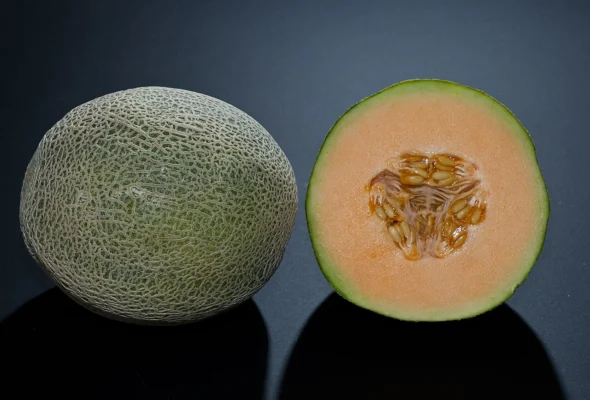
Choose strong light and shelter from cold draughts. Check night temperatures beside the plants: a comfortable greenhouse at lunchtime may be cold enough to check growth before dawn.
Prepare a fertile, freely drained border, incorporating well rotted compost. Avoid a wet planting hollow. Put irrigation where roots can receive water without repeatedly splashing the foliage or soaking the stem base.
Use one plant in a freely draining pot at least 40cm wide and deep, filled with peat free multipurpose compost. Position it before the vines attach themselves to supports.
Install strong trellis, wires or netting before the stems spread. Trained plants need less floor space, but the support must eventually carry fruit as well as leaves. Keep a clear route to vents and neighbouring crops.
Photo: Rob Duval, CC BY-SA 4.0. Resized and optimised; cropped for display. Adapted image under the same licence.
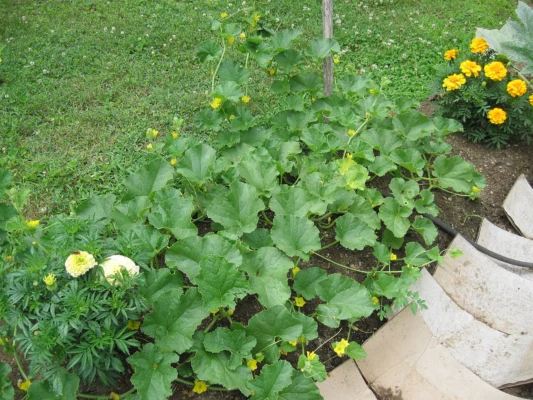
Use labelled seed and individual pots to protect sensitive roots. Delay sowing if necessary rather than keeping a large seedling waiting for its final position to warm up.
1.
Fill small clean pots with moist seed compost and label the variety and date.
2.
Sow one or two seeds per pot about 1.5cm deep, following the packet.
3.
Provide steady germination warmth, then bright light as soon as seedlings emerge.
4.
Retain one strong seedling per pot and keep the compost moist but airy.
5.
Prepare the final container or border and put supports in place before planting.
6.
Wait until the final position stays warm enough, and acclimatise plants gradually.
7.
Slide out each intact rootball and plant without breaking roots or burying the stem deeply.
8.
Water in and tie new growth gently, allowing around 45cm for trained plants or at least 90cm for trailing vines.

Watering
Water consistently, particularly while fruit is swelling. Check the root zone rather than assuming a wilted leaf always means dry compost. Saturated roots also struggle, so inspect drainage before adding another can of water.
Aim water at the compost or soil and use the morning when practical. Containers may need daily checks in hot weather. As fruit matures, reduce watering cautiously with plant demand, rather than suddenly drying out a still productive vine.

Feeding
Prepared soil and potting compost provide the starting nutrients. Container plants will need supplementary feeding as those reserves decline. Follow a suitable edible crop fertiliser label and avoid increasing the concentration to chase faster growth.
Once fruit is setting, a potassium rich liquid feed such as tomato feed is useful, usually at intervals specified by its maker. Excess nitrogen can produce abundant foliage without the desired crop. Review light, pollination and temperature before blaming every delay on hunger.

Pruning
Follow the variety supplier’s training method. A practical option is to pinch the young main tip after about five leaves and keep four strong side shoots. Guide them into separate spaces so you can find flowers and developing fruits.
Keep a modest number of well positioned fruit, especially late in the season. Pinch fruiting shoots a few leaves beyond the selected fruit and remove competing late growth. Cradle hanging melons in soft, breathable slings attached to the support, not tied tightly around their stalks.

Winter care
Melons are annual crops and will not overwinter outdoors in the UK. By early autumn, concentrate on fruit already close to maturity. A late flush of flowers may look promising but has little time to become a ripe melon.
Clear finished vines and inspect reusable supports. Clean the growing area, particularly after mites or disease. Record the variety and ripening dates to judge whether it earned its space.
Cantaloupe belongs to Cucumis melo, the true melon species. The vine has broad, slightly rough leaves, slender tendrils and yellow flowers. European cantaloupes and netted muskmelons are closely related cultivated groups, and the common name is used differently between countries.
Look for a small swelling behind a fruit bearing flower; a male flower lacks this tiny melon. Fruit skin may be smooth, ribbed or netted according to variety. Do not apply watermelon leaf, tendril or harvesting rules automatically to these plants.
Photo: Rob Duval, CC BY-SA 4.0. Resized and optimised; cropped for display. Adapted image under the same licence.

In northern, exposed or cool gardens, a greenhouse or polytunnel offers the strongest chance of ripening a crop. Ventilate on hot days without leaving tender plants exposed to cold nights. The aim is steady warmth, not the highest possible thermometer reading.
For a favourable outdoor site, choose a suitable variety and warm the soil before planting. Keep covers ready for cool spells and retain fewer fruit as summer advances.
Judge ripeness using the named variety’s guidance, colour and scent. Netted muskmelons often loosen at the stem; some European types do not slip cleanly. Inspect frequently once aroma develops and support the fruit while cutting or lifting it. Mature melons soften quickly, so cool ripe fruit and use it promptly.
Photo: Tiia Monto, CC BY-SA 3.0. Resized and optimised; cropped for display. Adapted image under the same licence.

Early flowers may be male. Later failure can reflect poor pollen transfer, temperature extremes or water stress. Identify fruit bearing flowers, allow insect access when warm and hand pollinate if necessary.
Glasshouse red spider mite thrives in hot, dry conditions. Inspect leaf undersides with a hand lens. Avoid drought and overcrowding, and seek an appropriate biological control early rather than waiting for extensive webbing.
Powdery mildew can weaken foliage. Maintain steady root moisture and airflow, remove badly affected debris and avoid excess nitrogen. Do not assume soaking leaves repeatedly will cure an established infection.
Cold conditions or disturbed roots can check a transplant. Compare night temperatures and compost moisture with the plant’s needs. Give it stable warmth and gentle watering instead of immediately adding strong feed.
Wet contact and damaged skin favour decay. Raise ground borne melons onto a clean dry tile or board, and support hanging fruit securely. Remove rotting fruit and check that water is not collecting beneath healthy ones.
Raise new plants from seed each spring or buy healthy young plants from a reliable supplier. A named early variety gives a clearer expectation than seed taken from an unlabelled supermarket fruit.
F1 hybrids do not reliably reproduce their original characteristics from saved seed, and melon varieties can cross. Bought labelled seed is simpler when predictable cropping matters.
Alvaro
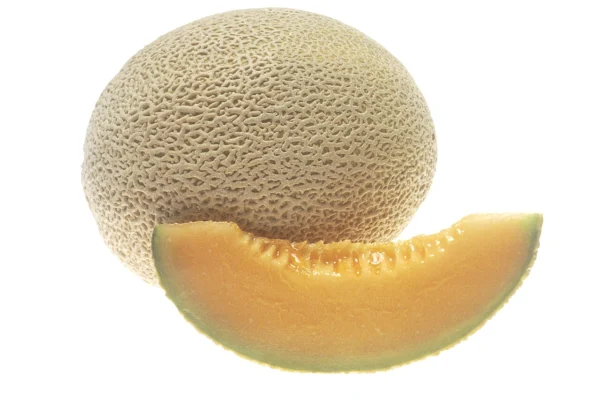
A cantaloupe suited to favourable outdoor UK sites as well as protected growing. RHS describes pale yellow skin with green stripes and pale orange flesh. Its outdoor suitability still depends on warmth and shelter.
Illustrative cantaloupe photograph; this netted fruit is not identified as Alvaro.
Photo: Renee Comet, National Cancer Institute, Public domain. Resized and optimised; cropped for display.
Emir
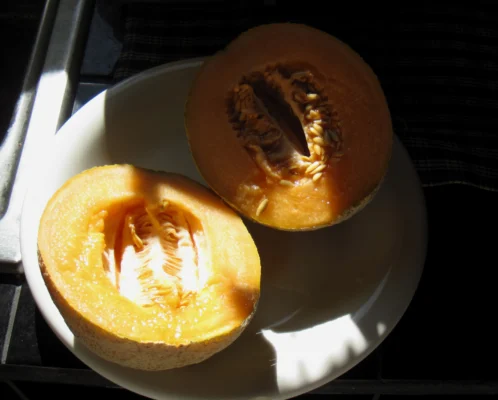
A UK option for less generous summers, best under glass despite its comparative cold tolerance. Produces netted fruit with aromatic orange flesh. Cold tolerance here does not mean frost hardiness.
Illustrative cut cantaloupe photograph; Emir is not identified.
Photo: Karen and Brad Emerson, CC BY 2.0. Resized and optimised; cropped for display.

Sweetheart
A relatively quick maturing choice with medium fruits, grey green skin and light orange flesh. Useful where ripening time is a priority. Check the current supplier’s growing instructions when buying seed or plants.
Illustrative melon rind close-up; Sweetheart is not identified.
Photo: Daderot, CC0 1.0. Resized and optimised; cropped for display.
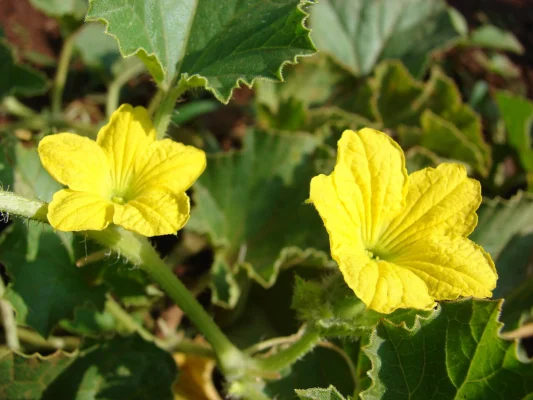
Charentais
A classic aromatic cantaloupe with orange flesh, generally best given greenhouse protection in the UK. Check the specific seed selection, since fruit skin and ripening behaviour can differ among Charentais types.
Illustrative cantaloupe flowers; the Charentais cultivar is not identified.
Photo: Forest & Kim Starr, CC BY 3.0. Resized and optimised; cropped for display.
Explore the BFFD map for nearby growers and plant suppliers. Ask which melon varieties suit your greenhouse or sheltered site, and confirm current availability before travelling.
Bees can transfer pollen between melon flowers when they have access. Open protected spaces during suitable warm weather and keep flowering plants nearby. Avoid spraying open flowers or trapping visiting insects when closing up.
Where insects are scarce, transfer pollen from an open male flower to an open fruit bearing flower using a soft brush. Work gently. Hand pollination helps fruit set but cannot correct unsuitable growing conditions.
Published by Buy From Farmers Direct. Sources checked 5 October 2026. Growing references: RHS: How to grow melons; Utah State University: Cantaloupe in the garden; University of Maryland: Growing melons in a home garden; University of Maryland: Ripening behaviours and harvest indexes; University of Minnesota: Harvesting and storing melons; RHS: Alvaro melon; RHS: Emir melon; Kings Seeds: Sweetheart melon plants; RHS Plants: Charentais melon; Kings Seeds: Melon growing instructions; Thompson and Morgan: Growing melons from seed; RHS: Glasshouse red spider mite; RHS: Powdery mildews. The seasonal timeline uses the shared BFFD Growers Calendar record; adjust timings to your variety and local conditions.
Yes, in a warm sheltered site with a suitable variety, but results vary with the summer. A greenhouse or polytunnel usually gives a more dependable chance of ripe fruit.
For a typical UK crop, sow indoors from mid April to mid May with steady warmth. Avoid starting so early that large seedlings outgrow their warm indoor space.
Often it helps. Transfer pollen from a male flower to a fruit bearing flower, recognised by its small swelling behind the petals. One plant can supply both flower types.
Use a pot at least 40cm wide and deep with good drainage, one plant and strong support. Water and feed consistently, and cradle developing fruit in slings if it hangs.
Look for the variety’s mature colour and a clear melon scent. Many netted types loosen at the stalk, while some European cantaloupes do not. Do not rely on size or a single universal slipping rule.
Check whether fruit bearing flowers are present and pollinated. Too much nitrogen, unsuitable temperatures, shade or water stress can all interfere. More fertiliser is not automatically the answer.
Plan the warm season with the BFFD growers calendar. Keep sowing, pollination and picking dates in your own notes to judge next year’s variety and position.
Explore more growing guides: Aubergine, Basil, Beans (French).
Want to get food independence, support your local grower, get better prices and shop more privately?
Local food isn’t just something you find. It’s something you protect. A free account helps keep local supply visible, supported, and resilient.

….it takes 30 seconds for food lovers and 5 minutes for suppliers
We built this for people who care where their food comes from. For people who want to remain food secure. For Farmers to get to the local people, who deserve a better income and to deliver a better price for you. For the environmentally conscious and the privacy-conscious. An account simply helps us make the map and supplier reach more useful to you, without changing how open it is. You’re always in control.


Find local food. Stay connected to it. Create a free account to support local producers and be part of a growing food network.


