New York asters bring fresh colour to borders as many summer flowers fade. Their pink, purple, blue or white daisies suit autumn planting schemes and cutting gardens. This guide covers Symphyotrichum novi-belgii and the garden selections and hybrids commonly sold with it. Choose by mature size as well as flower colour, then give the shallow roots steady moisture and enough space for a healthy clump.
Hardy perennial
Late season flowers
Sun preferred
Moisture retentive soil
Divide in spring
| Botanical name | Symphyotrichum novi-belgii and related garden hybrids |
| Family | Asteraceae |
| Older name | Aster novi-belgii |
| Common names | New York aster, Michaelmas daisy |
| Plant type | Herbaceous perennial |
| Origin of species | Eastern North America |
| Foliage | Dies back for winter |
| Position | Sun or light partial shade |
| Soil | Fertile, moist and drained |
| Soil reaction | Generally adaptable |
| Flowering | Late summer to autumn |
| Typical height | About 30 to 150 cm, depending on selection |
| Spacing | Usually 45 to 60 cm; check cultivar spread |
| Planting | Spring preferred; autumn also possible |
| Propagation | Division of named cultivars |
| Division season | March and April |
| Support | Useful for taller cultivars |
| Common problem | Powdery mildew |
| Wildlife value | Accessible flowers attract visiting insects |
| Use of flowers | Ornamental display and cutting |
| Plant name | Crop type | Spacing |
Sow indoors
Plant outdoors
Harvest
Polytunnel | |||||||||||
|---|---|---|---|---|---|---|---|---|---|---|---|---|---|---|
| Jan | Feb | Mar | Apr | May | Jun | Jul | Aug | Sep | Oct | Nov | Dec | |||
| Aster (New York) | Unusual & exotic | Single 0.60m, In row 0.60m, Row gap 0.60m; check cultivar spread | No activity recorded | No activity recorded | Plant outdoors | Plant outdoors | Plant outdoors | No activity recorded | No activity recorded | Harvest | Plant outdoors, Harvest | Plant outdoors, Harvest | No activity recorded | No activity recorded |
Sow indoors: no months recorded. Plant outdoors: March, April, May, September, October. Harvest: August, September, October. Polytunnel: no months recorded.
The calendar shows March to May and September to October as practical planting windows, provided soil is workable. August to October represents likely flowering and cutting, not an edible harvest. Named cultivars are normally bought or divided, so no general seed sowing band is shown. Established hardy plants do not need routine polytunnel protection. Flowering dates and spacing vary with the cultivar, local weather and any late spring cutting back.
New York asters refresh a border after its early summer peak. Taller clumps combine with grasses, while shorter selections fit nearer the edge. Leave access for watering and division.
Choose a named selection and check its mature height. A nursery pot in autumn bloom may not show next year’s size. For containers, pick a naturally compact plant.
Photo: Uwe W., CC BY-SA 3.0. Resized and optimised; cropped for display. Adapted image under the same licence.
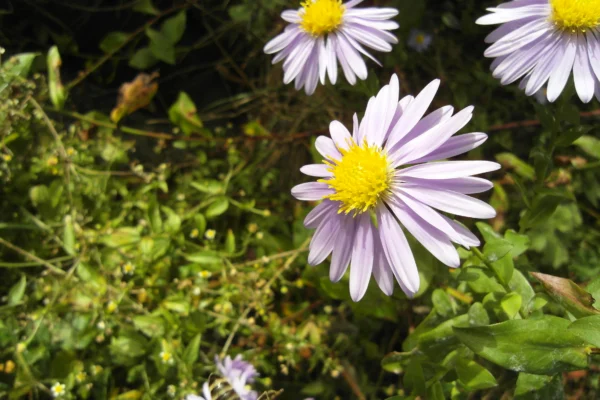
Choose a sunny position or light partial shade. Look at the site later in summer as well as in spring, when nearby trees may still be leafless. Deep shade rarely gives the best display.
The shallow roots need steady moisture. Avoid thin soil beside a thirsty hedge. Improve poor ground across the planting area rather than creating a rich pocket surrounded by hard soil.
Drainage still matters. Damp growing conditions differ from a crown sitting in stagnant water through winter. If rain regularly pools, improve the site or choose a more suitable raised position.
Allow for the cultivar’s eventual spread and keep new plants clear of sprawling neighbours. In windy gardens, fit supports while shoots are short, particularly for selections approaching a metre.
Photo: Andrea Moro, CC BY-SA 4.0. Resized and optimised; cropped for display. Adapted image under the same licence.
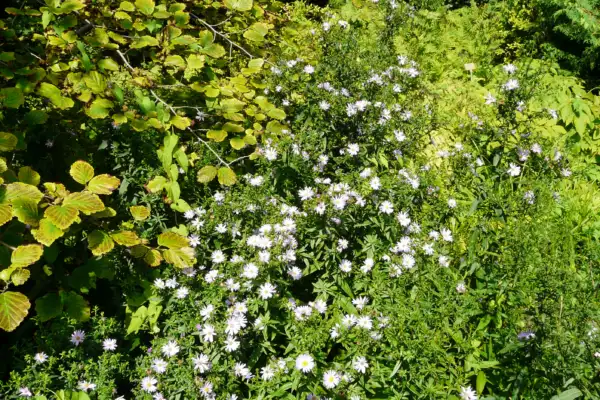
Spring gives plants time to establish before flowering. Autumn purchases can also settle well, but plants bought in bloom need careful watering.
1.
Check the label for the full cultivar name, final height and likely spread.
2.
Water the pot before planting so the rootball is evenly moist.
3.
Remove perennial weeds and loosen the surrounding soil without working it while sodden.
4.
Set out plants with their eventual width in mind, commonly about 45 to 60 cm apart.
5.
Dig a hole wide enough for the rootball and check that the crown will remain at its existing level.
6.
Ease the plant out, gently free tightly circling outer roots and backfill around them.
7.
Water thoroughly, then mulch the surrounding soil while keeping material clear of the crown.
8.
Label the plant and check moisture during establishment; fit supports before the stems become tangled.

Watering
Check both the original rootball and surrounding soil while plants establish: a nursery rootball can remain dry after a light shower. Water enough to wet the root zone rather than sprinkling the surface.
Pots need closer attention during warm weather. Check beneath the surface before watering. If stems wilt in wet compost, investigate drainage and roots rather than automatically adding another drink.

Feeding
A spring mulch of garden compost is often enough in a reasonably fertile border. Overfeeding can produce tall growth needing extra support. Review the soil and previous performance before adding more.
Container plants have limited nutrients. Apply a suitable liquid feed at the label rate once the compost’s initial feed is exhausted. Avoid trying to rescue a dry plant with a strong dose.

Pruning
The Chelsea chop can reduce height and encourage branching. In late May or early June, shorten some or all established shoots by about half. Expect flowering to be delayed on the cut stems. Try a small section first if you want to compare the effect in your own garden.
After flowering, remove untidy or diseased stems. Healthy standing stems can remain for winter structure and shelter, then be cut down before new spring shoots lengthen. Work carefully around fresh basal growth rather than cutting straight through the whole crown.

Winter care
Hardy New York asters usually remain outdoors. Their top growth dying back is normal. Keep the label visible so the resting crown is not accidentally dug up or covered during winter border work.
Check containers after prolonged rain. In exposed places, shelter the pot from repeated freezing and drying winds without moving it into a warm room. Keep drainage holes open.
New York asters have branching stems, narrow leaves and many daisy shaped flower heads. The central disc is made of tiny flowers, surrounded by coloured ray florets. The species can have leaf bases that partly clasp the stem; garden hybrids vary, so flowers alone do not prove an exact identity.
The names New York aster and New England aster are not interchangeable. New England asters are Symphyotrichum novae-angliae, while annual China asters are Callistephus chinensis. Nursery labels may still use the older name Aster. Keep the cultivar name with the plant when asking for advice or sharing divisions.
Photo: Robert H. Mohlenbrock / USDA NRCS, Public domain, US government work. Resized and optimised; cropped for display.
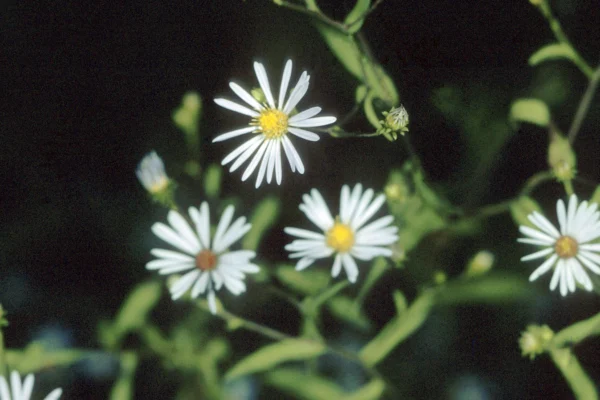
A late cultivar may suit a sheltered southern border but have a shorter display where autumn arrives early. Ask a local nursery which selections flower reliably before hard frosts.
Spring division suits colder or wetter districts because fresh pieces have the growing season ahead. Replant promptly, keep exposed roots from drying and water until new growth is steady.
Garden asters include hybrids sold under several names. The comparison includes selections associated with the New York group; they are not all botanically pure S. novi-belgii. Confirm identity and size with the supplier.
Photo: Uwe W., CC BY-SA 3.0. Resized and optimised; cropped for display. Adapted image under the same licence.
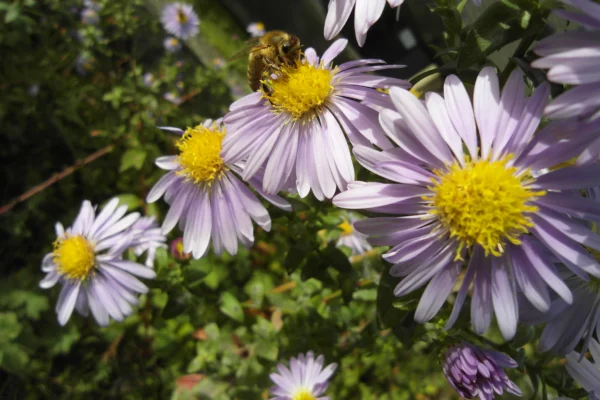
Powdery mildew is common in this group. Reduce drought stress, improve spacing and remove badly affected growth where practical. Try a different cultivar if the same plant is repeatedly disfigured.
Tall cultivars, shade and rich feeding can contribute. Add supports early, review the position and try a Chelsea chop on established plants. Naturally compact selections are more predictable for small beds.
An ageing clump may have a tired centre surrounded by stronger growth. Lift it in spring and replant vigorous rooted outer pieces with fresh space. Discard exhausted portions.
Slugs and snails can graze fresh shoots. Inspect during damp weather and protect vulnerable divisions. Distinguish chewed growth from a crown that has not yet started before assuming winter damage.
Review light, moisture and pruning dates. Repeated late cutting can delay flowering. Leave part of the clump uncut when experimenting so you can compare its performance.
Divide established clumps in March or April, usually every few years when growth or flowering begins to decline. Lift the plant, separate useful rooted sections and discard the exhausted centre. Label each division immediately, particularly when working with several similar cultivars.
Seed can produce interesting plants, but seedlings from garden asters may differ from the parent. Division is the more dependable way to preserve a named selection. Keep unfamiliar seedlings separate until their habit and flowers are clear, and avoid distributing them under the parent cultivar’s name.
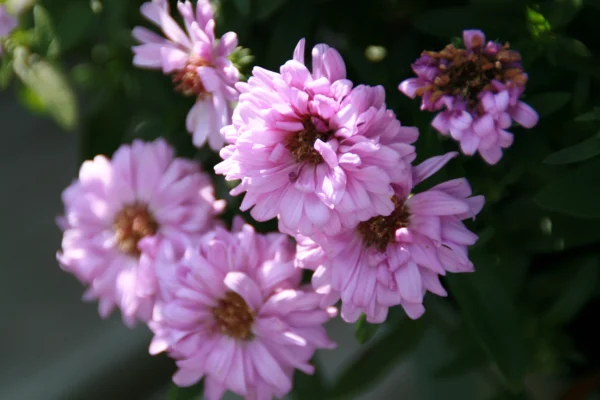
Symphyotrichum novi-belgii ‘Patricia Ballard’
A pink purple selection with semi double to double flowers, reaching about 90 cm. Useful where a substantial late border plant is wanted. The RHS records good mildew resistance, although sensible watering and spacing remain worthwhile.
Photo: David J. Stang, CC BY-SA 4.0. Resized and optimised; cropped for display. Adapted image under the same licence.
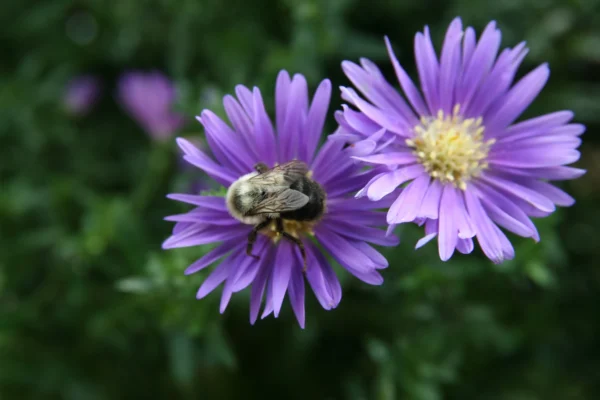
Symphyotrichum ‘Celeste’
A garden hybrid associated with New York asters, carrying lavender blue flowers with yellow centres. Often around 60 to 75 cm, it offers a shorter alternative to the tallest border selections. Treat nursery height figures as guidance rather than a fixed promise.
Photo: David J. Stang, CC BY-SA 4.0. Resized and optimised; cropped for display. Adapted image under the same licence.
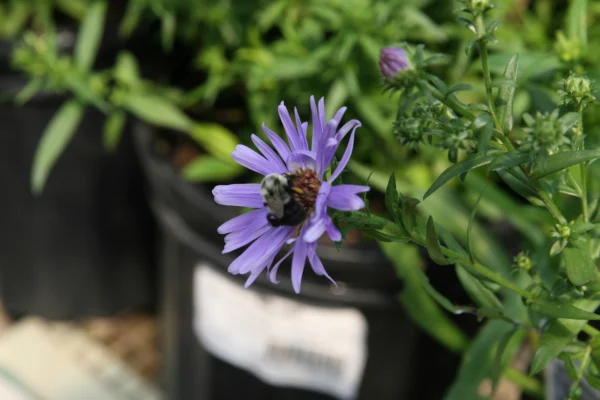
Symphyotrichum ‘Wood’s Blue’
A compact selection with blue purple flowers and yellow centres, commonly around 25 to 40 cm high. It is useful near an edge or in a suitable container. Modern references often list it at genus level rather than assigning it strictly to S. novi-belgii.
Photo: David J. Stang, CC BY-SA 4.0. Resized and optimised; cropped for display. Adapted image under the same licence.

Symphyotrichum ‘Daydream’
A mounding garden aster with violet blue flowers and bright yellow centres. Supplier descriptions put it around 50 to 60 cm, making it an option for a lower autumn display. Check the full name because Daydream is also used for unrelated plants.
Photo: David J. Stang, CC BY-SA 4.0. Resized and optimised; cropped for display. Adapted image under the same licence.
Explore the BFFD map for local growers and plant suppliers. Ask for the full cultivar name, its expected height and its performance in your area, then check availability before visiting.
Open flowers with visible centres provide accessible feeding opportunities for visiting insects late in the season. If that is your priority, compare the actual flower form rather than assuming a densely doubled bloom offers the same access.
Combine asters with earlier flowers and inspect for beneficial insects before treating pests. Retain healthy stems where practical. Keep clumps within the garden and never dump unwanted divisions beyond the boundary.
Published by Buy From Farmers Direct. Sources checked 4 October 2026. Growing references: RHS: growing asters; RHS: Patricia Ballard; RHS: Chelsea chop; RHS: powdery mildews; RHS: planting perennials; RHS: cutting back perennials; Kew: Symphyotrichum novi-belgii; NC State Extension: Symphyotrichum novi-belgii; Missouri Botanical Garden: Celeste; Missouri Botanical Garden: Wood’s Blue; Ball Seed: Daydream Lavender Aster; University of Missouri: garden asters. The seasonal timeline uses the shared BFFD Growers Calendar record; adjust timings to your variety and local conditions.
Yes. These herbaceous perennials normally return from their roots after winter. Provide suitable moisture and drainage, and divide congested clumps occasionally.
Remove old stems after flowering or before new spring growth. An optional Chelsea chop in late May or early June reduces height and delays flowers on the cut shoots.
This group is susceptible, especially when dry or crowded. Improve growing conditions and consider another cultivar if problems recur. Extra fertiliser is not the answer.
Yes, especially compact selections. Provide drainage, enough root space, consistent moisture and appropriate feeding. A small nursery pot does not guarantee a small mature plant.
Early spring, commonly March or April. Keep vigorous rooted sections, discard the worn centre and replant promptly. Division preserves a named selection more reliably than seed.
They are among the plants given that name, but it covers other asters too. Use the botanical and cultivar names for accurate identification.
Choose an aster for its mature size and autumn display. Use the Growers Calendar to plan seasonal jobs and the BFFD directory to discover local growers.
Explore more growing guides: Astrantia, Black Eyed Susan, Bells of Ireland.
Want to get food independence, support your local grower, get better prices and shop more privately?
Local food isn’t just something you find. It’s something you protect. A free account helps keep local supply visible, supported, and resilient.

….it takes 30 seconds for food lovers and 5 minutes for suppliers
We built this for people who care where their food comes from. For people who want to remain food secure. For Farmers to get to the local people, who deserve a better income and to deliver a better price for you. For the environmentally conscious and the privacy-conscious. An account simply helps us make the map and supplier reach more useful to you, without changing how open it is. You’re always in control.


Find local food. Stay connected to it. Create a free account to support local producers and be part of a growing food network.


