Bells of Ireland bring upright green spires to a summer border or cutting patch. The showy bells are leafy calyces surrounding tiny pale flowers, rather than large green petals. Moluccella laevis is an annual, so plan to sow fresh seed each year. Give it sunshine, shelter and soil that stays reasonably moist without becoming waterlogged. Keep spare seedlings because germination can be uneven.
Summer annual
Full sun
Green flower spikes
Fresh or dried stems
Grow from seed
| Botanical name | Moluccella laevis |
| Family | Lamiaceae |
| Plant type | Annual |
| Other name | Shell flower |
| Origin | Eastern Mediterranean and western Asia |
| UK native | No |
| Typical height | 60 to 90 cm |
| Typical spread | 30 to 45 cm |
| Position | Full sun |
| Exposure | Sheltered |
| Soil | Moist but well drained |
| Soil pH | Acid, neutral or alkaline |
| Sowing | March to May, depending on method |
| Planting out | May to June after hardening off |
| Display | Usually July to September |
| Spacing | About 30 cm |
| Propagation | Seed |
| Container suitability | Possible in a substantial pot |
| Main use | Borders and cut flowers |
| Handling | Small spines can catch skin |
| Plant name | Crop type | Spacing |
Sow indoors
Plant outdoors
Harvest
Polytunnel | |||||||||||
|---|---|---|---|---|---|---|---|---|---|---|---|---|---|---|
| Jan | Feb | Mar | Apr | May | Jun | Jul | Aug | Sep | Oct | Nov | Dec | |||
| Bells of Ireland | Unusual & exotic | Single 0.30m, In row 0.30m, Row gap 0.30m | No activity recorded | No activity recorded | Sow indoors, Polytunnel | Sow indoors, Polytunnel | Sow indoors, Plant outdoors, Polytunnel | Plant outdoors | Harvest | Harvest | Harvest | No activity recorded | No activity recorded | No activity recorded |
Sow indoors: March, April, May. Plant outdoors: May, June. Harvest: July, August, September. Polytunnel: March, April, May.
Sow indoors in March or April, or directly into prepared soil in late spring. Plant hardened seedlings outside when local conditions are suitable, normally May or June. The calendar Harvest period means decorative stems and flowering, not an edible crop. Polytunnel months indicate seed raising or sheltered establishment; an unheated tunnel can still freeze. Packet instructions and local frost dates take priority.
Choose Bells of Ireland if you want green vertical accents among colourful annuals. It works especially well where you can reach individual stems for cutting. Leave enough room around each plant to see its shape, rather than squeezing it between vigorous neighbours that will shade its base.
It is a seasonal addition rather than a permanent border backbone. Gardeners wanting dependable plants every spring should reserve a seed packet and some nursery space.
Photo: Zeynel Cebeci, CC BY-SA 4.0. Resized and optimised; cropped for display. Adapted image under the same licence.
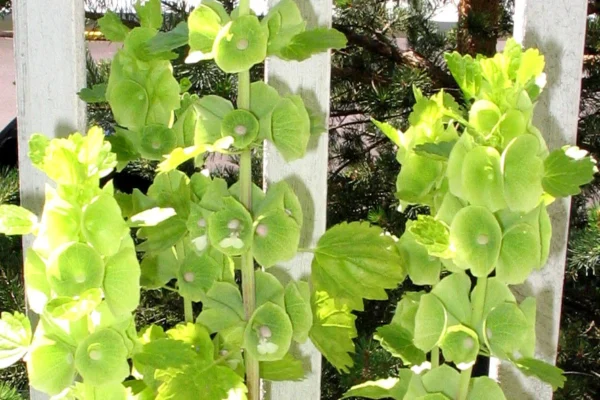
Pick an open, sunny part of the garden with protection from strong prevailing winds. Long stems are easier to keep straight where surrounding planting breaks the wind without blocking the light. Put supports in early if the site is exposed.
Prepare soil so rainfall can drain away. A bed that remains puddled after ordinary rain needs improvement or a different planting position.
A cutting patch makes harvesting convenient. Repeat a few plants through a border if the purpose is ornamental rhythm rather than maximum cutting.
For containers, use a stable pot with drainage holes and enough compost to buffer summer drying. One crowded small pot is harder to manage than a spacious container. Group it with plants whose watering needs are similar, and keep the drainage outlets clear.
Photo: Tsiaojian lee, Public domain. Resized and optimised; cropped for display.
Seed is the usual starting point. Germination advice varies between suppliers and seed lots, especially over prechilling, so follow the packet and avoid treating every delay as failure.
1.
Prepare clean pots or modules and fresh seed compost. Label the variety and sowing date before watering.
2.
Sow thinly near the surface. Light assists germination, so avoid burying the seed under a deep layer of compost.
3.
Keep compost evenly damp and provide the temperature recommended by the supplier. Germination may take several weeks.
4.
Alternatively, sow directly into a fine, weed free seedbed in late spring. Mark the row so emerging seedlings are not mistaken for weeds.
5.
Thin direct sowings to around 30 cm apart. Retain the strongest evenly spaced plants rather than leaving a dense cluster.
6.
Grow indoor seedlings in bright light and move them on before their roots become crowded. Handle the rootball gently.
7.
Harden plants gradually by increasing outdoor exposure. Delay planting if a sharp frost or cold, wet spell is forecast.
8.
Plant at the existing compost level, water in thoroughly and fit supports while plants are small. Check ties as stems grow.

Watering
Check the soil during dry spells, particularly after planting and while stems are lengthening. Water the root area thoroughly when needed, then allow surplus water to drain. Frequent splashes that wet only the surface are less useful.
Containers need closer attention than established plants in open ground. Feel the compost before watering and check again after windy weather. If a plant wilts while its compost is already wet, investigate drainage instead of adding another full watering can.

Feeding
Moderately fertile soil is usually sufficient for a useful garden display. Before planting, improve poor ground with well rotted organic matter, but do not assume that the richest possible bed will give the strongest stems.
Container plants eventually exhaust the nutrients in their compost. Use a suitable balanced liquid feed according to its label when required.

Pruning
Remove damaged or exhausted stems and cut useful flowers with clean secateurs. For fresh arrangements, select firm green stems with a good proportion of developed bells. Wear gloves if the small spines irritate your hands.
For drying, choose well developed stems before the seed ripens. Hang small bunches upside down somewhere dry and airy. The colour can fade towards beige, so judge the dried result as a different decorative material rather than expecting permanent fresh green.

Winter care
This is grown as an annual. Clear finished plants once their display is over, keeping healthy material for composting where appropriate. Do not leave a valuable container occupied all winter in the expectation of reliable perennial regrowth.
Store saved seed dry, cool and clearly labelled. Where seedlings appear naturally, leave only those in a useful place and avoid relying on them to supply the entire following season.
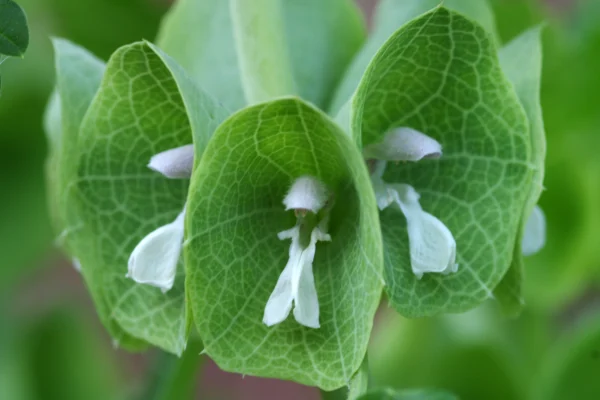
Look for upright, square stems carrying repeated green, bell shaped cups. Tiny pale flowers sit inside these cups. Rounded leaves have scalloped margins, and small spines occur around the flowering stems.
The green cups remain conspicuous after the tiny flowers have passed. This explains both the long decorative effect and the usefulness of the plant for drying. The common name does not mean that the species originated in Ireland.
Photo: Boronian, CC BY-SA 3.0. Resized and optimised; cropped for display. Adapted image under the same licence.
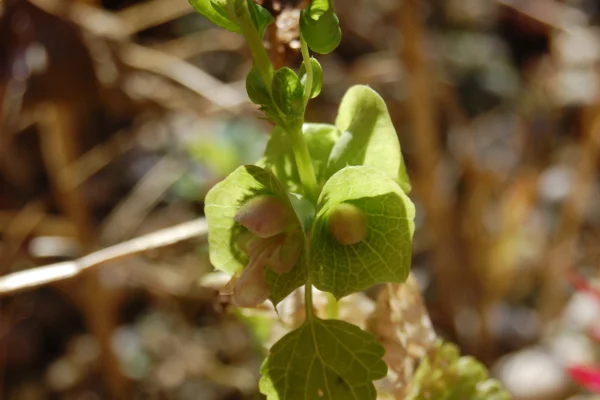
In a cool UK spring, seed raised under cover gives you more control over moisture and weed competition. Keep seedlings bright and avoid rushing soft growth into an exposed bed simply because the calendar has reached May.
In milder gardens, direct sowing can avoid root disturbance and reduce potting work. Watch actual soil conditions: workable, warming ground is more useful than a fixed national date. A second small sowing can also spread the risk of uneven emergence.
Northern, elevated and exposed gardens may need later planting and extra shelter. A tunnel is useful nursery space, but ventilate it in sunshine and check night temperatures. Protection from rain and wind does not automatically provide protection from frost.
Photo: Agnieszka Kwiecień, Nova, CC BY-SA 4.0. Resized and optimised; cropped for display. Adapted image under the same licence.
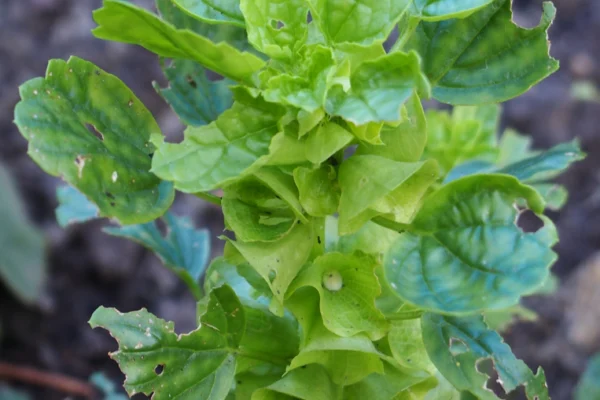
Germination can be irregular. Check sowing depth, moisture and packet temperature guidance before discarding the tray. Avoid repeated heavy watering, and give the seed adequate time.
Wind, crowding or insufficient light may contribute. Support stems early, thin seedlings and use a sunnier position next year. Tie loosely enough to avoid constriction.
Check moisture below the surface, especially in pots. Water the rootball thoroughly if dry. A pot standing in water requires drainage attention instead.
Older calyces naturally dry and change colour. Remove finished stems for a fresher display, or retain selected stems for drying and seed collection.
Ripe seed can fall around the parent plant. Cut stems before seed dispersal if self sowing is unwanted, and weed young seedlings while they are easy to remove.
Raise new plants from seed rather than division. If saving seed, choose healthy plants and let a few stems mature separately from those kept for cutting. Collect into a paper bag when dry, then remove plant debris before storage.
Seed from an open pollinated garden population may vary. Buy a named selection when its characteristics matter, and keep the supplier label. Never promise that saved seed will recreate the exact height or performance of a particular packet strain.
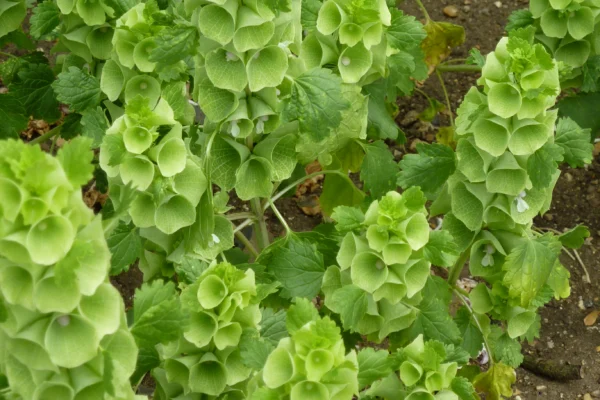
Moluccella laevis
The familiar species provides tall green spires for borders and cutting. This is the standard choice when a packet offers Bells of Ireland without a named selection.
Photo: Magnus Manske, CC BY-SA 2.5. Resized and optimised; cropped for display. Adapted image under the same licence.
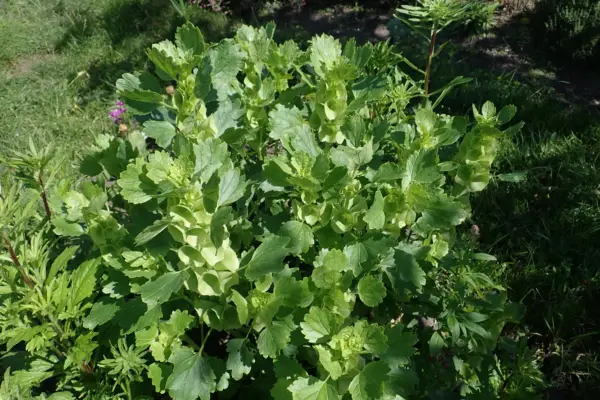
Pixie Bells
Takii lists this named annual selection at around 75 cm, with apple green calyces for fresh and dried arrangements. Check the supplier description rather than assuming the name means a very small plant.
Illustrative Moluccella laevis photograph. The cultivar shown is not identified as Pixie Bells.
Photo: Salicyna, CC BY-SA 4.0. Resized and optimised; cropped for display. Adapted image under the same licence.
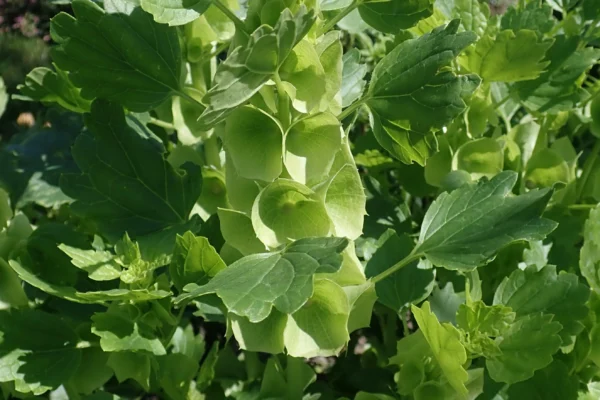
Fresh cutting form
Select firm, well developed green stems from the same species for fresh arrangements. This comparison describes a use and growth stage, rather than a separate botanical cultivar.
Moluccella laevis in growth, illustrating the species used for fresh stems.
Photo: Salicyna, CC BY-SA 4.0. Resized and optimised; cropped for display. Adapted image under the same licence.
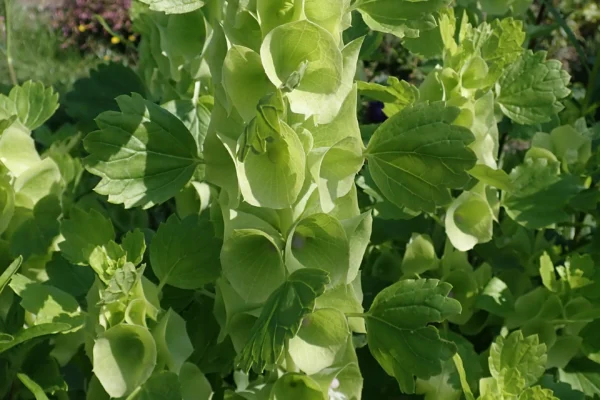
Dried display form
Mature stems of the same species can be cut and dried for a papery display. Bells gradually lose their fresh colour. This is a harvested form, not another cultivar.
Living Moluccella laevis before drying, not a separate cultivar.
Photo: Salicyna, CC BY-SA 4.0. Resized and optimised; cropped for display. Adapted image under the same licence.
Use the BFFD map to find local growing and gardening businesses. Ask whether they carry Moluccella laevis seed or young plants, and confirm current availability before travelling.
Leave room for a range of flowering plants around this annual, with different flower shapes and seasons. A cutting patch can still contain uncut flowers, but removing every stem reduces what remains available to visiting insects.
Avoid routine spraying when no problem has been identified. Check plants closely and deal with individual damaged stems first. This introduced ornamental should sit alongside a wider planting scheme rather than being presented as a substitute for native habitat.
Published by Buy From Farmers Direct. Sources checked 4 October 2026. Growing references: RHS: Moluccella laevis; Wisconsin Extension: Bells of Ireland; NC State: Moluccella laevis; Johnny’s: Bells of Ireland growing information; Takii: Pixie Bells. The seasonal timeline uses the shared BFFD Growers Calendar record; adjust timings to your variety and local conditions.
Sow under cover in March or April, or directly outdoors in late spring when soil is suitable. Follow the seed supplier temperature guidance and allow several weeks for uneven germination.
They are annual plants. Self sown seedlings may appear if seed ripens, but they are new plants rather than reliable regrowth from the old root system.
Some suppliers recommend chilling and others use different germination methods. It is not a universal requirement. Follow your packet, and keep a record so you can repeat the method that works with that seed lot.
Yes, provided the container is substantial, stable and well drained. Give plants sunshine, room for their roots and regular checks for drying compost. Tall stems may need discreet support.
They are enlarged calyces surrounding tiny pale flowers. Their lasting shape is why the stems remain decorative beyond the brief life of the individual flowers.
Cut well developed stems before seed ripens and hang small bunches upside down in a dry, airy place. Handle carefully around the small spines and expect the green colour to fade.
Use the BFFD growers calendar to plan sowing and planting alongside your other annuals. Check local conditions before moving seedlings out, and keep a few dated notes to make next year’s timing easier.
Explore more growing guides: Aster (New York), Black Eyed Susan, Astrantia.
Want to get food independence, support your local grower, get better prices and shop more privately?
Local food isn’t just something you find. It’s something you protect. A free account helps keep local supply visible, supported, and resilient.

….it takes 30 seconds for food lovers and 5 minutes for suppliers
We built this for people who care where their food comes from. For people who want to remain food secure. For Farmers to get to the local people, who deserve a better income and to deliver a better price for you. For the environmentally conscious and the privacy-conscious. An account simply helps us make the map and supplier reach more useful to you, without changing how open it is. You’re always in control.


Find local food. Stay connected to it. Create a free account to support local producers and be part of a growing food network.


