Black Eyed Susan brings warm colour to borders and containers as summer progresses. This guide covers Rudbeckia hirta, usually grown as a half hardy annual in the UK, including its yellow, gold and softer coloured selections. It is different from the climbing Black Eyed Susan vine, Thunbergia alata, and from reliably perennial rudbeckias such as Rudbeckia fulgida. Check the botanical label before choosing sowing and winter care.
Rudbeckia hirta
Summer colour
Sun or light shade
Useful in pots
Usually grown annually
| Botanical name | Rudbeckia hirta |
| Family | Asteraceae |
| Plant type | Biennial or short lived perennial |
| UK treatment | Usually a half hardy annual |
| Origin | North America |
| UK native | No |
| Height | About 25 to 100 cm, depending on selection |
| Spread | Usually 30 to 50 cm |
| Light | Full sun or light shade |
| Soil | Moist but well drained |
| Fertility | Moderate |
| Soil pH | Broadly adaptable |
| Sowing indoors | March and April |
| Planting out | May and June after frost risk |
| Flowering | Usually July to October |
| Spacing | About 30 to 45 cm, cultivar dependent |
| Propagation | Seed |
| Container suitability | Good, especially compact selections |
| Winter survival | Unreliable outdoors in much of the UK |
| Main routine task | Watering and deadheading |
| Plant name | Crop type | Spacing |
Sow indoors
Plant outdoors
Harvest
Polytunnel | |||||||||||
|---|---|---|---|---|---|---|---|---|---|---|---|---|---|---|
| Jan | Feb | Mar | Apr | May | Jun | Jul | Aug | Sep | Oct | Nov | Dec | |||
| Black Eyed Susan | Unusual & exotic | Single 0.40m, In row 0.40m, Row gap 0.40m | No activity recorded | No activity recorded | Sow indoors, Polytunnel | Sow indoors, Polytunnel | Sow indoors, Plant outdoors, Polytunnel | Plant outdoors | Harvest | Harvest | Harvest | Harvest | No activity recorded | No activity recorded |
Sow indoors: March, April, May. Plant outdoors: May, June. Harvest: July, August, September, October. Polytunnel: March, April, May.
The calendar applies to Rudbeckia hirta raised as annual summer bedding. Sow indoors in March or April, with May direct sowing possible in suitable conditions. Plant hardened seedlings after local frost risk, generally May or June. Harvest means flowering or decorative cutting from July to October, not food. Polytunnel months are for raising plants; an unheated tunnel may still freeze. Perennial rudbeckias and Thunbergia need different treatment.
Choose this plant for a sustained summer display where warm flower colours are welcome. It can fill planned gaps among perennials or provide a dedicated row for cutting. Select the eventual height first so a tall strain does not overwhelm a small front border.
Treat it as a seasonal commitment to watering and deadheading. If you want a clump that reliably returns outdoors for many years, compare hardy perennial rudbeckias separately. A similar common name does not mean that all these plants share the same winter behaviour.
Photo: Qwertzy2 at English Wikipedia, CC BY-SA 3.0. Resized and optimised; cropped for display. Adapted image under the same licence.
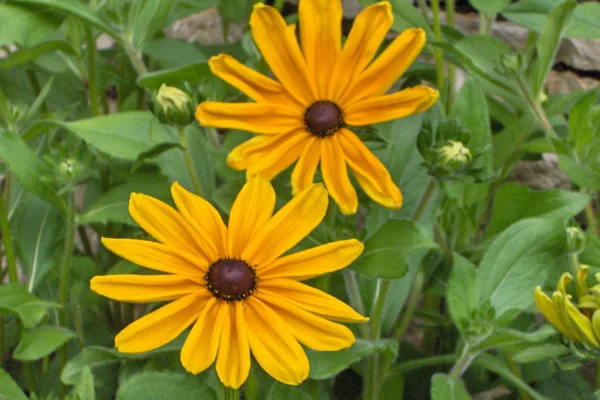
A sunny position encourages flowering. Light shade is possible, but increasingly shaded sites usually produce a less generous display. Watch where neighbouring plants will cast shade once they reach their full summer height.
Use soil that retains useful moisture while allowing excess rain to drain away. Improve very poor ground before planting, and avoid putting a new plant directly beside vigorous roots that will compete for every summer watering.
Containers suit compact selections particularly well. Give each plant enough compost and choose a pot with drainage holes. A generous container is easier to keep evenly moist than several tiny pots lined up in the hottest part of the patio.
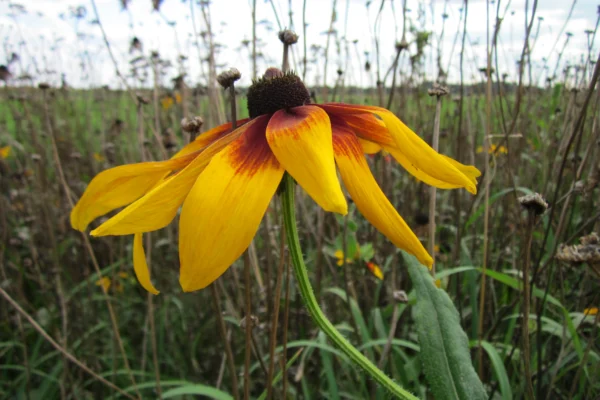
Starting with seed gives a wide choice of colours. Buying healthy young plants shortens the nursery stage, but small plugs still need growing on and hardening before outdoor planting.
1.
Choose a named seed strain or healthy young plant and read its final height and spacing requirements.
2.
For spring sowing, fill clean modules or trays with fresh seed compost and water it before sowing.
3.
Sow thinly near the surface. Light is needed for germination, so avoid burying the seed deeply.
4.
Provide gentle warmth according to the packet and keep the compost damp rather than saturated. Move emerged seedlings into bright light.
5.
Prick out or pot on when seedlings can be handled without crushing their stems. Hold a leaf and keep the roots supported.
6.
Gradually accustom plants to outdoor light, wind and temperature. Bring them back under protection if a cold night is forecast.
7.
Plant out after local frost risk, normally May or June. Use about 30 to 45 cm spacing, adjusting for the cultivar.
8.
Set the rootball at its existing level, firm gently and water thoroughly. Check young plants frequently while they establish.

Watering
Keep new plants supplied with water as roots spread into the surrounding soil. During dry periods, check below the surface rather than judging only from the appearance of the top centimetre.
Pots can dry quickly in hot or windy weather. Water thoroughly when needed and let excess drain out. Repeated wilting shortens the quality of the display, while permanently sodden compost creates a different root problem.

Feeding
Ordinary border soil usually needs little routine fertiliser. Well prepared ground and consistent moisture are more useful than frequent strong feeds. Avoid lawn fertiliser drifting into a nearby flower bed.
For containers, follow the compost instructions and begin supplementary feeding when its initial nutrients are depleted. Use the recommended dilution. Record applications so two people caring for the same pots do not accidentally double the dose.

Pruning
Deadhead faded flowers to encourage further bloom. Follow the old stem down to a healthy leaf or side shoot and cut neatly, leaving useful new buds in place.
Late in the season, decide whether to keep selected seedheads or continue cutting for a tidy display. Plants grown annually can be cleared when finished. Do not apply a perennial spring cutback rule to every plant bearing the name rudbeckia.

Winter care
Rudbeckia hirta may survive some mild winters, but that is unreliable in many UK gardens. Plan replacement seed or plants rather than relying on every crown to return.
A healthy plant may be kept in a light, frost free place if you want to try overwintering it. Check moisture sparingly and inspect for pests. An unheated polytunnel alone does not guarantee the required protection.
Look for rough, bristly leaves and upright leafy stems topped by daisy shaped flowerheads. The centre is a raised cone, commonly brown, although some selections begin with a green eye. Ray colours vary considerably between seed strains.
Thunbergia alata is a climbing plant with a different flower structure. Hardy Rudbeckia fulgida forms persistent perennial clumps. A label with the species name is a much better guide to care than flower colour or the shared common name alone.
Photo: Calimo, CC BY-SA 4.0. Resized and optimised; cropped for display. Adapted image under the same licence.
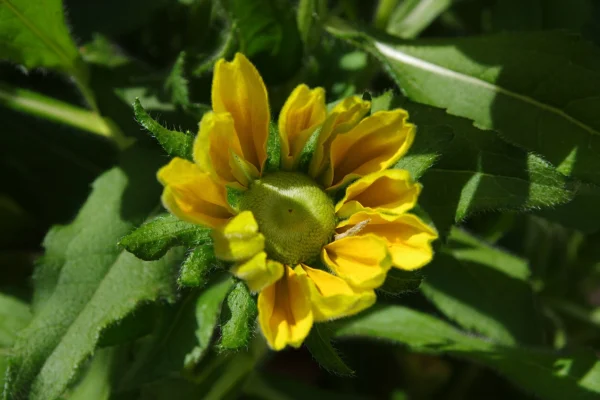
In cooler districts, raising plants indoors gives them a useful head start. Avoid sowing so early that seedlings spend weeks stretching towards a dim window. Bright conditions and sensible timing help produce manageable young plants.
Planting dates vary across the UK. Wait until soft young plants can cope with the actual forecast, particularly in frost pockets. Keep a few spare plants until the main planting has settled.
The flowering period depends on sowing date, variety and weather. July to October is a practical planning range for annual displays, with earlier or later results possible. The first damaging autumn frosts usually bring the season to an end.
Photo: Jon Sullivan, Public domain. Resized and optimised; cropped for display.
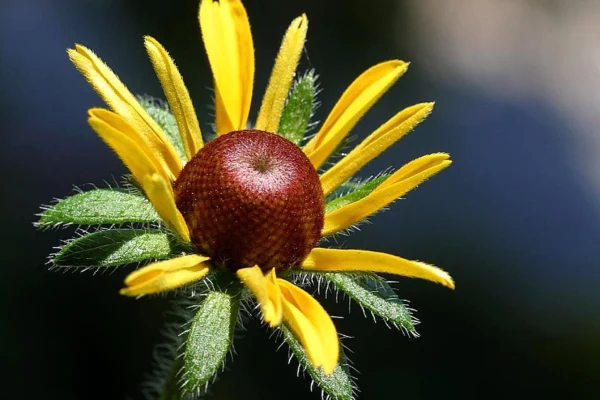
Slugs and snails can damage new growth. Inspect plants after dark and protect vulnerable seedlings using an appropriate garden approach. Check beneath pots and surrounding debris.
Powdery mildew can develop, especially when roots become dry. Maintain sensible spacing and consistent moisture. Remove badly affected material and seek a clear diagnosis before choosing treatment.
Check the rootball for dryness, particularly after transplanting. Water thoroughly if needed. If soil is already wet, inspect drainage and root health instead.
Consider shade, late sowing and excessive nitrogen. Move future plantings to a brighter site and avoid feeding as the automatic answer to poor flowering.
Inspect young growth closely. Small colonies can often be removed by hand or with water. Preserve visiting predators and avoid unnecessary spraying of open flowers.
Seed is the usual method for annual displays of Rudbeckia hirta. Sow a small labelled batch of each selection so you can compare its height, colour and flowering time in your own conditions.
Saved seed can produce variable offspring, especially from mixed colours or hybrids. Buy fresh labelled seed when an exact strain matters. Division advice for established hardy rudbeckias should not be treated as the main propagation method for this annual growing plan.
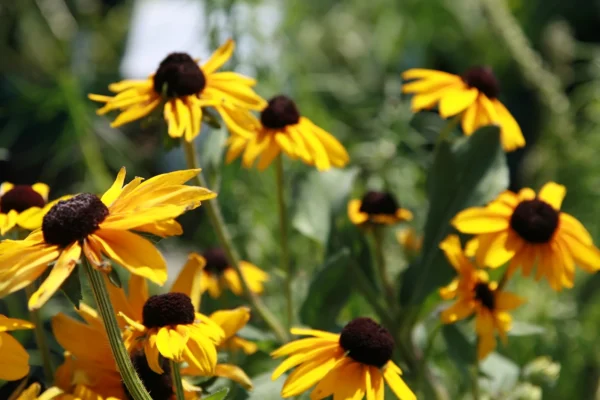
Indian Summer
A bold selection with large golden flowers and dark centres. It gives a stronger visual presence than tiny bedding daisies, so leave space around the blooms.
Photo: David J. Stang, CC BY-SA 4.0. Resized and optimised; cropped for display. Adapted image under the same licence.
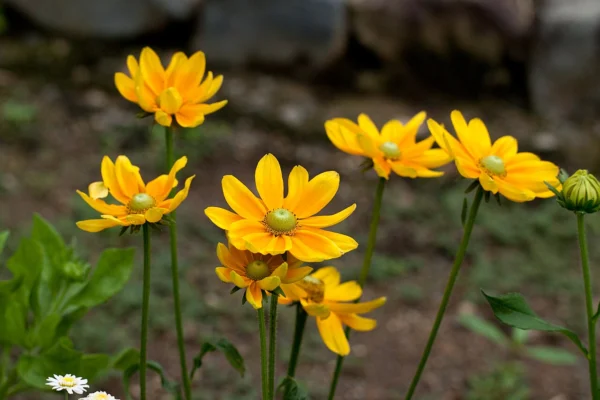
Prairie Sun
Flowers have a green centre, a warm golden inner ring and paler yellow tips. RHS records a typical height around 60 to 80 cm.
Photo: Yoko Nekonomania, CC BY 2.0. Resized and optimised; cropped for display.
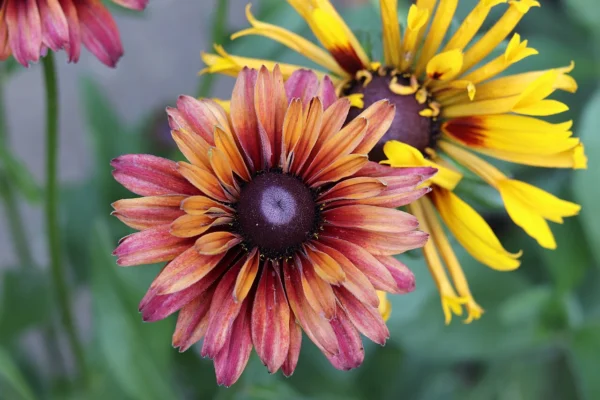
Sahara mixed
A seed mixture around 60 cm tall, with double and semi double flowers in softer yellow, orange, peach and pink tones. Individual plants vary.
Photo: S.G.S., CC BY-SA 4.0. Resized and optimised; cropped for display. Adapted image under the same licence.

Irish Eyes
Golden flowers surround a pale green eye that changes towards yellow brown as the central florets open. RHS describes plants reaching about 75 cm.
Rudbeckia hirta flower recorded by its photographer as probably Irish Eyes; cultivar identification is not certain.
Photo: Calimo, CC BY-SA 4.0. Resized and optimised; cropped for display. Adapted image under the same licence.
Explore the BFFD map for local gardening businesses. Ask specifically for Rudbeckia hirta seed or plants, and confirm the cultivar and availability before travelling.
Open flower centres give insects access to pollen and nectar. Include single flowered selections if pollinator access is a priority, alongside other plants that flower before and after this summer display.
Leave some seedheads where they remain sound and attractive. Avoid transferring North American butterfly host claims directly to UK gardens: this is an introduced ornamental here, best used within a varied planting scheme.
Published by Buy From Farmers Direct. Sources checked 4 October 2026. Growing references: RHS: Rudbeckia hirta; RHS: growing rudbeckias; NC State: Rudbeckia hirta; RHS: Indian Summer; RHS: Irish Eyes; RHS: Prairie Sun; RHS: Sahara mixed; Johnny’s: Rudbeckia hirta seed growing. The seasonal timeline uses the shared BFFD Growers Calendar record; adjust timings to your variety and local conditions.
This guide covers Rudbeckia hirta, a biennial or short lived perennial usually grown as an annual in the UK. Hardy perennial rudbeckias and the climbing Thunbergia alata are different plants.
Yes. Choose a compact Rudbeckia hirta selection, a substantial container and free draining compost. Check watering closely during summer and feed according to the compost and fertiliser instructions.
For annual Rudbeckia hirta, deadhead during flowering and clear finished plants at the end of the season unless attempting protected overwintering. Hardy perennial rudbeckias have a different winter and spring routine.
March or April indoors is a useful UK starting point. Sow near the surface with gentle warmth, then harden plants before planting out after frost risk. Later outdoor sowing produces a later display.
Check sunlight, sowing date and watering first. Deep shade, a late start or stressed roots can delay flowering. Excess nitrogen can also produce leafy growth without improving the flower display.
Rudbeckia hirta will not. The climbing plant sold as Black Eyed Susan vine is Thunbergia alata. Check the botanical name before buying supports or following growing instructions.
Use the BFFD growers calendar to plan sowing and planting around local frost dates. Record the species and selection on your label so next season’s care follows the right plant.
Explore more growing guides: Aster (New York), Bells of Ireland, Big Bluestem.
Want to get food independence, support your local grower, get better prices and shop more privately?
Local food isn’t just something you find. It’s something you protect. A free account helps keep local supply visible, supported, and resilient.

….it takes 30 seconds for food lovers and 5 minutes for suppliers
We built this for people who care where their food comes from. For people who want to remain food secure. For Farmers to get to the local people, who deserve a better income and to deliver a better price for you. For the environmentally conscious and the privacy-conscious. An account simply helps us make the map and supplier reach more useful to you, without changing how open it is. You’re always in control.


Find local food. Stay connected to it. Create a free account to support local producers and be part of a growing food network.


