Celery rewards steady moisture and a protected start. Its crisp leaf stalks take longer to develop than a quick salad crop, so plan summer watering before sowing. This guide focuses on self blanching and green stalk celery, Apium graveolens var. dulce. Traditional trench celery needs additional blanching work. Celeriac, grown for its swollen base, is a different crop.
Spring sowing
Moist fertile soil
Regular watering
Sunny sheltered bed
Autumn stalks
| Botanical name | Apium graveolens var. dulce |
| Family | Apiaceae |
| Crop type | Leaf stalk vegetable |
| Life cycle | Biennial grown as an annual |
| Main guide scope | Self blanching and green celery |
| Alternative method | Trench celery needs blanching |
| Typical sowing | Mid March to early April |
| Germination | Allow up to three weeks |
| Seed position | Surface sow for light |
| Seed warmth | At least 15°C to germinate |
| Planting out | Late May or early June |
| Main harvest | August to October |
| Position | Sunny and sheltered |
| Soil | Fertile and moisture retentive |
| Watering | Keep roots consistently moist |
| Block spacing | About 23cm each way |
| Trench spacing | 30 to 45cm within a row |
| Containers | Large pots with drainage |
| Cold sensitivity | Protect young plants from chilling |
| Propagation | Seed or purchased young plants |
| Plant name | Crop type | Spacing |
Sow indoors
Plant outdoors
Harvest
Polytunnel | |||||||||||
|---|---|---|---|---|---|---|---|---|---|---|---|---|---|---|
| Jan | Feb | Mar | Apr | May | Jun | Jul | Aug | Sep | Oct | Nov | Dec | |||
| Celery | Salad & leaves | Single 0.23m, In row 0.23m, Row gap 0.23m | No activity recorded | No activity recorded | Sow indoors | Sow indoors | Plant outdoors | Plant outdoors | No activity recorded | Harvest | Harvest | Harvest | No activity recorded | No activity recorded |
Sow indoors: March, April. Plant outdoors: May, June. Harvest: August, September, October. Polytunnel: no months recorded.
The calendar covers spring sown self blanching or green celery. Sow indoors in March or early April and plant out in late May or June after frost risk, once conditions stay warm. August to October is an approximate harvest window. Trench varieties can crop later with suitable protection. No polytunnel period is prescribed; an unheated tunnel does not prevent chilling.
Choose celery if you can visit the crop regularly through summer. Start with a modest block that you can water thoroughly, especially during holidays.
Self blanching types suit beginners because they need no earthing up. A trench variety such as Giant Red requires deliberate exclusion of light from the stalks. Check the packet before preparing a trench.
Photo: Robert Kerton, CSIRO, CC BY 3.0. Resized and optimised; cropped for display.
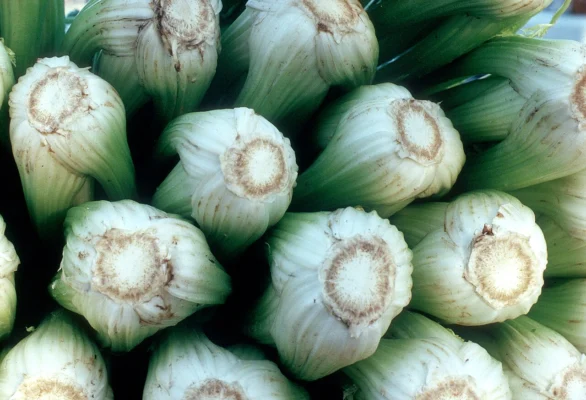
Place celery near a convenient water supply. A fertile bed that retains moisture is easier to manage than thin soil beside a thirsty hedge. Shelter helps reduce drying winds.
Improve soil with mature compost. Aim for moisture held within a crumbly soil, rather than a flooded hollow. Check whether water drains away after rain.
A large container works if inspected frequently. Use drainage holes and suitable peat free potting compost. Leave enough room to reach every plant with the watering can.
Record where celery and celeriac grew in previous seasons and rotate them together. Fresh seed does not remove disease already present in the bed.
Photo: Rameshng, CC BY-SA 3.0. Resized and optimised; cropped for display. Adapted image under the same licence.
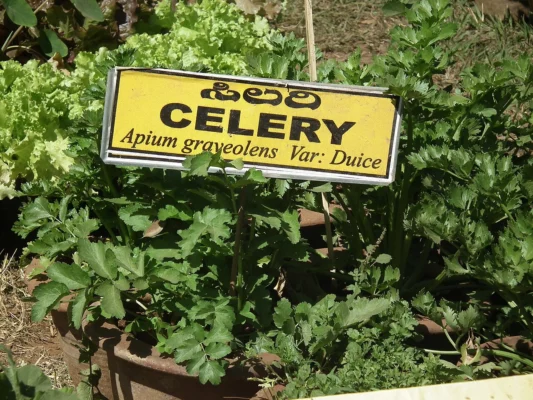
Raise small seedlings without letting cold or drought interrupt growth. Prepare clean containers and a bright protected space. Buying healthy young plants is useful if that space is unavailable.
1.
Sow thinly on moist seed compost in March or early April. The tiny seeds need light, so avoid burying them beneath a thick layer.
2.
Keep the tray at least 15°C for germination. Maintain gentle moisture and allow up to three weeks before deciding that a sowing has failed.
3.
Give emerged seedlings good light. Thin crowded modules so each retained plant has room, and pot small seedlings separately when they can be handled.
4.
Keep young plants warm as they develop. Avoid prolonged temperatures below 10°C, including cold nights on a windowsill or in an unheated greenhouse.
5.
Prepare the final bed and mark a block with plants about 23cm apart each way for the main self blanching crop.
6.
Acclimatise plants gradually, then transplant in late May or early June when frost danger has passed and the forecast is suitable.
7.
Water the rootballs before planting, settle them carefully and water the surrounding soil. Keep the growing heart clear of buried compost.
8.
Check the new planting for drying and slug damage. Use temporary protection in unsettled weather, ventilating covers when the sun warms them.

Watering
Water the root zone thoroughly, then check again before it dries. A quick sprinkle over the leaves can leave the soil underneath dry. Celery has a relatively shallow root system, so interruptions soon affect the developing stalks.
Mulch moist soil to slow evaporation and reduce weed competition. Keep material away from the heart. In a container, judge the whole rootball rather than the surface alone, and make sure water can escape instead of collecting around the base.

Feeding
Good preparation provides a useful foundation, but celery can need additional nutrients as it grows. Use a fertiliser suitable for vegetables at its stated rate, allowing for compost and any feed already included in the potting mix.
Record feeding dates. Before treating slow growth with more fertiliser, check water, root space and cold exposure. Extra nutrients cannot repair a dry rootball or immediately reverse chilling.

Pruning
Celery needs no routine pruning. Retain healthy leaves that support the developing crop, removing damaged or diseased material selectively. Wear gloves and cover your arms when handling foliage because contact can irritate skin in sunlight.
For trench celery, blanch by excluding light from the stalks using the method specified for the variety. Earthing up or suitable collars must leave the leafy tops exposed and keep soil out of the heart. Green and self blanching types do not need this treatment.

Winter care
Harvest the main self blanching crop before damaging autumn frost. Watch local forecasts instead of assuming that every plant can remain until the final month shown on the calendar. Mature plants and young seedlings have different tolerances.
Some trench varieties provide a later crop with protection. Follow their specific guidance and inspect remaining hearts. Prolonged wet conditions can be as troublesome as cold.
Stalk celery forms an upright cluster of fleshy, ribbed leaf stalks joined at the base. Each carries divided green leaves. The centre produces younger growth within the surrounding stalks, giving a plant its familiar heart.
Use labelled seed or plants, not an unknown wild plant identified by smell. Celeriac develops a swollen base; cutting celery is selected for leaves rather than substantial salad stalks.
Photo: Renee Comet, National Cancer Institute, Public domain. Resized and optimised; cropped for display.
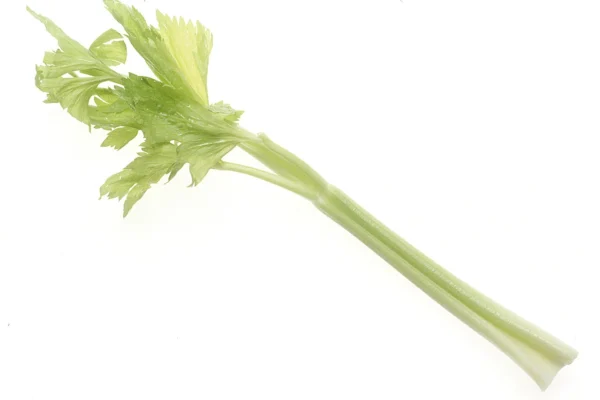
In cooler northern or exposed gardens, wait for dependable planting conditions. Moving seedlings from a heated tray into a cold frame can still cause a setback.
In warmer gardens, summer watering may be the greater challenge. Check containers especially closely during hot or windy weather.
Choose the first harvest by stalk quality and the variety guidance. You can take usable outer stalks or cut a mature plant at the base. Harvest close to use, then clean between the stalks and keep the crop cool.
Photo: Toranks, CC BY-SA 3.0. Resized and optimised; cropped for display. Adapted image under the same licence.
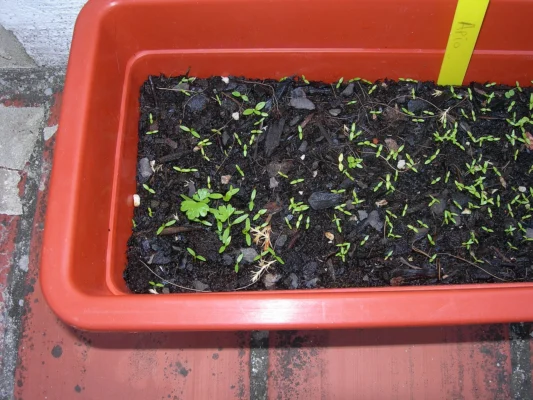
Dry soil can leave stalks tough even when foliage survives. Check below the surface and improve watering. A single soaking will not turn an already tough stalk tender.
Bolting can follow seedling chilling or other stress. Choose a suitable variety and protect young growth. Cutting off the flower stem will not reliably restore a good salad crop.
Celery leaf mining fly feeds between leaf surfaces. Tolerate minor late damage and pinch out badly mined portions where practical. Protective mesh must be combined with crop rotation.
Remove spotted foliage, favour soil watering and rotate celery with celeriac in mind. Persistent symptoms need closer diagnosis rather than an assumed nutrient treatment.
Inspect after dark for slugs and snails. Move feeding animals away from vulnerable plants. Check pots and hearts without stripping away healthy foliage.
Seed provides a known variety. Retain its packet and label so the timing and blanching instructions remain available at harvest.
A supermarket base may regrow leaves as a kitchen experiment. New foliage does not demonstrate that a full crop of thick stalks will follow.
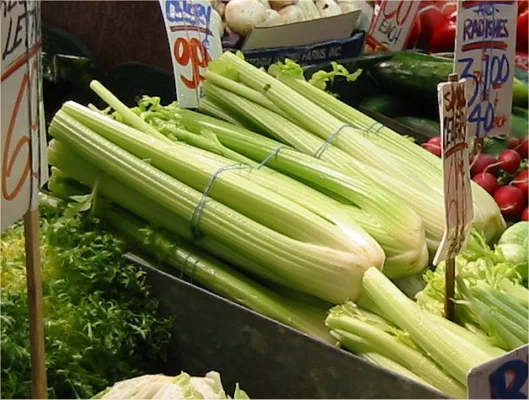
Tango
A self blanching selection with pale green stalks. The RHS describes reliable growth and good tolerance of bolting. It is a practical candidate where a straightforward first crop is the priority.
Illustrative green stalk celery. The pictured cultivar is not identified as Tango.
Photo: Eric Hunt, CC BY-SA 3.0. Resized and optimised; cropped for display. Adapted image under the same licence.
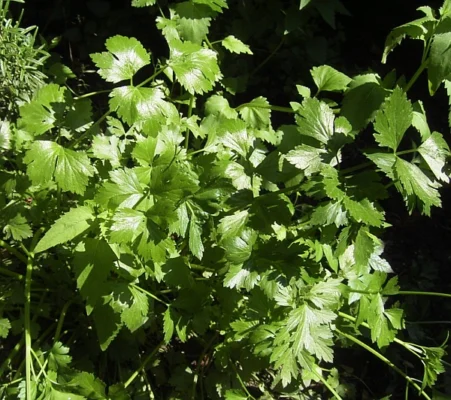
Golden Self Blanching
A relatively compact choice with cream coloured, strongly ribbed stalks. Consider it for a smaller growing area, while still allowing enough root space and water for useful stalk development.
Illustrative stalk celery. The pictured cultivar is not identified as Golden Self Blanching.
Photo: Denis Barthel, CC BY-SA 3.0. Resized and optimised; cropped for display. Adapted image under the same licence.
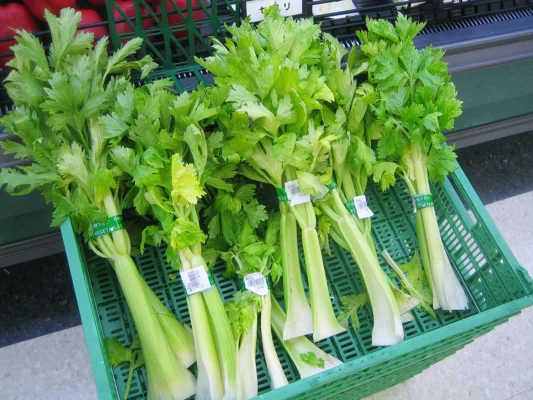
Victoria
A vigorous selection noted by the RHS for thick upright stalks and good standing ability. It is relatively slow to bolt, although young plants still need protection from unsuitable conditions.
Illustrative celery. The pictured cultivar is not identified as Victoria.
Photo: Lombroso, Public domain. Resized and optimised; cropped for display.
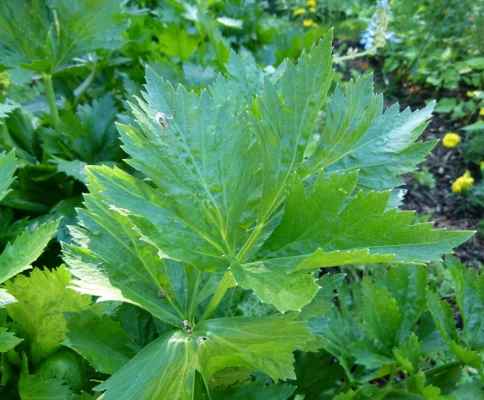
Tall Utah 52/70
A taller green celery with closely packed hearts and substantial stalks. The RHS states that it does not require earthing up, making it distinct from traditional trench varieties.
Illustrative stalk celery foliage. The pictured cultivar is not identified as Tall Utah 52/70.
Photo: Dinkum, CC0. Resized and optimised; cropped for display.
Explore the BFFD directory for local growers and nurseries, then check current availability directly. Ask whether the celery is self blanching, green or a traditional trench variety before buying.
A stalk crop is normally gathered before flowering, so it contributes little blossom during that season. Keep other flowering plants nearby for pollinators and beneficial insects.
Minor leaf damage does not always justify intervention. Leaf miners have natural enemies, and garden predators use slugs and other invertebrates as food. Focus protection on the young plants and crop portions you need.
Published by Buy From Farmers Direct. Sources checked 5 October 2026. Growing references: RHS: How to grow celery; Utah State University Extension: Celery in the garden; National Allotment Society: Growing celery for show; RHS: Celery Tango; RHS: Celery Golden Self Blanching; RHS: Celery Victoria; RHS: Celery Tall Utah 52/70; RHS: Celery leaf mining fly; Oregon State University: Celery production; RHS: Bolting in vegetables; RHS: Slugs and snails; University of Illinois Extension: Regrowing celery. The seasonal timeline uses the shared BFFD Growers Calendar record; adjust timings to your variety and local conditions.
For this main outdoor crop, sow indoors from mid March to early April. Give the seed warmth and light, then keep seedlings growing steadily until suitable planting conditions arrive.
Yes, provided the container is large enough and has drainage. The main commitment is regular watering. A cramped pot that dries between visits is unlikely to produce the crisp stalks you want.
No. Planting in a block helps the plants shade one another. Traditional trench varieties are different and need light excluded from the stalks by an appropriate blanching method.
Water stress is a common cause. Check the root zone throughout growth, especially in summer and in containers. Variety and harvest stage also influence texture.
Take stalks when they have reached a useful thickness and are still tender. The main crop often falls between August and October. Follow the variety instructions and harvest before damaging frost.
A base can produce new leaves, making an interesting experiment. That is different from reliably producing another full bunch. Use labelled seed or healthy young plants when planning a dependable garden crop.
Use the BFFD growers calendar to plan the long lead time between sowing celery and cutting the first stalks. Compare local seed and plant options through the directory, and record watering lessons and harvest dates in your own growing notes.
Want to get food independence, support your local grower, get better prices and shop more privately?
Local food isn’t just something you find. It’s something you protect. A free account helps keep local supply visible, supported, and resilient.

….it takes 30 seconds for food lovers and 5 minutes for suppliers
We built this for people who care where their food comes from. For people who want to remain food secure. For Farmers to get to the local people, who deserve a better income and to deliver a better price for you. For the environmentally conscious and the privacy-conscious. An account simply helps us make the map and supplier reach more useful to you, without changing how open it is. You’re always in control.


Find local food. Stay connected to it. Create a free account to support local producers and be part of a growing food network.


