Collards produce generous leaves without forming the tight head of a conventional cabbage. They are useful for repeated kitchen harvests and can carry a vegetable patch through autumn and, with the right variety and conditions, into winter or spring. Choose a sowing plan that suits your climate rather than expecting one planting to crop indefinitely.
Loose leaf brassica
Useful autumn greens
Pick outer leaves
Allow generous space
Choose a suitable winter variety
| Botanical group | Brassica oleracea, collard or Viridis Group |
| Crop family | Brassicaceae |
| Growth habit | Open rosette of large leaves |
| Main crop | Leaves and tender leafy shoots |
| Position | Sunny and open |
| Soil | Fertile, moisture retentive and well drained |
| Planning spacing | 50cm between plants |
| Spacing variation | Follow the variety; compact hybrids may need less |
| Spring sowing option | March to May |
| Overwintering sowing option | July to August for suitable varieties |
| Planting window used | May to June and September |
| Summer harvest option | From July following spring sowing |
| Autumn and spring crops | Depend on variety, establishment and winter conditions |
| Watering priority | Young transplants and dry growing periods |
| Harvest method | Take useful outer leaves, retaining the growing centre |
| Typical life cycle | Usually managed as a seasonal leaf crop |
| Propagation | Seed |
| Protection | Insect mesh and bird netting where needed |
| Crop rotation | Keep with the brassica group |
| Main pests | Caterpillars, flea beetles, slugs and pigeons |
| Plant name | Crop type | Spacing |
Sow indoors
Plant outdoors
Harvest
Polytunnel | |||||||||||
|---|---|---|---|---|---|---|---|---|---|---|---|---|---|---|
| Jan | Feb | Mar | Apr | May | Jun | Jul | Aug | Sep | Oct | Nov | Dec | |||
| Collards | Brassicas | Single 50cm, In row 50cm, Row gap 60cm | Harvest, Polytunnel | Harvest, Polytunnel | Sow indoors, Harvest, Polytunnel | Sow indoors, Harvest | Sow indoors, Plant outdoors | Plant outdoors | Sow indoors, Harvest | Sow indoors, Harvest | Plant outdoors, Harvest | Harvest | Harvest, Polytunnel | Harvest, Polytunnel |
Sow indoors: March, April, May, July, August. Plant outdoors: May, June, September. Harvest: January, February, March, April, July, August, September, October, November, December. Polytunnel: January, February, March, November, December.
The calendar combines two routes: spring sowing for leaves from summer, and July to August sowing for an established autumn planting that may crop through winter and spring. It is not a promise of year round picking from every variety. Tunnel months show optional winter shelter; most collards are grown outdoors. Follow the packet and bring planting forward where autumn growth ends early.
Collards suit a grower who wants to harvest individual leaves rather than cut a whole cabbage at once. They work well in a vegetable bed with enough room for mature foliage and easy access for regular picking.
A large container can hold a compact plant, but a shallow window box is unlikely to support a substantial long season crop. If space is limited, grow a few plants well rather than squeezing a full row into a narrow strip.
Photo: Jules Verne Times Two, CC BY-SA 4.0. Resized and optimised; cropped for display. Adapted image under the same licence.
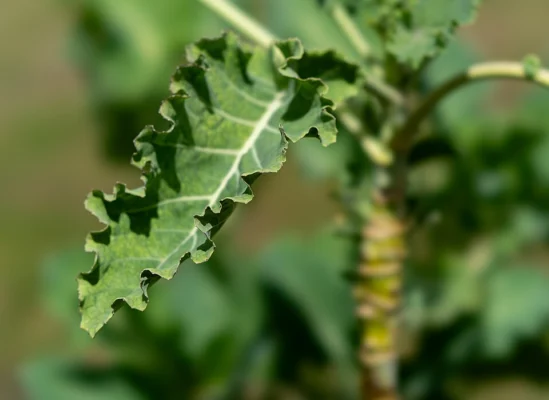
Choose fertile soil that holds moisture without staying saturated. Remove perennial weeds before planting and improve the bed with mature compost so the plants can build a strong root system.
Give the leaves access to light and air. Collards can become substantial plants, so position them where they will not shade small neighbouring salads or block a frequently used path.
Include them in your brassica rotation with cabbages, broccoli and kale. A different common name does not make collards a break crop from brassica soil problems.
For pots, choose a sturdy large container with drainage and enough depth for sustained growth. Check the seed supplier’s mature size, keep watering practical and be prepared to feed during active growth.
Photo: el Buho nº30, CC BY-SA 2.0. Resized and optimised; cropped for display. Adapted image under the same licence.
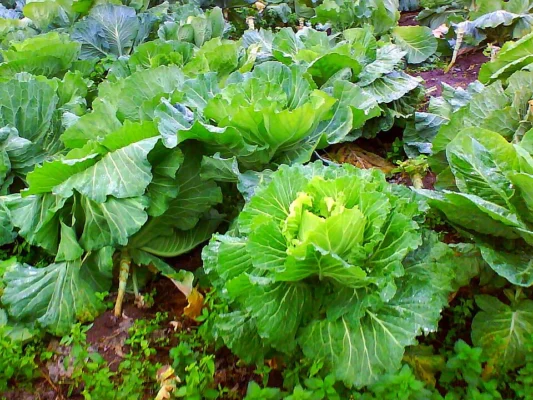
Select the variety and harvest season first. UK seed suppliers offer both spring sown crops and summer sowings intended for autumn, winter or spring use, so packet guidance matters.
1.
Choose a variety suited to your intended harvest and local winter conditions. Check whether the supplier recommends spring or summer sowing.
2.
Prepare modules or a small outdoor seedbed with a fine, weed free surface. Water dry compost or soil before sowing.
3.
Sow shallowly at the depth stated on the packet and label the variety and date. Keep moisture steady as seedlings emerge.
4.
Grow seedlings in good light and thin crowding early. Avoid leaving plants confined in tiny modules until they are weak or severely root bound.
5.
Acclimatise protected plants gradually before setting them outside. Choose a mild planting spell and prepare the final bed in advance.
6.
Space plants around 50cm apart as a practical starting point, adjusting for the cultivar. Firm them into the soil and water the root zone thoroughly.
7.
Install suitable protection where birds or cabbage pests are a recurring problem. Keep mesh supported above the foliage and secure the edges.
8.
Inspect plants as they establish, keep weeds down and replace failures promptly if the planting season still allows enough growing time.

Watering
Water newly planted collards thoroughly while their roots extend into surrounding soil. During dry spells, a deep watering of the root zone is more useful than frequent light splashes over dusty leaves.
Container plants need more frequent checks. If growth stalls, inspect compost moisture and drainage before assuming the crop needs fertiliser. Established leaves can be large enough to divert rain away from the pot.

Feeding
Begin with fertile prepared soil. Maintain steady growth with an appropriate vegetable feed where the soil or compost requires it, following the label rather than applying repeated strong doses.
Pale leaves can also reflect waterlogging, root damage or natural ageing. Examine the plant and its conditions before feeding, and remove exhausted lower foliage as part of routine care.

Pruning
Pick usable outer leaves while leaving the central growing point and enough healthy foliage to support regrowth. Harvest moderately when growth is slow and take only what the kitchen needs.
Remove damaged leaves and examine rising flower shoots as the season changes. A plant moving into reproduction may provide a final useful harvest, but it is often better to replace tired plants with a fresh sowing.

Winter care
Winter performance varies with cultivar, plant size, wind, drainage and the length of cold spells. Establish plants before growth slows and avoid stripping them heavily just before difficult weather.
Inspect protection after storms and harvest sound leaves as needed. In severe conditions, a sheltered position or ventilated cover may help, but do not assume all varieties will tolerate every UK winter.
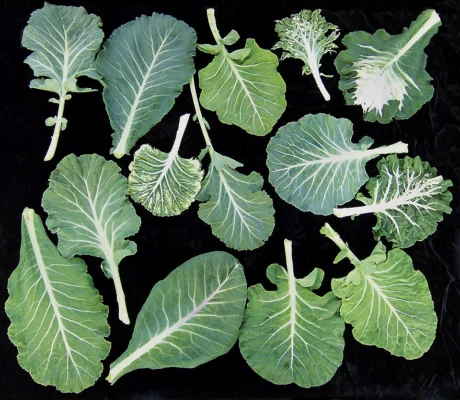
Collards carry broad green or blue green leaves with strong pale ribs, generally forming an open leafy plant rather than a firm heart. Leaf shape and stem length vary considerably between traditional populations and modern hybrids.
Portuguese and Galician leafy cabbages illustrate the range within closely related non heading Brassica oleracea crops. The photographs include these forms; they should not be used to identify a specific American named collard cultivar.
Photo: Jules Verne Times Two, CC BY-SA 4.0. Resized and optimised; cropped for display. Adapted image under the same licence.

In milder southern and coastal gardens, a well established autumn planting may provide useful leaves through winter. Keep drainage and wind exposure in mind, since wet soil and storm damage can matter as much as temperature.
In cooler northern, upland or exposed gardens, build a strong plant before autumn growth slows and be realistic about winter harvests. A spring sowing for summer and autumn picking may be the easier first crop.
Record the variety and sowing date alongside your harvest experience. A good local result is more useful than copying a calendar from a region with very different summers or winters.
Photo: Jules Verne Times Two, CC BY-SA 4.0. Resized and optimised; cropped for display. Adapted image under the same licence.
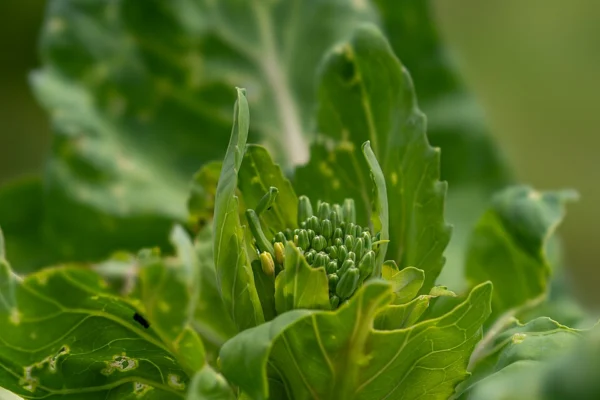
Inspect the undersides of leaves for eggs and caterpillars. Early use of properly fitted insect mesh can reduce problems, but check inside it so pests already present are not overlooked.
Large torn areas on exposed brassicas may be caused by birds. Use suitable taut netting on a secure frame where necessary and check it regularly to avoid trapping wildlife.
Check the soil before watering. Distorted swollen roots can indicate clubroot, while dry or waterlogged soil causes other root stress. Avoid carrying contaminated soil into clean growing areas.
Flea beetles can damage seedlings. Encourage steady growth, avoid drought stress and consider fine insect mesh while plants are small and particularly vulnerable.
Review crowding, moisture and the age of the crop. Flowering, repeated heavy picking or poor roots may be involved. Plan a fresh planting instead of expecting an exhausted plant to recover indefinitely.
Raise new plants from seed in small labelled batches. Modules make it easier to use limited bed space efficiently, because young plants can be ready when the previous crop finishes.
Seed saving needs isolation from other flowering Brassica oleracea crops and enough plants to maintain a useful population. Hybrid seed may not reproduce its parent. Begin with a reliable packet if predictable growth and season are your priority.
Georgia Wakefield
A traditional loose rosette type offered by Real Seeds. It is useful to consider for spring greens, with a spring sowing also possible for summer use where conditions suit.
Illustrative collard leaf variation; these leaves are not identified as Georgia Wakefield.
Photo: Ann Perry, Public domain. Resized and optimised; cropped for display.
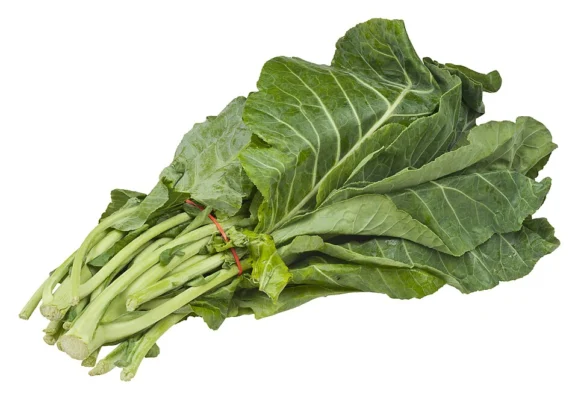
Champion
A familiar collard with long dark green leaves. UK supplier guidance allows spring growing and a later sowing for overwintering, with generous spacing for a substantial plant.
Illustrative harvested collard greens; the exact cultivar is not recorded.
Photo: Evan-Amos, Public domain. Resized and optimised; cropped for display.
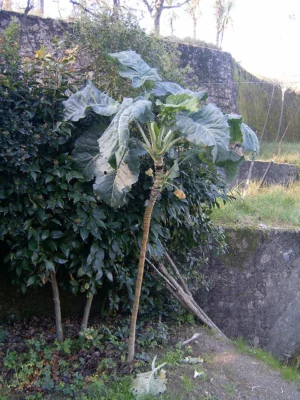
Portuguese leafy cabbage
Couve galega is a closely related non heading leafy cabbage, often developing a tall stem. Give it a permanent enough position for its size and check the local supplier’s growing guidance.
Portuguese couve galega shown in its taller growth habit.
Photo: Manuel Anastácio (attributed by Wikimedia Commons), CC BY-SA 2.5. Resized and optimised; cropped for display. Adapted image under the same licence.
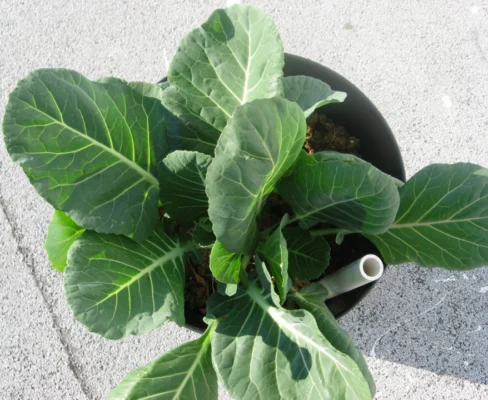
Hi Crop F1
A hybrid sold for loose leafy greens and a relatively compact planting. Suppliers differ in recommended sowing windows, so follow the instructions supplied with your seed.
Illustrative collards in a container; not a confirmed Hi Crop F1 plant.
Photo: Downtowngal, Public domain. Resized and optimised; cropped for display.
Check the variety, expected size and recommended sowing window before buying. Select healthy transplants with sound roots if starting from plants. Plan the final spacing and protection before the seedlings are ready to leave their modules.
Like other brassicas, collards can feed a range of insects. Inspect damage before choosing a response and use physical protection where practical to keep the crop useful without treating every visitor as a pest.
Plants left to flower can provide food for visiting insects, but flowering changes the crop and complicates seed saving. Keep this separate from the main leaf harvest plan.
Published by Buy From Farmers Direct. Sources checked 6 October 2026. Growing references: Real Seeds collard growing and varieties; Kings Seeds Hi Crop F1; She Grows Veg Champion; MoreVeg Hi Crop F1. The seasonal timeline uses the shared BFFD Growers Calendar record; adjust timings to your variety and local conditions.
They are closely related Brassica oleracea crops. Collards are generally grown for large loose leaves rather than a tightly packed head.
Spring sowings can give summer and autumn leaves. Suitable varieties can also be sown in July or August for planting by autumn and harvesting later. Follow the seed supplier’s guidance for the variety.
Some varieties and well established plants can crop through suitable winters. Performance depends on the cultivar and growing conditions, so avoid assuming that every collard has the same cold tolerance.
Around 50cm between plants is a useful starting point. Compact hybrids may need less and tall leafy forms more. Use the seed packet’s mature spacing for your chosen type.
Yes. Take sound outer leaves and leave the central growing point and enough foliage for regrowth. Harvest more lightly when growth is slow.
Yes, especially a compact type in a large drained container. Expect regular watering, appropriate feeding and a smaller practical planting than in a generous vegetable bed.
Choose a variety and season that fit your garden, allow room for the leaves and harvest steadily. A few well grown collards can supply useful greens without requiring a whole row of cabbages to mature at once.
Explore more growing guides: Cabbage (Summer), Cauliflower, Chinese Cabbage.
Want to get food independence, support your local grower, get better prices and shop more privately?
Local food isn’t just something you find. It’s something you protect. A free account helps keep local supply visible, supported, and resilient.

….it takes 30 seconds for food lovers and 5 minutes for suppliers
We built this for people who care where their food comes from. For people who want to remain food secure. For Farmers to get to the local people, who deserve a better income and to deliver a better price for you. For the environmentally conscious and the privacy-conscious. An account simply helps us make the map and supplier reach more useful to you, without changing how open it is. You’re always in control.


Find local food. Stay connected to it. Create a free account to support local producers and be part of a growing food network.


