Kiwi vines can crop in a warm UK garden, but their size and pollination needs deserve planning. Choose between the familiar fuzzy fruit and smaller smooth skinned kiwi berries, then give the vine strong support and regular pruning. Hardy wood does not mean frost proof young shoots, and a healthy climbing plant may still need help to ripen its autumn crop.
Warm sunny shelter
Strong permanent support
Check plant sex
Summer and winter pruning
Protect spring shoots
| Fuzzy kiwi group | Actinidia deliciosa, also sold under A. chinensis names |
| Hardy kiwi berry group | Actinidia arguta and related cultivars |
| Family | Actinidiaceae |
| Plant type | Deciduous woody climber |
| Growth habit | Vigorous twining vine |
| Unmanaged size | Many selections can exceed 8m |
| More compact choice | Issai commonly reaches around 4m |
| Light | Full sun |
| Best position | Warm south or west facing support |
| Soil | Fertile, moisture retentive and well drained |
| Soil reaction | Slightly acidic conditions generally preferred |
| Main planting window | Spring, usually March to May |
| Indicative spacing | 3 to 4.5m; check the cultivar and support |
| Flowering | Late spring or early summer |
| Sex and pollination | Female, male or self fertile, depending on cultivar |
| Male plants | Provide pollen but do not carry fruit |
| First useful crop | Often around three or four years after planting |
| Typical picking season | Autumn; exact timing varies with cultivar |
| Jenny hardiness | RHS H4; young shoots are frost sensitive |
| Issai hardiness | RHS H5; new spring growth still needs protection |
| Plant name | Crop type | Spacing |
Sow indoors
Plant outdoors
Harvest
Polytunnel | |||||||||||
|---|---|---|---|---|---|---|---|---|---|---|---|---|---|---|
| Jan | Feb | Mar | Apr | May | Jun | Jul | Aug | Sep | Oct | Nov | Dec | |||
| Kiwi | Orchard fruit | Single 450cm, In row 450cm, Row gap 450cm | No activity recorded | No activity recorded | Plant outdoors | Plant outdoors | Plant outdoors | No activity recorded | No activity recorded | No activity recorded | Harvest | Harvest | No activity recorded | No activity recorded |
Sow indoors: no months recorded. Plant outdoors: March, April, May. Harvest: September, October. Polytunnel: no months recorded.
The calendar uses spring planting and a September to October picking window for commonly offered UK cultivars. Kiwi berries such as Issai and Ken’s Red are often picked in late September or October; fuzzy kiwis may remain hard at picking and need indoor ripening. Local frost forecasts and fruit maturity take priority over the month. Named plants are used rather than seed, and protected growing is optional, so no sowing or general polytunnel band is shown.
A kiwi suits a substantial sunny wall, a strong pergola or a purpose built support. It is a long term planting with an annual pruning commitment, not a small climber to squeeze between crowded shrubs.
If there is room for one vine, compare self fertile Jenny and Issai. If choosing a female cultivar, include a compatible male of the correct group in the space and support plan.
Photo: Luis Miguel Bugallo Sánchez (Lmbuga), CC BY-SA 3.0. Resized and optimised; cropped for display. Adapted image under the same licence.
Choose the warmest sheltered position available, preferably by a south or west facing wall. Avoid exposed corners where drying winds damage the large leaves.
Keep the roots out of permanently wet soil. Improve a poorly drained site before planting, or choose somewhere else, rather than relying on a richer planting hole.
Allow access to the whole framework for pruning and picking. A vine over a tall pergola can become difficult to manage once branches and fruit are overhead.
Space plants to suit their vigour, commonly 3 to 4.5m apart, with more room where the supplier recommends it. A pollen partner must flower at the right time and should be planted nearby.
Photo: Homoarborea, CC0. Resized and optimised; cropped for display.
Buy a labelled vine with its species group, cultivar and sex recorded. Install the permanent support before vigorous shoots begin to grow.
1.
Compare the final size and pollination requirements before buying. Ask the nursery to match a male to a female rather than assuming any kiwi will do.
2.
Choose spring planting when the ground is warming. Protect a newly purchased plant with soft growth if a late frost is forecast.
3.
Install strong posts, wires or a sound pergola. For a wall trained framework, horizontal wires around 40 to 50cm apart provide successive training levels.
4.
Clear weeds from the root area and prepare the soil across the planting space. Keep access for watering once the canopy fills out.
5.
Water the root ball, remove the pot and plant with the compost surface level with the surrounding soil. Do not bury the stem deeply.
6.
Refill, firm gently and water thoroughly. Apply a surface mulch, leaving a small clear ring around the stem base.
7.
Choose a main shoot and tie it upright loosely, rather than letting it spiral tightly around a post. Follow a training plan suited to its current growth stage.
8.
Select side shoots for the permanent arms as the leader develops. Keep the cultivar and sex labels, inspect ties regularly and guide new growth before it tangles.

Watering
Water young vines during dry spells while they establish. Once plants are settled, pay particular attention during prolonged drought and while the fruit is swelling.
Check the root area beneath walls, which may receive little rain. Keep moisture reasonably steady, but ensure excess water drains away instead of leaving roots saturated.

Feeding
A regularly mulched, fertile soil may provide enough nutrition without routine extra feeding. Assess growth and leaf condition before repeatedly adding fertiliser.
If a deficiency is suspected, check moisture, drainage and soil reaction as well as nutrient supply. Use an appropriate feed at its labelled rate after identifying the likely cause.

Pruning
Train a permanent framework and retain suitable young wood for replacement fruiting shoots. On an established espalier, summer pruning can shorten fruiting shoots to four or five leaves beyond the last fruit, keeping the crop exposed to light.
Prune again while dormant, before new growth begins, to shorten laterals and renew selected older fruiting wood. Follow the linked RHS instructions for the plant’s stage rather than cutting every branch to the same length.

Winter care
Choose a cultivar hardy enough for your site. Hardy kiwi berries generally tolerate colder winters than fuzzy kiwis, but both can lose tender shoots to a spring frost.
Keep fleece or another suitable temporary cover ready for vulnerable new growth. Inspect supports and ties during dormancy, and keep the soil freely drained throughout winter.
Fuzzy kiwis typically have large leaves, hairy shoots and brown, hairy fruit. Hardy kiwi berries are smaller and have a smooth skin that can be eaten with the ripe flesh. Ken’s Red adds red colouring to the kiwi berry group.
Warm sheltered gardens, particularly in southern districts, offer the best chance of a substantial outdoor crop. Cooler gardens may find hardy kiwi berries a more suitable choice, but warmth and protection from late frosts still matter.
Allow fruit as long a growing season as local conditions permit, then harvest before a hard autumn frost. Kiwi berries can soften on the vine; fuzzy kiwis often need further ripening after picking in British conditions.
Set mature but firm fruit in a single layer indoors and check it regularly. It is ready when it gives slightly to gentle pressure. Move ripe fruit to the fridge and remove damaged specimens promptly. Very immature fruit will not gain a full growing season indoors.
Photo: Hiperpinguino, CC BY-SA 3.0. Resized and optimised; cropped for display. Adapted image under the same licence.
Check whether the vine is male, female or self fertile, and whether its partner belongs to the right kiwi group. Flowering must overlap and insects need access to transfer pollen.
Late frost can injure soft growth even on a hardy plant. Protect surviving shoots during further cold spells and allow time to see which buds recover before removing damaged material.
Drought and drying winds are common causes. Check below the soil surface and improve watering or shelter as needed. If the ground is already wet, investigate poor drainage instead.
Nutrient availability can be limited on alkaline soil, but waterlogging and other growing problems can look similar. Check site conditions and the pattern of symptoms before choosing a treatment.
Neglected growth shades fruit and makes future pruning difficult. Rebuild a clear framework through appropriate seasonal pruning, retaining useful replacement wood rather than removing all young shoots at once.
Softwood cuttings or layering can reproduce a known plant. Keep the cultivar and sex attached to every new vine, especially where male and female plants share the same support.
Seed from bought fruit does not provide a dependable named cultivar, known sex or predictable cropping time. A nursery propagated plant is the practical starting point when the purpose is a garden harvest.
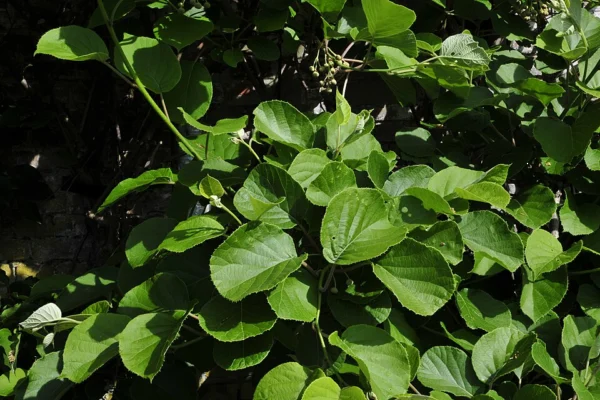
Jenny
A self fertile fuzzy kiwi for a single vine planting. It remains vigorous and needs plenty of warmth, even though a separate male is not essential.
Illustrative Actinidia deliciosa foliage; this plant is not confirmed as Jenny.
Photo: Homoarborea, CC0. Resized and optimised; cropped for display.
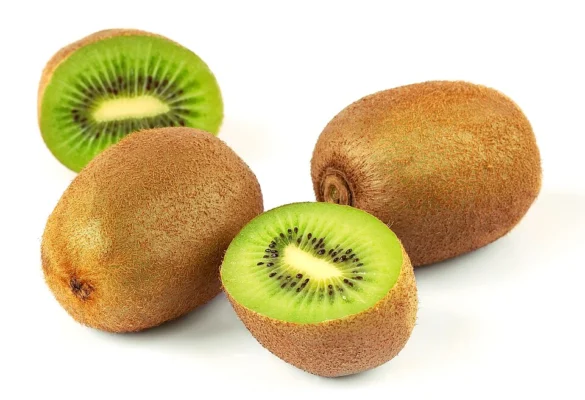
Hayward
A female fuzzy kiwi with relatively large green fleshed fruit. Choose a compatible male, such as a supplier matched Tomuri or Atlas, and allow generous space.
Whole and cut Hayward kiwifruit.
Photo: Luc Viatour, CC BY-SA 2.5. Resized and optimised; cropped for display. I, Luc Viatour
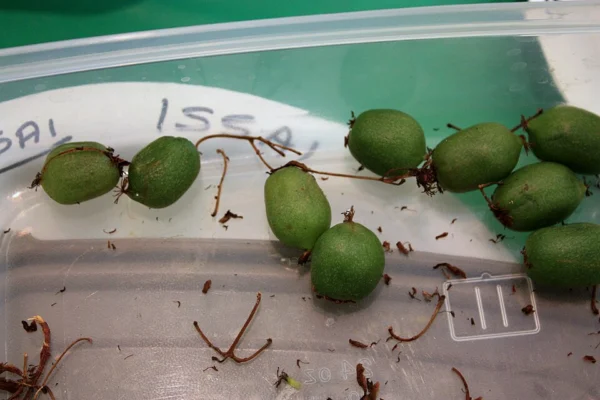
Issai
A relatively compact self fertile kiwi berry with small smooth skinned fruit. It can crop alone, but should not be bought as the assumed pollen source for other female kiwi berries.
Issai kiwi berries displayed at a fruit show.
Photo: Leslie Seaton from Seattle, WA, USA, CC BY 2.0. Resized and optimised; cropped for display.
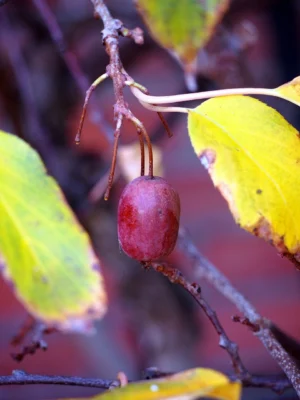
Ken’s Red
A female kiwi berry with red fruit colouring. Pair it with a suitable male kiwi berry, such as a plant specifically sold as male Weiki.
A Ken’s Red fruit photographed on the vine.
Photo: Agnieszka Kwiecień, Nova, CC BY-SA 4.0. Resized and optimised; cropped for display. Adapted image under the same licence.
Ask for the cultivar, kiwi group, sex and recommended partner in writing on the label. Self fertile, female and male vines serve different purposes, and a hardy kiwi male is not a substitute for a fuzzy kiwi partner.
Kiwi flowers attract visiting insects that can transfer pollen between suitable plants. A nearby male is useful only when its pollen reaches receptive female flowers.
Allow insect access during flowering. If growing under cover, ventilation and, where needed, careful hand pollination deserve attention alongside watering and pruning.
Published by Buy From Farmers Direct. Sources checked 6 October 2026. Growing references: RHS kiwi growing and training guide; RHS Jenny profile; RHS Hayward profile; RHS Issai profile; RHS Ken’s Red profile; Victoriana Nursery: Jenny; Victoriana Nursery: Hayward; Victoriana Nursery: Issai and its pollination limitations; Victoriana Nursery: Ken’s Red; Victoriana Nursery: male Weiki; Chris Bowers: kiwi support, training and harvest; RHS frost damage and protection; RHS nutrient deficiencies; RHS tree and shrub planting. The seasonal timeline uses the shared BFFD Growers Calendar record; adjust timings to your variety and local conditions.
Yes, in a warm sunny sheltered position with a suitable cultivar. Cropping is more reliable in favourable sites, and fuzzy fruit may need to finish ripening indoors.
Female cultivars need an appropriate pollen partner. Self fertile Jenny and Issai can crop alone. A male vine supplies pollen but does not produce fruit.
Do not rely on it. Choose a male kiwi berry recommended for Ken’s Red, such as male Weiki. Issai being self fertile does not make it a dependable pollen partner for other female plants.
Kiwi berries are smaller, smooth skinned fruit, mainly from the Actinidia arguta group. The familiar larger fuzzy fruit belongs to a different group. Their hardiness, ripening and pollination partners differ.
A British growing season may not provide enough warmth for full outdoor ripening. Pick mature fruit before a hard frost and let it soften indoors, checking frequently. Very early picking limits flavour development.
Train it from planting, then prune in summer and during dormancy before new growth starts. Preserve a permanent framework and suitable young fruiting wood, following a method appropriate to its age and support.
Treat the support, cultivar and pollen partner as one planting decision. With shelter, seasonal pruning and sensible autumn harvesting, a kiwi vine can become a productive part of the garden.
Explore more growing guides: Elderberry, Cherry (Fan), Blackberry.