Kohlrabi produces a crisp, rounded stem just above the soil, with leaf stalks sticking out around its sides. Green and purple varieties both have pale flesh, good grated into salads or lightly cooked. The secret is steady growth and timely picking: ordinary varieties taste best while small, before dry weather or age makes them woody.
Edible swollen stem
Quick growing brassica
Green or purple skin
Keep evenly watered
Harvest young and tender
| Botanical group | Brassica oleracea Gongylodes Group |
| Family | Brassicaceae |
| Life cycle | Biennial usually grown as an annual crop |
| Edible swollen part | Stem above ground, not a root |
| Other edible part | Young leaves |
| Position | Sun; some summer crops tolerate light shade |
| Soil | Fertile, moisture retentive and well drained |
| Soil acidity | Avoid strongly acidic conditions; test before liming |
| Typical plant height | Around 30cm, varying by variety |
| Sowing depth | About 1 to 1.5cm |
| General plant spacing | 15 to 30cm according to variety and harvest size |
| General row spacing | 30cm |
| Germination | Often around 10 to 14 days |
| Early sowing | February or March under cover |
| Main outdoor sowing | April to July; August in suitable mild areas |
| Typical cropping time | About 6 weeks for baby stems; 8 to 12 weeks for larger crops |
| Main harvest window | May to November with successive sowings |
| Tender harvest size | Golf ball to tennis ball for ordinary varieties |
| Container minimum | About 30cm wide and deep |
| Crop rotation group | Grow with the brassicas |
| Plant name | Crop type | Spacing |
Sow indoors
Plant outdoors
Harvest
Polytunnel | |||||||||||
|---|---|---|---|---|---|---|---|---|---|---|---|---|---|---|
| Jan | Feb | Mar | Apr | May | Jun | Jul | Aug | Sep | Oct | Nov | Dec | |||
| Kohlrabi | Brassicas | Single 20cm for ordinary varieties, In row 20cm, Row gap 30cm; give giant types more room | No activity recorded | Sow indoors | Sow indoors | Sow indoors, Plant outdoors | Sow indoors, Plant outdoors, Harvest | Sow indoors, Plant outdoors, Harvest | Sow indoors, Plant outdoors, Harvest | Sow indoors, Plant outdoors, Harvest | Harvest | Harvest | Harvest | No activity recorded |
Sow indoors: February, March, April, May, June, July, August. Plant outdoors: April, May, June, July, August. Harvest: May, June, July, August, September, October, November. Polytunnel: no months recorded.
February and early March sowings need protection; wait for suitable warmth before direct sowing outside. August sowing is an option for suitable varieties in places with a mild autumn, not a reliable late start everywhere. The planting band covers young module plants, and the harvest band assumes several sowings. No separate polytunnel cropping band is shown: early protected propagation is described below.
A few kohlrabi plants suit a small vegetable bed, raised bed or roomy container. Their quick growth makes them useful between slower crops, provided enough light, moisture and spacing remain available.
Sow only as much as you are likely to eat at one time. Several small batches give a better kitchen supply than one large sowing that all needs picking in the same week.
Photo: Schlaghecken Josef, CC BY-SA 4.0. Resized and optimised; cropped for display. Adapted image under the same licence.
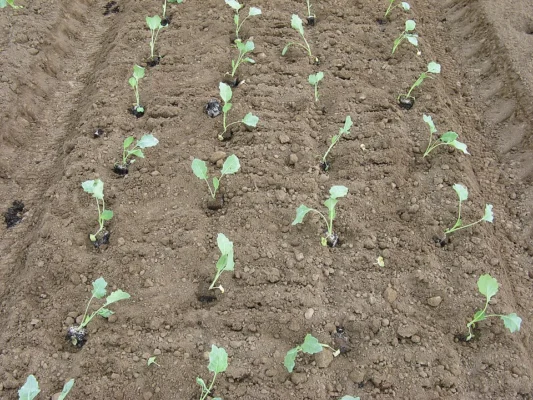
Choose an open position with fertile soil that holds moisture but drains freely. A bed that bakes dry every summer makes maintaining tender stems much harder.
Improve poor soil with well rotted garden compost before sowing. Test acidic soil before adding lime, and include kohlrabi with cabbage relatives when planning crop rotation.
For containers, use a drained pot at least 30cm wide and deep with peat free compost. Grow a few plants for baby stems rather than packing a small pot with a full row’s worth of seedlings.
A little shade can be useful in hot summer conditions, but avoid deep shade and competition beneath established trees. Put early modules somewhere bright so seedlings remain compact.
Photo: Schlaghecken Josef, CC BY-SA 4.0. Resized and optimised; cropped for display. Adapted image under the same licence.
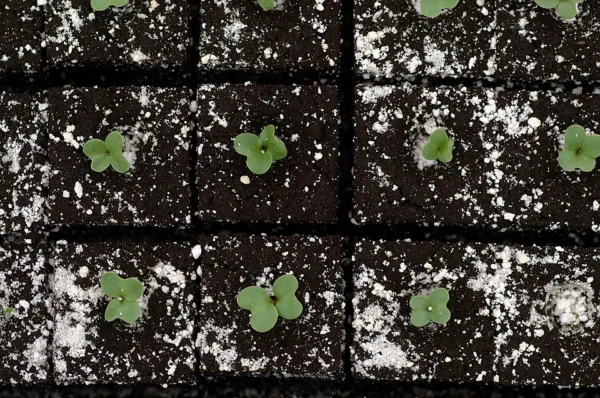
Use direct sowing for a simple crop, or start a small early batch in modules. Handle young transplants gently and avoid exposing them abruptly to cold conditions.
1.
Select a variety suited to your sowing date. Plan a short row or a small module tray first, keeping seed back for a later batch.
2.
For an early start, sow in February or March under cover in peat free seed compost. Place one or two seeds in each module, about 1 to 1.5cm deep.
3.
Keep the compost damp and give seedlings good light. If both seeds emerge, retain one strong plant per module rather than leaving them crowded together.
4.
For direct sowing, prepare a fine, weed free surface and shallow drills about 30cm apart. Sow thinly once spring conditions are reliably warm, usually from April.
5.
Thin outdoor seedlings before they crowd one another. Allow about 15 to 30cm between ordinary varieties, using the wider end for larger stems and following the packet for giant types.
6.
Harden off module plants gradually and transplant while still small. Keep roots intact and plant at their previous depth, without burying the point where the stem will swell.
7.
Water in and fit suitable insect mesh securely over the crop. Leave enough space underneath for growth and check that pests have not been enclosed with the seedlings.
8.
Sow another small batch after a few weeks if you want a longer harvest. In very dry gardens, concentrate on spring and late summer crops that avoid the hottest part of the season.

Watering
Keep seedlings and young plants consistently supplied with water. Later, water the soil thoroughly during dry spells so growth continues rather than repeatedly stopping and restarting.
Containers need especially close attention in warm weather. A surface mulch around established plants can slow moisture loss, but keep the expanding stems visible and check beneath the mulch before watering.

Feeding
Well prepared fertile soil is usually a better starting point than frequent heavy feeding. Kohlrabi does not need the same high nitrogen supply as some large leafy brassicas.
If growth is poor, first check water, crowding, roots and pest damage. Where nutrition is limited, use a suitable general organic fertiliser at its recommended rate.

Pruning
Kohlrabi needs no routine pruning. Keep healthy foliage while the stem is growing, removing only badly damaged leaves when necessary. Hand weed nearby to avoid nicking the swelling stem with a hoe.
Harvest ordinary varieties from golf ball to tennis ball size. Lift the plant or cut the stem just above the roots, trim the foliage and use it fresh; regular sowings provide replacement crops.

Winter care
Plan to finish most outdoor crops during autumn. Suitable late varieties can last longer in mild areas, but a late sowing does not guarantee useful growth through a cold, dark winter.
Protect remaining tender stems with fleece or a cloche before severe weather, and check them for deterioration. Clear finished crops and keep records of varieties and sowing dates that worked locally.
The rounded edible portion develops above the soil and has leaf stalks attached around its sides. This distinguishes kohlrabi from an underground root crop, even though it is sometimes called a cabbage turnip.
Leaves are generally blue green and somewhat waxy. Purple skin does not mean purple flesh: most coloured varieties remain white or pale green inside. Colour alone cannot reliably identify a named cultivar.
Photo: Schlaghecken Josef, CC BY-SA 4.0. Resized and optimised; cropped for display. Adapted image under the same licence.

In cooler and northern gardens, raise early plants under cover and wait for settled conditions before moving them outside. A slower start can give a better crop than rushing tender seedlings into persistent cold.
In warm southern gardens, keeping the roots moist becomes particularly important. Spring and autumn harvests often give better texture than plants struggling through a hot midsummer spell.
Mild coastal districts can try a suitable August sowing for an autumn crop. Elsewhere, sow earlier so stems have time to swell before short days and low temperatures slow growth.
Photo: Pavel Ševela, CC BY-SA 4.0. Resized and optimised; cropped for display. Pavel Ševela
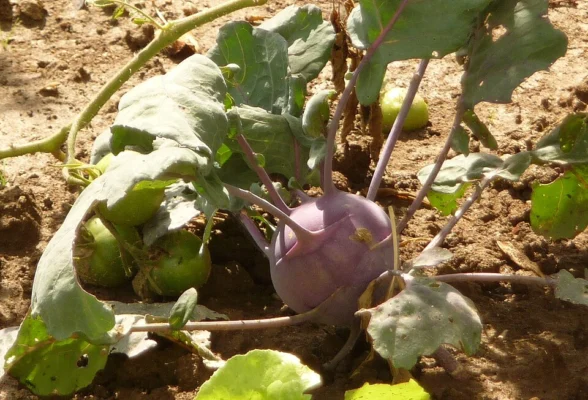
The usual causes are late picking and interrupted growth, especially during drought. Harvest the remaining tender stems promptly, water future batches consistently and use a named giant variety if you want large specimens.
Cold exposure, heat or drought can contribute to bolting. Use varieties suited to the season, harden off gradually and avoid leaving module plants crowded or stressed before planting.
Look beneath leaves for eggs and young caterpillars. Fine insect mesh can prevent butterflies reaching the crop when fitted before egg laying. Check mesh edges and inspect plants regularly.
Slugs and snails can damage newly emerged plants. Check around seedlings after damp evenings, remove nearby hiding places where practical and avoid assuming every missing seedling failed to germinate.
Distorted underground roots with poor growth can indicate club root. These are different from the normal rounded stem above ground. Avoid moving affected soil, use clean planting stock and seek advice before planting more brassicas in that bed.
Kohlrabi is normally raised from seed. For predictable crops, buy a labelled variety and keep the packet so its recommended season, spacing and harvest size remain available.
Saving seed takes another season and planning: plants are biennial and flowering kohlrabi can cross with other Brassica oleracea crops. Seed from F1 hybrids will not reliably reproduce the parent’s qualities; nearby crops do not alter this year’s edible stems.
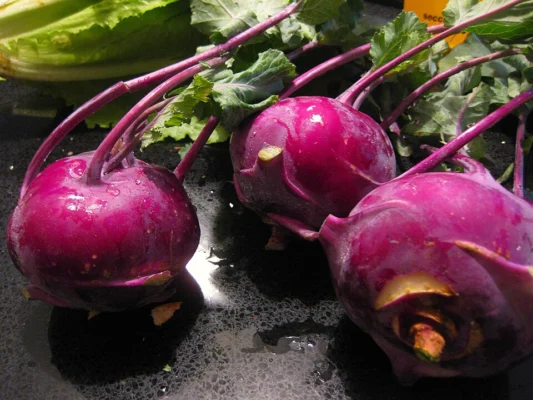
Kolibri F1
A compact purple skinned choice with pale flesh, useful where you want a quick, uniform crop. Pick while tender instead of assuming its attractive colour means it can remain in the bed indefinitely.
Illustrative purple kohlrabi; the pictured cultivar is not confirmed as Kolibri.
Photo: Barbara Wells, CC BY-SA 2.0. Resized and optimised; cropped for display. Adapted image under the same licence.
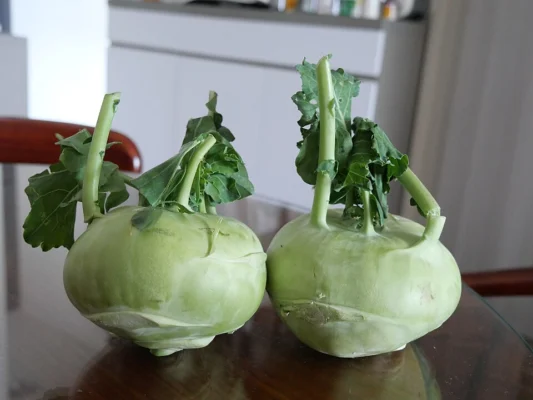
Korist F1
A green variety with mild, juicy flesh and useful downy mildew resistance. Suitable for early sowings with appropriate protection; resistance still needs to be supported by sensible spacing and growing conditions.
Illustrative harvested green kohlrabi, not a confirmed photograph of Korist.
Photo: Peachyeung316, CC BY-SA 4.0. Resized and optimised; cropped for display. Adapted image under the same licence.
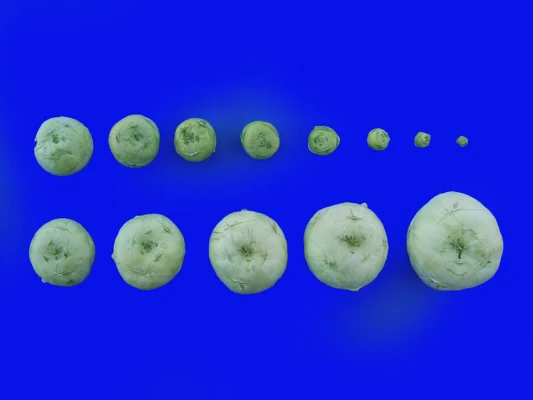
Kossak F1
A larger white or pale green type with a mild flavour, taking around three months under suitable conditions. Follow its packet for spacing and maturity rather than treating it as a crowded baby crop.
Illustrative kohlrabi at different sizes; these are not identified as Kossak.
Photo: Schlaghecken Josef, CC BY-SA 4.0. Resized and optimised; cropped for display. Adapted image under the same licence.
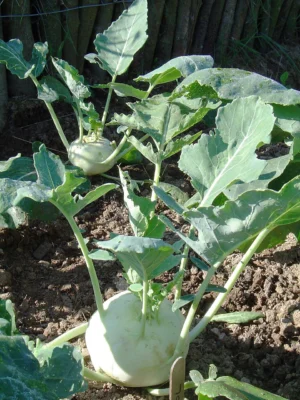
Superschmelz
A light green giant variety selected to remain tender at a much larger size. Allow room and a longer growing period; its behaviour should not be assumed for ordinary quick cropping varieties.
Illustrative green kohlrabi in the ground, not confirmed Superschmelz plants.
Photo: Toubib at Dutch Wikipedia, CC BY-SA 3.0. Resized and optimised; cropped for display. Toubib at Dutch Wikipedia
Compare the packet’s sowing window, spacing and harvest size before buying. A quick variety for tender small stems and a giant storage type serve different purposes. If buying plugs, look for compact young plants with healthy roots rather than oversized plants waiting in small cells.
Insect mesh protects the crop without routine spraying. Secure it so birds cannot become caught, keep it clear of sharp supports and inspect it whenever you water or harvest.
Leave flowering habitat around the wider vegetable garden for insects. Kohlrabi grown for its stem is normally harvested before flowering, so it does not require pollinator access beneath its protective mesh to produce the crop.
Published by Buy From Farmers Direct. Sources checked 6 October 2026. Growing references: RHS kohlrabi growing guide; Garden Organic kohlrabi guide; Vital Seeds kohlrabi growing and seed saving advice; RHS Kolibri profile; RHS Korist profile; RHS Kossak profile; Vital Seeds Superschmelz; Winnow Farm seasonal kohlrabi sowing and planting advice; RHS club root advice; RHS cabbage caterpillar advice. The seasonal timeline uses the shared BFFD Growers Calendar record; adjust timings to your variety and local conditions.
The part usually eaten is a swollen stem that sits above ground. The true roots are underneath it. This is why planting the stem deeply or earthing it up is unnecessary.
Start early batches under cover in February or March. April to July is a useful main outdoor window, with August possible for suitable varieties in mild areas. Follow your seed packet and local conditions.
Baby stems can be ready in about six weeks, while many ordinary crops take eight to twelve weeks. Cool conditions and giant varieties can take longer, so check size and tenderness rather than relying only on dates.
Yes. Wash the young leaves and cook them like other brassica greens, or use tender small leaves sparingly in salads. At harvest, keep healthy leaves for the kitchen as well as the swollen stem.
It may have stayed in the ground too long or grown slowly through dry conditions. Harvest ordinary varieties while small and maintain steady moisture. Only varieties bred for large stems should be deliberately left to grow much bigger.
Trim away the tough base and peel the outer skin if necessary. Grate or slice the tender flesh for salads, or steam, roast or stir fry it. Refrigerate harvested stems and use the leaves promptly.
Start with a small sowing, keep the soil evenly moist and check developing stems frequently. Picking at the right size is the simplest way to enjoy kohlrabi’s crisp texture and mild flavour.
Explore more growing guides: Cabbage (Summer), Cauliflower, Broccoli (Green).
Want to get food independence, support your local grower, get better prices and shop more privately?
Local food isn’t just something you find. It’s something you protect. A free account helps keep local supply visible, supported, and resilient.

….it takes 30 seconds for food lovers and 5 minutes for suppliers
We built this for people who care where their food comes from. For people who want to remain food secure. For Farmers to get to the local people, who deserve a better income and to deliver a better price for you. For the environmentally conscious and the privacy-conscious. An account simply helps us make the map and supplier reach more useful to you, without changing how open it is. You’re always in control.


Find local food. Stay connected to it. Create a free account to support local producers and be part of a growing food network.


