Dessert melons need warmth, pollination and even watering to ripen well. Choose an early Cucumis melo variety suited to British conditions and grow it under protection. This guide covers cantaloupes, Charentais and other dessert melons; watermelon is a different crop.
Tender annual fruit crop
Greenhouse or polytunnel preferred
Warm indoor sowing
Help flowers set fruit
Support heavy ripening melons
| Botanical name | Cucumis melo |
| Family | Cucurbitaceae |
| Plant type | Tender annual climbing or trailing vine |
| Different crop | Watermelon is Citrullus lanatus |
| Best UK position | Warm greenhouse or polytunnel |
| Outdoor possibility | Selected early varieties in very warm sheltered sites |
| Light | Plenty of light, with ventilation in hot weather |
| Soil or compost | Fertile, moisture retentive and well drained |
| Sowing window | Mid-April to mid-May indoors |
| Germination warmth | Around 18–21°C |
| Sowing depth | About 1.5cm |
| Final planting | Late May or June, once nights are warm enough |
| Night temperature guide | Reliably above roughly 12–15°C |
| Supported plant spacing | Allow about 60cm; check variety vigour |
| Trailing plant spacing | At least 90cm, often more |
| Container size | One plant in a pot at least 40cm wide and deep |
| Pollination | Insects, with hand pollination useful under cover |
| Fruit load | A modest crop ripens better than too many fruits |
| UK harvest window | Late July to early autumn under protection |
| Winter treatment | Clear the finished annual crop |
| Plant name | Crop type | Spacing |
Sow indoors
Plant outdoors
Harvest
Polytunnel | |||||||||||
|---|---|---|---|---|---|---|---|---|---|---|---|---|---|---|
| Jan | Feb | Mar | Apr | May | Jun | Jul | Aug | Sep | Oct | Nov | Dec | |||
| Melon | Cucurbits | Single 60cm supported, In row 60cm supported, Row gap 100cm; allow at least 90cm between trailing plants | No activity recorded | No activity recorded | No activity recorded | Sow indoors, Polytunnel | Sow indoors, Plant outdoors, Polytunnel | Plant outdoors, Polytunnel | Harvest, Polytunnel | Harvest, Polytunnel | Harvest, Polytunnel | No activity recorded | No activity recorded | No activity recorded |
Sow indoors: April, May. Plant outdoors: May, June. Harvest: July, August, September. Polytunnel: April, May, June, July, August, September.
This calendar covers protected dessert melons. Sow indoors with warmth in April or May; plant in May or June only when nights are suitable. Harvest is approximately July to September, commonly August onwards. Protection includes warm seed raising followed by greenhouse growing, not cold outdoor sowing.
Melon suits a gardener able to check a protected crop frequently. Plan space for vines, watering access and strong supports.
Outdoor growing needs an early variety and warm sheltered site. In cooler gardens, protection improves the chance of ripening.
Photo: Photo by David J. Stang, CC BY-SA 4.0. Resized and optimised; cropped for display. Adapted image under the same licence.
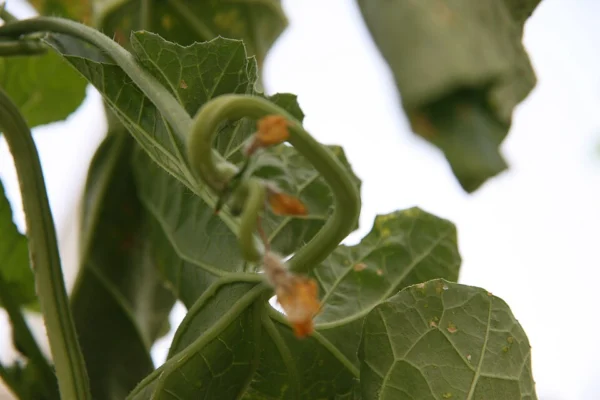
Choose a bright greenhouse or polytunnel bed, growing bag or large container, leaving access for tending plants.
Prepare fertile, well drained soil with mature organic matter. In containers, use fresh peat free potting compost with good drainage.
Install strong supports before vines tangle. Secure the structure: ripe melons are heavy.
Ventilate on warm days, shading temporarily if needed. Overheating damages leaves despite the crop’s warmth requirement.
Photo: شهریار, CC BY-SA 3.0. Resized and optimised; cropped for display. Adapted image under the same licence.
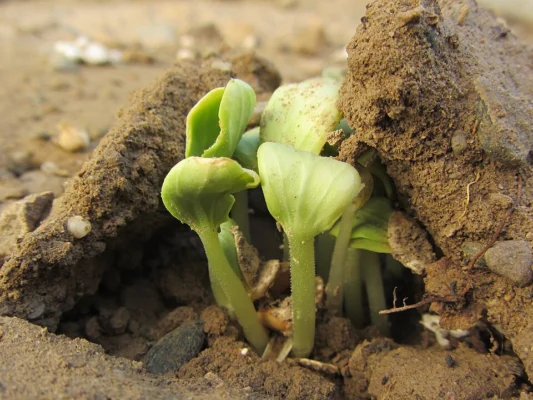
Choose an early dessert melon, buying a healthy young plant if you cannot raise seed warmly.
1.
Sow indoors from mid-April to mid-May in small pots. Place one or two seeds about 1.5cm deep in moist seed compost.
2.
Maintain approximately 18–21°C for germination. Use a heated propagator or reliably warm bright position, keeping the compost moist without soaking it.
3.
After emergence, provide good light. If two seedlings grow in one pot, remove the weaker one so the remaining plant develops without competition.
4.
Prepare its final bed or container while the seedling grows. Allow about 60cm between supported plants and at least 90cm for trailing plants.
5.
Wait for a plant with several true leaves and warm nights. Late May or June is usual; a sudden cold move can check growth severely.
6.
Acclimatise gradually if the final position differs from its raising conditions. Outdoor trials need a particularly warm sheltered site and suitable variety.
7.
Plant without disturbing the rootball unnecessarily, retaining its previous depth. Water in and keep wet compost or mulch away from the stem base.
8.
Guide growth onto supports or arrange trailing stems with enough room. Label the variety so you can use its particular ripeness signs later.

Watering
Keep moisture reasonably even, especially during flowering and fruit swelling. Water at the roots, ideally in the morning, and avoid leaving the compost saturated.
Check containers often in hot weather. As fruit ripens and growth slows, ease watering rather than suddenly flooding a dry plant or allowing severe wilting.

Feeding
Container and growing bag crops benefit from regular liquid feeding once established. Follow the product’s dilution and frequency, taking account of nutrients already in the compost.
When fruits begin swelling, use a feed with an appropriate potassium content. Plants in well prepared ground may need less; stop feeding as the crop finishes and foliage declines.

Pruning
One simple training system is to pinch out the young tip after five leaves, then retain four strong shoots. Arrange them on supports or across the ground instead of allowing a dense tangle.
After fruit sets, retain a manageable crop, often four to six fruits on a vigorous protected plant and fewer on weaker plants. Shorten fruiting shoots two or three leaves beyond retained fruit, and support climbing melons in loose slings.

Winter care
Melon is grown as an annual and does not need a winter home. Remove the exhausted crop when harvesting finishes and cold nights bring growth to an end.
Clear roots and debris, clean pots and inspect supports. Start next year with fresh seed or suitable saved seed.
Dessert melon vines have broad leaves, tendrils and yellow flowers. The fruit may be smooth, ribbed or covered with corky netting, with orange, pale green or other flesh colours depending on the variety.
Watermelon belongs to a different genus, and its cultivation details should not be assumed identical. A small swelling behind a fruit-bearing melon flower helps distinguish it from a male flower with no developing fruit at its base.
Photo: Rouibi Dhia Eddine Nadjm, CC BY-SA 4.0. Resized and optimised; cropped for display. Adapted image under the same licence.

Open protected structures on suitable days so insects can visit. Where fruit set is poor, gently transfer pollen from an open male flower to receptive fruit-bearing flowers with a soft brush.
Support each climbing fruit as it becomes heavy, leaving room for expansion. Put a clean tile or board beneath trailing fruit to keep it away from damp soil.
Pick according to the variety. Many cantaloupes develop a strong scent and loosen or crack around the stalk as they ripen, but some melons remain firmly attached. Check several signs rather than forcing fruit off the vine.
Image from the BFFD media library.
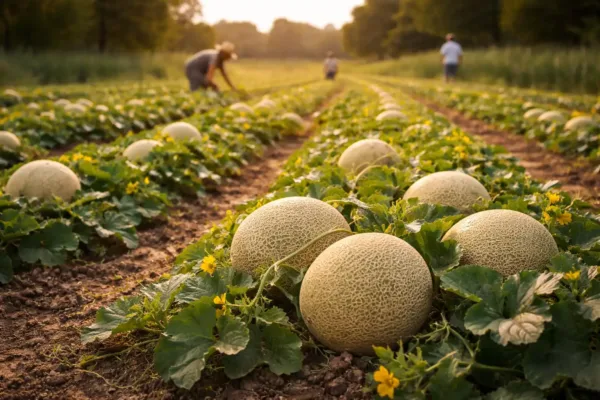
Check warmth and pollination. Male flowers alone cannot become melons. Allow insect access when weather suits, or transfer pollen by hand between the appropriate open flowers.
Check below the surface before adding more. Both drought and damaged roots in saturated compost can cause wilting; cold conditions also slow root activity.
Powdery mildew is more likely on stressed plants. Keep watering steady, improve air movement and avoid crowding without stripping away healthy leaves needed by the crop.
Inspect for red spider mite under glass, particularly in hot dry conditions. Check nearby crops and consider suitable biological control before the infestation becomes extensive.
Uneven watering can contribute to splitting, while excessive crop load and cool late weather delay ripening. Keep moisture steady and concentrate the plant’s resources on a modest number of fruits.
Start from seed each spring or buy nursery plants. Grafted plants still need warmth, care and strong supports.
Seed saved from F1 hybrids will not reliably reproduce the same crop. Open pollinated melon varieties can cross with other Cucumis melo varieties, so isolation or controlled pollination is needed to preserve a named variety.
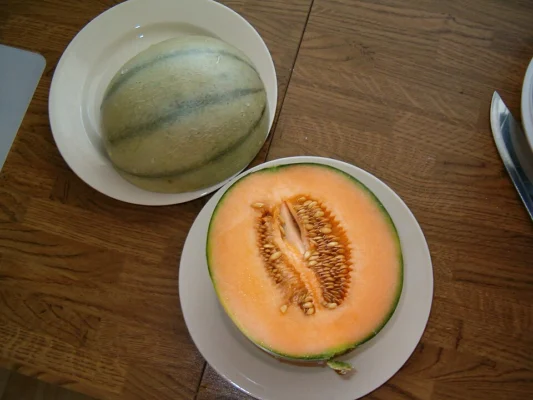
Charentais
A fragrant orange fleshed melon type associated with compact rounded fruits. Protected growing gives it more dependable warmth in Britain.
Charentais melon, identified in the image source.
Photo: Marius Kant, CC BY-SA 3.0. Resized and optimised; cropped for display. Adapted image under the same licence.
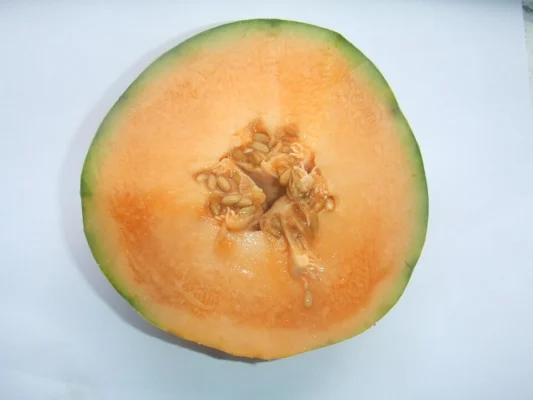
Alvaro F1
An early Charentais type with orange flesh. It is offered for favourable outdoor sites, but a greenhouse remains a useful advantage in cooler districts.
Illustrative Charentais melon; this photograph is not confirmed as Alvaro.
Photo: Hans B. at Dutch Wikipedia, CC BY-SA 3.0. Resized and optimised; cropped for display. Hans B.
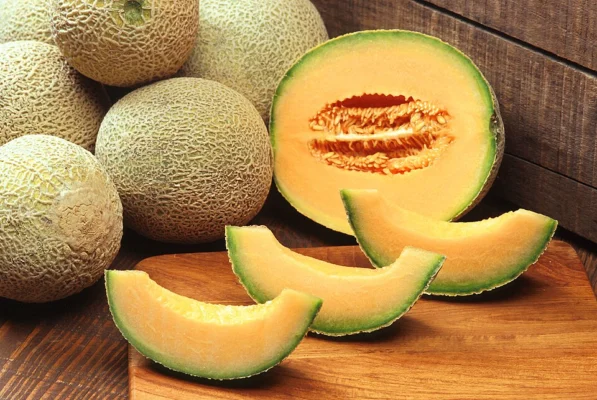
Emir F1
An orange fleshed cantaloupe selection recommended for UK growing. Choose it for a warm protected position and keep the fruit load realistic.
Illustrative netted dessert melon, not a confirmed Emir specimen.
Photo: USDA photo by Scott Bauer. Image Number K7355-11., Public domain. Resized and optimised; cropped for display.
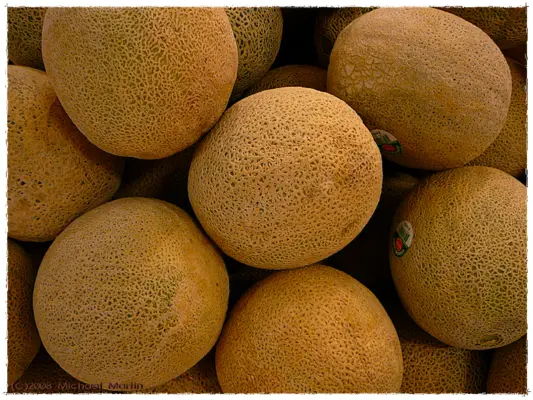
Minnesota Midget
Small fruits and relatively compact vines make this early variety useful where space or summer warmth is limited. It still needs the same care as a larger melon.
Illustrative cantaloupe melons; the exact cultivar is not recorded.
Photo: Michael Martin from Cypress, Texas, CC BY-SA 2.0. Resized and optimised; cropped for display. Adapted image under the same licence.
Check packets for fruit size, vigour and protected growing advice. Start with few plants.
Bees can pollinate melon flowers when greenhouse doors and vents allow access. Hand pollination helps when insects are scarce or conditions keep the crop enclosed.
Avoid unnecessary spraying while flowers are open. Inspect young plants for slugs and snails, and use targeted protection rather than treating healthy plants routinely.
Published by Buy From Farmers Direct. Growing guidance reviewed 6 October 2026. The seasonal timeline uses the shared BFFD Growers Calendar record; adjust timings to your variety and local conditions.
Selected early varieties can crop in exceptionally warm sheltered sites. A greenhouse or polytunnel gives most UK gardeners a better prospect of ripe fruit.
Usually from mid-April to mid-May indoors, with about 18–21°C for germination. Keep seedlings warm and bright until the final growing position is suitable.
Use a soft brush to transfer pollen from an open male flower to the centre of a receptive fruit-bearing flower. The latter has a small swelling behind it.
A vigorous greenhouse plant may support four to six, while weaker or outdoor plants should carry fewer. Retaining every fruit can leave the whole crop small or unripe.
Use the variety’s guidance. Fragrance, rind colour, slight softness and changes around the stalk can help, but not every type slips easily from its stem.
No. Dessert melons are Cucumis melo; watermelon is Citrullus lanatus. This guide’s variety choices and training advice focus on dessert melons.
Start warmly, help flowers set and give a modest crop room to ripen. One carefully tended vine is a good beginning.
Explore more growing guides: Chilli Pepper, Basil, Coriander.
Want to get food independence, support your local grower, get better prices and shop more privately?
Local food isn’t just something you find. It’s something you protect. A free account helps keep local supply visible, supported, and resilient.

….it takes 30 seconds for food lovers and 5 minutes for suppliers
We built this for people who care where their food comes from. For people who want to remain food secure. For Farmers to get to the local people, who deserve a better income and to deliver a better price for you. For the environmentally conscious and the privacy-conscious. An account simply helps us make the map and supplier reach more useful to you, without changing how open it is. You’re always in control.


Find local food. Stay connected to it. Create a free account to support local producers and be part of a growing food network.


