Mustard can mean peppery leaves for a salad, larger greens for cooking or a crop of seeds for the kitchen. This guide concentrates on leafy Brassica juncea and white mustard, Sinapis alba, grown to maturity for seed. Choose the crop you want before sowing: a quick leaf harvest and a full season of flowering and seed ripening need different amounts of time and space.
Leaves or seeds
Quick young leaf crops
Summer and autumn sowings
Keep roots evenly moist
Choose the correct species
| Main leafy mustard | Brassica juncea |
| White or yellow mustard | Sinapis alba |
| Family | Brassicaceae, the cabbage family |
| Growing cycle | Usually managed as a seasonal annual crop |
| Edible crops covered | Young leaves, cooking greens and ripe seed |
| Leaf flavour | Peppery; strength varies with plant and conditions |
| Leaf appearance | Green, red tinged or purple, depending on selection |
| Flowers | Yellow, with four petals |
| Leaf crop position | Sun or light shade |
| Seed crop position | Open sunny site |
| Soil | Fertile, moisture retentive and well drained |
| Usual sowing depth | About 5 to 10mm; follow the packet |
| Young leaf spacing | Closer sowing followed by thinning |
| Larger leafy plants | Usually 20 to 30cm apart |
| Indicative row spacing | 30cm for leafy crops |
| First young leaves | Often four to eight weeks after sowing |
| Larger outdoor greens | Late summer sowing is especially useful |
| Protected winter crop | Sow suitable leaf varieties in early September |
| White mustard seed sowing | Early spring, usually March or April |
| White mustard seed harvest | Summer to early autumn when pods ripen |
| Plant name | Crop type | Spacing |
Sow indoors
Plant outdoors
Harvest
Polytunnel | |||||||||||
|---|---|---|---|---|---|---|---|---|---|---|---|---|---|---|
| Jan | Feb | Mar | Apr | May | Jun | Jul | Aug | Sep | Oct | Nov | Dec | |||
| Mustard | Salad & leaves | Single 30cm, In row 30cm, Row gap 30cm | Polytunnel | Polytunnel | Sow indoors, Polytunnel | Sow indoors, Plant outdoors, Polytunnel | Sow indoors, Plant outdoors, Harvest | Sow indoors, Plant outdoors, Harvest | Sow indoors, Plant outdoors, Harvest | Sow indoors, Plant outdoors, Harvest | Sow indoors, Plant outdoors, Harvest, Polytunnel | Harvest, Polytunnel | Polytunnel | Polytunnel |
Sow indoors: March, April, May, June, July, August, September. Plant outdoors: April, May, June, July, August, September. Harvest: May, June, July, August, September, October. Polytunnel: January, February, March, April, September, October, November, December.
The March to September sowing band combines spring baby leaves, summer succession, July and August larger greens, and early September protected crops. White mustard for seed requires early spring sowing. The May to October harvest band shows main outdoor leaf picking and summer seed ripening. Protected spring and autumn or winter growing can extend this season. The 30cm spacing applies to leafy plants; follow the seed packet for a mature seed stand.
Leaf mustard suits beds and large containers. Sow small batches so leaves are ready when needed, rather than a whole bed flowering together.
A seed crop needs room and a full growing season. Reserve a separate patch rather than repeatedly stripping plants intended to produce seed.
Photo: Comedora, CC BY-SA 4.0. Resized and optimised; cropped for display. Adapted image under the same licence.
Choose fertile, well drained soil that stays reasonably moist. Full sun suits the crop, while light shade can help summer leaves in a hot garden.
Treat mustard as part of the brassica family in your rotation. It shares pests and diseases with cabbages and radishes, including when white mustard is grown as green manure.
For containers, choose a pot or trough at least 30cm wide with drainage holes and peat free compost. Larger volumes retain moisture better than small pots.
Reserve a sunny open site for seed mustard. Follow packet spacing and leave access to inspect ripening pods before they shed.
Photo: Agnieszka Kwiecień, Nova, CC BY-SA 4.0. Resized and optimised; cropped for display. Adapted image under the same licence.
Buy seed labelled for the species, variety and intended use. Leaf mustard, seed mustard, green manure and indoor mustard and cress trays are related growing topics, but their crop schedules are not interchangeable.
1.
Choose a named leafy variety for salads or cooking greens, or a seed mustard intended for a mature seed crop. Keep different packets clearly labelled.
2.
Prepare a weed free seedbed with a fine surface. Improve poor soil with well rotted compost, and water dry ground before sowing.
3.
For leaf crops, sow small batches through the suitable season. Early spring sowings are best picked young; July and August are useful for substantial outdoor greens.
4.
Sow thinly at the packet depth, usually around 5 to 10mm. Cover lightly, label and water gently without washing seeds out of place.
5.
Alternatively, raise leafy mustard in modules and plant it out while young. Harden off sheltered seedlings and avoid leaving roots crowded in the cells.
6.
Thin leafy plants according to harvest size. Allow around 20 to 30cm for bigger plants, with closer spacing only where the intention is frequent young leaf picking.
7.
Protect vulnerable seedlings from slugs and, where needed, cover with suitable insect mesh against flea beetles. Keep the cover edges secure and leave growing room beneath it.
8.
For white mustard seed, sow in early spring and let selected plants grow through flowering. Maintain moisture during establishment and plan to collect mature pods before seed is lost.

Watering
Keep leafy crops evenly moist to encourage continuous tender growth. Check regularly in dry weather, especially when plants are crowded or growing in containers.
Water at the base where practical and allow surplus water to drain. Drought stressed leaves can become coarse and pungent, but permanently wet roots will not produce a healthy crop either.

Feeding
A short young leaf crop generally needs little extra feeding in a prepared bed or fresh compost. Prioritise good soil and steady watering over repeated doses of fertiliser.
For a longer container crop, review nutrition after several harvests and follow an appropriate feed’s instructions if growth becomes weak. Do not feed a flowering seed crop as though the only aim were more leaves.

Pruning
Mustard does not need shrub pruning. Pick outer leaves from larger plants while leaving the centre intact, or cut a young leaf crop above its growing point so it can regrow.
Replace a tired or flowering leaf crop with a fresh sowing. For plants reserved for seed, retain flower stems and developing pods instead of cutting them back for more leaves.

Winter care
Suitable Brassica juncea varieties can provide autumn and winter leaves under a cloche, greenhouse or polytunnel. Sow early enough in September to build a useful plant before growth slows.
Ventilate protected crops on mild days and pick lightly during cold dull periods. Winter performance varies by variety and site; this is not a promise of rapid growth or uninterrupted outdoor harvests everywhere.
Leaf mustard commonly has broad or finely divided green, red or purple leaves. Brassica juncea later produces yellow flowers and slender pods. Red Giant is a broad leaved selection; frilled varieties have a very different outline.
White mustard, Sinapis alba, is another species grown for seed and green manure, with yellow flowers and beaked pods. Garden cress is a different plant, Lepidium sativum. Use labelled seed rather than identifying unknown yellow flowered weeds for food.
Photo: Goldlocki, CC BY-SA 3.0. Resized and optimised; cropped for display. Adapted image under the same licence.
Spring warmth can give quick young leaves, but mustard may flower before it forms large plants. Later summer sowings often suit bigger cooking greens better. Follow the chosen variety’s timing, and use the local weather rather than a fixed date alone.
Pick clean healthy leaves at the size you enjoy, wash them and use promptly. Young leaves give salads a peppery lift; larger tender leaves suit stir fries and other cooked dishes. Try a small amount first because pungency varies considerably.
For a seed crop, inspect pods as they dry and change colour. On a dry day, cut ripe stems into a bag before pods shed, finish drying in an airy place, then rub out and clean the seed. Store only thoroughly dry seed in a labelled airtight container.
Image from the BFFD media library.
Flea beetles commonly feed on young brassicas. Protect vulnerable sowings with suitable insect mesh and keep plants growing steadily. A few holes on otherwise healthy larger plants can be tolerated.
Check for slugs and snails, particularly after damp nights. Protect young sowings and inspect hiding places close to the crop before assuming germination has failed.
Timing, weather stress and crowding can shorten the leafy stage. Pick remaining good leaves, start another batch and use late summer sowings where larger mustard plants are the aim.
Older leaves and dry growing conditions can reduce salad quality. Pick younger foliage, maintain moisture and use suitable larger leaves cooked rather than expecting them to taste like tiny seedlings.
Pods can ripen unevenly and shed quickly. Check the crop often, collect mature stems in stages and finish drying them over a tray or inside a paper bag. Do not wait for every pod to open outdoors.
Mustard is normally raised from seed rather than divided or propagated from cuttings. Fresh labelled packets are the straightforward way to repeat a favourite leaf variety.
Saving seed for sowing needs more planning than collecting a culinary seed crop. Related varieties can cross, and hybrid seed may not reproduce its parent. Keep species and variety records and obtain appropriate isolation advice if preserving a selection matters.
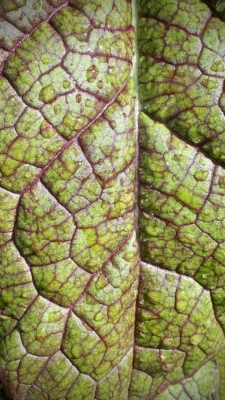
Red Giant leaf mustard
A Brassica juncea selection with broad blistered leaves and red colouring. Pick small for salads or allow tender larger leaves to develop for cooking.
Close detail of a Red Giant mustard leaf photographed in the USDA People’s Garden.
Photo: USDAgov, Public domain. Resized and optimised; cropped for display.
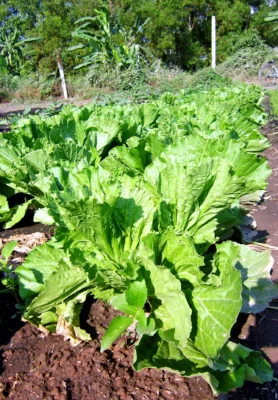
Green leaf mustard
Green selections of Brassica juncea can provide substantial cooking greens. Choose a named packet suited to your season and preferred strength of flavour.
Green Brassica juncea grown as a leaf crop; no specific cultivar is claimed.
Photo: Bùi Thụy Đào Nguyên, CC BY-SA 3.0. Resized and optimised; cropped for display. Adapted image under the same licence.
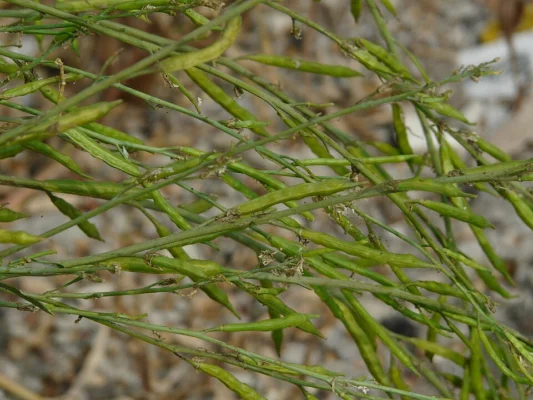
Brown mustard for seed
Brassica juncea can also produce seed for culinary use. Choose an appropriate seed crop packet and allow flowering and pod ripening instead of repeated leaf cutting.
Developing green Brassica juncea pods; these are not yet a dry ripe seed harvest.
Photo: Dinesh Valke from Thane, India, CC BY-SA 2.0. Resized and optimised; cropped for display. Adapted image under the same licence.
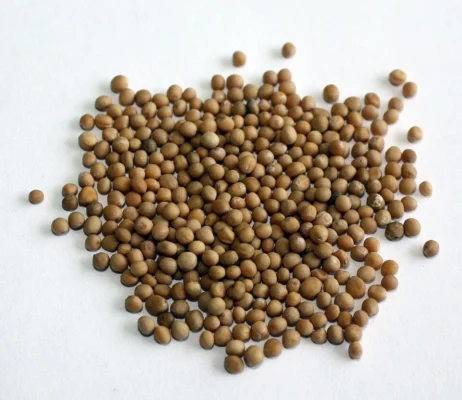
White or yellow mustard
Sinapis alba provides the familiar pale mustard seed. Sow early enough for a full growing season and distinguish a seed harvest from a green manure crop cut before flowering.
Ripe white mustard seeds, Sinapis alba, shown on a white background.
Photo: Edal Anton Lefterov, CC BY-SA 3.0. Resized and optimised; cropped for display. Adapted image under the same licence.
Choose leaf varieties by flavour and season, and seed mustard by species and intended harvest. Green manure is normally cut before flowering; indoor mustard and cress is harvested much younger.
Mustard flowers can attract visiting insects when plants are allowed to bloom. A seed patch therefore has a different role in the garden from a leaf crop harvested before flowering.
Keep insect mesh on vulnerable leafy crops where needed. If retaining plants for seed, allow insect access during flowering and avoid unnecessary disturbance or sprays around visiting pollinators.
Published by Buy From Farmers Direct. Growing guidance reviewed 6 October 2026. The seasonal timeline uses the shared BFFD Growers Calendar record; adjust timings to your variety and local conditions.
They can be related or even the same species, but varieties and harvest stages differ. Brassica juncea is grown for leaves and seed; Sinapis alba is another familiar seed mustard.
No. Garden cress is Lepidium sativum. Mustard and cress are often paired as very young indoor seedlings, which is different from growing garden mustard for larger leaves or ripe seed.
Choose timing for the crop. Spring sowings can provide young leaves, July and August are useful for larger greens, and early September suits protected winter leaves. White mustard for seed needs an early spring start.
Yes, if the growing point and enough healthy foliage remain. Take outer leaves or cut young crops above the crown, then water as needed. Start fresh sowings as older plants decline or flower.
Mustard naturally flowers to produce seed, and unsuitable timing or stress can hasten it. Pick usable leaves and replace the crop, or deliberately retain suitable plants for seed.
Wait for mature pods to dry and change colour, but collect before they split and scatter. Finish drying the stems, release and clean the seeds, and store only when thoroughly dry.
Match the packet to its purpose. Tender leaves reward steady moisture and timely picking; ripe seed needs a longer season and close attention as pods dry.
Explore more growing guides: Chinese Cabbage, Chives, Coriander.