Oats can fill a bare vegetable bed with useful cover, provide seed for birds or make an interesting small grain growing project. This guide focuses on cultivated common oats, Avena sativa. Decide whether you want green growth or mature grain before sowing: a green manure is cut down before seed ripens, while a grain crop occupies the ground much longer and needs further work after harvesting.
Annual cereal grass
Direct sow outdoors
Sun and open ground
Green manure or grain
Match seed to season
| Main botanical name | Avena sativa |
| Family | Poaceae |
| Plant type | Annual cereal grass |
| Garden uses | Green manure, learning crop or bird food |
| Grain use | A small trial requiring harvesting and processing |
| Growth habit | Upright stems with basal tillers |
| Root system | Fibrous |
| Typical height | Varies by cultivar; allow room for tall cereal stems |
| Flower head | Open branching panicle with hanging spikelets |
| Position | Full sun |
| Seedbed | Fine, firm and reasonably weed free |
| Soil drainage | Avoid persistently waterlogged ground |
| Spring grain sowing | Usually March and April |
| Winter grain sowing | September and October; suitable winter varieties only |
| Late summer cover sowing | August to early September |
| Typical sowing depth | 2 to 3cm; follow the supplier |
| Example pure cover crop rate | About 12.5g per square metre; check packet |
| Usual grain harvest window | July to September, depending on type and season |
| Green manure cutting | Before seed ripens; preferably while still green |
| Nitrogen fixation | None; oats are not a legume |
| Plant name | Crop type | Spacing |
Sow indoors
Plant outdoors
Harvest
Polytunnel | |||||||||||
|---|---|---|---|---|---|---|---|---|---|---|---|---|---|---|
| Jan | Feb | Mar | Apr | May | Jun | Jul | Aug | Sep | Oct | Nov | Dec | |||
| Oats | Grains | Single grown as a close sown stand, In row sow thinly, Row gap 15 to 20cm for a small trial; follow packet rate for broadcasting | No activity recorded | No activity recorded | Sow indoors | Sow indoors | No activity recorded | No activity recorded | Harvest | Sow indoors, Harvest | Sow indoors, Harvest | Sow indoors | No activity recorded | No activity recorded |
Sow indoors: March, April, August, September, October. Plant outdoors: no months recorded. Harvest: July, August, September. Polytunnel: no months recorded.
March and April are the main spring grain sowing months. August to early September is a cover crop window, not a late route to ripe grain that same summer. September and October also suit autumn sowing of labelled winter oats. The July to September harvest band means mature grain: winter crops often finish first, with spring crops later. Green manure is cut according to growth and the following crop. Planting and polytunnel bands are blank because oats are normally direct sown outside.
A small bed of oats is useful for seeing how cereals develop from grass seedlings into grain bearing plants. Growing enough for regular household porridge takes considerably more space and processing than a few garden rows.
For soil cover, common oats can help protect bare ground and produce organic material. They fit best where you have planned the next crop and can clear them in time, rather than letting an unwanted cereal crop mature.
Photo: Alan Manson, CC BY-SA 3.0. Resized and optimised; cropped for display. Adapted image under the same licence.
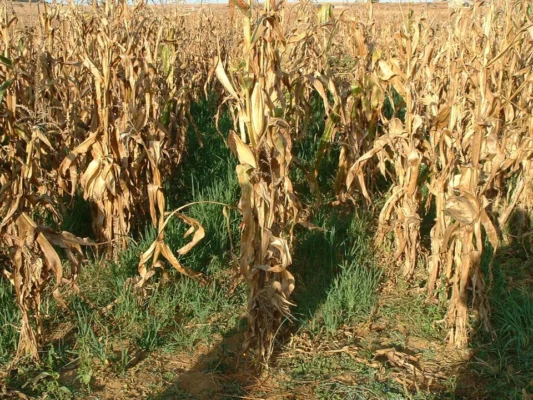
Choose open sunny ground with access along the edge for weeding and harvesting. Tall surrounding vegetables or shrubs can shade young oats and make a small stand uneven.
Prepare soil when it is workable, not sticky and saturated. A reasonably fine surface helps seed contact the soil, while firm ground underneath supports steady rooting.
Rotate the patch rather than growing cereals repeatedly in the same place. Avoid using an oat cover immediately before another cereal crop where possible, because grasses can carry shared pests and disease problems.
A container can demonstrate a few plants, but a bed is more useful for green manure or grain. Pots have limited rooting space and dry quickly, so do not use their yield as a guide to what a field crop might produce.
Photo: W.carter, CC BY-SA 4.0. Resized and optimised; cropped for display. Adapted image under the same licence.
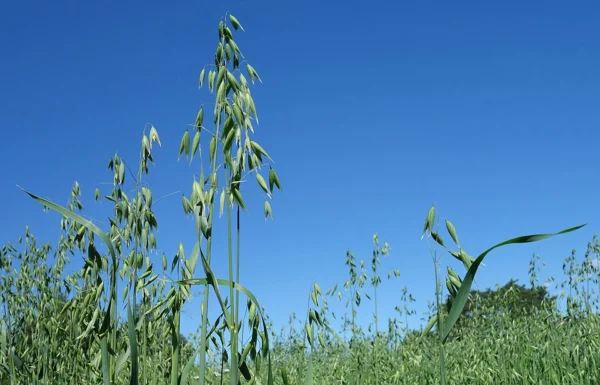
Use labelled sowing seed and check whether it is intended for spring grain, winter grain or cover cropping. Porridge oats will not germinate, and an unidentified bag of feed grain is a poor substitute for reliable planting stock.
1.
Choose the purpose of the crop first. For a grain trial, buy a suitable named variety; for soil cover, a common oat green manure seed lot or an appropriate mixture may be simpler.
2.
Check the sowing season on the packet. Use spring varieties in spring for grain, and only winter suitable varieties for an autumn grain sowing expected to survive until the following summer.
3.
Clear weeds and old crop debris that obstruct sowing. Break up large surface clods, then rake and gently firm the bed without compacting wet soil.
4.
Measure the area before broadcasting a cover crop. About 12.5g per square metre is one supplier’s example for pure oats; follow the actual packet, especially with mixtures.
5.
Sow evenly over the surface and rake seed into the upper soil, or use shallow drills about 2 to 3cm deep. For a small trial, rows around 15 to 20cm apart make hand weeding easier.
6.
Cover the seeds and firm lightly so they contact moist soil. Water gently if the seedbed is dry, avoiding a strong jet that exposes or washes seeds into piles.
7.
Where birds take seed, temporarily protect the bed with a well secured cover. Check regularly and remove it once seedlings are established; do not leave loose netting where wildlife can become tangled.
8.
Label the variety and sowing date. Remove competing weeds early, then record whether the crop is being kept for grain or will be cut before mature seed forms.

Watering
Keep the seedbed moist enough for emergence during dry weather. Once roots develop in open ground, rainfall usually does most of the work, though prolonged spring drought can reduce growth and grain filling.
For a small grain trial, water the soil during severe dry spells rather than repeatedly wetting the foliage. Avoid saturated roots, and do not interpret naturally drying mature stems as a signal to keep watering.

Feeding
A cover crop on a recently cropped vegetable bed often needs no extra fertiliser. Its role is to take up available nutrients and return organic material, not to create nitrogen from the air.
Grain crops need adequate fertility, but excessive nitrogen or fresh rich manure can encourage weak, lush growth that falls over. Base any feeding on the soil and seed supplier’s advice rather than copying farm rates onto a small bed.

Pruning
Oats do not need pruning. For green manure, cut while growth is still manageable and before seed ripens; chop and incorporate it, or remove top growth for composting and deal with any regrowth.
For grain, let the panicles and stems turn straw coloured and assess several heads. Harvest when the grains are mature and firm rather than green and milky, cutting in dry weather and finishing drying under cover with good airflow.

Winter care
Spring oats sown as late summer cover often die in hard winter weather, leaving material on the surface. Survival varies with conditions, so inspect the bed and clear surviving plants when needed.
A winter grain crop requires a winter suitable variety and a sound autumn seedbed. Check for waterlogging, weeds and pest damage through mild spells; a greenhouse is not required for this outdoor cereal.
Common oats have narrow grass leaves and several stems arising from the base. Their loose branching panicles carry pendulous spikelets, unlike the compact ears familiar on wheat and barley.
Read the seed label carefully. Black or bristle oats sold for green manure are often Avena strigosa, a different species. Ornamental blue oat grass and wild oats are also different plants, so common names alone are not enough.
Photo: Rasbak, CC BY-SA 3.0. Resized and optimised; cropped for display. Adapted image under the same licence.
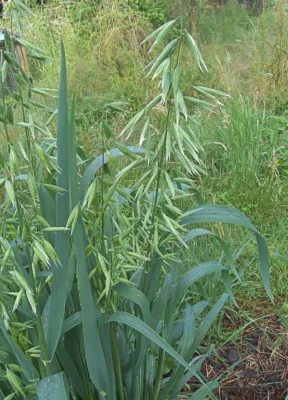
Spring sowing is a straightforward starting point for a garden trial across much of the UK. Wait for workable soil; sowing into a cold sticky bed simply to meet an early date can give poor establishment.
Cooler northern districts often reach grain harvest later than southern gardens. Keep expectations flexible and choose a variety suited to the region, with an emphasis on maturity and standing ability rather than headline commercial yield.
In wet or exposed places, strong stems and good drainage matter. Plan somewhere airy under cover to finish drying a small harvest, because a run of rain near maturity can make collecting sound grain more difficult.
Photo: H. Zell, CC BY-SA 3.0. Resized and optimised; cropped for display. Adapted image under the same licence.
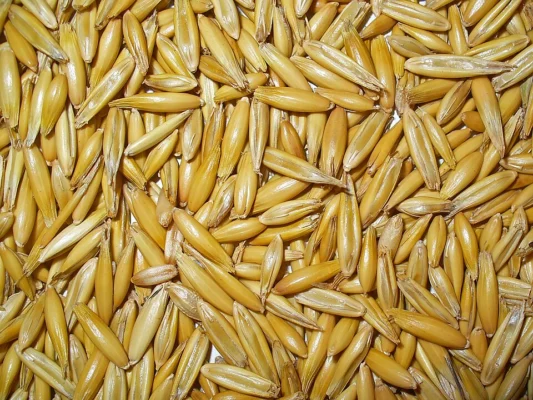
Birds can remove seed and slugs can damage emerging shoots. Inspect the bed for the cause, cover exposed seed properly and remove nearby hiding places where practical. A dry or cloddy seedbed can also cause patchy emergence.
Crown rust is an important oat disease, favoured by warm humid conditions. Choose a variety with useful resistance, avoid unnecessarily dense lush growth and remove cereal volunteers that keep crops present between seasons.
Powdery mildew can weaken oats, with susceptibility differing between varieties. Improve growing conditions and consider a more resistant variety next time. Farm fungicide programmes are not a routine prescription for a garden bed.
This is lodging, often associated with wind, rain, high plant density or excessive nitrogen. Avoid overfeeding and overcrowding, and choose a variety with better standing strength for future sowings.
Freshly decomposing oat material can temporarily hinder germination and affect available nutrients. Clear the cover in good time; allow about six weeks after incorporation before directly sowing a sensitive small seeded crop, allowing longer in cold conditions.
Oats are raised from seed, usually sown directly where they will grow. Dividing clumps or transplanting individual seedlings offers little benefit for an ordinary grain or cover crop.
For a small seed saving experiment, keep only fully mature, clean seed from healthy plants and dry it properly. Store it cool and dry with a clear label; fresh certified seed is a more dependable start where seed health and varietal identity matter.
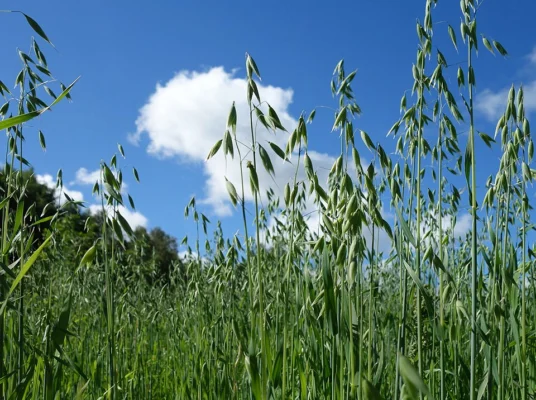
Canyon
A husked spring oat listed in UK trials as early maturing with good mildew resistance. It is an option to discuss with a seed supplier for a small spring grain trial; maturity and disease resistance still depend on growing conditions.
Illustrative green common oats; Canyon is not confirmed in this photograph.
Photo: W.carter, CC0. Resized and optimised; cropped for display.
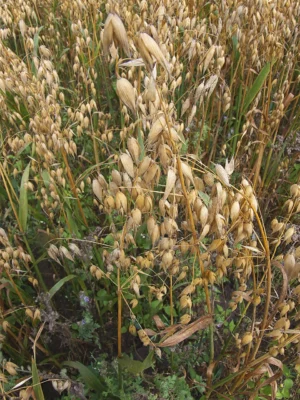
WPB Isabel
A husked spring variety used in UK grain production. It offers another spring sowing option, but crown rust susceptibility is worth considering. Small quantities may require a specialist cereal seed supplier.
Illustrative ripening oat panicle, not a confirmed WPB Isabel plant.
Photo: Rasbak, CC BY-SA 3.0. Resized and optimised; cropped for display. Adapted image under the same licence.
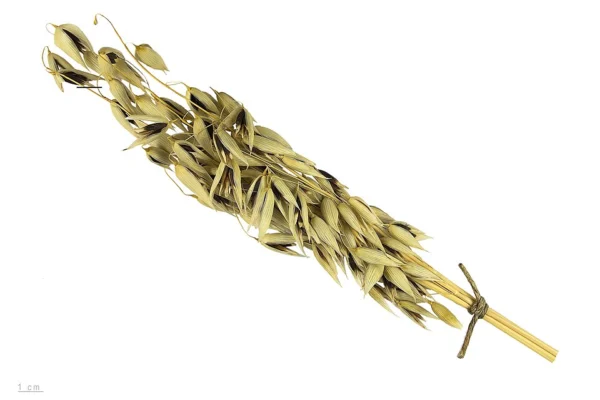
Mascani
A familiar husked winter oat, chosen for autumn sowing and harvest the following summer. It needs a different timetable from a spring variety and can make a tall crop, so leave sufficient open space.
Illustrative dried oat panicle; this specimen is not confirmed as Mascani.
Photo: Roger Culos, CC BY-SA 3.0. Resized and optimised; cropped for display. Adapted image under the same licence.
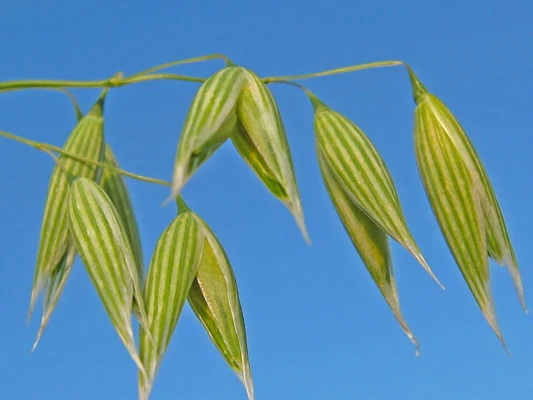
Lennon
A naked spring oat described in UK variety information. Naked types shed most of their hull during threshing, making a small food grain experiment more practical, although cleaning, drying and suitable preparation are still needed.
Illustrative green oat spikelets, not confirmation of Lennon or a naked grain type.
Photo: Andreas Trepte, CC BY-SA 2.5. Resized and optimised; cropped for display. Adapted image under the same licence.
Ask for labelled seed with a stated sowing season and purpose. For a food grain experiment, discuss a suitable naked variety and the work needed after harvest. For green manure, compare the mixture, sowing rate and clearance date with your next vegetable crop.
Ripening oat seed can feed visiting birds if a portion of the crop is left for them. Decide in advance which area is for wildlife and which is your harvest, rather than expecting every grain to remain untouched.
Oats have inconspicuous flowers and are not a substitute for nectar rich flowering plants. Their ground cover can shelter invertebrates, while a varied garden provides a wider range of food and habitat.
Published by Buy From Farmers Direct. Growing guidance reviewed 6 October 2026. The seasonal timeline uses the shared BFFD Growers Calendar record; adjust timings to your variety and local conditions.
You can grow a small learning crop, but usable grain is only part of the harvest. Ordinary oats retain a tough hull and require dehulling, cleaning and preparation. A naked variety reduces that work but does not turn harvesting into ready rolled porridge.
Spring varieties are normally sown in spring for grain that summer. Winter varieties are suited to autumn sowing and harvest the next summer. Spring oats used as autumn cover may die during winter, so check the label before sowing.
No. Their roots take up nutrients already in the soil and their residues add organic material. A mixture containing a suitable legume, such as vetch, has a different role because the legume can fix atmospheric nitrogen.
Clear it before ripe seed forms and early enough for the following crop. Young growth is easier to manage than dry straw. After incorporating oats, allow about six weeks before directly sowing small seeds, particularly where residues remain obvious.
Dry cut heads thoroughly in an airy, sheltered place, thresh to release the grain and winnow away loose chaff. Ordinary husked oats still need dehulling. Do not seal damp grain in a jar; use proper grain moisture guidance if storing it.
Not necessarily. Many green manure packets called black or bristle oats contain Avena strigosa, whereas this guide centres on Avena sativa. Check the botanical name and supplier’s instructions rather than relying on colour or the common name.
Start with a manageable patch, label its purpose and choose seed suited to the season. Oats are rewarding to watch and useful as planned soil cover, while a grain harvest is best approached as a project with drying and processing still to come.
Explore more growing guides: Barley, Buckwheat, Beans (Broad).
Want to get food independence, support your local grower, get better prices and shop more privately?
Local food isn’t just something you find. It’s something you protect. A free account helps keep local supply visible, supported, and resilient.

….it takes 30 seconds for food lovers and 5 minutes for suppliers
We built this for people who care where their food comes from. For people who want to remain food secure. For Farmers to get to the local people, who deserve a better income and to deliver a better price for you. For the environmentally conscious and the privacy-conscious. An account simply helps us make the map and supplier reach more useful to you, without changing how open it is. You’re always in control.


Find local food. Stay connected to it. Create a free account to support local producers and be part of a growing food network.


