Pak choi and bok choy are two names for the same crop, Brassica rapa Chinensis Group. This guide complements our Bok Choy guide with seasonal planning for small UK sowings, especially a useful late summer and autumn crop.
Also called bok choy
Quick leafy harvests
Useful autumn crop
Beds or large pots
Keep evenly watered
| Botanical group | Brassica rapa Chinensis Group |
| Other common name | Bok choy or pak choy |
| Family | Brassicaceae, the cabbage family |
| Crop type | Leafy vegetable grown as an annual |
| Edible parts | Leaves, fleshy stalks and tender flower shoots |
| Mature crop height | Often 30 to 45cm |
| Leaf stalk colours | White or pale green, depending on variety |
| Preferred weather | Mild and moist |
| Light | Sun; light shade useful in hot weather |
| Soil | Fertile, moisture retentive and well drained |
| Protected early sowing | March to May, with care over cold spells |
| Main outdoor sowing | June to August |
| Autumn protected sowing | September |
| Seed depth | Follow packet; often about 0.5 to 1cm |
| Baby leaf spacing | Around 8 to 10cm |
| Mature head spacing | Around 25 to 30cm |
| Row spacing | Around 30cm |
| Baby leaf harvest | Often from about 30 days |
| Whole head harvest | Usually around 45 to 75 days |
| Main challenge | Premature flowering, known as bolting |
| Plant name | Crop type | Spacing |
Sow indoors
Plant outdoors
Harvest
Polytunnel | |||||||||||
|---|---|---|---|---|---|---|---|---|---|---|---|---|---|---|
| Jan | Feb | Mar | Apr | May | Jun | Jul | Aug | Sep | Oct | Nov | Dec | |||
| Pak Choi | Brassicas | Single 30cm, In row 30cm, Row gap 30cm | No activity recorded | No activity recorded | Sow indoors, Polytunnel | Sow indoors, Polytunnel | Sow indoors, Plant outdoors, Harvest, Polytunnel | Sow indoors, Plant outdoors, Harvest | Sow indoors, Plant outdoors, Harvest | Sow indoors, Plant outdoors, Harvest | Sow indoors, Plant outdoors, Harvest, Polytunnel | Harvest, Polytunnel | Harvest, Polytunnel | No activity recorded |
Sow indoors: March, April, May, June, July, August, September. Plant outdoors: May, June, July, August, September. Harvest: May, June, July, August, September, October, November. Polytunnel: March, April, May, September, October, November.
The sowing band combines different crops: March to May sowings are protected early batches, June to August is the main outdoor window, and September is for autumn plants under cover. Outdoor planting begins in settled late spring weather; September planting belongs under cover. The May to November harvest band includes small early leaves and protected late crops, not seven months from one sowing. Polytunnel months show optional spring and autumn protection, with ventilation essential in sunshine.
Pak choi suits gardeners who can sow a little at a time and check watering regularly. A short row is easier to use at its best than a whole bed of plants becoming ready together.
For beginners, a June, July or August sowing for later picking is a useful starting point. Early spring crops are possible, but cold checks can prompt flowering before the plants make worthwhile heads.
Photo: Forest & Kim Starr, CC BY 3.0. Resized and optimised; cropped for display. Forest & Kim Starr
Choose an open bed with fertile soil that stays moist without becoming waterlogged. Work in garden compost where needed, and clear weeds before sowing so the young plants get an even start.
Use sunshine in spring and autumn. In a hot summer position, light shade helps reduce stress, especially for a crop that will remain in place until its stalks become substantial.
Containers at least 30cm wide are useful for a small crop. Use peat free multipurpose compost and drainage holes, and allow enough room for the harvest size you want rather than crowding full heads together.
A greenhouse or polytunnel can extend the season. The pictured seedlings are in a hydroponic greenhouse, but this guide uses ordinary soil and compost methods; specialist growing equipment is unnecessary.
Photo: Forest and Kim Starr, CC BY 3.0 us. Resized and optimised; cropped for display. Forest & Kim Starr
Plan the harvest first: closely spaced baby leaves need less room than broad, mature rosettes. Choose a variety and sowing date that suit that purpose.
1.
Choose fresh seed suited to baby leaves or larger heads. Keep the packet for its individual sowing advice.
2.
For an early start, sow one or two seeds per cell in moist peat free seed compost. Modules reduce later root disturbance.
3.
Cover according to the packet, commonly about 0.5 to 1cm, and keep the compost evenly moist. Give emerging seedlings good light and ventilation.
4.
Thin each module to one strong seedling. Grow it on steadily, without letting the compost dry out or leaving the roots cramped for weeks.
5.
For direct summer sowing, make a shallow drill in prepared moist soil. Sow thinly and water gently, then thin in stages as the plants develop.
6.
Gradually acclimatise protected seedlings before outdoor planting. Avoid moving them straight from warmth into cold nights; wait for settled conditions and use temporary cover if needed.
7.
Plant intact plugs at their previous depth. Allow roughly 25 to 30cm between full heads and 30cm between rows, or 8 to 10cm for baby leaves. Water in gently.
8.
Protect vulnerable young plants from slugs and cover with suitable insect mesh where needed. Label the date and make another small sowing when the first batch is established.

Watering
Keep the root zone consistently moist. Water before plants wilt, particularly when seedlings are establishing or thick leaf stalks are developing. A dry spell can shorten the useful harvest window.
Check containers more often than beds. Water thoroughly when needed, let excess escape and favour morning watering.

Feeding
In well prepared fertile soil, a short pak choi crop normally needs little extra feeding. Steady moisture and adequate spacing are more useful than repeatedly adding fertiliser.
Fresh multipurpose compost usually supports a quick container crop. If you keep taking leaves for longer, follow the compost and feed instructions, using a modest liquid feed when its original nutrients are exhausted.

Pruning
Pak choi needs harvesting rather than ornamental pruning. Take a few outer leaves while leaving the centre growing, or cut a complete head when it reaches the size you want.
A cut made above the growing base may give some regrowth, but do not rely on endless harvests. Once a flower stem develops, use the remaining tender crop promptly and make room for a new batch.

Winter care
September sowings can give autumn leaves in a greenhouse, polytunnel or under cloches. Growth slows as days shorten, so plants must make useful size before the darkest weather.
Ventilate protected crops on mild days and remove rotting leaves. Some plants may stand into winter in favourable conditions, but frost tolerance and survival are not a promise of continuous fresh growth.
Pak choi forms an open upright rosette of smooth leaves on thick, juicy stalks. Cultivars differ in size and colour, with both white stemmed and pale green stemmed forms widely grown.
Bok choy is the same crop name, while Chinese or napa cabbage forms a different, more enclosed head. The upright stem and closed flower buds pictured here show pak choi moving from leaf production towards flowering.
Photo: Forest and Kim Starr, CC BY 3.0 us. Resized and optimised; cropped for display. Forest & Kim Starr
Match the sowing to your local season. In cooler northern or exposed gardens, protect early starts and delay outdoor planting. In warm southern gardens, pay particular attention to summer shade, ventilation and watering.
Harvest baby leaves while tender, or wait for broad stalks on a compact head. Wash carefully between the overlapping leaf bases. Add chopped stalks to a stir fry before the softer leaves so both reach the texture you want.
Late summer sowings make useful autumn crops after earlier vegetables finish. The field photograph shows an overseas pak choi harvest; follow the UK timings described here.
Image from the BFFD media library.
Cold checks in young plants, hot dry conditions and ageing can all encourage bolting. Harvest tender leaves and unopened flower shoots promptly. Use a better timed succession and a bolt resistant variety for the next crop.
Flea beetles can damage brassicas, especially small seedlings in warm dry weather. Protect new sowings with fine insect mesh, keep growth steady and tolerate minor holes on otherwise healthy larger plants.
Look for slugs and snails around vulnerable young plants, particularly after damp weather. Check after dusk, remove nearby hiding places where practical and protect the crop without assuming every slug in the garden needs removing.
Inspect both sides of leaves regularly. Pick off caterpillars from the crop when necessary, or use well secured fine netting held above the foliage so butterflies cannot lay eggs through it.
Check moisture below the surface and look at drainage before watering again. Both dry roots and saturated compost can cause poor growth. Give crowded plants room and inspect weak plants for root damage if the cause remains unclear.
Sow fresh batches from seed rather than trying to maintain an old harvested plant indefinitely. Small repeated sowings spread the work, reduce waste and let you adjust the next batch to changing weather.
F1 varieties are useful choices for uniform growth, but saved seed will not reliably reproduce their characteristics. For a predictable crop of a named hybrid, buy its labelled seed again rather than treating a flowering plant as an identical replacement.
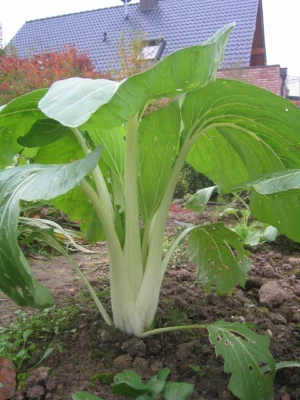
Joi Choi
An upright F1 with broad white stalks and dark leaves. Sow outdoors in summer and give mature plants about 30cm of space.
A white stemmed pak choi plant illustrating the general form; not a verified photograph of Joi Choi.
Photo: Webvet~enwiki at English Wikipedia, Public domain. Resized and optimised; cropped for display.
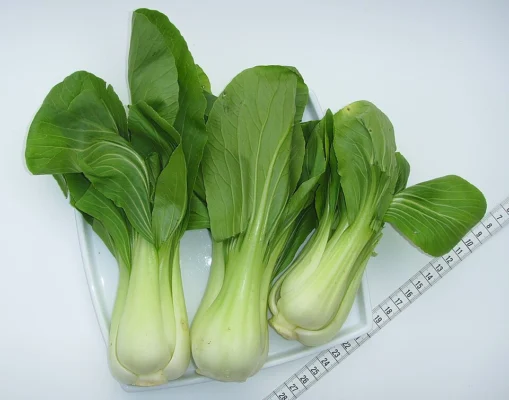
Yang Qing Choi
A compact F1 with thick light green stalks and good resistance to bolting. Useful for whole heads or individual leaves; follow the supplier’s spacing for the chosen harvest size.
Harvested baby pak choi with pale green stalks; illustrative rather than verified Yang Qing Choi.
Photo: Karl-Heinz Wellmann, CC BY-SA 3.0. Resized and optimised; cropped for display. Adapted image under the same licence.
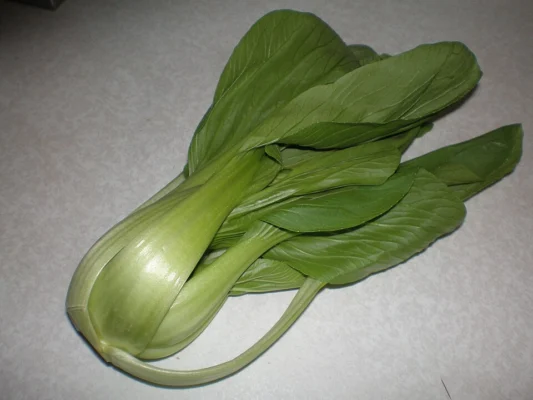
Summer Breeze
A bolt resistant choice described by the RHS as having good tolerance of heat and cold. Pick young for salads or grow on for substantial stalks.
A harvested pak choi head illustrating leaves and stalks; the cultivar is not identified as Summer Breeze.
Photo: おむこさん志望, CC BY 2.5. Resized and optimised; cropped for display.
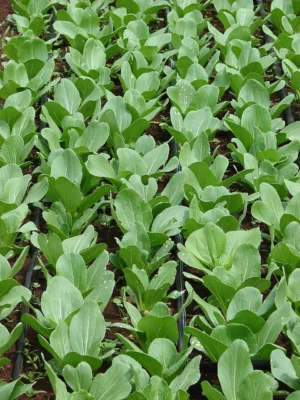
Ivory
A white stemmed variety with dark green leaves, suitable for young salad leaves or mature cooking heads. Keep plants watered rather than relying on the name to guarantee easy growth.
A field crop of pak choi; this general crop photograph is not a verified image of Ivory.
Photo: Forest and Kim Starr, CC BY 3.0 us. Resized and optimised; cropped for display. Forest & Kim Starr
Look for Brassica rapa Chinensis Group and compare the recommended dates, mature size and bolt resistance. Packets labelled bok choy are offering the same crop; the cultivar and sowing guidance are the useful distinctions.
Pak choi is a brassica, so its leaves also feed butterfly and moth caterpillars. Protect the kitchen crop with mesh while leaving other appropriate flowering plants and habitat nearby for garden wildlife.
If space allows, leave a spare plant to flower for visiting insects. This ends its main life as a leafy vegetable, so use a separate succession for the kitchen rather than trying to preserve every plant as a crop.
Published by Buy From Farmers Direct. Growing guidance reviewed 6 October 2026. The seasonal timeline uses the shared BFFD Growers Calendar record; adjust timings to your variety and local conditions.
No. They are alternative common names for Brassica rapa Chinensis Group. Varieties can have different stalk colours and sizes, but the two names do not define separate crops.
June to August is a useful main outdoor window, particularly for later summer and autumn harvests. Earlier protected sowings need care to avoid cold checks; September batches benefit from cover.
Young plants exposed to cold, later heat or water stress, and plants left too long can bolt. Choose a suitable variety, grow it steadily and harvest before the flower stem lengthens.
Yes. Use a container at least 30cm wide with drainage and peat free compost. Give full heads more space than baby leaves and check watering frequently.
Tender leaves, stems and unopened flower shoots from your known edible crop can still be harvested. Use them promptly; older flower stalks become tough and the plant will not return to making a normal compact head.
Allow about 25 to 30cm for mature heads and roughly 30cm between rows. Baby leaf crops can be closer, around 8 to 10cm, and individual compact cultivars may have their own spacing advice.
For a manageable harvest, choose a season suited to your garden, sow modest batches and keep the roots evenly moist. Our related Bok Choy guide covers this same vegetable under its other familiar name.
Explore more growing guides: Bok Choy, Chinese Cabbage, Coriander.