Pears bring spring blossom and fruit for late summer and autumn. Choose variety, rootstock and pollination partner together. This guide covers European pears, Pyrus communis, usually picked firm and ripened indoors.
Hardy deciduous fruit tree
Choose a suitable rootstock
Check pollination compatibility
Sunny sheltered position
Pick firm and ripen indoors
| Botanical name | Pyrus communis |
| Family | Rosaceae |
| Plant type | Deciduous perennial tree |
| Fruit uses | Dessert, cooking or both, depending on variety |
| Position | Full sun, sheltered from strong wind |
| Soil | Deep, fertile and moist but well drained |
| Best planting season | Late autumn to early spring |
| Quince C or Eline | Dwarfing rootstocks; usually about 2.5 to 3m tall |
| Quince A | Semi vigorous rootstock; usually about 3 to 4.5m tall |
| Final size | Also affected by soil, cultivar and training |
| Spacing on Quince C or Eline | About 2.5 to 3.5m for free standing trees |
| Spacing on Quince A | About 3.5 to 5.5m for free standing trees |
| Container size | About 45 to 50cm wide and deep |
| Pollination | Usually improved by a compatible different pear |
| Flowers | White clusters in spring |
| Main harvest | August to October, according to cultivar |
| First useful crops | After several years; rootstock and care affect timing |
| Bush tree pruning | Dormant season, usually November to early March |
| Restricted trained forms | Mainly summer pruning once shoots mature |
| Harvest stage | Firm and mature, before fully soft |
| Plant name | Crop type | Spacing |
Sow indoors
Plant outdoors
Harvest
Polytunnel | |||||||||||
|---|---|---|---|---|---|---|---|---|---|---|---|---|---|---|
| Jan | Feb | Mar | Apr | May | Jun | Jul | Aug | Sep | Oct | Nov | Dec | |||
| Pear | Orchard fruit | Free standing: 2.5 to 3.5m on Quince C/Eline; 3.5 to 5.5m on Quince A; trained forms differ | Plant outdoors | Plant outdoors | Plant outdoors | No activity recorded | No activity recorded | No activity recorded | No activity recorded | Harvest | Harvest | Harvest | Plant outdoors | Plant outdoors |
Sow indoors: no months recorded. Plant outdoors: January, February, March, November, December. Harvest: August, September, October. Polytunnel: no months recorded.
The calendar covers dormant tree planting from November to March and established-tree harvest from August to October. Container trees allow other planting dates in suitable conditions. Empty seed and polytunnel rows reflect the normal grafted-tree route. Eating ripeness may follow harvest by weeks.
Pears suit a long term planting for blossom and fruit. A dwarfing rootstock or trained form can suit a small garden.
Expect extra watering for a container tree and annual attention to pruning. Frost pockets, shallow chalky soil and deep shade make reliable cropping more difficult.
Photo: Ввласенко, CC BY-SA 3.0. Resized and optimised; cropped for display. Adapted image under the same licence.
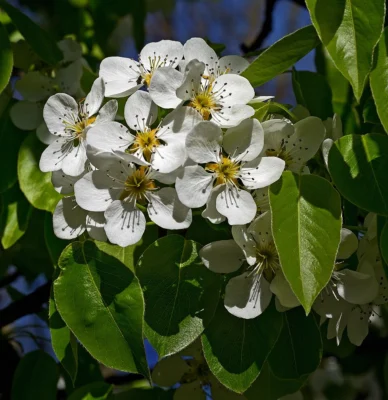
Choose a warm sunny position sheltered from strong winds. Pears flower early, so avoid low spots where cold air collects and late frosts regularly damage blossom.
Match rootstock and mature spread to the available ground. Quince C or Eline keeps trees smaller than Quince A, but still needs space and care.
Install strong wires before planting an espalier or cordon. A south or west facing wall provides warmth; plant about 30cm out and check moisture in its rain shadow.
For a pot, choose a compatible compact variety on dwarfing stock. Use a stable drained container around 45 to 50cm wide and deep, filled with loam based peat free compost.
Photo: Thoslee, CC BY-SA 4.0. Resized and optimised; cropped for display. Adapted image under the same licence.
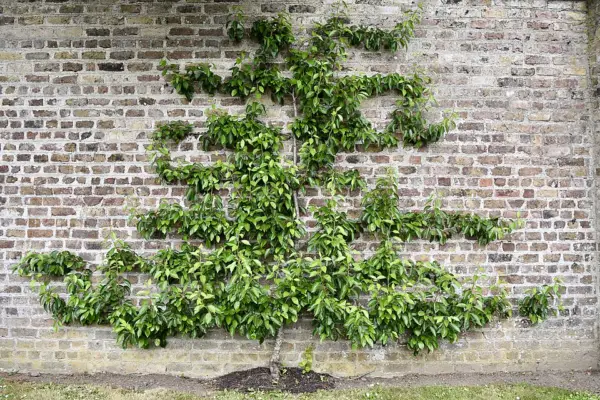
Buy a healthy named grafted tree with its rootstock recorded. Ask the nursery to confirm pollination compatibility and support requirements.
1.
Check for a compatible pear nearby or plan a partner. Two identical cultivars do not provide different pollen.
2.
Plant while dormant where possible, postponing work if soil is frozen or waterlogged. Keep exposed roots moist until planting.
3.
Clear grass and perennial weeds around the site. Dig a hole wide enough for roots to spread without bending or crowding.
4.
Water container trees before unpotting. Soak bare roots in water for about half an hour.
5.
Install the stake or training supports now. Quince C generally needs permanent support; follow nursery advice for other stocks and forms.
6.
Set the tree at its original soil mark with the graft union above ground. Spread roots, backfill with soil and firm gently.
7.
Water thoroughly, attach a flexible tree tie and mulch the cleared ground. Leave a gap around the trunk and keep the graft visible.
8.
Label variety and rootstock. Follow the formative pruning plan for the chosen shape, then check moisture and ties regularly as the tree establishes.

Watering
Water thoroughly in dry spells for the first couple of years. Keep grass away from establishing roots.
Pots and wall trained trees need closer checks. Maintain steady moisture as fruit swells, while allowing drainage; a container must not stand in water.

Feeding
Mulch ground grown trees with well rotted organic matter each spring. Regularly mulched fertile soil may need no extra feed; poor cropping alone does not establish a nutrient deficiency.
Feed container trees during growth according to product instructions. Refresh surface compost annually and repot periodically as roots fill the container.

Pruning
Prune established bush and standard pears while dormant, usually November to early March. Remove damaged, crossing and congested growth while retaining productive wood. Heavy cutting encourages vigorous shoots and can reduce cropping.
Cordons, espaliers and other restricted forms need their own summer pruning method. Wait until the lower portion of new shoots becomes woody, often from late July onwards for pears. Do not shorten every shoot indiscriminately.

Winter care
Check stakes, ties and guards, loosening anything that rubs or constricts the trunk. Clear rotten fruit left on branches and inspect stored pears regularly.
Keep container drainage open and protect exposed pots from prolonged freezing. The tree itself is hardy, but roots in a small container have less protection than those in the ground.
European pears have oval green leaves and white spring flowers. Fruit may be rounded or distinctly necked, with green, yellow, russet or flushed skins.
The graft joins the fruiting variety to its size controlling rootstock. Shoots below it belong to that stock. Keep the label, as appearance rarely identifies a cultivar reliably.
Photo: Forest and Kim Starr, CC BY 3.0 us. Resized and optimised; cropped for display. Forest & Kim Starr
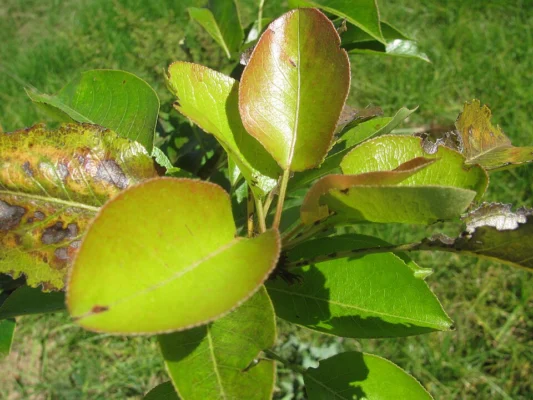
Choose earlier ripening varieties for cooler districts and reserve demanding late pears for warmer sites. Protect reachable blossom overnight when frost is forecast, removing covers by day for insect access.
After the natural early summer fruit drop, thin a heavy crop. Aim for one pear per cluster on trained trees or two on free standing trees, with clusters about 10 to 15cm apart where practical.
Pick mature fruit while still firm. Later pears should release with a gentle lift and twist. Store sound fruit separately in cool airy conditions, checking often; bring some indoors to finish ripening and test for slight softness near the stalk.
Image from the BFFD media library.
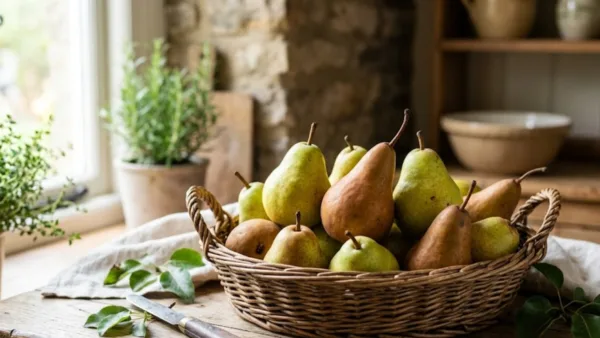
Check frost damage, the presence of a compatible flowering partner and conditions for insect visits. A young tree may also need more time. Feeding cannot replace missing pollination or restore frost damaged flowers.
Pear rust alternates between pears and junipers. Removing an infected nearby juniper may reduce pressure, but spores travel considerable distances. Do not strip a heavily affected pear of its leaves; that can do more harm than the disease.
Pear scab can distort or crack fruit. Remove fallen infected leaves and affected twigs as appropriate to reduce carryover. Light surface marks need not spoil eating quality, but cracked fruit stores poorly.
Remove rotting fruit promptly, including shrivelled fruit hanging on branches. Infection can pass between touching pears and enter through wounds. Handle the harvest gently and store only sound fruit.
Fireblight is one possible cause, especially with wilted blossom, dying shoots and ooze. Seek a diagnosis promptly. Confirmed infections need cutting back well into healthy wood and disinfecting tools between cuts; it is not solved by feeding.
Grafting or budding preserves named fruit characteristics while controlling vigour. Some pear and quince combinations need an intermediate graft, so obtain advice before attempting your own.
Seedlings do not reliably copy their parents and may take years to fruit on large trees. A nursery grafted tree gives a more predictable crop.
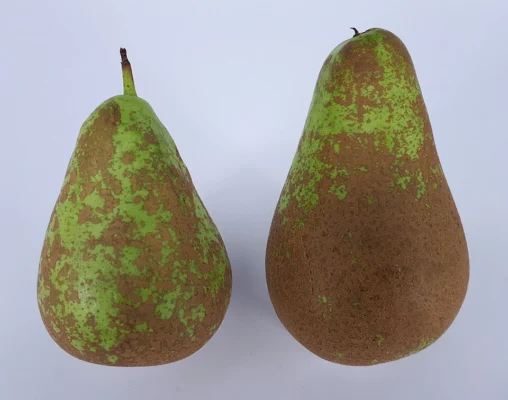
Conference
A familiar pear with elongated, often russeted fruit and a sweet juicy flavour. It can set some fruit without a partner, but compatible cross pollination is a better plan for reliable crops.
Illustrative photograph labelled Conference pears.
Photo: Fructibus, CC0. Resized and optimised; cropped for display.
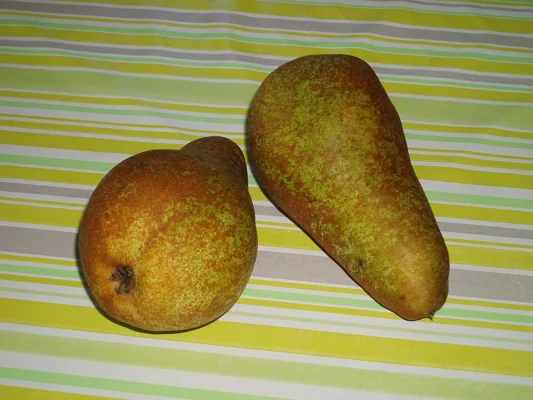
Concorde
A comparatively compact dessert pear, generally quick to begin cropping. Match its rootstock to your site and check compatible flowering partners.
Illustrative photograph labelled Concorde pears.
Photo: Queeste, CC BY-SA 4.0. Resized and optimised; cropped for display. Adapted image under the same licence.
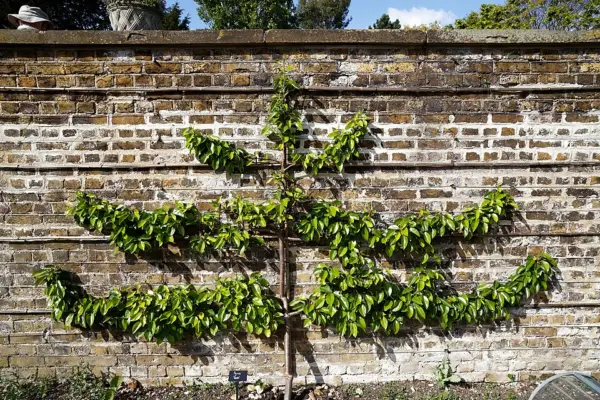
Beth
Produces small sweet yellow green pears for an earlier season of use, usually September. Its relatively compact habit and early crop are useful qualities to compare for smaller or cooler gardens.
A labelled Beth pear trained as an espalier at Myddelton House.
Photo: Acabashi, CC BY-SA 4.0. Resized and optimised; cropped for display. Adapted image under the same licence.
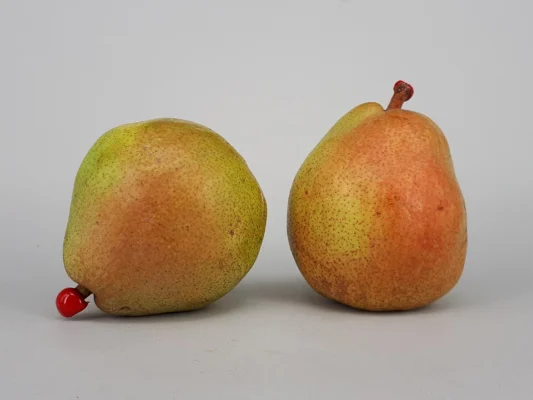
Doyenné du Comice
Compare cultivar, rootstock, pollination needs and training form. Check mature size and season of use before ordering.
Pear blossom supplies food for visiting insects, which also transfer pollen. Include other flowering plants through the season and keep blossom accessible when frost covers are removed.
Birds and predatory insects contribute to a living orchard. If using netting, fix it taut and inspect frequently to prevent entanglement.
Published by Buy From Farmers Direct. Growing guidance reviewed 6 October 2026. The seasonal timeline uses the shared BFFD Growers Calendar record; adjust timings to your variety and local conditions.
Most crop best with a compatible different pear flowering at the same time. A suitable nearby tree may serve; confirm compatibility with the nursery.
Quince C or Eline usually gives a smaller tree than Quince A. Final size still depends on cultivar, soil and training.
Yes, with a suitable dwarfing rootstock, a large stable container and regular watering and feeding. It needs ongoing care.
Prune free standing bush trees in the dormant season. Restricted forms such as cordons and espaliers mainly need summer pruning.
European pears are generally picked before fully ripe. The time needed to soften varies greatly by cultivar; check fruit regularly during storage.
Usually not. Grafted named trees give a more predictable variety, mature size and wait for fruit.
Choose the right rootstock and pollination partner, establish carefully and prune appropriately. Patient indoor ripening brings pears to their best.
Explore more growing guides: Cherry (Dwarf), Cherry (Fan), Hazel.
Want to get food independence, support your local grower, get better prices and shop more privately?
Local food isn’t just something you find. It’s something you protect. A free account helps keep local supply visible, supported, and resilient.

….it takes 30 seconds for food lovers and 5 minutes for suppliers
We built this for people who care where their food comes from. For people who want to remain food secure. For Farmers to get to the local people, who deserve a better income and to deliver a better price for you. For the environmentally conscious and the privacy-conscious. An account simply helps us make the map and supplier reach more useful to you, without changing how open it is. You’re always in control.


Find local food. Stay connected to it. Create a free account to support local producers and be part of a growing food network.


