Pomegranate, Punica granatum, is a deciduous shrub with glossy leaves, orange red flowers and distinctive crowned fruit. In the UK it is an attractive plant with the possibility of a harvest in a particularly warm position. Winter survival and fruit ripening are separate challenges: a bush can grow and flower well without producing ripe pomegranates. Choose a suitable variety and enjoy the flowers while treating fruit as a conditional bonus.
Warm sheltered position
Summer flowers
Fruit needs autumn warmth
Container growing possible
Light spring pruning
| Botanical name | Punica granatum |
| Family | Lythraceae |
| Plant type | Deciduous shrub or small tree |
| Typical garden bush | Often 2m to 4m; cultivar dependent |
| Larger cultivars | Wonderful can eventually reach 4m to 8m |
| Dwarf option | Nana is usually around 50cm to 1m |
| Light | Full sun |
| Position | Warm and sheltered |
| Soil | Fertile and well drained |
| RHS species hardiness | H3; suited to mild, sheltered conditions |
| Main planting opportunity | Spring after hard frosts |
| Bush spacing | About 3m, with more for large cultivars |
| Flowering | Summer, depending on conditions |
| Flower colour | Orange red in typical fruiting forms |
| Pollination | Usually self fertile |
| Number of plants | One can fruit in suitable conditions |
| Autumn ripening warmth | RHS advises around 13°C to 16°C |
| Possible Provence harvest | November to December, only if ripe |
| Pruning | Light shaping and removal of damaged growth |
| Edible portion | Juicy arils surrounding the seeds |
| Plant name | Crop type | Spacing |
Sow indoors
Plant outdoors
Harvest
Polytunnel | |||||||||||
|---|---|---|---|---|---|---|---|---|---|---|---|---|---|---|
| Jan | Feb | Mar | Apr | May | Jun | Jul | Aug | Sep | Oct | Nov | Dec | |||
| Pomegranate | Orchard fruit | Single 300cm, In row 300cm, Row gap 300cm | No activity recorded | No activity recorded | Sow indoors | Sow indoors, Plant outdoors | Plant outdoors | Plant outdoors | No activity recorded | No activity recorded | No activity recorded | No activity recorded | Harvest | Harvest |
Sow indoors: March, April. Plant outdoors: April, May, June. Harvest: November, December. Polytunnel: no months recorded.
The calendar uses a named UK example: Provence can ripen in November and December when the season is sufficiently warm. These are possible picking months, not a promise of ripe fruit; other cultivars and protected growing conditions differ. Spring sowing is an optional seed project under protection, while April to June planting means settling an established plant after hard frosts. The 3m spacing suits a garden bush and must be increased for vigorous forms; it does not apply to a dwarf in a pot. There is no fixed polytunnel band because useful cover depends on temperature and cultivar. An unheated tunnel is not necessarily frost free.
Grow pomegranate for its flowers and foliage if your garden is cool, exposed or far north. For a realistic attempt at fruit, choose a very warm sheltered site or suitable greenhouse space and a named fruiting selection.
Containers make winter shelter easier, particularly for compact plants. Consider the eventual weight of a watered pot before placing it somewhere that requires lifting up steps each autumn.
Photo: DGtal, CC BY-SA 4.0. Resized and optimised; cropped for display. Adapted image under the same licence.
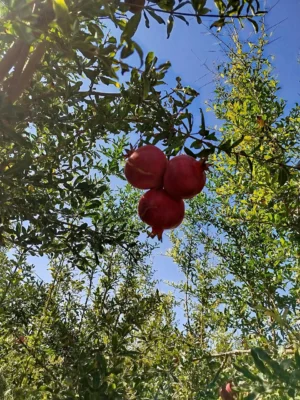
A sunny south facing wall can offer warmth and protection from cold winds. Avoid shaded corners and frost pockets, where both growth and ripening are less favourable.
The roots need drainage throughout the year. Improve the general condition of poor soil before planting, but do not leave the shrub sitting in a deep pocket of compost surrounded by wet clay.
Start a young plant in a pot proportionate to its roots and move it up as necessary. A fruiting plant may need a substantial container around 45cm to 50cm across, with drainage holes and loam based peat free compost.
Under glass, provide plenty of light and ventilation. A container can spend summer outdoors and winter in a cool frost free place, but gradually accustom new greenhouse growth to outdoor conditions.
Photo: Eiku, CC BY-SA 4.0. Resized and optimised; cropped for display. Adapted image under the same licence.
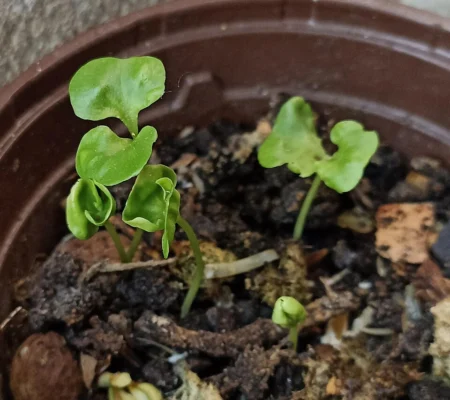
Buy a labelled fruiting cultivar if harvesting matters. Ornamental selections, especially some double flowered forms, may be grown mainly for display and may not set useful fruit.
1.
Check the variety, expected size and winter requirements with the supplier. Decide whether its permanent home will be open ground, a large pot or a protected growing space.
2.
Choose a warm sheltered site and clear weeds. Leave about 3m for an ordinary bush, allowing more if the variety is expected to grow substantially larger.
3.
Plant in spring once severe frosts have passed and the soil is workable. Water the rootball thoroughly before removing its container.
4.
Dig a broad hole no deeper than the rootball. Ease congested outer roots gently and place the plant so the original soil surface remains level with the surrounding ground.
5.
Backfill with the excavated soil, firm gently and water thoroughly. Keep a mulch clear of the base of the stems.
6.
For pot growing, use a container with unobstructed drainage and suitable peat free loam based compost. Leave enough space below the rim to water effectively.
7.
Water during establishment and watch for the rootball drying out even when surrounding ground looks damp. Keep grass and weeds away from the young shrub.
8.
Label the cultivar and record flowering and ripening dates. Before the first cold season, arrange suitable shelter for a container and assess protection needed for a young outdoor plant.

Watering
Keep newly planted shrubs supplied with water during dry weather. Established pomegranates tolerate some drought, but regular moisture supports fruit development and container plants must not dry out completely.
Avoid abrupt swings between severe dryness and heavy watering, which can contribute to splitting fruit. Reduce watering when a plant is dormant in winter, while keeping the rootball from becoming completely dry.

Feeding
A bush in good garden soil does not need heavy feeding. Too much nitrogen encourages leafy growth; use any spring fertiliser according to soil condition and the product instructions.
For actively growing container plants, the RHS recommends balanced liquid feeding about monthly. Check the compost and plant growth before adding more, and stop pushing soft growth as winter approaches.

Pruning
Prune lightly in spring, removing dead, damaged, crossing or badly placed shoots. Take out unwanted suckers if they crowd the framework, while retaining the sound stems that give the plant its shape.
Avoid an annual hard cut. Flowers and fruit arise on short shoots associated with established wood, so repeatedly stripping the framework back can remove useful fruiting growth.

Winter care
The RHS rates the species H3, which calls for a mild sheltered position. Cold tolerance varies with cultivar, age and growing conditions; a hardy sounding nursery description does not guarantee ripe fruit.
Move vulnerable pots to cool frost free shelter before damaging cold arrives. Seasonal leaf fall is normal because pomegranate is deciduous. Keep dormant plants on the drier side and protect roots from prolonged saturation.
Pomegranate has narrow glossy leaves and often thorny branches. Its orange red flowers have a thick fleshy base; developing fruit retains a conspicuous crown at the opposite end from the stalk.
Inside the leathery rind are juicy arils, each surrounding a seed, separated by pale membranes. Fruit colour varies by cultivar, so the appearance of a photographed red fruit cannot establish either variety or ripeness.
Photo: Ivar Leidus, CC BY-SA 4.0. Resized and optimised; cropped for display. Adapted image under the same licence.
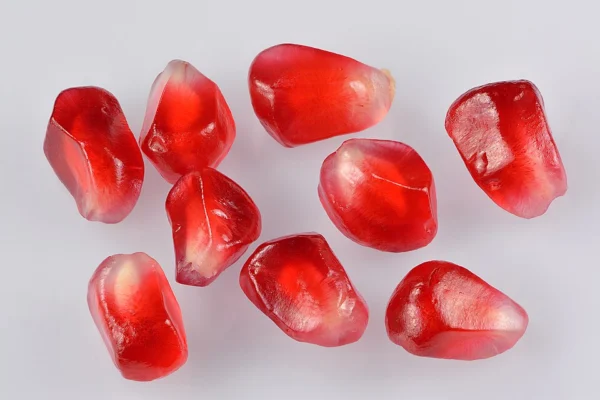
The difficult stage is often autumn ripening. The RHS gives around 13°C to 16°C as the warmth needed then, which explains why a plant can flower outdoors but fail to finish its fruit in a cool British season.
Wait for fruit to reach its expected size and cultivar appropriate ripe colour, checking a sample if uncertain. Pomegranates do not continue ripening after picking. Cut the stalk with secateurs instead of pulling hard on the branch.
Wash fruit before opening and separate the juicy arils from the rind and bitter membranes. Use sound fruit promptly and discard any fruit showing mould or rot. Splitting is a problem to assess, not a ripeness test to wait for.
Photo: Mirishkorlik, CC BY-SA 4.0. Resized and optimised; cropped for display. Adapted image under the same licence.
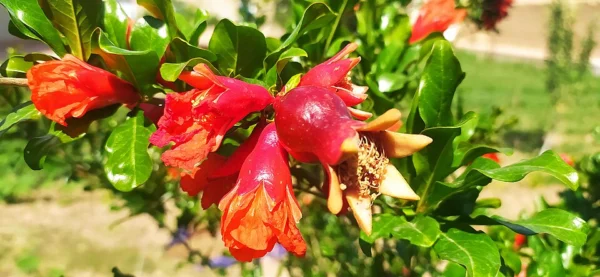
Pomegranates produce both male flowers and flowers capable of fruiting, so some flower drop is normal. Young plants, unsuitable conditions and poor pollination can also limit a crop. One established self fertile cultivar can fruit, but no plant sets every flower.
A short cool season may not provide enough warmth to finish ripening. Improve the position or consider protected growing next season. Picking immature fruit and leaving it indoors will not make it properly ripe.
Rapid changes in moisture, including rain after drought, can split the rind. Keep watering steady, especially in pots. Examine split fruit promptly and discard any with mould or decay rather than storing it.
Autumn leaf loss is normal. During active growth, check for a dry rootball, saturated compost or a recent change in conditions before feeding. Roots need both moisture and drainage.
Cold or persistently wet roots can damage the plant. Wait for spring growth to show what is alive, then remove dead wood. Improve drainage and reconsider winter shelter for container specimens.
Seed can be sown under protection in spring at around 13°C to 18°C. It is an interesting growing project, but seedlings will not reliably reproduce a named cultivar or provide a quick route to a useful UK harvest.
To preserve a particular plant, take semi ripe cuttings in summer from healthy growth with a firm base and softer tip. Use a free draining propagation medium, warmth and humidity, then ventilate gradually as the cuttings establish.
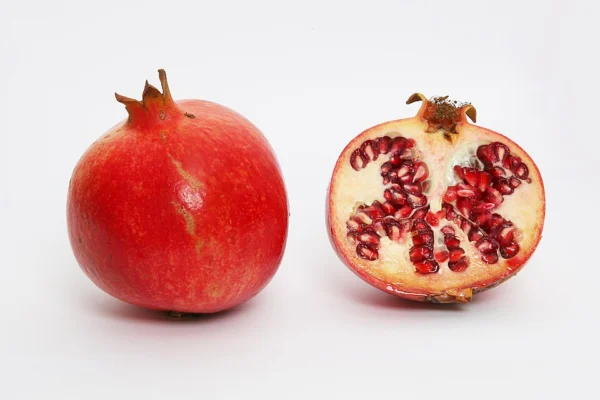
Wonderful
A well known red fruited selection with dark red pulp. It is potentially vigorous, with RHS dimensions of 4m to 8m, and needs a long warm season rather than simply enough winter protection.
Whole and cut red pomegranates illustrating the fruit; the source does not verify Wonderful.
Photo: Tim.Reckmann, CC BY-SA 3.0. Resized and optimised; cropped for display. Adapted image under the same licence.
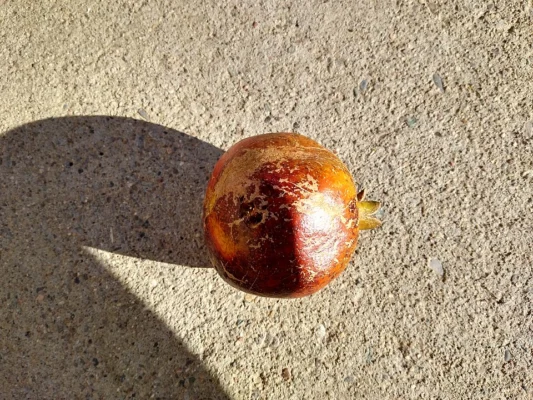
Provence
A fruiting selection offered by UK suppliers for warm sunny sites or protected growing. Its possible November to December harvest is the example used in this calendar, and remains dependent on conditions.
A red pomegranate illustrating the crop; not a verified photograph of Provence.
Photo: Prahlad balaji, CC BY-SA 4.0. Resized and optimised; cropped for display. Adapted image under the same licence.
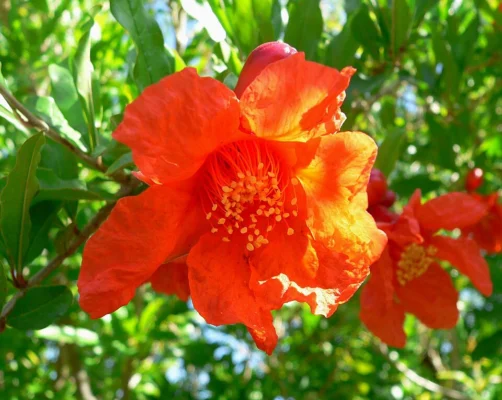
Dente di Cavallo
A fruiting selection sold for a sheltered warm position or container growing. Enjoy its summer flowers, protect it through cold winters and allow enough warmth for any fruit to finish.
An orange red pomegranate flower illustrating the species; the cultivar is not identified as Dente di Cavallo.
Photo: Stan Shebs, CC BY-SA 3.0. Resized and optimised; cropped for display. Stan Shebs
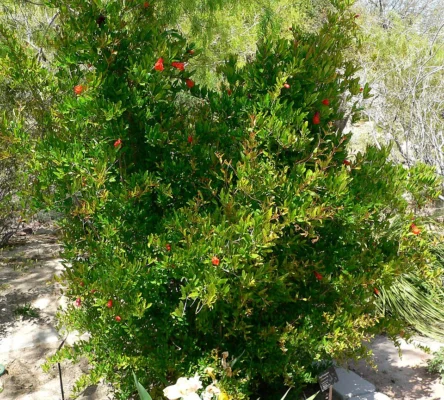
Nana
A compact ornamental form, usually around 50cm to 1m, with orange red flowers and small fruit. Choose it for a small display plant rather than expecting the large eating fruit of a cropping cultivar.
The source identifies this compact flowering shrub as the Nana form of pomegranate.
Photo: Stan Shebs, CC BY-SA 3.0. Resized and optimised; cropped for display. Stan Shebs
Look for a named fruiting selection, realistic eventual dimensions and clear winter advice. If your main aim is flowers in a small pot, a dwarf ornamental form may be the more suitable choice.
Insects visit pomegranate flowers and help move pollen, although the plant is usually self fertile. In a greenhouse, provide ventilation and insect access when weather permits.
A shrub grown mainly for its flowers can still be worthwhile in a UK garden. Avoid routine spraying and give the plant space so you can inspect growth and deal with individual problems promptly.
Published by Buy From Farmers Direct. Growing guidance reviewed 6 October 2026. The seasonal timeline uses the shared BFFD Growers Calendar record; adjust timings to your variety and local conditions.
Sometimes, in a warm sheltered position with a suitable cultivar and a long favourable season. Outdoor survival does not guarantee ripe fruit. A greenhouse can help but does not make cropping certain.
Usually no. Pomegranates are generally self fertile, so one plant can fruit. It still needs suitable temperatures, maturity and effective pollination, and many flowers naturally do not become fruit.
The RHS rates the species H3, suitable for mild sheltered conditions. Individual cultivars differ. Protect young plants and vulnerable containers, and use cool frost free winter shelter where necessary.
No. Leave them on the plant until properly ripe for their cultivar, then cut them off carefully. An immature fruit will not become sweet and ripe on a kitchen windowsill.
The seeds may germinate, but the resulting plant will not reliably match a named cultivar. Treat it as a long term growing experiment; buy a suitable labelled plant if fruiting is your priority.
Nana is a dwarf ornamental form valued for its compact growth and flowers. Its small fruit is part of that habit, not evidence that you should heavily feed it to obtain full sized eating pomegranates.
Give pomegranate warmth, drainage and room to develop a sound framework. In the UK, flowers are a more dependable reward than fruit, and a ripe harvest should be judged by the actual season and cultivar.
Explore more growing guides: Fig, Cherry (Fan), Hazel.
Want to get food independence, support your local grower, get better prices and shop more privately?
Local food isn’t just something you find. It’s something you protect. A free account helps keep local supply visible, supported, and resilient.

….it takes 30 seconds for food lovers and 5 minutes for suppliers
We built this for people who care where their food comes from. For people who want to remain food secure. For Farmers to get to the local people, who deserve a better income and to deliver a better price for you. For the environmentally conscious and the privacy-conscious. An account simply helps us make the map and supplier reach more useful to you, without changing how open it is. You’re always in control.


Find local food. Stay connected to it. Create a free account to support local producers and be part of a growing food network.


