Maincrop potatoes occupy the plot through summer and reward patient growing with tubers for late summer meals and winter storage. Choose a variety for the way you cook, from floury roasting potatoes to firm salad types. This guide covers the maincrop season of Solanum tuberosum, planted from certified seed tubers in spring. It is separate from early new potatoes and from the unrelated sweet potato.
Spring planted tubers
Late summer and autumn harvest
Suitable for winter storage
Sunny vegetable beds
Keep tubers out of light
| Botanical name | Solanum tuberosum |
| Family | Solanaceae |
| Crop group | Maincrop potatoes |
| UK life cycle | Grown as an annual crop |
| Edible part | Underground stem tubers |
| Planting material | Certified seed potatoes, which are tubers |
| True seed required | No, not for an ordinary named-variety crop |
| Position | Open and sunny |
| Soil | Fertile, moisture retentive and well drained |
| Soil preference | Slightly acid soil; avoid recent liming |
| Main planting window | Mid-April to early May |
| Typical planting depth | About 15cm |
| Plant spacing | About 38 to 40cm |
| Row spacing | About 75cm |
| Typical growing season | About four to six months, depending on variety and weather |
| Main harvest window | August to October |
| Chitting | Optional for maincrops |
| Frost sensitivity | Shoots and leaves are tender |
| Main disease risk | Late blight in warm wet weather |
| Storage conditions | Cool, dark, airy and frost free |
| Plant name | Crop type | Spacing |
Sow indoors
Plant outdoors
Harvest
Polytunnel | |||||||||||
|---|---|---|---|---|---|---|---|---|---|---|---|---|---|---|
| Jan | Feb | Mar | Apr | May | Jun | Jul | Aug | Sep | Oct | Nov | Dec | |||
| Potatoes (Maincrop) | Root vegetables | Single 40cm, In row 40cm, Row gap 75cm | No activity recorded | No activity recorded | No activity recorded | Plant outdoors | Plant outdoors | No activity recorded | No activity recorded | Harvest | Harvest | Harvest | No activity recorded | No activity recorded |
Sow indoors: no months recorded. Plant outdoors: April, May. Harvest: August, September, October. Polytunnel: no months recorded.
April and May refer to planting seed tubers, usually from mid-April to early May when soil conditions permit. There is no seed-sowing band because an ordinary maincrop is raised from tubers. August to October is an indicative lifting season; judge maturity and local weather rather than a fixed date. No polytunnel band is shown because this is a normal outdoor maincrop calendar, not an early forced or Christmas crop.
Maincrops suit an allotment or vegetable garden with enough room for broad leafy plants to grow through summer. They are particularly useful when you want potatoes that can be lifted together and stored for later cooking.
Consider how much space and watering time you have. Early varieties are generally easier in a small container, while a maincrop needs a longer commitment. A few well spaced plants can still give you a useful trial before planting several rows.
Photo: Smartse, CC BY-SA 4.0. Resized and optimised; cropped for display. Adapted image under the same licence.
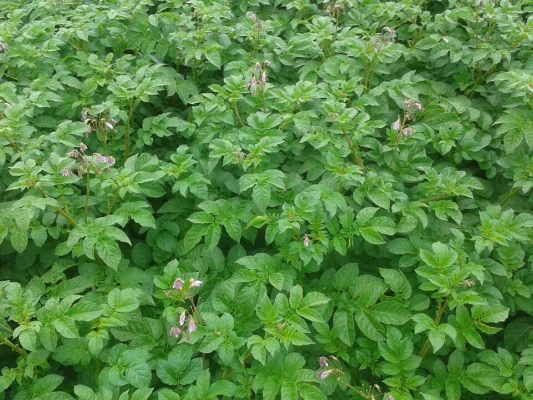
Choose open ground with plenty of sun, clear of dense tree roots. Avoid hollows where water stands or cold air settles, especially if young shoots tend to meet late spring frosts.
Improve the soil with well rotted organic matter before planting. Aim for moisture retention without saturation, and remove persistent weeds while the bed is accessible.
Rotate potatoes around the plot, ideally allowing at least four years between potato crops in the same ground. Include tomatoes when planning around shared blight and other soil problems, and remove volunteer potato plants.
A large drained container can hold a small maincrop experiment, but leave ample room for roots and tubers. Use suitable peat free compost and check moisture beneath the foliage; a leafy canopy can stop rain reaching the pot.
Photo: Kangarooth, CC BY-SA 4.0. Resized and optimised; cropped for display. Adapted image under the same licence.
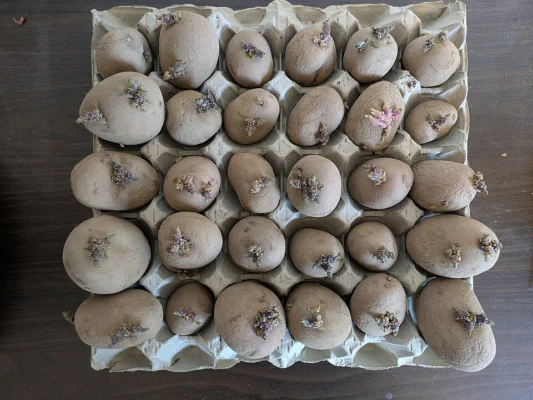
Order certified seed potatoes during winter or early spring and retain the variety label. These are planting tubers, not a packet of botanical seed. Kitchen leftovers may grow but lack the health assurance of certified stock.
1.
Choose a maincrop variety for its cooking qualities, likely harvest date and relevant disease resistance. Buy sound certified seed tubers and keep different varieties labelled.
2.
Store the tubers somewhere cool and frost free until planting. If shoots have started, give them light to keep growth sturdy. Deliberate chitting is optional for maincrops rather than a requirement.
3.
Prepare the bed with mature compost or well rotted manure. Avoid adding lime immediately before potatoes, particularly where common scab has been troublesome.
4.
Wait for workable, warming soil, usually mid-April to early May. Delay on a cold wet site instead of placing seed tubers into a saturated trench.
5.
Make holes or a trench about 15cm deep. Space the tubers roughly 38 to 40cm apart, with about 75cm between rows for growth, access and earthing up.
6.
Place any existing shoots upwards, cover carefully and mark the row. Water if conditions are dry, but do not repeatedly soak cold ground before growth begins.
7.
As stems grow, draw loose soil around their bases while leaving leafy tops exposed. Repeat as necessary so developing tubers remain covered; protect young shoots separately when frost is forecast.
8.
Keep early weeds in check, monitor moisture and inspect foliage through summer. Make a cautious test dig when the variety should be approaching maturity rather than lifting everything on a calendar date.

Watering
Water thoroughly in dry spells while tubers form and swell, rather than frequently wetting only the surface. The period around early flowering can be important, although flowering itself is not a reliable harvest signal.
Check containers at root depth, even after rain. Avoid alternating severe dryness with heavy watering, and use a suitable mulch to retain moisture while ensuring no new tubers are exposed to daylight.

Feeding
Well prepared fertile ground usually needs little extra feeding. On poor soil, use a suitable fertiliser at the recommended rate rather than assuming that every potato row needs repeated strong applications.
Container compost has a limited nutrient supply. Follow its instructions and provide additional suitable feed when needed, often once its initial fertiliser has been used. Vigorous Sarpo varieties do not need heavy nitrogen feeding.

Pruning
There is no routine pinching or pruning while a healthy crop is bulking. Keep foliage growing well and avoid trampling the row when weeding or inspecting tubers.
For storage, most varieties are ready as their tops yellow and die back. Remove mature tops and usually allow two to three weeks for skins to set before lifting. Sarpo Mira may remain green, so use test digs and cut its tops when tubers reach the size wanted.

Winter care
Lift mature tubers carefully on a dry day, starting the fork well away from the stem. Let surface moisture dry for a few hours, then move potatoes out of the light. Do not wash those intended for storage.
Store only sound, dry potatoes in paper or hessian sacks in a cool, dark, airy, frost-free place. Check regularly and discard any that are rotting. Keep damaged tubers separate for prompt use if otherwise sound, and never use green potatoes.
Potato plants carry divided leaves and may produce white, pink or purple flowers. Below ground, new tubers develop on underground stems. Their small eyes are buds; these help distinguish a potato tuber from an ordinary root.
Some plants form green berries above ground that resemble tiny tomatoes. They are not the potato crop and must not be eaten. Leaves, stems and green tubers are also unsuitable for eating; harvest the sound underground tubers for cooking.
Image from the BFFD media library.
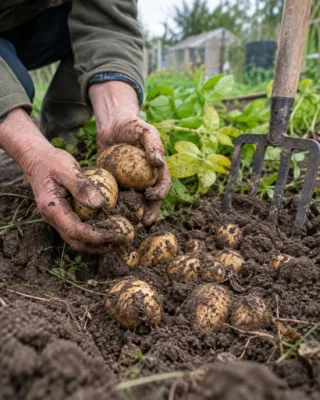
Planting dates vary with altitude, soil and region. A sheltered southern plot may be ready before an exposed northern one, but all gardens need to watch for frost once shoots emerge.
Maincrops remain outside during the part of summer when blight can spread quickly. In a wet district, a resistant variety may be a more useful choice than one selected only for appearance or reputation in the kitchen.
Autumn is a balance between allowing skins to mature and avoiding wet soil, frost and increasing slug damage. Have a dark storage space ready before lifting day, and keep labels with the crop so next year’s choices reflect your own results.
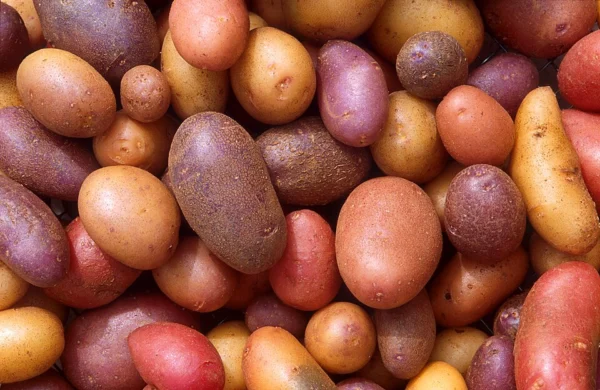
Photo: Scott Bauer, USDA ARS, Public domain. Resized and optimised. Mixed potato varieties shown as a harvest illustration; maturity groups are not identified.
Late blight is favoured by warm wet weather. Check stems too. If infection is substantial or stem lesions appear, remove the tops and follow current RHS guidance on lifting after skins harden, usually about two weeks. Keep suspect crops out of long-term storage; resistance is not immunity.
Common scab is often worse when soil dries during early tuber formation or has recently been limed. Improve moisture management and choose an appropriate resistant variety next time. Mild superficial scab differs from deep damage or decay, which needs closer assessment.
Slugs may enter through small openings and hollow out larger cavities, while wireworms often make narrower tunnels. Identify the cause before acting. Lift mature crops promptly where damage is increasing, and avoid keeping affected potatoes in the storage sack.
Light exposure causes greening and can accompany harmful glycoalkaloid levels. Keep growing tubers covered with soil or suitable mulch and keep stored potatoes dark. Do not eat green potatoes or assume cooking makes them safe.
Frost can damage tender growth. Protect emerging shoots when low temperatures are forecast, using soil over very small shoots or a suitable overnight cover. Plants often regrow from below ground, but the setback can delay development.
Named potatoes are normally multiplied from tubers, preserving the variety. Starting each season with certified seed potatoes reduces the risk of carrying viruses and other diseases from an earlier crop.
True seed from potato berries produces variable seedlings and is a separate breeding project. It is not a straightforward replacement for labelled seed tubers, and berries should be kept away from children who might mistake them for edible fruit.
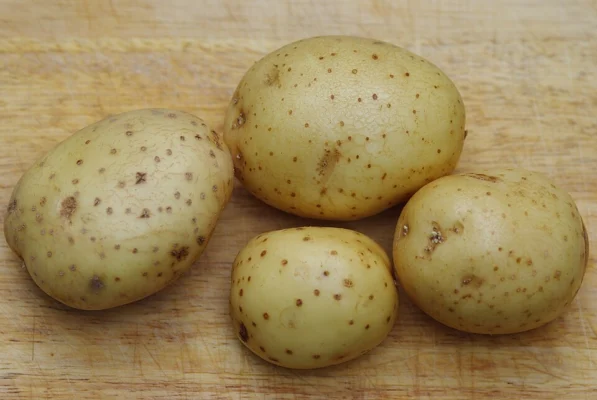
Maris Piper
A familiar maincrop with pale skinned, cream fleshed tubers and a floury cooking texture. It is a useful choice for roasting, chips and mash. Provide good growing conditions and keep watch for blight rather than assuming a well known variety is disease proof.
Maris Piper tubers, identified by the photograph’s source.
Photo: Ben Harris, CC0. Resized and optimised; cropped for display.
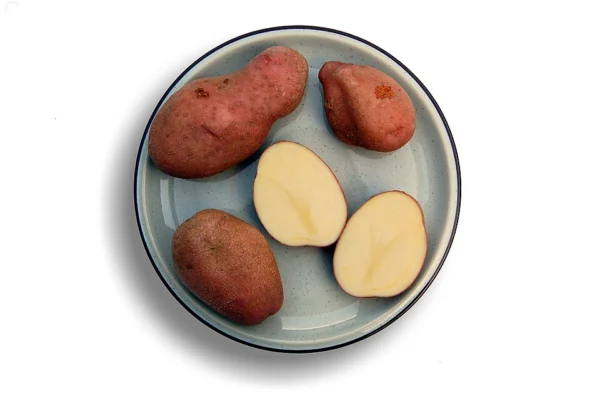
Sarpo Mira
A vigorous, pink skinned late maincrop with strong blight resistance and a floury texture. Its tops may continue growing instead of naturally dying down. Test tuber size and cut the foliage when the crop is large enough, avoiding oversized tubers.
Sarpo Mira tubers, with cut examples showing the flesh.
Photo: Alupus, CC BY-SA 3.0. Resized and optimised; cropped for display. Adapted image under the same licence.
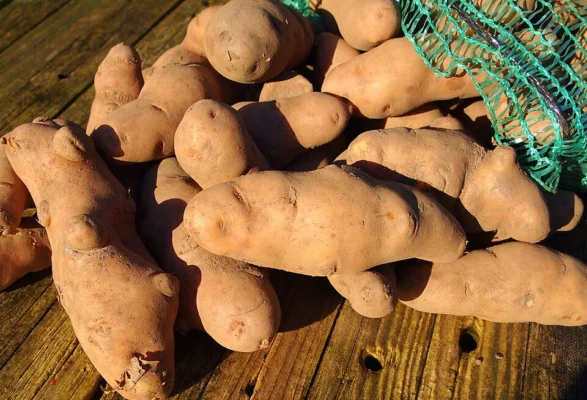
Pink Fir Apple
A late maincrop salad potato with long, knobbly tubers and a firm waxy texture. Choose it for flavour and salads rather than uniform baking potatoes. Its irregular shape makes careful lifting and cleaning particularly worthwhile.
Pink Fir Apple tubers, identified by the photograph’s source.
Photo: Theroadislong, CC BY-SA 3.0. Resized and optimised; cropped for display. Adapted image under the same licence.
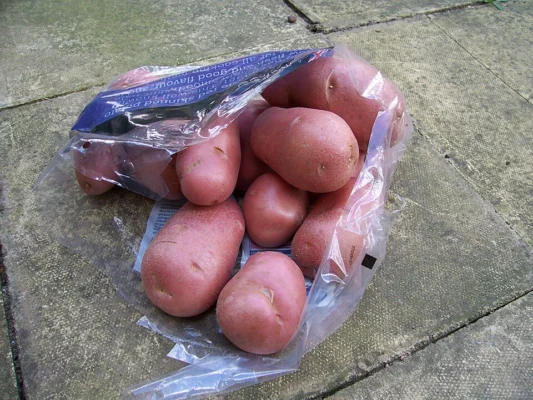
Desiree
An early maincrop with red skins and pale yellow flesh, useful for several cooking methods including baking. It can suit gardeners who want a maincrop ready earlier than the latest storage varieties. Keep variety labels, as skin colour alone is not an identification.
Desiree potatoes, identified by the photograph’s source.
Photo: Nickmurdoch, CC BY-SA 3.0. Resized and optimised; cropped for display. Nickmurdoch at English Wikipedia
Check that the stock is certified and labelled as the maincrop variety you want. Compare floury or waxy texture, maturity and relevant resistance. Buying a modest quantity of two contrasting types is a practical way to discover what earns space in your garden.
Healthy soil and thoughtful pest management matter more than treating every creature around the crop as an enemy. Most slugs recycle decaying material, while a smaller number damage potatoes; inspect the crop and respond to actual losses.
Maintain nearby habitat for ground beetles and other predators, and avoid unnecessary pesticide use. Potato tuber production does not depend on flowers being pollinated, so poor flowering alone is not evidence of a failed crop.
Published by Buy From Farmers Direct. Growing guidance reviewed 6 October 2026. The seasonal timeline uses the shared BFFD Growers Calendar record; adjust timings to your variety and local conditions.
Usually from mid-April to early May in the UK, adjusted for local conditions. Cold, wet ground is a reason to wait. Protect the emerging shoots if a late frost is forecast.
No. Chitting gives the clearest benefit to early varieties, while maincrops have a much longer growing season. If your seed tubers have already sprouted, keep them cool, bright and frost free so shoots remain manageable.
Use the variety’s expected season and a test dig. Most maincrops mature from August to October as foliage declines. For storage, allow skins to set after tops die or are cut; Sarpo Mira can remain green and needs a deliberate harvest decision.
For a normal stored maincrop, lifting is more dependable. Winter wet, frost and slugs can ruin tubers left outside. Lift when mature, dry them briefly and store sound potatoes in a dark, airy, frost-free place.
They may grow, but they are not certified planting stock and can introduce disease. Buy certified seed potatoes, especially when establishing a new vegetable bed or allotment crop.
No. These are berries containing true seed, not the underground potato tubers. Do not eat them or the foliage, and keep them away from children. Green potatoes are also unsuitable for eating.
Give maincrop potatoes healthy planting stock, enough room and steady moisture through summer. Then judge maturity carefully and store only sound tubers in darkness, so the work of one growing season supplies useful meals well beyond harvest.
Explore more growing guides: Carrot, Celeriac, Beans (Broad).
Want to get food independence, support your local grower, get better prices and shop more privately?
Local food isn’t just something you find. It’s something you protect. A free account helps keep local supply visible, supported, and resilient.

….it takes 30 seconds for food lovers and 5 minutes for suppliers
We built this for people who care where their food comes from. For people who want to remain food secure. For Farmers to get to the local people, who deserve a better income and to deliver a better price for you. For the environmentally conscious and the privacy-conscious. An account simply helps us make the map and supplier reach more useful to you, without changing how open it is. You’re always in control.


Find local food. Stay connected to it. Create a free account to support local producers and be part of a growing food network.


