A quince tree brings pale spring blossom, characterful branches and fragrant golden fruit to the garden. The orchard quince, Cydonia oblonga, is grown mainly for cooking in Britain, where its firm fruit becomes aromatic jelly, paste, compote and autumn puddings. It is self fertile, so one tree can crop on its own. The important choices are a warm position, the right rootstock and enough room for its spreading canopy.
Fragrant autumn fruit
One tree can crop
Warm sunny position
Preserve fruiting tips
Excellent for cooking
| Botanical name | Cydonia oblonga |
| Family | Rosaceae, the rose family |
| Plant type | Deciduous fruit tree or large shrub |
| Typical garden size | About 3m to 5m, depending on rootstock and variety |
| Light | Full sun |
| Position | Warm, sheltered and outside a frost pocket |
| Soil | Deep, fertile and moisture retentive with drainage |
| RHS hardiness | H5 |
| Main planting season | November to March |
| Pollination | Self fertile |
| Pollinating partner | Not essential |
| Flowering season | Late spring |
| Flower colour | White to pale pink |
| Fruiting habit | Mainly at the tips of last year's shoots |
| Typical picking season | October to November, before frost |
| Earlier option | Serbian Gold can be ready from late September |
| First useful crops | Often when the tree is five or six years old |
| Dormant pruning | Light thinning when needed |
| Container option | Compact tree on dwarfing rootstock |
| Main UK kitchen use | Cooked fruit and preserves |
| Plant name | Crop type | Spacing |
Sow indoors
Plant outdoors
Harvest
Polytunnel | |||||||||||
|---|---|---|---|---|---|---|---|---|---|---|---|---|---|---|
| Jan | Feb | Mar | Apr | May | Jun | Jul | Aug | Sep | Oct | Nov | Dec | |||
| Quince | Orchard fruit | Single 450cm, In row 450cm, Row gap 450cm | Plant outdoors | Plant outdoors | Plant outdoors | No activity recorded | No activity recorded | No activity recorded | No activity recorded | No activity recorded | Harvest | Harvest | Plant outdoors, Harvest | Plant outdoors |
Sow indoors: no months recorded. Plant outdoors: January, February, March, November, December. Harvest: September, October, November. Polytunnel: no months recorded.
The calendar combines ordinary October and November picking with the possible late September start of an early selection such as Serbian Gold. Check the actual fruit and local frost forecast rather than waiting for a fixed date. November to March is the main dormant planting window; container trees can be planted at other suitable times with more watering. The 4.5m spacing is an example for a free standing garden tree, not a rule for every rootstock or trained form. Check the supplier's eventual spread. Seed raising is an optional autumn project, not the usual route to a named fruiting tree, so no routine sowing or polytunnel band is shown.
Quince suits a garden where a small fruit tree can have permanent space and several years to settle in. Its flowers and autumn colour give interest before a young tree reaches a useful cropping age.
It is particularly rewarding if you enjoy cooking and preserving. Choose the fruit for its aroma and kitchen uses rather than expecting a crisp dessert apple substitute straight from the tree.
Photo: Agnieszka Kwiecień, Nova, CC BY-SA 4.0. Resized and optimised; cropped for display. Adapted image under the same licence.
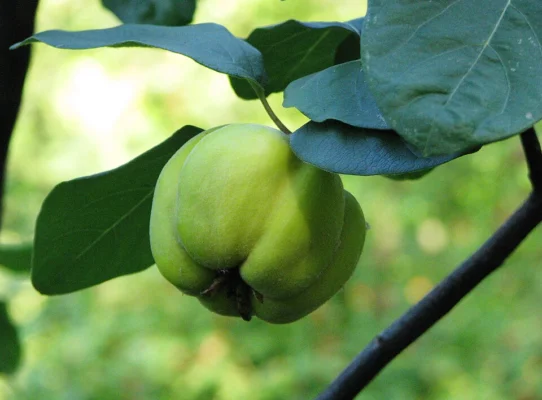
Choose the sunniest sheltered position available. In cooler northern or exposed gardens, a south or south west facing wall can improve warmth and offer a place to train a carefully selected young tree.
Deep moisture retentive soil is valuable when large fruit is swelling. Clay can suit quince if it drains adequately, but ground that remains waterlogged is unsuitable. Avoid very thin dry soil unless you can improve its condition.
Check both the named variety and rootstock. Quince A usually produces a larger tree than dwarfing Quince C or Quince Eline, while an own root tree may need considerably more space.
For a container, buy a compact tree on a suitable dwarfing rootstock. Use a stable pot about 45cm to 60cm wide, drainage holes and peat free loam based compost. Allow access for watering and eventual repotting.
Photo: Ввласенко, CC BY-SA 3.0. Resized and optimised; cropped for display. Adapted image under the same licence.
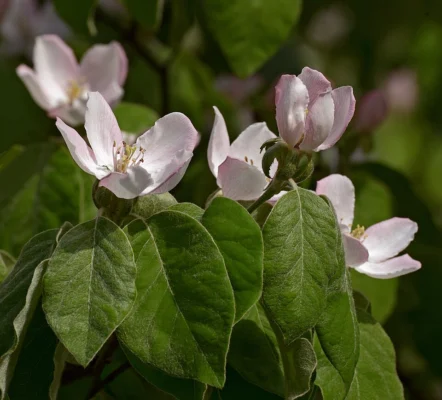
A well shaped young tree with a named cultivar and rootstock makes planning easier. Set out the mature canopy space before you dig, not just the width of the nursery pot.
1.
Choose a healthy bare root tree for dormant planting or a container grown tree. Read its label for rootstock, expected dimensions and any particular training requirements.
2.
Prepare a sunny sheltered site, remove perennial weeds and relieve compaction over a broad area. Delay planting if the ground is frozen or saturated.
3.
Soak bare roots for about half an hour before planting, or thoroughly water a container rootball. Keep exposed roots covered until they go into the soil.
4.
Dig a broad hole that comfortably accommodates the roots without bending them upwards. It should be no deeper than needed to place the first root flare at ground level.
5.
Set the tree upright and spread bare roots naturally. Keep the graft union above the finished soil level rather than burying the swollen join on the trunk.
6.
Backfill carefully, firm gently and water well. Fit a suitable stake and flexible tie without driving the stake through major roots or allowing the trunk to rub.
7.
Apply a mulch over the surrounding soil, leaving a clear collar around the trunk. Add protection from rabbits or deer where those animals are a local problem.
8.
Check moisture and ties during establishment. Keep a clear area around the young tree and record its variety, rootstock and planting date for future care.

Watering
Water new trees through dry spells during their first couple of years. Check beneath the mulch: a damp surface does not always mean the original rootball has received enough water.
Established trees in good moisture retentive ground need less help, but drought during fruit swelling can reduce the crop. Check pots frequently and keep the compost evenly moist without leaving it standing in water.

Feeding
An annual spring mulch helps soil condition and may provide enough fertility for an established tree. Add fertiliser only when growth or a known soil deficiency justifies it; excessive nitrogen can favour shoots over fruit.
Container trees depend on the compost you supply. Use a suitable fruit fertiliser at its labelled rate during active growth, and renew some compost each spring. Repot when the root system has filled the available space.

Pruning
Build a balanced framework while the tree is young, following advice for its intended bush or trained form. Once established, prune lightly in winter to remove dead, damaged, crossing or badly congested branches.
Keep healthy shoot tips where possible: quince mainly fruits at the ends of shoots made the previous year. Repeatedly clipping every branch shorter can remove the next crop. Remove unwanted shoots from below the graft union.

Winter care
The tree is hardy and naturally loses its leaves. Check stakes and ties after storms and keep the base clear of fallen diseased material without repeatedly disturbing the roots.
Late frost is more of a concern to blossom than to dormant wood. On a small tree, temporary fleece or hessian over flowers can help when frost is forecast; remove it during the day so insects can visit.
Orchard quince has simple oval leaves and comparatively large five petalled flowers, usually white or pale pink. The aromatic fruit may be pear shaped or rounded, depending on variety, and can retain a soft surface down.
This guide covers Cydonia oblonga. Flowering or Japanese quinces, Chaenomeles, are different shrubs often grown for early blossom, while Chinese quince is Pseudocydonia sinensis. Buy a labelled orchard quince for the crop described here.
Photo: Spring's Flowers, CC0. Resized and optimised; cropped for display.
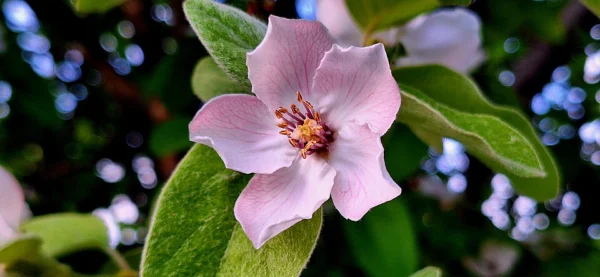
Allow fruit to develop its colour and scent for as long as conditions safely permit, then pick before the first frost. Most crops are gathered in October or November, with some earlier varieties ready sooner. Handle each fruit gently to avoid bruising.
Keep only sound fruit for storage, in a cool frost free place with airflow. Arrange it in a single layer without touching, separate from other fruit that could absorb its strong scent. Check often and remove any fruit showing rot.
Quince from a British garden is generally firm and astringent when picked. Wash it, remove the core and seeds, and cook according to a suitable recipe. Cooking softens the flesh; allowing sound fruit to mellow in storage can also develop its aroma.
Photo: Spring's Flowers, CC0. Resized and optimised; cropped for display.
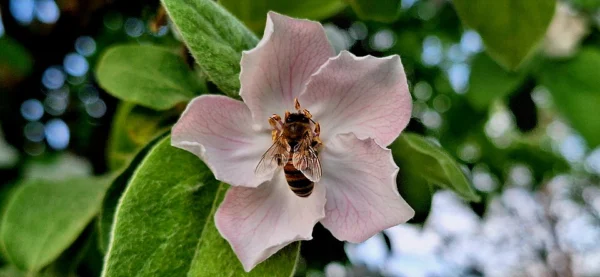
Quince leaf blight is often worse in wet summers and can also mark fruit. Collect affected fallen leaves, remove dead shoots during winter and keep the tree growing steadily. Serbian Gold and Aromatnaya have shown useful tolerance, not immunity.
Brown rot often enters through damaged skin and can spread between touching fruit. Remove affected fruit promptly, including shrivelled fruit left hanging on the tree, and do not put rotten quinces into store.
Check its age, sunlight and pruning history before buying a second tree. A young quince may need several years, frost can damage blossom, and frequent shortening of shoot tips can remove fruiting growth.
Inspect tender shoot tips for colonies and sticky honeydew. A vigorous tree usually tolerates modest numbers, while ladybirds and other predators help reduce them. Avoid routine spraying across a flowering tree.
Rapid dieback, wilted blossom or oozing cankers can indicate fireblight rather than ordinary autumn leaf loss. Obtain a diagnosis promptly and follow appropriate pruning advice, cleaning tools between cuts to avoid spreading infection.
Named quinces are usually bought grafted onto a chosen rootstock, combining known fruit characteristics with more predictable size. Seed raised trees vary, take time to mature and do not reliably reproduce a named parent variety.
For a propagation project, the species can be sown in autumn. Named plants may also be propagated by summer semi ripe cuttings or dormant hardwood cuttings from healthy wood, although an own root plant will not inherit the size control of a grafted rootstock.
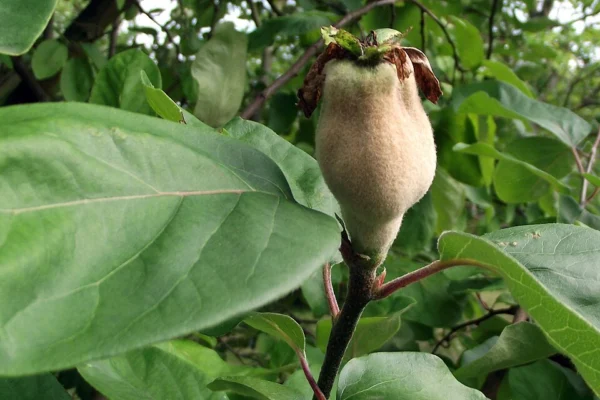
Vranja
A well established choice with aromatic pear shaped fruit for cooking. Give it a warm position and check the rootstock, as it can become a substantial tree rather than a compact patio plant.
A young downy quince illustrating fruit development; the photograph does not identify Vranja.
Photo: Rillke, CC BY-SA 3.0. Resized and optimised; cropped for display. Adapted image under the same licence.
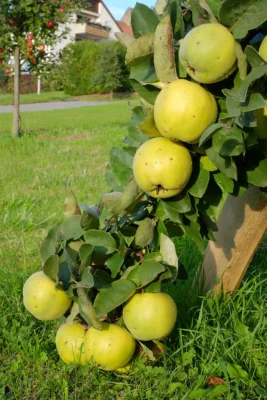
Meech's Prolific
A traditional selection producing regular crops of fragrant pear shaped fruit. It suits a sunny sheltered garden with deep soil and enough space for its eventual branching framework.
Developing quinces on a branch; an illustration of fruiting, not verified Meech's Prolific.
Photo: Dietrich Krieger, CC BY-SA 3.0. Resized and optimised; cropped for display. Dietrich Krieger
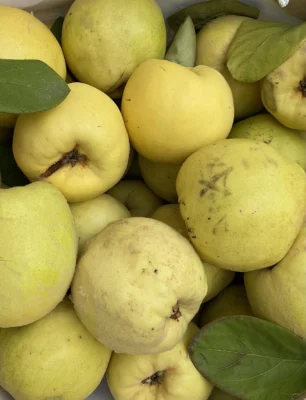
Serbian Gold
A rounded fruited selection that can be ready from late September. It has shown good leaf blight tolerance in wet conditions, making it worth considering where that disease is troublesome.
Harvested quinces illustrating the crop; the source does not establish Serbian Gold.
Photo: Mariaherrero786, CC BY-SA 4.0. Resized and optimised; cropped for display. Adapted image under the same licence.
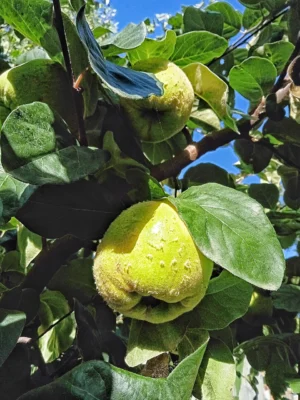
Aromatnaya
A yellow fruited selection with rounded to oval fruit and useful observed leaf blight tolerance. Fully ripe fruit can be less astringent than many quinces, but UK growers can plan to use it cooked.
Quinces hanging on a tree; the photograph is illustrative and is not verified Aromatnaya.
Photo: Suhayl091, CC BY-SA 4.0. Resized and optimised; cropped for display. Adapted image under the same licence.
Compare eventual spread, fruiting season and leaf blight tolerance. A tree described by cultivar alone does not tell you how large it will become, so ask about the rootstock before choosing its permanent position.
Open quince flowers provide pollen and nectar for visiting insects. Self fertility means a second variety is not essential, but insects still help move pollen between flowers.
Allow natural predators to deal with minor aphid populations where possible. Good airflow, targeted removal of diseased material and regular inspection support the tree without routine preventative spraying.
Published by Buy From Farmers Direct. Growing guidance reviewed 6 October 2026. The seasonal timeline uses the shared BFFD Growers Calendar record; adjust timings to your variety and local conditions.
No. Orchard quinces are self fertile, so one tree can crop. It still needs maturity, suitable weather, pollination and enough sunshine to develop useful fruit.
No. Japanese or flowering quince belongs to Chaenomeles. The orchard quince described here is Cydonia oblonga, a tree grown for much larger aromatic fruit.
Usually in October or November, once the fruit has developed colour and fragrance but before frost. Earlier selections such as Serbian Gold may be ready from late September in a favourable site.
Most UK grown quinces are hard and astringent and are best cooked. Some varieties can be less astringent when fully ripe, but do not expect every home grown quince to eat like an apple. Remove the core and seeds when preparing it.
Quinces mainly bear at the tips of shoots made the previous year. Shortening all those shoots removes potential fruiting points. Established trees generally need light thinning rather than an annual all over trim.
Yes, with a compact cultivar on a suitable dwarfing rootstock and a large stable container. Regular watering, feeding and compost renewal are essential, and the crop will reflect the restricted growing space.
A well placed quince can be both an attractive garden tree and a source of distinctive autumn cooking fruit. Choose its rootstock carefully, protect the fruiting tips and give the young tree time to establish.
Explore more growing guides: Fig, Cherry (Fan), Hazel.
Want to get food independence, support your local grower, get better prices and shop more privately?
Local food isn’t just something you find. It’s something you protect. A free account helps keep local supply visible, supported, and resilient.

….it takes 30 seconds for food lovers and 5 minutes for suppliers
We built this for people who care where their food comes from. For people who want to remain food secure. For Farmers to get to the local people, who deserve a better income and to deliver a better price for you. For the environmentally conscious and the privacy-conscious. An account simply helps us make the map and supplier reach more useful to you, without changing how open it is. You’re always in control.


Find local food. Stay connected to it. Create a free account to support local producers and be part of a growing food network.


