Spring onions are a compact, useful crop for beds and containers, with fresh green leaves and crisp, mild-tasting bases. A few short sowings are usually more useful than one crowded row. Choose a variety for the season, keep young plants growing steadily and lift them while they are tender.
Also called salad onions
Good in containers
Small repeat sowings
Harvest young and fresh
Hardy varieties overwinter
| Botanical group | Allium cepa and Allium fistulosum selections |
| Family | Amaryllidaceae |
| Other names | Salad onions and scallions |
| Main edible parts | Green leaves and the young white or coloured base |
| Growing method | Usually raised from seed for young plants |
| Position | Sunny, with good airflow |
| Soil | Fertile, well drained and reasonably moisture retentive |
| Main sowing season | March to August |
| Autumn sowing | August or September, using a suitable hardy variety |
| Sowing depth | About 1cm outdoors |
| Individual plant spacing | About 2.5cm for small salad onions |
| Row spacing | About 20cm |
| Container width | At least 30cm, with drainage holes |
| Module starting | Optional; useful in a cold, wet spring |
| Time to harvest | Often 8–12 weeks in active growth; longer over winter |
| Main harvest | Late spring to autumn from repeat sowings |
| Early spring harvest | From established, overwintered hardy plants |
| Bulb formation | Variety dependent; some form a small bulb, others remain cylindrical |
| Storage approach | Use fresh rather than curing as dry bulb onions |
| Pollination | Not needed before harvesting the young crop |
| Plant name | Crop type | Spacing |
Sow indoors
Plant outdoors
Harvest
Polytunnel | |||||||||||
|---|---|---|---|---|---|---|---|---|---|---|---|---|---|---|
| Jan | Feb | Mar | Apr | May | Jun | Jul | Aug | Sep | Oct | Nov | Dec | |||
| Spring Onion | Alliums | Single 2.5cm, In row 2.5cm, Row gap 20cm for small individual salad onions | Polytunnel | Polytunnel | Sow indoors, Harvest, Polytunnel | Sow indoors, Plant outdoors, Harvest, Polytunnel | Sow indoors, Plant outdoors, Harvest | Sow indoors, Plant outdoors, Harvest | Sow indoors, Plant outdoors, Harvest | Sow indoors, Plant outdoors, Harvest | Sow indoors, Plant outdoors, Harvest | Harvest, Polytunnel | Polytunnel | Polytunnel |
Sow indoors: March, April, May, June, July, August, September. Plant outdoors: April, May, June, July, August, September. Harvest: March, April, May, June, July, August, September, October. Polytunnel: January, February, March, April, October, November, December.
March to August covers the main sowing sequence; September is reserved for a suitable hardy variety intended for the following spring. The planting band is optional module or young-plant transplanting from April to September, not a required second stage for direct-sown rows. March and April harvesting refers to overwintered crops; most new spring sowings crop later. The protected band covers optional early starts in March and April and autumn/winter shelter, not a promise of rapid winter growth.
Spring onions are useful when you want small, frequent harvests close to the kitchen. They need little room individually, although the whole row still needs light, moisture and space to breathe. A broad pot can provide a worthwhile first crop.
Decide whether you want slim young onions or larger bunching stems. Non-bulbing varieties can stand longer than some traditional salad onions, but leaving every sowing indefinitely will not give the same tenderness as harvesting at the intended stage.
Photo: Salicyna, CC BY-SA 4.0. Resized and optimised; cropped for display. Adapted image under the same licence.
Choose an open, sunny patch where you can keep weeds under control. The small root system is easily outcompeted, so squeezing plants between vigorous established crops can be less successful than it looks on a planting plan.
Improve tired ground with mature compost ahead of sowing and remove large lumps from the surface. Avoid fresh manure and do not sow while the bed is waterlogged.
For pots, use peat-free multipurpose compost in a container at least 30cm wide. Provide clear drainage holes and enough root space to keep the compost from drying within a few hours.
Keep alliums out of ground known to have onion white rot. A clean container filled with uncontaminated compost offers a more suitable alternative, provided tools and soil are not carrying the problem into it.
Photo: Apelsinskal, CC BY-SA 4.0. Resized and optimised; cropped for display. Adapted image under the same licence.
Direct sowing is the simplest route, while modules are useful when outdoor conditions are poor. Follow one spacing method consistently: a thin row of individual plants is different from deliberately growing widely spaced small clumps.
1.
Choose a named salad or bunching onion. Use a variety specifically suitable for overwintering if sowing in late summer or early autumn.
2.
Prepare a fine, weed-free surface and make shallow drills about 1cm deep, leaving around 20cm between rows. Water a dry drill before sowing.
3.
Sow a small amount thinly from March onwards when the ground is workable. Cover lightly, label the row and keep the surface moist as the seed germinates.
4.
For an optional protected start, sow in modules in March using peat-free seed compost. Keep seedlings in good light with ventilation rather than leaving them in a hot, damp propagator after emergence.
5.
Thin crowded direct-sown seedlings so individual small salad onions have roughly 2.5cm each. Where a packet specifies a bunching or clump method, follow its wider spacing instead.
6.
Plant module-grown seedlings outside once they are well rooted and growing strongly, after acclimatising them to outdoor conditions. Water before and after moving and keep the roots protected while you work.
7.
Keep the new crop watered and free of weeds. Check vulnerable seedlings for slug damage, and use insect mesh where onion fly is a recurring local problem.
8.
Repeat a short sowing every few weeks during the main season, adjusting the amount to what you actually use. Label autumn batches separately because they will develop much more slowly.

Watering
Check seedlings regularly until they establish. Their small roots cannot reach far into the bed, so a dry seedbed can cause a growth check even if neighbouring larger plants look comfortable.
Once established, water beds during prolonged dry weather and containers whenever their compost needs it. Water at the base and let surplus drain, rather than keeping a tray of roots permanently submerged.

Feeding
A prepared, reasonably fertile bed usually supports a short crop without repeated feeding. More fertiliser is not an answer to overcrowding or a row smothered by weeds.
If a container has carried several successive crops, refresh the compost or feed according to the compost and fertiliser instructions. Avoid pushing excessive soft leaf growth with unnecessary high-nitrogen feeding.

Pruning
Routine pruning is unnecessary. Leave healthy leaves to support growth and remove damaged material carefully when tidying or harvesting.
Lift individual plants as they reach the size you enjoy, using a small trowel where needed to avoid snapping or bruising them. Wash, trim the roots and use the sound green leaves as well as the base; there is no dry-curing stage for a salad harvest.

Winter care
Select a hardy variety and establish it before the weather turns cold. A September sowing is intended to wait through winter and resume growth, not deliver the same quick turnaround as a warm-season batch.
In cold or exposed gardens, a cloche or fleece can help shelter established plants. Ventilate covers when conditions allow and check for damp, collapsing foliage; protection does not compensate for saturated soil.
The name spring onion describes a young edible crop rather than one single species. Some Allium cepa varieties form a small rounded base, whereas selections of Allium fistulosum, including Ishikura, are grown for elongated stems that do not develop a typical storage bulb.
The familiar leaves are tubular, and the pale shank consists of overlapping leaf bases. Leeks are a separate crop with flat, strap-like leaves. For planting, use a labelled culinary variety rather than relying on the appearance of an unidentified allium.
Photo: Salicyna, CC BY-SA 4.0. Resized and optimised; cropped for display. Adapted image under the same licence.
Start the outdoor season according to the soil, not the calendar alone. If March is cold and wet, modules in a bright protected place or a later outdoor sowing are both reasonable options.
Eight to twelve weeks is a useful warm-season expectation, not a deadline. Slow spring weather, drying pots and the short days of winter can extend the time considerably, while different varieties reach useful sizes at different stages.
Harvest to suit the crop. Traditional salad onions are particularly useful while young and slender; a non-bulbing bunching selection can supply larger stems. Sow again before the previous batch is exhausted if you want a steady kitchen supply.
Photo: Dalgial, CC BY-SA 3.0. Resized and optimised; cropped for display. Adapted image under the same licence.
Downy mildew is favoured by damp conditions and poor airflow. Thin congested rows, keep weeds down and remove affected plants. Do not put diseased material into a normal home compost heap.
Onion white rot can cause root decay, with fluffy growth and later small black resting bodies around the base. Avoid moving contaminated soil on tools or footwear. Ordinary short crop rotation will not remove this long-lived soil problem.
Onion fly can destroy roots and young plants. Inspect damaged roots before blaming watering alone, remove badly affected plants and protect subsequent sowings with suitable insect mesh where the pest is established.
Slugs or snails may be responsible, especially in damp weather. Look for feeding damage and inspect at dusk. Protect vulnerable sowings while they establish and check under pots and temporary covers.
Check moisture, weeds, crowding and the sowing season first. Winter crops naturally grow slowly, but a crowded summer pot can run short of both water and nutrients. Correct the growing conditions rather than automatically applying more feed.
For a predictable fresh crop, sow seed in small batches. Spring onions do not require onion sets, and bulb-onion set planting schedules should not be substituted for the chosen salad variety’s seed instructions.
Seed saving is possible from suitable open-pollinated plants kept to flower. Retain a healthy group and plan isolation from compatible flowering onions; different allium species do not all cross in the same way. For a small garden with several flowering onions nearby, fresh labelled seed is the simpler option.
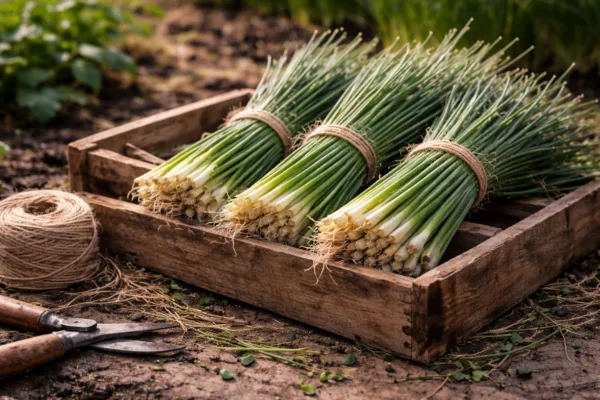
White Lisbon
A familiar Allium cepa salad onion with white bases and a mild flavour when young. It suits successive small sowings, and suitable autumn sowings can overwinter for an early spring crop.
Illustrative spring-onion harvest from the BFFD media library; no White Lisbon identity is claimed.
Image from the BFFD media library.
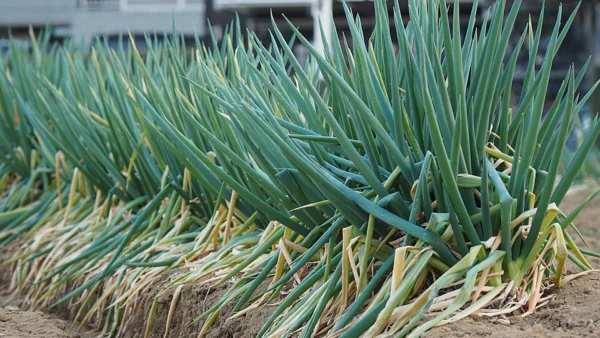
Ishikura
An Allium fistulosum bunching type with a long pale shank rather than a rounded storage bulb. Useful if you want a longer harvesting window or slightly larger stems for the kitchen.
Illustrative Japanese bunching onions; the source does not confirm Ishikura.
Photo: Ka23 13, CC BY-SA 4.0. Resized and optimised; cropped for display. Adapted image under the same licence.
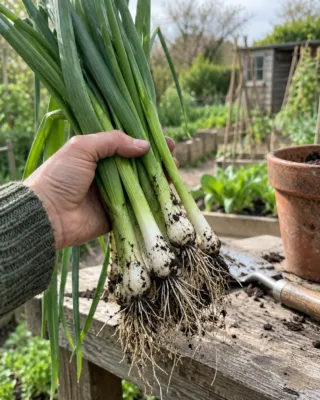
Guardsman
A vigorous selection with upright foliage that is relatively slow to make a bulb. Choose it for fresh salad stems, using the packet’s recommended method if growing larger plants or clumps.
Illustrative spring-onion harvest from the BFFD media library; no Guardsman identity is claimed.
Image from the BFFD media library.
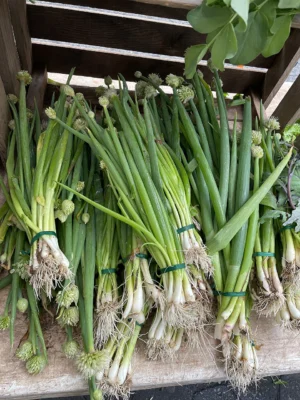
Apache
A red-purple based salad onion with green tops. It adds colour to a harvested bunch and is best picked while tender; follow its own sowing instructions rather than assuming every coloured variety is equally winter hardy.
Illustrative green scallions; this photograph does not show a confirmed red-purple Apache crop.
Photo: Deans Charbal, CC BY-SA 4.0. Resized and optimised; cropped for display. Adapted image under the same licence.
Look for the intended sowing season, whether the variety bulbs or stays cylindrical, and any overwintering guidance. A small packet used over several sowings can be more useful than planting an entire large packet at once.
Onions retained to flower can offer nectar to visiting insects. Keep a few designated flowering plants if wanted, while harvesting the main salad crop before that stage.
Young spring onions do not need pollinating, so insect mesh can remain over a vulnerable crop. Keep it clear of the leaves where possible and secure its edges so the protection remains effective.
Published by Buy From Farmers Direct. Growing guidance reviewed 6 October 2026. The seasonal timeline uses the shared BFFD Growers Calendar record; adjust timings to your variety and local conditions.
Some are Allium cepa selections harvested young, while others are non-bulbing Allium fistulosum types. The seed variety determines whether the base eventually swells into a bulb or stays more cylindrical.
March to August is a useful main window. Sow suitable hardy varieties in August or September for the following spring, and follow the packet because early and late sowing suitability varies.
Often around eight to twelve weeks during active growth. Overwintered crops take much longer, and cold weather, dry compost or crowding can delay other sowings too.
Yes. Use a draining pot at least 30cm wide, peat-free compost and a sunny position. Sow thinly, prevent severe drying and keep the crop spaced well enough for air to move between plants.
Thin an overcrowded direct-sown row to around 2.5cm between small individual onions. Deliberately multi-sown clumps use a different, wider planting pattern; follow that variety’s instructions rather than combining both methods in a dense row.
No. They are harvested for fresh leaves and tender bases, so use them promptly instead of curing them like mature storage onions. Lift only what you need and leave the next suitable plants growing until required.
Keep the sowings small, the row weed-free and the plants growing steadily. Harvest young spring onions as you need them, then let the next labelled batch take over.
Explore more growing guides: Chives, Chives (Garlic), Garlic.