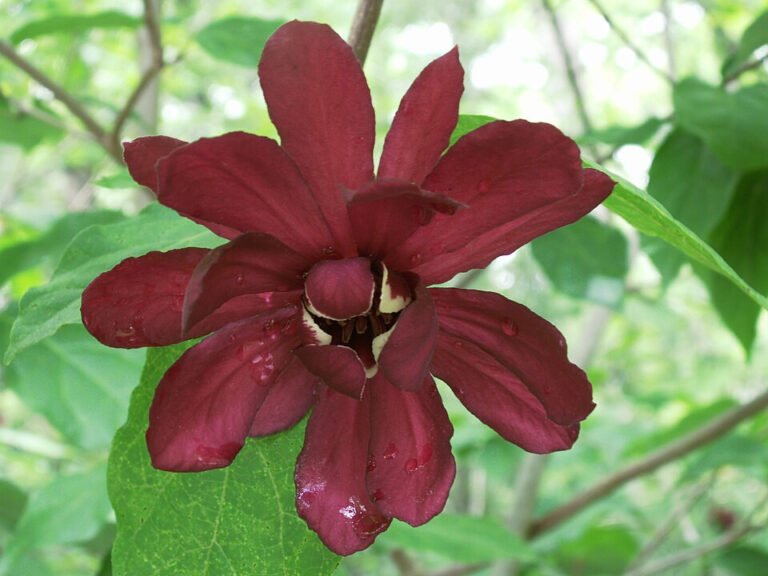
Sweetshrub is a quiet but distinctive choice for a sheltered mixed border. Its dark red-brown flowers sit among broad green leaves, and some plants carry a rich fruity fragrance. Scent varies, so buying a flowering plant or a named fragrant selection is sensible when that is the main attraction. Give the shrub room to widen and keep its roots from becoming parched during establishment.
Deciduous flowering shrub
Fruity scent varies
Sun or partial shade
Moist fertile ground
Not culinary allspice
| Botanical identity | Calycanthus floridus |
| Family | Calycanthaceae |
| Plant type | Deciduous shrub |
| Typical height | About 1.5 to 3m |
| Typical spread | About 1.5 to 3m |
| Main flowering season | Late spring and summer |
| Light | Sun or partial shade |
| Soil | Fertile, humus-rich, moist but drained |
| Soil reaction | Broad tolerance; avoid extremes |
| Winter behaviour | Generally hardy; shelter young growth |
| Main planting window | October to November or March to April |
| Seed route | Specialist optional seed route |
| Pruning approach | Light pruning after flowering |
| Propagation | Layering, cuttings or rooted suckers |
| Container suitability | Young plants only in generous containers |
| Watering priority | Water through establishment and drought |
| Feeding priority | Modest spring nutrition if needed |
| Wildlife value | Flowers and shrub shelter |
| Main use | Scented ornamental shrub |
| Important distinction | Calycanthus floridus is an ornamental sweetshrub, not culinary allspice Pimenta dioica; flower scent varies between individual plants. |
| Plant name | Crop type | Spacing |
Sow indoors
Plant outdoors
Harvest
Polytunnel | |||||||||||
|---|---|---|---|---|---|---|---|---|---|---|---|---|---|---|
| Jan | Feb | Mar | Apr | May | Jun | Jul | Aug | Sep | Oct | Nov | Dec | |||
| Sweetshrub | Not recorded | Single 200cm, In row 200cm, Row gap 200cm | No activity recorded | No activity recorded | Plant outdoors | Plant outdoors | No activity recorded | No activity recorded | No activity recorded | No activity recorded | No activity recorded | Plant outdoors | Plant outdoors | No activity recorded |
Sow indoors: no months recorded. Plant outdoors: March, April, October, November. Harvest: no months recorded. Polytunnel: no months recorded.
Plant in autumn while soil remains workable, or in spring before the main growing season. Container plants can be established outside these windows with suitable watering. Sow, harvest and cover bands remain empty because routine UK care uses nursery shrubs, no food harvest and no standard tunnel protection. These month bands are planning windows for a typical UK garden; local frost, altitude, exposure and the season can move the work. Check the plant or seed label before using an optional route.
Sweetshrub suits a mixed shrub border where its flowers can be inspected close up and its eventual width will not crowd a path.
It is useful near a seat if a fragrant plant has been selected, but the scent of one specimen should not be assumed for every seedling.
Photo: KENPEI, CC BY-SA 3.0. Resized and optimised; cropped for display. Adapted image under the same licence.
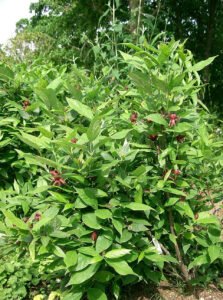
Choose sun or light partial shade with shelter from drying winds. Deep shade can reduce the flower display. A place beside a frequently used path makes the unusual flowers easier to appreciate than a distant boundary does. Leave enough clearance that branches need not be clipped back each year merely to keep the path open.
Provide fertile humus-rich soil with moisture through summer and drainage in winter. A dry cramped strip near paving is a poor long-term site.
Allow roughly 2m or more according to the cultivar’s stated size. Include room for occasional suckers and access around the shrub.
A large container can hold a young plant, but a substantial garden shrub is generally easier in open ground than permanently restricted roots.
Photo: Agnieszka Kwiecień, Nova, CC BY-SA 4.0. Resized and optimised; cropped for display. Adapted image under the same licence.
Begin with correctly labelled sweetshrub and decide where the mature plant will fit. Preparing the growing space before buying makes the first season easier, especially when young plants need prompt attention.
1.
Choose a healthy labelled Calycanthus floridus, ideally in flower if fragrance matters.
2.
Plant in autumn or spring, avoiding frozen or waterlogged conditions.
3.
Prepare the wider root area and remove persistent weeds.
4.
Check the expected mature spread before placing neighbouring shrubs.
5.
Set the rootball at its former soil level and ease only tightly circling roots.
6.
Backfill, firm gently and water the whole root area.
7.
Mulch around the shrub while keeping the stem base clear. Spread mulch over the root area rather than piling it against the stems. Renew it as needed, keeping an eye on moisture beneath it and on any suckers appearing beyond the intended outline of the shrub.
8.
Water during dry establishment periods and inspect emerging basal shoots.

Watering
Water new shrubs deeply during dry weather until roots extend into surrounding soil. Mature plants still benefit from attention during prolonged drought.
A container-grown sweetshrub needs consistent checks; dry roots can spoil foliage even when the top growth is shaded.

Feeding
A suitable organic mulch and reasonably fertile soil are often sufficient. Use a measured general spring feed only where growth indicates a need.
Poor flowering can reflect shade or youth rather than hunger. Avoid pushing excessive soft growth with repeated nitrogen applications.

Pruning
Little routine pruning is needed. After flowering, remove dead, damaged or badly placed stems and lightly correct the shape. Stand back before removing a major branch and consider the resulting gap. Sweetshrub is most attractive with a natural framework; repeated short cuts around the outside can create a dense shell of shoots and hide the flowers.
If the shrub spreads through suckers beyond its allotted area, remove unwanted shoots at their origin. Avoid repeatedly shearing the whole plant into a tight outline.

Winter care
Established sweetshrubs are generally hardy in suitable UK sites. Young roots benefit from a sensible mulch and reliable drainage. Choose the final position with spring frost in mind as well as winter minimum temperature. A sheltered site that encourages very early soft growth can still suffer when a late cold night follows a mild spell.
Protect container roots from severe exposure where necessary. Late frost can damage fresh growth, so avoid an obvious frost pocket.
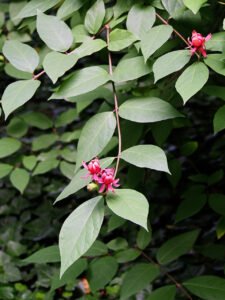
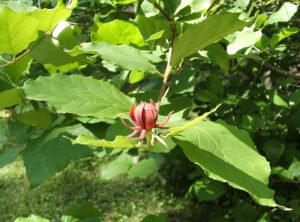
Calycanthus floridus has broad opposite leaves and many narrow petal-like parts forming dark reddish-brown flowers. Its deciduous framework widens with age.
The common name Carolina allspice refers to fragrance, not a kitchen spice. Calycanthus seeds and other material must not be substituted for edible allspice.
Photo: Roger Culos, CC BY-SA 3.0. Resized and optimised; cropped for display. Adapted image under the same licence.
A sheltered warm position can help flowers and fragrance be appreciated, but summer moisture remains important. Warm walls can also create unexpectedly dry soil.
Visit a nursery while plants are flowering if scent is your priority. Ask whether the plant is a named clone or a variable seedling. Fragrance can change with the temperature and stage of a flower, so inspect more than one bloom if possible. A plant advertised under a common name alone gives less certainty than a documented named selection from a reliable grower.
Enjoy flowers on the shrub and retain its natural branching character. This guide provides no food harvest, essential-oil or medicinal instructions.
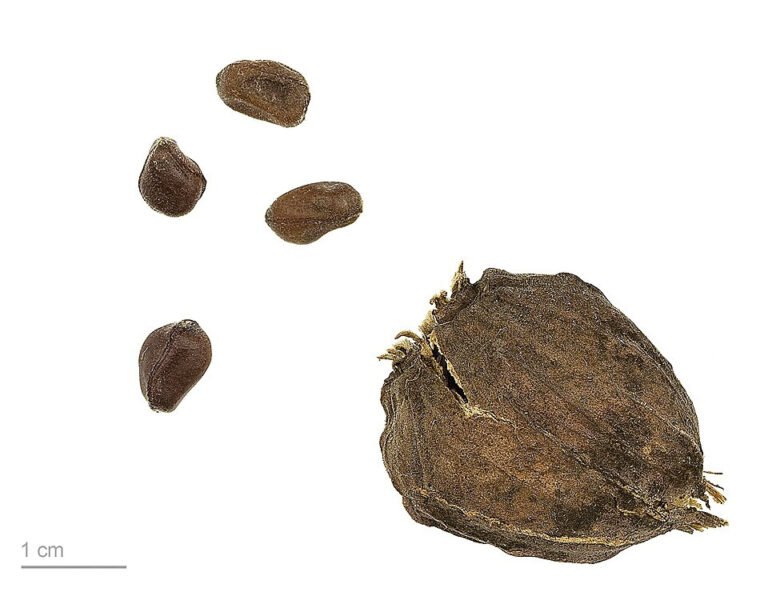
Photo: Douglas W. Jones, Public domain. Resized and optimised; cropped for display.
Individual plants vary and weather affects perception. Select a flowering plant or a known fragrant clone rather than assuming cultivation alone can change its inherited scent.
Check drought and wind exposure, especially after planting. Water the root area thoroughly if dry and avoid feeding a severely stressed plant.
Youth, deep shade or inappropriate pruning may contribute. Allow establishment and prune lightly after flowering rather than removing developing flowering wood repeatedly.
Remove unwanted basal growth early and check its point of origin. A wider permanent position may be more practical than constant restriction.
Persistent waterlogging can damage woody plants. Improve the site or drainage before replacing a failed shrub, rather than treating the symptoms only with fertiliser.
Layer a low healthy shoot or separate a genuinely rooted sucker when suitable, retaining enough roots for independent growth. Keep new plants watered while establishing. A sucker is ready for independent planting only when it carries an adequate root system. Exposing its connection carefully helps you avoid cutting off a shoot that still relies almost entirely on the parent for water.
Cuttings require appropriate propagation conditions. Seed-grown plants can vary in fragrance and flower quality, so use vegetative propagation to preserve a selected clone.
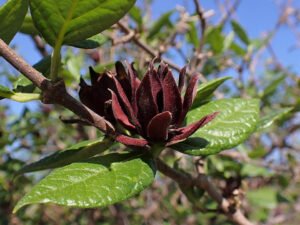
Calycanthus floridus species
A useful dark-flowered shrub, but seedlings vary in fragrance. Choose a flowering specimen if scent is central to the purchase.
Source identified Calycanthus floridus flower.
Photo: Krzysztof Ziarnek, Kenraiz, CC BY-SA 4.0. Resized and optimised; cropped for display. Adapted image under the same licence.
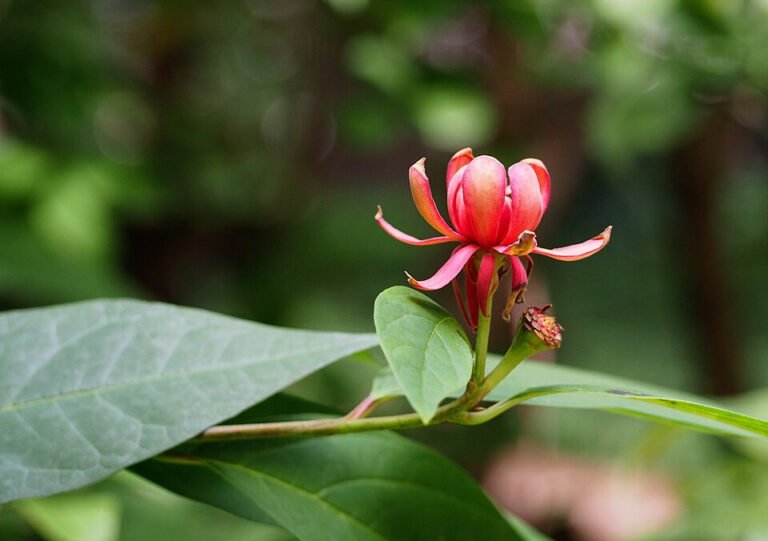
Athens
A named pale-flowered selection of C. floridus. Check the nursery label and allow for its mature shrub dimensions.
Red flowered sweetshrub comparison photograph; this is not an authenticated photograph of the pale flowered Athens cultivar.
Photo: Agnieszka Kwiecień, Nova, CC BY-SA 4.0. Resized and optimised; cropped for display. Adapted image under the same licence.
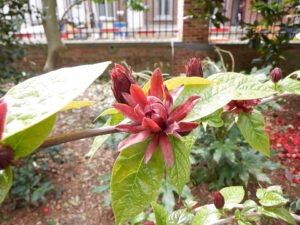
Michael Lindsay
A named C. floridus selection worth comparing for fragrance and garden habit. A generic sweetshrub photograph does not prove cultivar identity.
Sweetshrub comparison photograph; Michael Lindsay identity is not authenticated.
Photo: Hannes wilms, CC BY-SA 4.0. Resized and optimised; cropped for display. Adapted image under the same licence.
Compare the mature size, growing requirements and season of interest before choosing sweetshrub. Buy clearly labelled, healthy stock and prepare its position in advance. A plant suited to the available light and soil is easier to establish and maintain.
Flowers can receive insect visitors, and an established branching shrub provides shelter within a mixed planting. Its value is stronger as part of a varied garden.
Check for active bird nests before pruning and postpone work around an occupied nest. Tolerate minor leaf damage when the shrub remains healthy.
Published by Buy From Farmers Direct. Growing guidance reviewed 11 October 2026. The seasonal timeline uses the shared BFFD Growers Calendar record; adjust timings to your variety and local conditions.
No. Calycanthus floridus is ornamental; culinary allspice is Pimenta dioica.
Fragrance varies between plants and with conditions. Buy in flower or choose a named selection when scent matters.
Sun or partial shade is suitable; deep shade can reduce flowering.
Lightly after flowering, mainly to remove damaged or misplaced growth.
A young plant can, but its long-term size and moisture needs make open ground easier in many gardens.
It can produce basal suckers. Remove unwanted shoots or allow room for a broader shrub.
Give sweetshrub an appropriate position, establish it carefully and adjust care to the weather. Keep a simple note of flowering and any problems so that next year’s planting decisions reflect what actually succeeds in your garden.
Explore more growing guides: Viburnum, Witch Hazel, Winter Jasmine.
Want to get food independence, support your local grower, get better prices and shop more privately?
Local food isn’t just something you find. It’s something you protect. A free account helps keep local supply visible, supported, and resilient.

….it takes 30 seconds for food lovers and 5 minutes for suppliers
We built this for people who care where their food comes from. For people who want to remain food secure. For Farmers to get to the local people, who deserve a better income and to deliver a better price for you. For the environmentally conscious and the privacy-conscious. An account simply helps us make the map and supplier reach more useful to you, without changing how open it is. You’re always in control.


Find local food. Stay connected to it. Create a free account to support local producers and be part of a growing food network.