Viburnums can provide evergreen structure, scented winter flowers, spring blossom, autumn colour or ornamental berries, but no single shrub supplies every feature equally. Choose the species for the space and season you want to improve. A spreading layered shrub needs a different position from a clipped evergreen screen. Most are straightforward once established in suitable ground, with restrained pruning and enough moisture during dry periods.
Evergreen or deciduous choices
Different flowering seasons
Choose mature size carefully
Prune after the relevant flowers
Berries are ornamental here
| Botanical identity | Viburnum species and hybrids |
| Family | Adoxaceae |
| Plant type | Evergreen or deciduous shrub |
| Typical height | About 1 to 4m or more, by type |
| Typical spread | About 1 to 4m or more |
| Main flowering season | Winter, spring or summer according to species |
| Light | Sun or partial shade |
| Soil | Generally fertile, moist but drained |
| Soil reaction | Species-specific; many tolerate ordinary garden soil |
| Winter behaviour | Varies by species and cultivar |
| Main planting window | October to November or March to April |
| Seed route | Slow specialist route; cultivars do not come true |
| Pruning approach | Usually light pruning after flowering |
| Propagation | Cuttings appropriate to the species |
| Container suitability | Compact types in large containers |
| Watering priority | Water new shrubs and during prolonged drought |
| Feeding priority | Mulch; modest spring feed if needed |
| Wildlife value | Flowers, berries and shrub shelter |
| Main use | Structure, scent, blossom and ornamental fruit |
| Important distinction | Viburnum is a diverse genus; evergreen tinus, winter-flowering bodnantense, layered plicatum and native opulus require distinct selection and pruning decisions. |
| Plant name | Crop type | Spacing |
Sow indoors
Plant outdoors
Harvest
Polytunnel | |||||||||||
|---|---|---|---|---|---|---|---|---|---|---|---|---|---|---|
| Jan | Feb | Mar | Apr | May | Jun | Jul | Aug | Sep | Oct | Nov | Dec | |||
| Viburnum | Not recorded | Single 200cm, In row 200cm, Row gap 200cm | No activity recorded | No activity recorded | Plant outdoors | Plant outdoors | No activity recorded | No activity recorded | No activity recorded | No activity recorded | No activity recorded | Plant outdoors | Plant outdoors | No activity recorded |
Sow indoors: no months recorded. Plant outdoors: March, April, October, November. Harvest: no months recorded. Polytunnel: no months recorded.
Autumn and spring are the main establishment windows for nursery shrubs, avoiding frozen or saturated soil. Container plants can be planted at other suitable times with careful watering. Sow, harvest and cover bands are empty: seed is a slow specialist route, fruit is treated as ornamental, and established suitable shrubs need no routine tunnel season. These month bands are planning windows for a typical UK garden; local frost, altitude, exposure and the season can move the work. Check the plant or seed label before using an optional route.
Viburnum suits mixed borders, specimen planting and some hedges, provided the chosen species has the right habit and mature size. Buy for a specific role rather than a generic genus label.
A compact selection can live in a large container for a time, but many viburnums develop broad shallow roots and substantial branches that are easier to accommodate in open ground.
Photo: Derek Harper, CC BY-SA 2.0. Resized and optimised; cropped for display. Adapted image under the same licence.
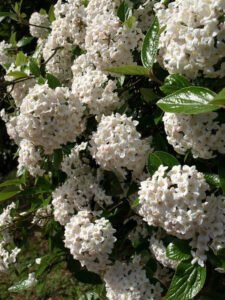
Sun or partial shade suits many types, though light affects flowering and density. Protect scented winter flowers from the harshest exposure where possible.
Most appreciate fertile moisture-retentive but drained soil. Check the exact species for exceptions rather than assuming all will thrive on very dry chalk or saturated clay.
Allow room for the natural habit: V. plicatum needs width for layered branches, while tall winter-flowering shrubs need vertical space. The 200cm calendar gap is only a general planning allowance. Draw the eventual outline on a simple planting plan before adding smaller shrubs nearby. A viburnum that seems modest in a nursery pot may later shade much of the bed, particularly if it retains leaves through winter.
For a pot, choose a genuinely compact cultivar and a large stable container. Plan future repotting or planting out before roots fill the entire available volume.
Photo: Derek Harper, CC BY-SA 2.0. Resized and optimised; cropped for display. Adapted image under the same licence.
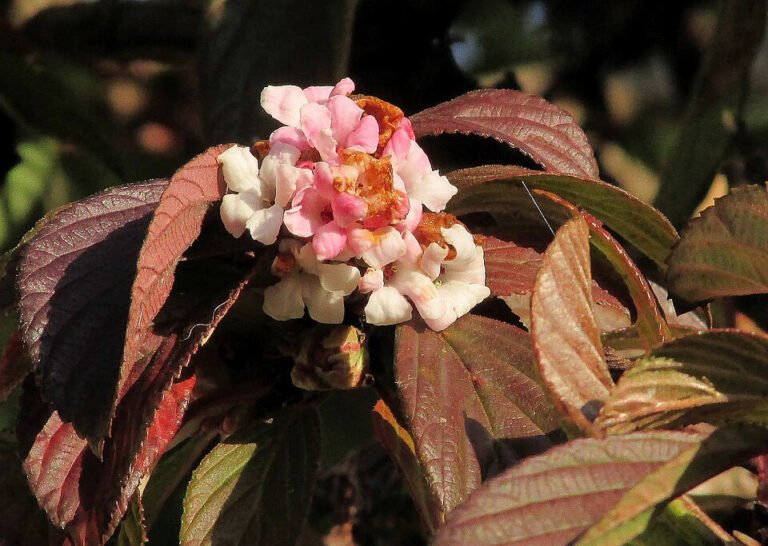
Begin with correctly labelled viburnum and decide where the mature plant will fit. Preparing the growing space before buying makes the first season easier, especially when young plants need prompt attention.
1.
Choose a species for the required flowering season, evergreen cover, berries or autumn colour.
2.
Check the mature dimensions and soil preferences on the nursery label before choosing its final position.
3.
Plant in autumn or spring when soil is workable and roots can establish without extreme stress.
4.
Prepare a broad weed-free area, removing competition rather than enriching only a small planting pocket.
5.
Set the rootball at its former level, easing tightly circling roots where necessary.
6.
Backfill, firm gently and water thoroughly so the surrounding soil settles around the roots.
7.
Apply an appropriate organic mulch while leaving the stem base clear.
8.
Monitor moisture through establishment and record flowering time before deciding when any pruning is needed.

Watering
Water new shrubs deeply through dry spells. Many viburnums have roots near the surface and can show drought stress despite apparently substantial top growth.
Container shrubs need more frequent attention. Check the rootball itself, because dense leaves can keep rain from reaching the compost.

Feeding
A regular organic mulch helps maintain soil condition. Use a modest general spring feed if needed, rather than feeding heavily every time growth slows.
Poor flowering or berries can reflect pruning, pollination or species choice. Extra fertiliser will not correct those causes and can encourage unwanted leafy growth.

Pruning
Most viburnums need little pruning beyond removing damaged, crossing or badly placed branches. Where shaping is necessary, work after that species has flowered. Learn where the chosen shrub flowers before removing long shoots. Cutting at the wrong time can remove the next display, while leaving a naturally graceful framework often gives better results than annual clipping to an arbitrary outline.
Check for active bird nests before cutting and postpone affected work. Avoid shearing a naturally layered specimen or removing all the growth that would carry flowers and berries.

Winter care
Choose a species and cultivar hardy enough for the garden. Established suitable plants usually remain outdoors, with winter drainage and exposure more relevant than routine wrapping.
Winter-flowering shrubs may lose individual flowers in severe weather without the whole plant being damaged. New flowers can open later as conditions improve. Compare damage to flowers with the condition of stems and buds. Brown petals after frost may be cosmetic, whereas persistent dieback into the wood warrants a closer examination of roots, drainage and general shrub health.
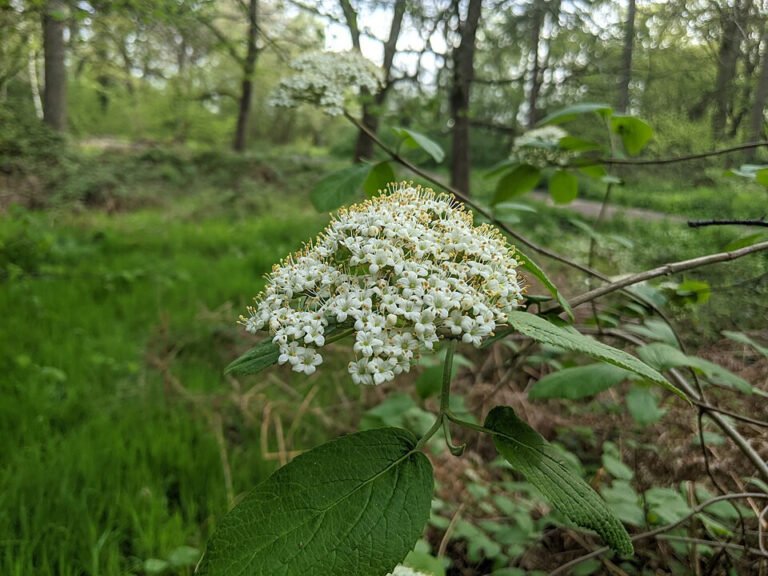
Viburnums generally have opposite leaves and clusters of small flowers, but leaf texture, evergreen habit and inflorescence shape differ widely.
Some flower heads have conspicuous sterile outer flowers or entirely sterile rounded heads. Those differences affect appearance and potential berry production, so retain the exact plant name.
Photo: Bob Harvey, CC BY-SA 2.0. Resized and optimised; cropped for display. Adapted image under the same licence.
For winter scent, position the shrub where you pass it during cold months rather than far behind summer planting. Flowering can pause in severe weather.
Berry production may require compatible plants nearby and flowers that are fertile. A snowball type with sterile flowers will not behave like a fruiting species. Check pollination requirements with the supplier when berries are a main reason for buying. Two plants with the same clonal identity may not provide the same benefit as a suitable genetically distinct partner of the correct species.
Treat berries as ornamental and leave them for wildlife where appropriate. This guide does not provide food preparation advice for any viburnum species.
Photo: משתמש:ymm. Original uploader was Ymm at he.wikipedia, CC BY-SA 3.0. Resized and optimised; cropped for display. Adapted image under the same licence.
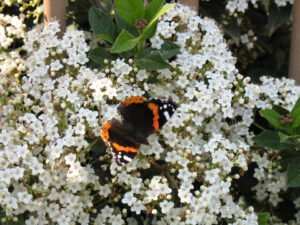
Viburnum beetle can affect susceptible species such as V. opulus and V. tinus. Confirm the pest and assess plant health before deciding whether action is necessary.
Sterile flowers, poor pollination or lack of compatible partners may explain the result. Check the species and cultivar rather than adding more feed.
Shallow roots may be dry, especially under competition. Water the root zone deeply if needed and maintain a suitable mulch.
Frost and prolonged wet weather can spoil individual flowers. Wait for further blooms before treating this as a disease of the whole shrub.
Repeated hard clipping can spoil flowers and habit. Consider selective renovation suited to the species or replace it with a genuinely smaller choice.
Take softwood cuttings from suitable deciduous types in late spring or early summer, or semi-ripe cuttings from appropriate evergreen and other species later in the season.
Some deciduous viburnums can also be raised from hardwood cuttings. Seed is slow and does not preserve named cultivars, so choose a method suited to the exact plant.
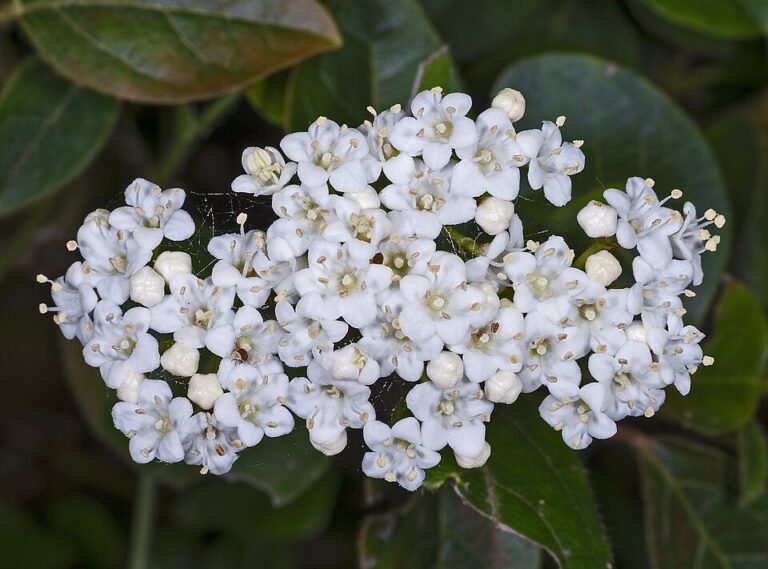
Viburnum tinus
An evergreen shrub offering winter-to-spring flowers and useful structure. Check cultivar size and local exposure before using it as a screen.
Source identified Viburnum tinus flowers.
Photo: Didier Descouens, CC BY-SA 4.0. Resized and optimised; cropped for display. Adapted image under the same licence.
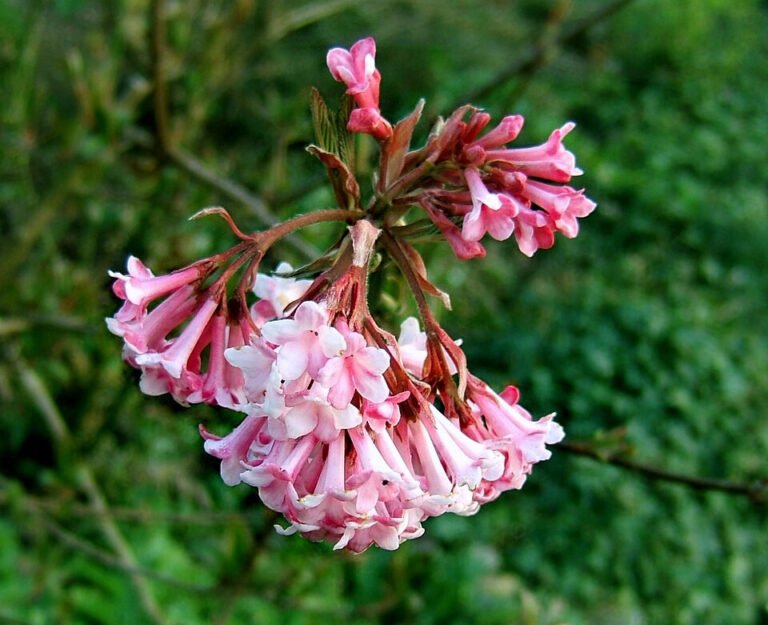
Viburnum × bodnantense
Deciduous winter-flowering hybrids are valued for scent on bare stems. Give them room and a position where winter flowers can be enjoyed.
Source identified Viburnum × bodnantense flowers.
Photo: Wildfeuer, CC BY-SA 3.0. Resized and optimised; cropped for display. Adapted image under the same licence.
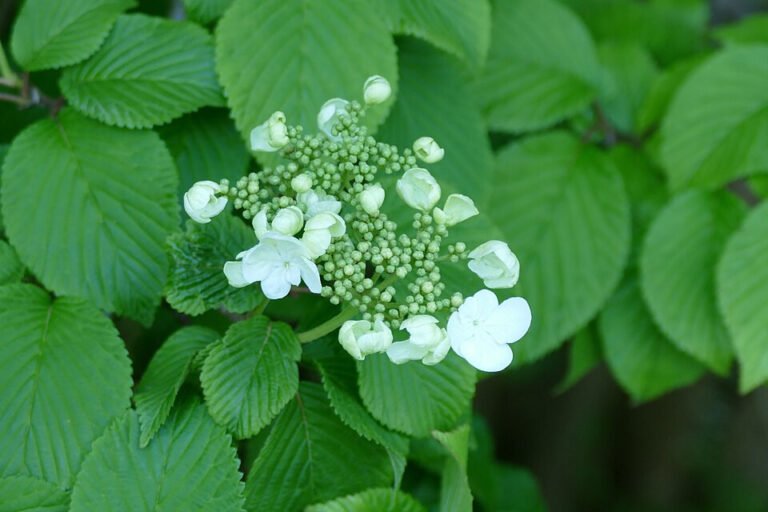
Viburnum plicatum forms
Often chosen for broad layered branches and spring flowers. Their width is central to their character, so avoid a narrow cramped gap.
Source identified Viburnum plicatum Mariesii.
Photo: Kritzolina, CC BY-SA 4.0. Resized and optimised; cropped for display. Adapted image under the same licence.
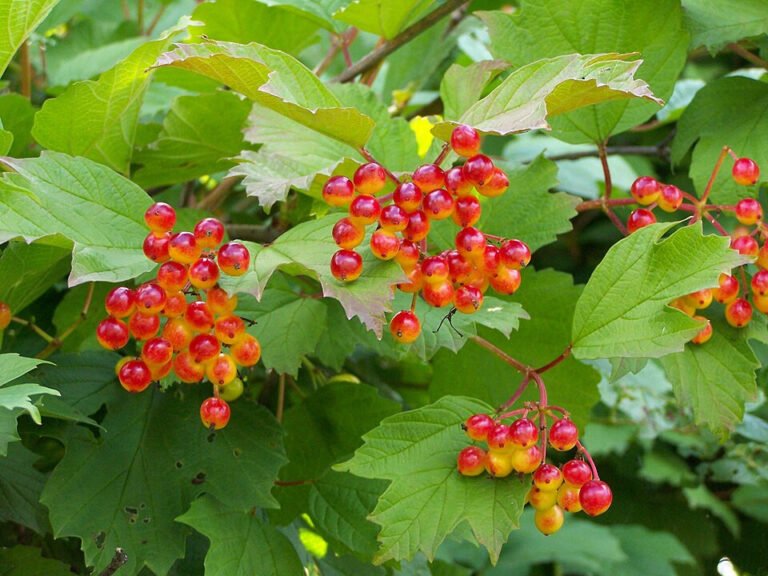
Viburnum opulus
The native guelder rose offers flowers, autumn colour and berries in suitable conditions. Named sterile snowball forms differ from the fruiting species.
Source identified Viburnum opulus berries and foliage, shown for ornamental identification rather than food use.
Photo: Lestat (Jan Mehlich), CC BY-SA 3.0. Resized and optimised; cropped for display. Adapted image under the same licence.
Compare the mature size, growing requirements and season of interest before choosing viburnum. Buy clearly labelled, healthy stock and prepare its position in advance. A plant suited to the available light and soil is easier to establish and maintain.
Fertile flowers can feed visiting insects, while suitable fruiting species provide berries for birds. Sterile ornamental heads offer a different wildlife value from fertile ones.
A mature shrub gives shelter and potential nesting sites. Check before pruning and keep a varied planting so flowers and fruit are available beyond one viburnum’s season.
Published by Buy From Farmers Direct. Growing guidance reviewed 11 October 2026. The seasonal timeline uses the shared BFFD Growers Calendar record; adjust timings to your variety and local conditions.
No. The genus includes evergreen and deciduous shrubs with very different appearances and flowering seasons.
Usually lightly after its own flowering season, checking for active nests before work.
Check whether the flowers are fertile and whether the plant needs a compatible pollination partner.
This guide treats all viburnum fruit as ornamental and gives no edible-use advice.
Many tolerate partial shade, but deep shade can reduce flowers and density. Check the species.
Choose a genuinely compact named cultivar based on mature dimensions, not the size of its nursery pot.
Give viburnum an appropriate position, establish it carefully and adjust care to the weather. Keep a simple note of flowering and any problems so that next year’s planting decisions reflect what actually succeeds in your garden.
Explore more growing guides: Sweetshrub, Witch Hazel, Winter Jasmine.
Want to get food independence, support your local grower, get better prices and shop more privately?
Local food isn’t just something you find. It’s something you protect. A free account helps keep local supply visible, supported, and resilient.

….it takes 30 seconds for food lovers and 5 minutes for suppliers
We built this for people who care where their food comes from. For people who want to remain food secure. For Farmers to get to the local people, who deserve a better income and to deliver a better price for you. For the environmentally conscious and the privacy-conscious. An account simply helps us make the map and supplier reach more useful to you, without changing how open it is. You’re always in control.


Find local food. Stay connected to it. Create a free account to support local producers and be part of a growing food network.


