Thyme earns its place beside the kitchen door with aromatic leaves, neat evergreen growth and flowers that attract visiting bees. It is well suited to a sunny pot, gravel bed or the dry edge of a herb garden. The secret is a bright position with water able to drain away freely, especially through winter. Start with a healthy young plant for useful sprigs sooner, or raise common thyme from seed if you enjoy a slower project.
Sun-loving evergreen herb
Excellent drainage matters
Good in pots
Trim within leafy growth
Flowers welcome bees
| Botanical scope | Thymus vulgaris and named culinary thyme selections |
| Family | Lamiaceae |
| Plant type | Evergreen woody-based perennial or small shrub |
| Common thyme habit | Usually a small bushy mound |
| Other forms | Low mats, variegated foliage and lemon scents |
| Typical common thyme height | Around 20 to 30cm, depending on conditions |
| Position | Full sun |
| Soil | Freely drained, not rich and constantly wet |
| Seed sowing | March and April indoors |
| Seed covering | Surface sow; the small seeds need light |
| Germination warmth | Around 15 to 20°C |
| Main planting | April to June, with settled conditions |
| Spacing guide | About 25 to 30cm; check the variety’s spread |
| Container approach | A drained pot with gritty peat free compost |
| Watering once established | Light needs in the ground; check pots |
| Routine feeding | Little needed in ordinary garden soil |
| Pruning | Lightly trim after flowering within green growth |
| Harvest | Light picking from established plants year round |
| Best fresh growth | Late spring and summer |
| Winter concern | Wet roots and poor drainage more than routine feeding |
| Plant name | Crop type | Spacing |
Sow indoors
Plant outdoors
Harvest
Polytunnel | |||||||||||
|---|---|---|---|---|---|---|---|---|---|---|---|---|---|---|
| Jan | Feb | Mar | Apr | May | Jun | Jul | Aug | Sep | Oct | Nov | Dec | |||
| Thyme | Herbs | Single 30cm, In row 30cm, Row gap 30cm; adjust for the named variety’s mature spread | Harvest | Harvest | Sow indoors, Harvest | Sow indoors, Plant outdoors, Harvest | Plant outdoors, Harvest | Plant outdoors, Harvest | Harvest | Harvest | Harvest | Harvest | Harvest | Harvest |
Sow indoors: March, April. Plant outdoors: April, May, June. Harvest: January, February, March, April, May, June, July, August, September, October, November, December. Polytunnel: no months recorded.
March-April is an indoor seed-sowing window, with warmth and light; seed-raised plants need time to establish and are not an instant kitchen harvest. April-June is a practical main window for planting young thyme into settled conditions. The all-year harvest band means modest picking from healthy established evergreen plants, with the best fresh growth in late spring and summer; pause when growth is stressed, frozen or sparse. There is no routine polytunnel crop band. Vulnerable pots may need an airy rain shelter in winter, depending on the selection and site.
Thyme suits a sunny patio, a raised herb bed or the edge of a border where larger plants will not shade it. A single small plant can provide useful sprigs without occupying much space, and several forms make an attractive collection.
For everyday cooking, choose a labelled culinary thyme with a flavour you enjoy. Upright common thyme is easier to gather in little sprigs than a very low creeping mat. Named lemon and variegated selections also give useful differences in scent and appearance.
Photo: Tangopaso, Public domain. Resized and optimised; cropped for display.
Choose full sun and a position that dries reasonably promptly after rain. A damp shaded corner encourages weak growth and is a poor home for this Mediterranean-style herb, even if the soil has been heavily fed.
Improve the growing situation rather than just adding grit to a waterlogged hole. Where ground is persistently wet, a properly drained raised bed or container provides a more useful change. Leave room for air to move around the plant.
A pot about 20cm across is a practical starting point for a small thyme plant. Use drainage holes and a peat free soil-based compost with roughly a quarter of its volume made up of grit. Avoid leaving the pot in a water-filled saucer.
Space small plants about 25 to 30cm apart, adjusting for the final spread on the label. Low creeping selections can spread farther than their height suggests; give them room without letting neighbouring foliage smother the centre.
Photo: Inhemska trädgården, CC BY-SA 4.0. Resized and optimised; cropped for display. Adapted image under the same licence.
A small nursery plant establishes a kitchen supply more quickly than seed. Choose firm healthy growth without a permanently wet rootball, then plant in spring or early summer while roots have time to settle before winter.
1.
Choose a named culinary thyme that suits the available space. Compare its height, spread and hardiness rather than selecting only by leaf colour or flower photograph.
2.
Prepare a sunny bed or drained container and remove competing weeds. If the site holds standing water, change the growing position before bringing the plant home.
3.
Water the nursery pot if the rootball is dry. Ease the plant out carefully, keeping its roots together rather than pulling firmly on the small woody stems.
4.
Plant at the same level as it stood in its pot. Keep the crown clear of deep mulch and firm the surrounding compost gently so there are no large air gaps.
5.
Water to settle the roots, then check moisture during establishment. New plants need more attention than a mature thyme that has rooted well into free-draining garden soil.
6.
For a seed start, surface sow thinly in March or April onto moist seed compost. Keep in good light at about 15 to 20°C and do not bury the tiny seeds beneath a thick covering.
7.
Once seedlings can be handled, move them into small individual pots and grow on in bright conditions. Harden indoor-raised plants off before planting out; avoid leaving crowded seedlings in saturated compost.
8.
Allow the plant to make new growth before taking a light harvest. Snip short leafy tips from several stems, leaving a healthy framework rather than stripping a young plant to bare wood.

Watering
Water new plants when needed until they are well rooted. Established thyme in free-draining ground tolerates dry conditions and usually needs less attention than neighbouring leafy vegetables. Do not put it automatically on the same watering schedule.
Containers dry more quickly, so check them during warm weather. Let excess water drain away and allow the surface to begin drying before watering again. In winter, check sheltered pots occasionally without keeping them continually wet.

Feeding
Thyme does not need a rich feeding programme in an ordinary garden bed. Too much feeding can encourage soft, loose growth where a compact healthy plant is more useful for the kitchen.
A long-term container plant may benefit from an occasional light liquid feed during active growth, following the label. Refresh or repot tired compost when necessary; extra fertiliser cannot correct shade, waterlogging or a pot packed solid with roots.

Pruning
Give thyme a light trim after flowering to keep its shape and encourage fresh leafy shoots. Work within the green leafy part of the plant, using clean sharp scissors or small secateurs.
Avoid cutting an old woody plant hard into bare brown stems and expecting reliable regrowth. Regular small trims are easier than drastic rescue work. If the centre becomes sparse and woody, propagate a replacement while useful healthy shoots remain.

Winter care
Winter survival depends on the selection, drainage and local exposure. Many commonly grown thymes are hardy in suitable ground, but a cold wet pot can still deteriorate. Keep drainage holes clear and avoid burying the crown under damp organic mulch.
Move a vulnerable container into a bright airy rain shadow or other suitable protection. Do not wrap the whole plant tightly in a damp covering. Keep winter picking light, and leave frozen or stressed foliage alone until conditions improve.
Thyme has small aromatic leaves in opposite pairs on stems that become woody with age. Common thyme forms a little bush, while other selections spread as low mats. The scent and leaf colour vary, so use a reliable label to identify a culinary variety.
The flowers are small, usually pink, lilac or white, and gather towards the shoot tips. White-edged or golden leaves may be a normal variegated feature rather than a deficiency. Compare new growth with the plant’s named description before trying to correct its colour.
Photo: Salicyna, CC BY-SA 4.0. Resized and optimised; cropped for display. Adapted image under the same licence.
A sunny well-drained position makes thyme a practical herb in many UK gardens. On heavy ground, a pot beside a sunny wall may grow better than a richer but wetter bed further into the garden.
For the kitchen, gather a few leafy sprigs as needed from a healthy established plant. Fresh late-spring and summer growth is particularly useful, but do not assume the evergreen habit means rapid replacement of leaves during winter.
To save a surplus, harvest healthy shoots on a dry day and dry them in small loose bunches in a warm shaded, well-ventilated place. Once thoroughly dry, store the leaves in a clean airtight container away from light. Label the variety if you grow several flavours.
Photo: Jeffery Martin, CC0. Resized and optimised; cropped for display.
Examine the roots and drainage before watering more. Persistently saturated soil can kill roots and cause the shoots to brown. Move future plants to freer-draining conditions and discard badly rotted material rather than trying to feed it back to health.
An older plant can become sparse, particularly after irregular trimming. Take healthy tip cuttings or root a low stem to make a replacement. Avoid severe cutting into bare old wood, where new shoots may fail to develop.
Check whether neighbouring plants or a wall are shading the thyme. Excessive feeding can also encourage soft growth. Improve light, reduce unnecessary feeding and trim lightly once the plant is growing well.
Damping off is encouraged by wet, crowded seed trays with poor airflow. Use clean containers, fresh compost and thin sowing. Water carefully and remove failed seedlings; do not keep a sealed humid cover on indefinitely after emergence.
Rosemary beetle also feeds on thyme. Its adults have metallic green and purple stripes, while larvae are paler. Minor damage can usually be tolerated; inspect and remove beetles by hand if a small plant is being noticeably stripped.
Common thyme can be raised from seed, but allow a season for a useful plant to develop rather than expecting an immediate supply of sprigs. Named selections are better maintained from cuttings or other vegetative material so their particular character is retained.
Take suitable soft cuttings in spring or early summer, or semi-ripe shoots later in summer. Low stems can also be layered into gritty compost until rooted. Divide only suitable spreading plants with rooted sections, keeping each new piece well supplied with roots and shoots.
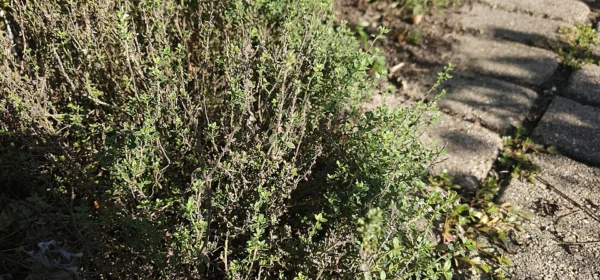
Common thyme
Thymus vulgaris is a useful everyday kitchen herb with small strongly aromatic leaves and a compact bushy habit. It is a sensible first choice where the aim is regular sprigs for cooking rather than a carpet between paving stones.
Common thyme, identified as English thyme in the source.
Photo: TheTechnician27, CC0. Resized and optimised; cropped for display.
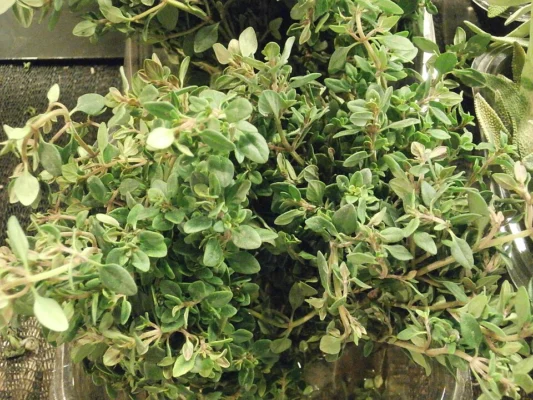
Lemon-scented thyme
Choose a labelled culinary lemon thyme for leaves with a citrus scent. Several selections are sold under this common description, with differences in leaf colour and growth. Check the label for the particular plant’s size and hardiness.
Lemon thyme foliage; no named cultivar is claimed.
Photo: Jeffery Martin, CC0. Resized and optimised; cropped for display.
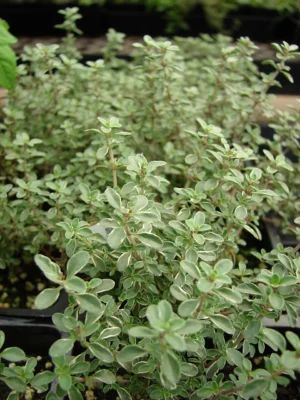
Silver Posie
A small bushy thyme with white-edged green leaves and a lemon scent, reaching around 30cm in suitable conditions. It brings useful contrast to a herb container, while still needing a sunny position and freely draining compost.
Illustrative variegated thyme: the source identifies Argenteus, not Silver Posie.
Photo: Forest and Kim Starr, CC BY 2.0. Resized and optimised; cropped for display.
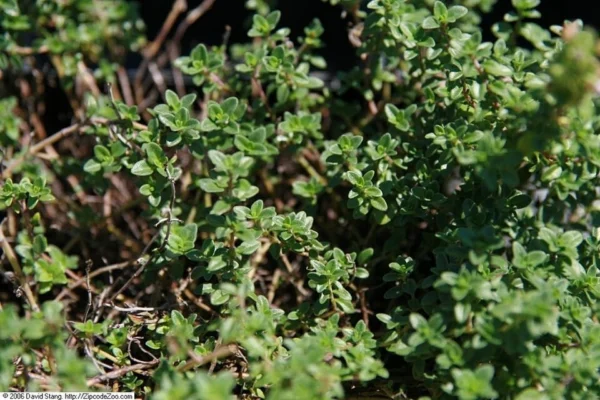
Doone Valley
A low mat-forming selection with dark leaves splashed yellow and pinkish-lilac summer flowers. Its small scale suits a sunny edge or container. Give it especially good drainage, since winter wet is a particular weakness.
Doone Valley, identified by the source photographer.
Photo: David J. Stang, CC BY-SA 4.0. Resized and optimised; cropped for display. Adapted image under the same licence.
Start with healthy labelled plants and compare scent, spread and hardiness. Common thyme is a useful kitchen staple; a lemon-scented or variegated selection can sit beside it in another pot. Keep different forms labelled so you can judge which grows and cooks best for you.
Thyme flowers attract bees and other small visitors. Leave part of the plant or a second pot to flower while taking kitchen sprigs from elsewhere, so harvesting does not remove every available bloom.
Avoid routine spraying around open flowers. Minor insect feeding rarely justifies treating the entire plant, and regular close inspection often reveals that a little damage is not affecting growth or your supply of leaves.
Published by Buy From Farmers Direct. Growing guidance reviewed 6 October 2026. The seasonal timeline uses the shared BFFD Growers Calendar record; adjust timings to your variety and local conditions.
Yes. Give it sun, drainage holes and gritty peat free compost. A pot around 20cm across is a useful start for one small plant. Check water in summer and protect vulnerable pots from prolonged winter wet.
Take small amounts from a healthy established evergreen plant, but most fresh growth arrives in late spring and summer. Pick lightly in winter and stop if the plant is frozen, sparse or struggling.
Age and infrequent trimming can leave bare stems. Light regular pruning within green growth helps keep a younger plant compact. An old bare plant is often better replaced from healthy cuttings than cut hard into leafless wood.
A young plant supplies useful sprigs sooner. Common thyme can be raised from seed in spring, but needs time to establish. Choose a plant or rooted cutting when you want a named selection to keep its distinctive traits.
Flowers from a correctly identified culinary thyme can be used in food. Leave some for bees and avoid plants treated with products unsuitable for edible crops. A decorative-looking herb should still have a reliable identity.
No. It prefers a sunny freely drained position and usually needs little feeding in garden soil. Container plants may need modest feeding during growth, but rich wet compost and heavy feeding can make conditions worse.
Give thyme sunshine, drainage and small regular trims, and it can remain a useful kitchen companion for several seasons. Pick modestly, leave some flowers for insects and raise a replacement before an old woody plant becomes difficult to manage.