Cherry tomatoes give small, sweet fruits that often ripen sooner than larger tomatoes. Choose the growing habit before the colour: a tall cordon needs support and side shoot removal, while a bush or trailing variety keeps its branches. Both reward steady watering and a warm, bright position.
Tender summer crop
Cordon and bush types
Small fruits ripen readily
Pots or protected beds
Keep watering consistent
| Botanical name | Solanum lycopersicum, small fruited cultivars |
| Family | Solanaceae |
| Plant type | Tender plant grown as an annual in the UK |
| Harvested part | Ripe fruit |
| Growing habits | Cordon, bush and trailing forms |
| Cordon support | A strong tall cane or secure string |
| Bush training | Keep side shoots; support heavy branches if needed |
| Position | Full sun, warm and sheltered |
| Soil | Fertile, moist and well drained |
| Protected crop sowing | Late February to mid March indoors |
| Outdoor crop sowing | Late March to early April indoors |
| Germination warmth | Around 18°C |
| Germination time | Usually within about two weeks |
| Final planting | May to June, when the growing position is warm enough |
| Outdoor spacing | Usually 45 to 60cm; follow the cultivar label |
| Container size | One plant in a pot about 30 to 45cm across |
| Main harvest | July to October, earlier or longer under suitable cover |
| Feeding | Tomato feed once the first fruits start swelling |
| Pollination | Self fertile; flower vibration helps release pollen |
| Frost tolerance | None; protect young plants and finish before frost |
| Plant name | Crop type | Spacing |
Sow indoors
Plant outdoors
Harvest
Polytunnel | |||||||||||
|---|---|---|---|---|---|---|---|---|---|---|---|---|---|---|
| Jan | Feb | Mar | Apr | May | Jun | Jul | Aug | Sep | Oct | Nov | Dec | |||
| Tomato (Cherry) | Unusual & exotic | Usually 45 to 60cm between ground grown plants; one per 30 to 45cm pot | No activity recorded | Sow indoors | Sow indoors | Sow indoors | Plant outdoors, Polytunnel | Plant outdoors, Polytunnel | Harvest, Polytunnel | Harvest, Polytunnel | Harvest, Polytunnel | Harvest, Polytunnel | No activity recorded | No activity recorded |
Sow indoors: February, March, April. Plant outdoors: May, June. Harvest: July, August, September, October. Polytunnel: May, June, July, August, September, October.
All February to April sowing is indoors with warmth. The earlier start suits a protected crop; late March to early April suits outdoor plants. May and June planting depends on warmth and frost risk. July to October harvest combines outdoor and protected crops. The optional May to October tunnel band describes the growing season under cover, not guaranteed frost protection or continuous fruiting.
Cherry tomatoes suit beginners with a sunny patio, greenhouse or sheltered bed. A single well cared for plant can provide regular small pickings. Bush and trailing choices are useful where a tall support would be awkward.
Cordon varieties make good use of vertical space but need regular attention. Pots and baskets dry quickly in hot weather, so arrange reliable watering before choosing several plants.
Image from the BFFD media library.
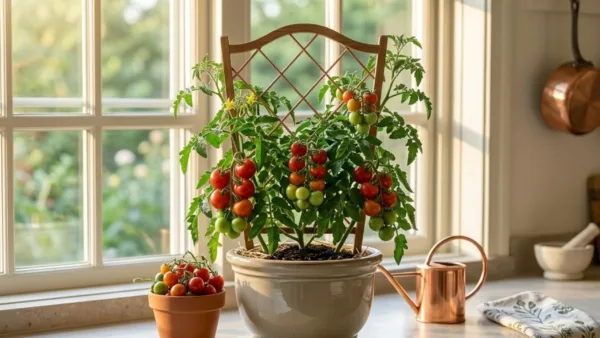
Choose the warmest sunny position available, sheltered from cold wind. In cool districts, a greenhouse or polytunnel usually offers a more dependable season than an exposed outdoor bed.
Prepare fertile, free draining soil with well rotted organic matter. Rotate outdoor tomatoes away from the same bed where practical, and start container crops in fresh peat free compost.
Allow about 45 to 60cm between ground grown plants, checking the variety’s requirements. Leave enough room to reach fruit and maintain airflow; small fruits do not necessarily mean a small plant.
Use one plant in a drained pot around 30 to 45cm across. Choose a genuinely trailing variety for a hanging basket and secure it for the weight of wet compost and a full crop.
Photo: Dwight Sipler, CC BY 2.0. Resized and optimised; cropped for display.
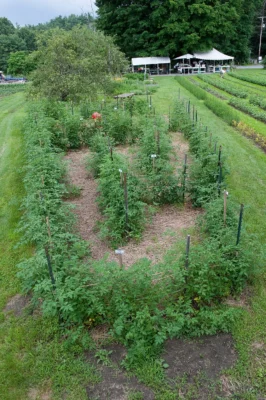
Buy seed or young plants labelled with both variety and growth habit. Match your sowing date to the space available for growing seedlings on.
1.
Sow indoors from late February to mid March for protected cropping, or late March to early April for outdoor plants. Fill clean pots or modules with seed compost.
2.
Sow thinly and cover lightly according to the packet. Moisten gently and keep around 18°C in a propagator or warm position.
3.
Once seedlings emerge, remove their cover and provide strong light. Crowded, warm but poorly lit seedlings become tall and weak.
4.
When there are a couple of true leaves, pot seedlings individually. Hold a leaf, support the roots and keep the stem intact.
5.
Pot on as needed while plants grow. Prepare the final container or bed and install cordon supports before roots and branches become difficult to work around.
6.
Harden plants off before outdoor planting. Wait until frost risk has passed and conditions are reliably warm; an unheated greenhouse can still be too cold early in spring.
7.
Plant ordinary seedlings deeply enough for their lowest leaves to sit just above the soil. For grafted plants, follow the supplier’s instructions and keep the graft union above the surface.
8.
Water thoroughly and label the growth habit. Tie cordon stems loosely to supports; allow bush plants to branch and keep their fruit off wet soil where possible.

Watering
Keep compost evenly moist. Check pots and baskets daily in hot weather, watering thoroughly when needed instead of allowing repeated drying and flooding.
Water at the roots and let surplus drain away. A mulch helps beds retain moisture. Avoid leaving pots in stagnant water or routinely wetting foliage late in the day.

Feeding
Begin a high potassium tomato feed when the first fruits start swelling. Follow the product label; roughly fortnightly is common, but products and composts differ.
Rich ground may need less feeding than containers. More fertiliser cannot replace good light or consistent water, and excessive leafy growth can compete with fruit production.

Pruning
For cordons, remove small side shoots from the angle between a leaf and the main stem, and tie new growth regularly. Keep these distinct from flower trusses. Bush and trailing plants retain their side shoots.
Stop a cordon at about four trusses outdoors or seven under cover, or when it reaches its support. Leave two leaves above the top truss. Remove yellowing lower foliage gradually rather than stripping the plant bare.

Winter care
Finish the crop before frost. Bring sound mature green fruits indoors to ripen, checking frequently and removing any that develop rot.
Clear spent plants, clean supports and wash reusable pots. Healthy debris can be composted; follow appropriate disposal advice for serious disease rather than carrying infected material into the next crop.
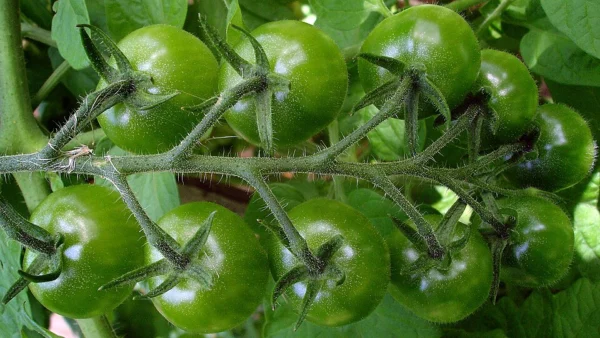
Cherry tomatoes have divided, hairy leaves and yellow flowers followed by small fruits in trusses. Ripe colour may be red, orange, yellow or dark pink, so use the variety description rather than assuming every fruit turns red.
Growth habit cannot be decided from fruit size. A cherry variety may climb well above head height or stay compact and trail. Keep the label and harvest the fruits, not the leaves or stems.
Photo: WikiPedant, CC BY-SA 3.0. Resized and optimised; cropped for display. Photo by WikiPedant at Wikimedia Commons.
Under cover, open vents and doors in warm weather to prevent overheating and excessive humidity. Gentle movement of the plant helps pollen fall within the flowers; very hot or cold conditions can still interrupt fruit set.
Pick regularly once fruit reaches its expected colour and flavour. Hold the truss while removing individual ripe fruits so that the remaining green tomatoes stay attached.
Use sound split fruits promptly and discard any that are mouldy or rotting. At season’s end, prioritise the remaining mature fruit rather than encouraging fresh flowers with little time left to ripen.
Image from the BFFD media library.
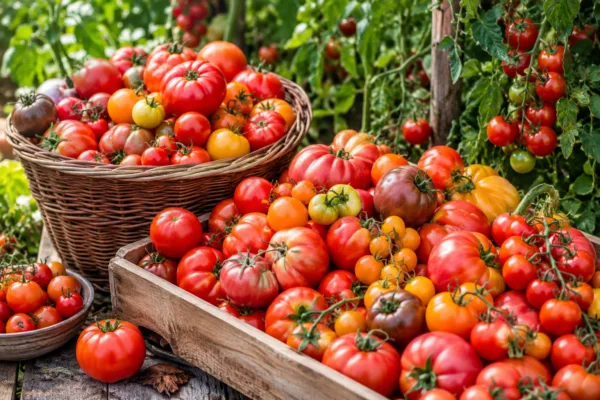
A sudden change in water supply can swell fruits faster than their skins stretch. Keep watering steady, especially in pots, and pick ripe fruit regularly. Avoid leaving a thirsty crop to receive one enormous soaking.
Blossom end rot involves insufficient calcium reaching developing fruit, often because watering fluctuates. Improve moisture consistency and root conditions. Adding calcium alone is not a reliable answer.
Tomato blight spreads in warm wet conditions and can affect fruit. Remove affected material promptly and seek a diagnosis if uncertain. Good spacing and keeping foliage dry help, but do not make plants immune.
Glasshouse whitefly may be present. Inspect leaf undersides and check new plants before introducing them. Appropriate biological controls can help under cover; sticky traps are mainly useful for monitoring.
Check heat, cold, drying roots and poor ventilation. Improve the growing conditions and gently tap a support when flowers are open. More feed will not compensate for unsuitable temperatures.
Seed is the usual route for a fresh crop each spring. Choose a healthy plant and correctly identified seed rather than relying on an unknown tomato from the kitchen.
Seed from an open pollinated variety can be saved using a suitable tomato seed cleaning method. F1 hybrids may produce varied offspring rather than repeat the parent, so buy fresh seed where predictable traits matter.
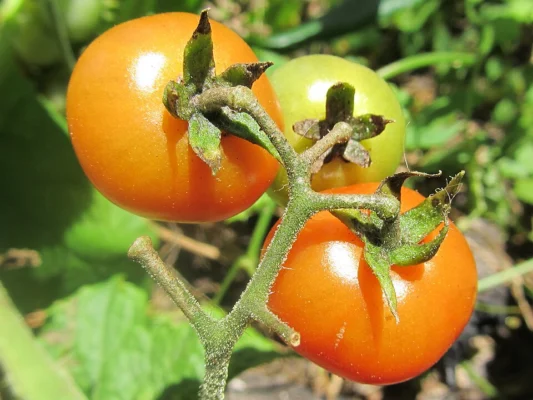
Sungold
A vigorous cordon with golden orange cherry fruits and a sweet flavour. Give it tall support, remove side shoots and pick regularly once fruit reaches its orange ripe colour.
Orange cherry tomatoes illustrating colour; this is not a verified Sungold plant.
Photo: Ton Rulkens, CC BY-SA 2.0. Resized and optimised; cropped for display. Adapted image under the same licence.
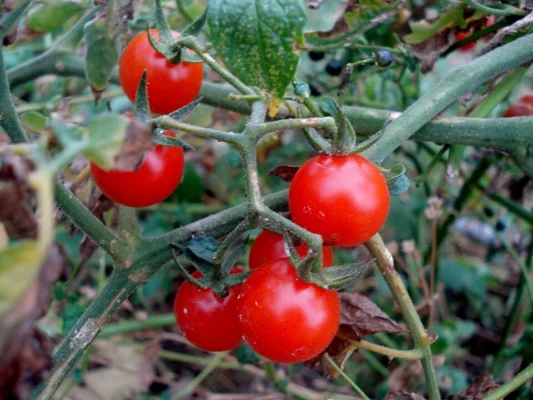
Sweet Million
A cordon producing long trusses of small sweet fruit. It suits a supported container or greenhouse bed where you can keep up with watering and training.
Illustrative red cherry tomatoes; Sweet Million is not confirmed.
Photo: Aruna, CC BY-SA 3.0. Resized and optimised; cropped for display. Adapted image under the same licence.
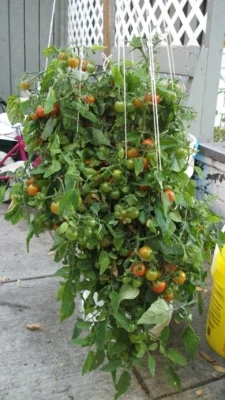
Tumbling Tom Red
A trailing cherry tomato for baskets and containers. Retain its branching growth and allow room for shoots to hang without resting on the ground.
Source-identified Tumbling Tom in a hanging basket; the colour form is not independently verified.
Photo: Rkjw, CC BY-SA 3.0. Resized and optimised; cropped for display. Adapted image under the same licence.
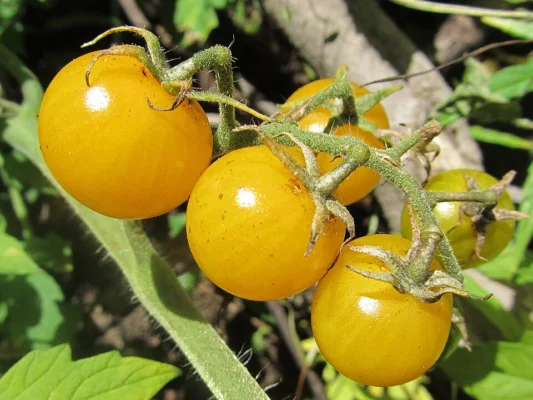
Gold Nugget
A compact bush choice with small orange yellow fruits and an early season. It offers a different habit from tall yellow or orange cordon varieties.
Yellow cherry tomatoes illustrating fruit colour, not a verified Gold Nugget plant.
Photo: Ton Rulkens, CC BY-SA 2.0. Resized and optimised; cropped for display. Adapted image under the same licence.
Compare cordon, bush and trailing plants with the space and supports you have. Check whether the variety is intended for outdoor or protected cropping.
Tomato flowers can be visited by bumblebees, whose vibration helps release pollen. Give visiting insects access when ventilating a greenhouse in suitable weather.
Include other flowering plants nearby and identify pests before acting. Targeted care avoids unnecessary disturbance to the useful insects sharing the growing space.
Published by Buy From Farmers Direct. Growing guidance reviewed 6 October 2026. The seasonal timeline uses the shared BFFD Growers Calendar record; adjust timings to your variety and local conditions.
No. Remove them from cordon varieties; retain them on bush and trailing types. Check the label before pruning.
Yes, with a suitable variety and a warm sheltered sunny position after frost risk. Cover helps in cooler or exposed places.
Usually one plant in a pot about 30 to 45cm across. A larger root volume is easier to keep evenly moist than a very small pot.
Use tomato feed once the first fruits begin swelling, following the product instructions and maintaining regular watering.
Orange or yellow may be their ripe colour. Check the cultivar description and judge ripeness accordingly.
It may germinate, but the resulting plants can differ from the parent. Fresh F1 seed is the predictable option.
Choose the right growth habit, give plants warmth and keep watering steady. Small regular pickings are one of the best rewards of growing cherry tomatoes.
Explore more growing guides: Cantaloupe, Coriander, Ground Cherry.
Want to get food independence, support your local grower, get better prices and shop more privately?
Local food isn’t just something you find. It’s something you protect. A free account helps keep local supply visible, supported, and resilient.

….it takes 30 seconds for food lovers and 5 minutes for suppliers
We built this for people who care where their food comes from. For people who want to remain food secure. For Farmers to get to the local people, who deserve a better income and to deliver a better price for you. For the environmentally conscious and the privacy-conscious. An account simply helps us make the map and supplier reach more useful to you, without changing how open it is. You’re always in control.


Find local food. Stay connected to it. Create a free account to support local producers and be part of a growing food network.


