Tulips turn an autumn planting into a spring display. Their colours and shapes range widely, so plan the flowering season and height as carefully as the palette. Buy sound bulbs, give them drainage and decide whether you want a fresh bedding display each year or varieties with a better chance of returning.
Plant bulbs in autumn
Spring colour
Sun and good drainage
Borders and containers
Retain leaves after flowering
| Botanical name | Tulipa species and cultivars |
| Family | Liliaceae |
| Plant type | Bulbous perennial, often used for seasonal bedding |
| Main planting | September to November |
| Common border planting choice | October to November |
| Flowering | March to May, depending on selection |
| Position | Usually full sun |
| Soil | Fertile and freely drained |
| Planting depth | About 2 to 3 times the bulb’s height |
| Spacing | At least about 2 bulb widths apart |
| Height | Varies widely with species and cultivar |
| Containers | Use a drained pot and suitable compost |
| Watering | As needed during active growth |
| Feeding | Useful when retaining bulbs for another year |
| Deadheading | Remove spent flowers unless saving seed |
| Leaf care | Leave foliage until naturally yellow |
| Cut flowers | Pick when buds show colour |
| Summer rest | Avoid prolonged wetness around dormant bulbs |
| Reflowering | Varies; not guaranteed for every border cultivar |
| Handling | Bulbs can irritate skin; plants are not food |
| Plant name | Crop type | Spacing |
Sow indoors
Plant outdoors
Harvest
Polytunnel | |||||||||||
|---|---|---|---|---|---|---|---|---|---|---|---|---|---|---|
| Jan | Feb | Mar | Apr | May | Jun | Jul | Aug | Sep | Oct | Nov | Dec | |||
| Tulip | Not recorded | At least about 2 bulb widths apart | No activity recorded | No activity recorded | Harvest | Harvest | Harvest | No activity recorded | No activity recorded | No activity recorded | Plant outdoors | Plant outdoors | Plant outdoors | No activity recorded |
Sow indoors: no months recorded. Plant outdoors: September, October, November. Harvest: March, April, May. Polytunnel: no months recorded.
Plant dry bulbs in September to November, with October and November a common choice for border tulips. The March to May harvest band means cut flowers, not an edible crop. Seed sowing is not the usual route to a spring display, so that band is empty. Routine outdoor bulbs do not require a polytunnel.
Tulips suit spring pots, border groups and dedicated cutting rows. A few carefully chosen varieties can extend the display without needing every flower to open at once.
Consider what happens after flowering. Leaves need time to die back if bulbs are being retained, while a heavily watered summer bed may be unsuitable for their dormant season.
Photo: Kurt Kaiser, CC0. Resized and optimised; cropped for display.
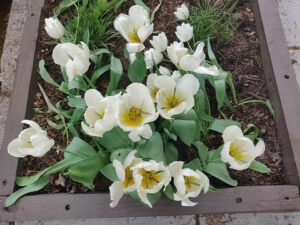
Choose a sunny position for most border tulips, with enough light reaching their leaves in spring. Check individual requirements for specialist species, some of which tolerate different conditions.
Drainage is essential. Avoid hollows that hold winter water and soil that stays saturated around the bulbs. A raised surface helps only where excess water can escape.
Plan groups by mature height and flowering time. Leave space for emerging perennial plants rather than burying bulbs directly through established crowns.
For pots, choose a stable container with drainage holes and suitable peat free compost. Leave enough depth for bulbs and roots, and a watering space below the rim.
Photo: Dominicus Johannes Bergsma, CC BY-SA 4.0. Resized and optimised; cropped for display. Adapted image under the same licence.
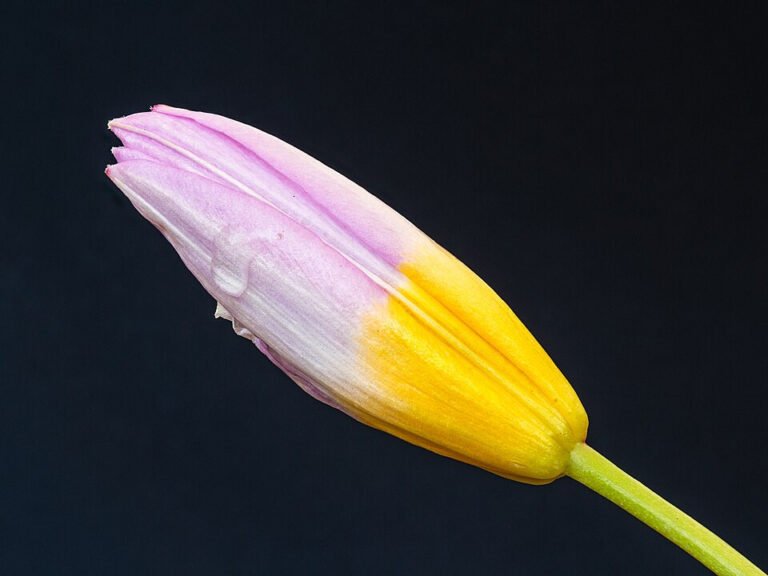
Start with firm, healthy bulbs labelled for their variety and flowering season. The usual garden display comes from planting mature bulbs, not sowing seed shortly before spring.
1.
Compare height, flower form and flowering period before buying. Decide whether the display is temporary or whether repeat flowering is a priority.
2.
Inspect bulbs for softness, mould or damage. A loose dry outer skin alone is not necessarily a problem, but unhealthy tissue should not be planted among sound bulbs.
3.
Store briefly in a cool, dry, ventilated place if planting must wait. Keep ornamental bulbs labelled and separate from edible onions and other food.
4.
Prepare the bed or container in autumn. Check drainage before making holes, and avoid forcing planting into frozen or waterlogged ground.
5.
Plant with the pointed end upwards at roughly two to three times the bulb’s height. Allow at least around two bulb widths between bulbs in the ground, adjusting to the display and supplier’s guidance.
6.
Backfill gently and label each group. In containers, leave a gap between bulbs rather than allowing them to touch, and keep sufficient compost beneath for roots.
7.
Water a container after planting and place it where surplus winter rain can drain away. A sheltered position can help if pots otherwise remain saturated.
8.
Where squirrels disturb bulbs, use securely fitted temporary protection and inspect it regularly. Remove or adjust it before shoots become trapped or damaged.

Watering
Outdoor beds often receive enough rain while bulbs establish. Check containers more closely and avoid leaving them on a saucer of winter water.
During active spring growth, water if conditions are dry. Keep foliage supplied while it is still green, then reduce watering as plants become dormant.

Feeding
If you intend to retain bulbs, a suitable feed during active growth can help replenish them. Follow the product directions and stop as leaves yellow and growth ends.
A temporary bedding display relies largely on reserves already in the bulb. Extra feeding does not guarantee that every cultivar will flower equally well the following year.

Pruning
Remove spent flower heads unless you are deliberately saving seed. Leave the green leaves intact so they can continue supplying the bulb.
Do not tie, fold or cut away foliage simply to tidy the bed. Remove it once naturally yellow and dry, usually several weeks after the flowers finish.

Winter care
Most common border tulips need no heated protection. Keep drainage open and inspect pots after prolonged rain or severe weather.
If a species or specialist selection has particular shelter requirements, follow its label. Do not apply one rule to every plant sold under the broad name tulip.
Tulips emerge from a bulb with a papery outer covering, producing leaves and upright flower stems. Flowers may be simple cups, pointed stars, fringed forms or richly doubled heads.
A striped flower can be a normal characteristic of a named cultivar, but new distortion, spotting or abnormal markings deserve investigation. A photograph alone cannot establish the health or identity of a bulb.
Photo: Zachi Evenor and MathKnight, CC BY 3.0. Resized and optimised; cropped for display.

Flowering shifts with variety and spring weather. Combine earlier and later selections for a longer season, and expect a warm spring to shorten the time each flower stays fresh.
For reliable return, choose suitable species or proven perennialising types and give them the appropriate conditions. Some border tulips are better treated as a seasonal display, so repeat flowering should not be promised universally.
Where summer soil remains wet, bulbs can be lifted after foliage yellows, dried and stored with ventilation before autumn replanting. Keep only sound bulbs and inspect them during storage.
Photo: Kurt Kaiser, CC0. Resized and optimised; cropped for display.
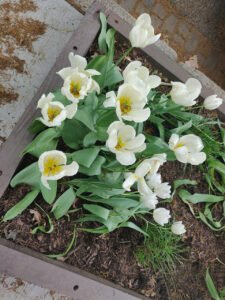
Small bulbs, poor previous growth, shade or unsuitable summer conditions may be involved. Retain healthy leaves and review the variety and position before assuming one feed will solve everything.
Check waterlogging and the condition of planting stock. Remove affected material and correct the growing conditions before replacing it.
Tulip fire or another disease may be involved. Remove affected plants and avoid spreading contaminated debris. Investigate repeated losses before planting the same area again.
Squirrels or other animals may be responsible. Use suitable securely fitted protection and inspect as shoots emerge.
They may have been stored damp or already damaged. Remove affected bulbs, improve ventilation and check the remaining stock rather than sealing it into a moist bag.
Offsets can develop around a healthy parent bulb. They may need several seasons to reach flowering size, so separate propagation plans from a display that must perform next spring.
Species tulips can also be raised from seed, with patience and appropriate seasonal conditions. Named border cultivars do not reliably come true from seed; labelled bulbs are the straightforward way to reproduce a chosen display.
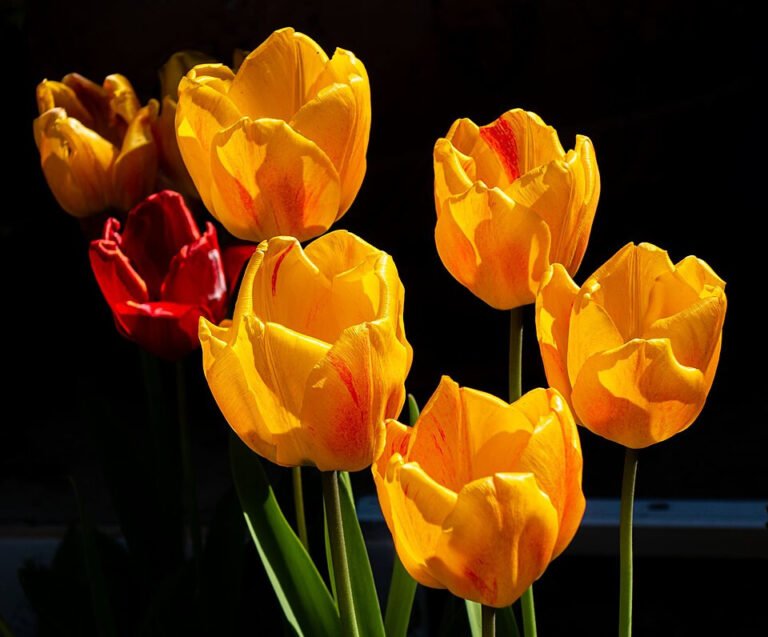
Early and mid spring choices
Use flowering period alongside colour when planning the first part of the display. Check the description of each cultivar rather than relying only on its group name.
Border tulips shown for comparison; flowering season and named cultivar identity are not authenticated.
Photo: Friedrich Haag, CC BY-SA 4.0. Resized and optimised; cropped for display. Adapted image under the same licence.
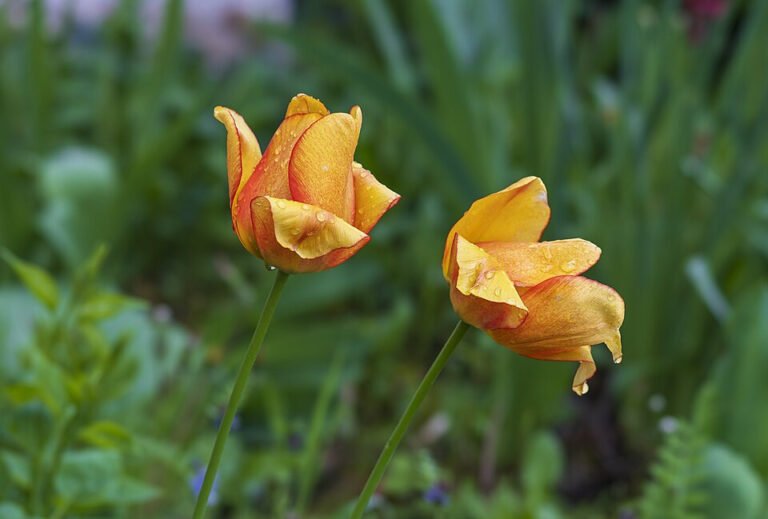
Later border tulips
Late varieties can bridge the gap towards early summer planting. Allow their foliage to finish if bulbs will be kept, even when the next display is ready to go in.
Border tulips shown for comparison; later flowering behaviour and cultivar identity are not authenticated.
Photo: Roman Eisele, CC BY-SA 4.0. Resized and optimised; cropped for display. Adapted image under the same licence.

Distinctive flower forms
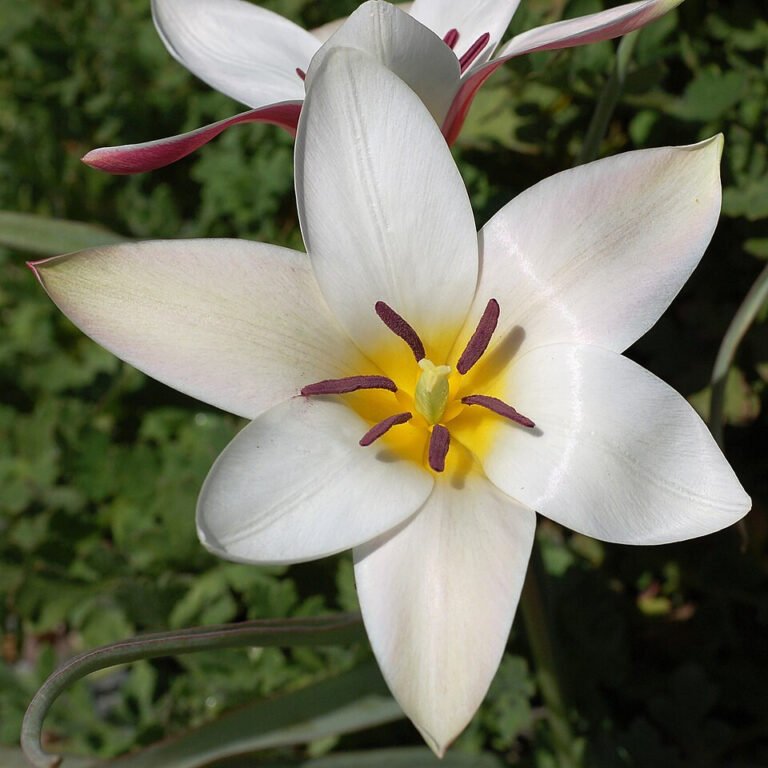
Lily flowered, fringed, parrot and double tulips bring different shapes. Compare stem strength and height as well as the close up flower photograph.
White tulip shown as a flower form comparison; a specific named tulip group is not authenticated.
Photo: Syced, CC0. Resized and optimised; cropped for display.
Species and returning types
Smaller species and certain established garden groups may return more reliably in suitable conditions. Match the actual species requirements to the site rather than assuming all are identical.
Source identified Tulipa clusiana Lady Jane illustrates a species related tulip; reliable return in a particular garden is not guaranteed.
Photo: Photo by and (c)2007 Derek Ramsey (Ram-Man). Co-attribution must be given to the Chanticleer Garden., CC BY-SA 3.0. Resized and optimised; cropped for display. Adapted image under the same licence.
Choose height, shape and flowering time together, then decide where fading foliage can finish naturally. That makes the autumn order and summer follow on planting easier.
Open flowers can offer visiting insects access to pollen, although tulips should be one part of a broader spring planting. Include other suitable flowers across the season.
Use bulb protection carefully and remove loose or unnecessary mesh. Avoid leaving emerging shoots trapped beneath a cover intended only to stop digging.
Published by Buy From Farmers Direct. Growing guidance reviewed 11 October 2026. The seasonal timeline uses the shared BFFD Growers Calendar record; adjust timings to your variety and local conditions.
Plant in autumn, generally September to November. October and November are common choices for border tulips, provided the ground is workable.
About two to three times the bulb’s height, with the pointed end upwards. Follow any specific instructions for the selection and container.
Some do reliably in suitable conditions, while many border cultivars decline. Choose returning types if that matters and retain healthy foliage after flowering.
No, if you want to retain the bulbs. Leave leaves until they naturally yellow and dry so they can replenish the bulb.
Yes. Use a sufficiently deep container, suitable compost and good drainage. Watch moisture during spring growth and avoid winter waterlogging.
No. Keep them separate from food bulbs. Handling can also irritate sensitive skin, so use gloves where needed.
Tulips are a simple pleasure when the bulbs are sound and the site drains well. Plan beyond the flower itself, giving the leaves and summer rest the attention that retained bulbs need.
Explore more growing guides: Wallflower, Viola, Sweet William.
Want to get food independence, support your local grower, get better prices and shop more privately?
Local food isn’t just something you find. It’s something you protect. A free account helps keep local supply visible, supported, and resilient.

….it takes 30 seconds for food lovers and 5 minutes for suppliers
We built this for people who care where their food comes from. For people who want to remain food secure. For Farmers to get to the local people, who deserve a better income and to deliver a better price for you. For the environmentally conscious and the privacy-conscious. An account simply helps us make the map and supplier reach more useful to you, without changing how open it is. You’re always in control.


Find local food. Stay connected to it. Create a free account to support local producers and be part of a growing food network.


