Sweet William forms cheerful clusters of small flowers in white, pink, red and rich burgundy, often with contrasting markings. Traditional strains make leafy plants in their first season and flower the following year. That two-season rhythm suits a cottage border or cutting patch: sow a replacement batch while the current plants are flowering, and avoid relying on ageing clumps indefinitely.
Classic cottage flowers
Usually a biennial cycle
Sunny drained soil
Useful for cutting
Resow for fresh plants
| Botanical identity | Dianthus barbatus |
| Family | Caryophyllaceae |
| Plant type | Short-lived perennial often grown as a biennial |
| Typical height | 20 to 60cm |
| Typical spread | 20 to 35cm |
| Main flowering season | Late spring and summer |
| Light | Full sun |
| Soil | Fertile but well-drained |
| Soil reaction | Neutral to alkaline preferred |
| Winter behaviour | Hardy established plants; drainage important |
| Main planting window | September to October or March to April |
| Seed route | May to July for following-year flowers |
| Pruning approach | Deadhead; trim exhausted flowering stems |
| Propagation | Seed or suitable cuttings |
| Container suitability | Compact strains suit containers |
| Watering priority | Steady moisture during establishment |
| Feeding priority | Modest balanced nutrition |
| Wildlife value | Accessible flowers attract insects |
| Main use | Cottage borders and cut flowers |
| Important distinction | The main calendar follows traditional biennial Dianthus barbatus; specially bred first-year-flowering strains have their own packet timetable. |
| Plant name | Crop type | Spacing |
Sow indoors
Plant outdoors
Harvest
Polytunnel | |||||||||||
|---|---|---|---|---|---|---|---|---|---|---|---|---|---|---|
| Jan | Feb | Mar | Apr | May | Jun | Jul | Aug | Sep | Oct | Nov | Dec | |||
| Sweet William | Not recorded | Single 25cm, In row 25cm, Row gap 30cm | No activity recorded | No activity recorded | Plant outdoors | Plant outdoors | Sow indoors, Harvest | Sow indoors, Harvest | Sow indoors, Harvest | No activity recorded | Plant outdoors | Plant outdoors | No activity recorded | No activity recorded |
Sow indoors: May, June, July. Plant outdoors: March, April, September, October. Harvest: May, June, July. Polytunnel: no months recorded.
May to July sowing is for traditional plants flowering the following late spring or summer. Plant young stock in September to October, or March to April if autumn establishment was unsuitable. May to July harvest means ornamental cutting, not food. No routine tunnel band is needed for hardy established biennials; first-year-flowering strains must follow their own packet instructions. These month bands are planning windows for a typical UK garden; local frost, altitude, exposure and the season can move the work. Check the plant or seed label before using an optional route.
Sweet William suits cottage borders, spring-to-summer bedding and small cutting patches where its clustered heads can be reached easily.
Compact seed strains work in pots and at border fronts, while taller kinds give more useful stems for small bouquets.
Photo: osianshirley, CC BY 4.0. Resized and optimised; cropped for display.

Choose an open sunny position. Some light shade is tolerated, but dense shade encourages weaker stems and poorer flowering.
Use fertile soil with good drainage, especially through winter. Constant wetness around the crown shortens the life of older plants.
Allow roughly 25cm between plants, adjusting for the strain. Dense foliage should not conceal neglected weeds or trap decaying material. Think ahead to the second season when setting out a small autumn rosette. The flowering stems will occupy more space than the young plant, and tight autumn spacing can create a crowded humid patch by the following spring.
A drained pot suits compact plants, with fresh peat-free compost and enough space for their leaf rosettes to develop.
Photo: Татьяна Горбушина, CC0 1.0. Resized and optimised; cropped for display.

Begin with correctly labelled sweet William and decide where the mature plant will fit. Preparing the growing space before buying makes the first season easier, especially when young plants need prompt attention.
1.
Choose a traditional biennial strain or a clearly labelled first-year-flowering type.
2.
For biennials, sow in a seedbed or modules in late spring or summer.
3.
Keep seedlings moist and remove weeds before they compete strongly.
4.
Thin or pot on to produce sturdy individual plants rather than a crowded tangle.
5.
Harden module plants off and plant in autumn while soil remains workable.
6.
Keep the crown at its previous level and water around the roots.
7.
Check plants through winter for loose roots, slug damage and wet decaying leaves.
8.
Cut flowers the following season and raise another batch for continuity. A labelled nursery row makes the biennial cycle easy to follow. The new batch can grow quietly while the previous year’s plants flower elsewhere, then move into the space released after summer bedding or vegetables have finished.

Watering
Water young plants until established, and support flowering plants during prolonged dry periods. Aim for an even root supply rather than constantly wet foliage.
Check pots regularly in spring wind. A container can dry quickly while its dense leaf cover makes the compost difficult to see.

Feeding
Reasonably fertile ground is sufficient for many plantings. Avoid excessive nitrogen, which can produce soft leafy growth.
Give container plants a measured feed if their compost supply is exhausted. Examine drainage and roots before treating persistent yellowing as hunger.

Pruning
Remove faded flower heads to tidy the display and reduce unwanted seed formation. Cut stems for the house while flowers remain fresh.
After the main display, trim exhausted stems and assess the plant’s vigour. Replace weak ageing plants rather than expecting permanent performance from every short-lived clump. A healthy plant that remains compact can be retained for another season as a trial. Keep young replacements as well, because survival and repeat flowering vary, and a whole display based on old plants can become uneven.

Winter care
Established traditional sweet Williams usually remain outdoors. Good drainage and secure roots help them through wet and windy weather.
Small late-raised plugs may benefit from a sheltered cold frame until stronger. They need light and airflow rather than warm indoor forcing.
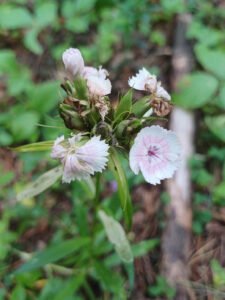
Sweet William has narrow leaves and dense rounded clusters of small five-petalled flowers, often with toothed edges and contrasting eyes.

An autumn planting gives young biennials time to establish before their spring flowering season. On very wet ground, spring planting may be the better compromise.
Cut stems when a useful proportion of the cluster has opened and place them promptly in clean water. Remove leaves that would sit below the waterline. Inspect the flower cluster rather than cutting every stem at the same date. Heads on one plant may be at different stages, and very immature clusters may not give the same immediate vase effect as those with several fresh open flowers.
Persistent winter wet and buried crowns can cause losses. Remove failed plants and improve drainage before replanting.
A young biennial may not yet have reached its flowering season. Check the strain and sowing date before increasing feed.
Rust can affect Dianthus. Remove badly affected material, improve airflow and avoid propagating from visibly diseased plants.
Slugs and snails can remove young growth. Inspect sheltered seedbeds and module trays, especially after damp evenings.
Short-lived plants naturally lose vigour. Raise replacements and retain only healthy vigorous clumps rather than relying on severe cutting back.
Sow a small batch each late spring or summer for next year’s display. Keep the seedbed labelled because young rosettes are easy to overlook.
Healthy non-flowering shoots may provide cuttings where a particular plant is worth preserving. Seed from mixed or named strains may vary in colour and habit. Take material from vigorous shoots without flower buds when possible, and keep it separately labelled from seedlings. A cutting preserves the parent’s character, whereas a seedling from a mixed planting may introduce an entirely different colour.

Traditional tall mixtures
Useful for cottage borders and cutting, with a broad range of flower colours. Their usual rhythm is sowing one year and flowering the next.
Sweet William species photograph; a particular tall seed mixture is not authenticated.
Photo: Татьяна Горбушина, CC0 1.0. Resized and optimised; cropped for display.
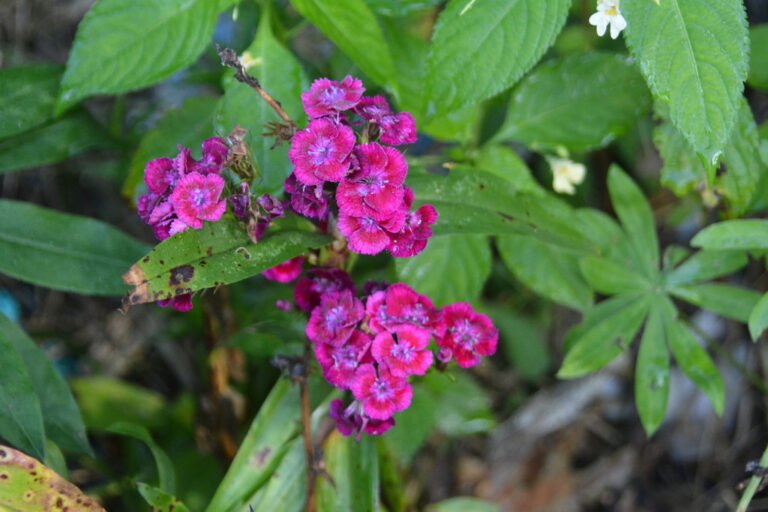
Sooty
A named dark-flowered selection valued for rich tones. Keep the supplier label if matching a colour scheme; generic dark flowers do not authenticate the cultivar.
Sweet William species photograph; Sooty cultivar identity is not authenticated.
Photo: Игорь Загребин, CC0 1.0. Resized and optimised; cropped for display.

Barbarini Series
Compact selections useful for lower planting and containers. Check the supplier’s stated first-flowering schedule rather than applying every biennial assumption.
Sweet William species photograph; Barbarini Series identity is not authenticated.
Photo: Jade, CC BY 4.0. Resized and optimised; cropped for display.
Compare the mature size, growing requirements and season of interest before choosing sweet William. Buy clearly labelled, healthy stock and prepare its position in advance. A plant suited to the available light and soil is easier to establish and maintain.
Flowers with accessible centres can attract visiting insects. Leave some heads on the plant when cutting, and combine sweet William with later-flowering plants. Some highly doubled selections present flowers differently from simpler forms. If insect access is a priority, observe the chosen plants in flower and compare actual visits instead of assuming every richly petalled head offers identical resources.
Avoid unnecessary treatments on open flowers. Healthy mixed borders provide alternative food and shelter for natural predators as well as ornamental colour.
Published by Buy From Farmers Direct. Growing guidance reviewed 11 October 2026. The seasonal timeline uses the shared BFFD Growers Calendar record; adjust timings to your variety and local conditions.
It is a short-lived perennial commonly managed as a biennial, with fresh seed-grown plants providing the most dependable display.
May to July is a useful window for flowers the following year.
Some specially bred strains can. Follow that packet’s timetable rather than assuming all sweet Williams behave the same way.
Yes, especially compact strains in drained containers with regular moisture checks.
Remove faded heads to tidy plants and limit seed formation; keep some only if seed saving is wanted.
Yes. Cut fresh stems when several flowers in the cluster are open and remove submerged leaves.
Keep the two-season rhythm in mind: raise sturdy young sweet Williams, establish them in drained ground, then enjoy their clustered flowers the following year. A small replacement batch gives more dependable continuity than relying on every old plant to remain vigorous for another full season.
Explore more growing guides: Wallflower, Sweet Pea, Viola.
Want to get food independence, support your local grower, get better prices and shop more privately?
Local food isn’t just something you find. It’s something you protect. A free account helps keep local supply visible, supported, and resilient.

….it takes 30 seconds for food lovers and 5 minutes for suppliers
We built this for people who care where their food comes from. For people who want to remain food secure. For Farmers to get to the local people, who deserve a better income and to deliver a better price for you. For the environmentally conscious and the privacy-conscious. An account simply helps us make the map and supplier reach more useful to you, without changing how open it is. You’re always in control.


Find local food. Stay connected to it. Create a free account to support local producers and be part of a growing food network.