Turnips are at their best when picked young, with crisp flesh and a mild, peppery flavour. Small sowings can provide roots for salads and cooking, plus a few tender leaves for the kitchen. They fit into a vegetable bed surprisingly easily, especially when a summer gap opens after an earlier crop.
Quick root crop
Young leaves also edible
Sow little and often
Likes steady moisture
Good for autumn harvests
| Botanical group | Brassica rapa, Rapifera Group |
| Family | Brassicaceae |
| Growing cycle | Biennial usually harvested in its first season |
| Main crop | The swollen root and lower stem |
| Additional harvest | Tender turnip tops |
| Position | Sun, with reliable moisture |
| Soil | Fertile, well drained and moisture retentive |
| Main sowing season | March to mid-August |
| Optional early start | February under cover with a suitable early variety |
| Early-crop sowing | March to June |
| Autumn-crop sowing | July to mid-August |
| Outdoor seed depth | About 1cm; follow the packet |
| Baby-root spacing | About 10cm |
| Larger early roots | About 15cm apart |
| Maincrop spacing | Around 20–23cm apart |
| Row spacing | About 25–30cm |
| Typical harvest speed | Roughly six to ten weeks in active growth |
| Best picking stage | Small, tender roots before they become coarse |
| Container choice | A broad pot at least 40cm across |
| Winter limit | Lift before severe frost; do not assume full winter hardiness |
| Plant name | Crop type | Spacing |
Sow indoors
Plant outdoors
Harvest
Polytunnel | |||||||||||
|---|---|---|---|---|---|---|---|---|---|---|---|---|---|---|
| Jan | Feb | Mar | Apr | May | Jun | Jul | Aug | Sep | Oct | Nov | Dec | |||
| Turnip | Root vegetables | Single 10–23cm, In row 10–23cm, Row gap 25–30cm; match spacing to harvest size | No activity recorded | Sow indoors, Polytunnel | Sow indoors, Plant outdoors, Polytunnel | Sow indoors, Plant outdoors | Sow indoors, Harvest | Sow indoors, Harvest | Sow indoors, Harvest | Sow indoors, Harvest | Harvest | Harvest | Harvest | Harvest |
Sow indoors: February, March, April, May, June, July, August. Plant outdoors: March, April. Harvest: May, June, July, August, September, October, November, December. Polytunnel: February, March.
The main sowing period is March to mid-August. February is an optional protected start using an early variety, followed by careful March or April planting of young modules; direct-sown crops do not need transplanting. May to November covers the usual root harvests. December is conditional on a sound late crop and mild or protected conditions, not a promise of frostproof roots. The polytunnel band marks an optional February/March start.
Turnips suit gardeners who would rather pick a few tender roots than store a large harvest. A short row every few weeks is easier to use well than a whole bed reaching the same size together.
They are useful in a small plot because you can harvest them before neighbouring slower crops need all their space. Allow enough room for both crops, and remove the turnips promptly instead of letting them compete indefinitely.
Photo: Jhulis, CC BY-SA 4.0. Resized and optimised; cropped for display. Adapted image under the same licence.
Choose open, sunny ground where water drains away after rain but the soil does not repeatedly dry to dust. Consistent growth matters more than trying to make unusually large roots.
Work mature compost into the growing area ahead of sowing, or prepare a settled no-dig surface. Remove weeds and break up large surface clods so small seedlings can emerge evenly.
For containers, use a broad pot with drainage holes and peat-free multipurpose compost. A width of at least 40cm gives a useful small crop; pick the roots young and check moisture frequently.
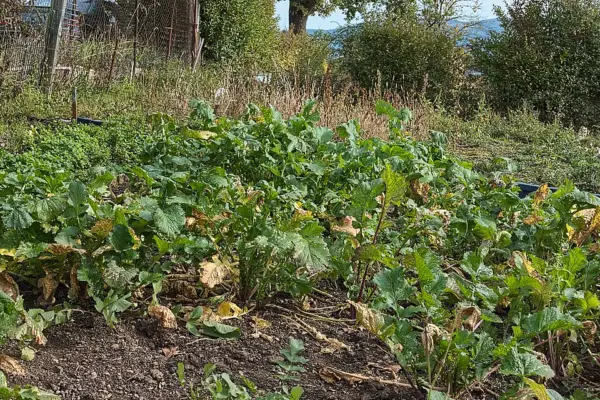
Include turnips in the brassica part of your rotation. Their quick growth does not make them exempt from cabbage-family pests or persistent soil diseases such as club root.
Photo: Touam (Hervé Agnoux), CC BY-SA 4.0. Resized and optimised; cropped for display. Adapted image under the same licence.
Direct sowing is the simplest approach for most crops. Choose a variety for the intended season, then plan a small sowing that you can keep watered and harvest on time.
1.
Pick an early variety for spring or early summer, or one recommended for a July/August sowing and autumn lifting. Check its packet rather than treating every turnip as interchangeable.
2.
Prepare a fine, weed-free surface. Mark short rows about 25–30cm apart so watering, thinning and harvesting remain easy.
3.
Make an outdoor drill roughly 1cm deep and water the base if dry. Sow the small seed thinly, then cover and firm gently.
4.
Keep the surface moist while seedlings establish. In hot weather, pay particular attention to newly sown rows rather than assuming a deep watering last week is enough.
5.
Thin carefully once seedlings are manageable: about 10cm for baby roots, 15cm for larger early turnips, and around 20–23cm for a maincrop. Use the packet if its guidance differs.
6.
Protect vulnerable seedlings with suitable fine insect mesh where flea beetles or cabbage root fly are a concern. Secure the edges and avoid enclosing an infestation already present.
7.
For an optional February start, sow a suitable early variety in modules under cover. Acclimatise the plants and move them out while small, keeping the rootball intact; do not hold them until roots are crowded.
8.
Repeat modest sowings during the variety’s season. Label each row and begin checking root size early, so the first usable turnips are picked while still tender.

Watering
Water when the root zone needs it and aim for steady moisture, especially as roots swell. Long dry spells followed by sudden heavy watering can contribute to splitting and coarse growth.
Containers dry more quickly than garden beds. Water thoroughly, let excess drain, and avoid leaving the compost permanently saturated. Check beneath covers because rain may not reach the soil.

Feeding
A reasonably fertile, compost-prepared bed normally supports this short crop without repeated feeding. If growth is weak, check water, crowding and root damage before reaching for fertiliser.
Use fresh compost for a container crop. If growing successive batches in the same pot, refresh the growing medium and follow the labelled rate of any suitable feed; more fertiliser does not make old roots tender again.

Pruning
Turnips do not need shaping or routine pruning. Remove weeds carefully while plants are small, avoiding damage to the shallow root area.
Pick tender tops sparingly if you also want roots. Repeatedly stripping a root crop of leaves reduces the plant’s ability to grow; sow a separate patch if regular leafy harvests are your priority.

Winter care
Autumn roots can remain available into early winter, but severe frost may damage them. Lift sound roots before harsh weather, especially on exposed sites or wet ground.
For short storage, remove excess foliage and keep sound roots cool and frost-free in a suitable moist packing medium. Inspect regularly and use any damaged roots first. Leaving roots outdoors is a site-dependent choice, not guaranteed storage.
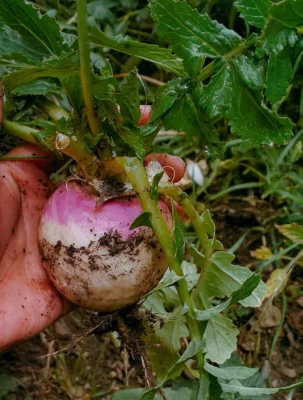
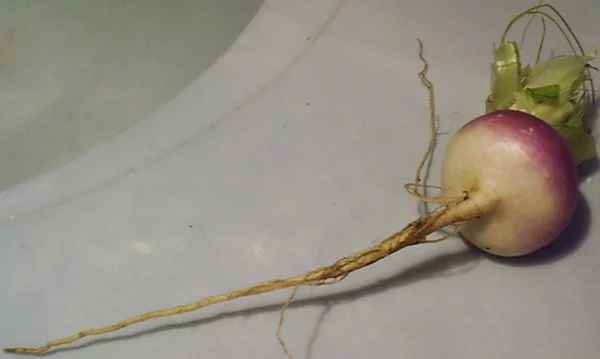
A garden turnip carries a rosette of leaves above a rounded or flattened swelling at soil level. Skins may be white, purple-topped, yellow or red, so colour alone does not identify a named variety.
This guide covers Brassica rapa turnips. Swedes are a different brassica crop and are sometimes called turnips in regional speech; kohlrabi also looks bulb-like, but its edible swelling is an above-ground stem with leaves arising around it.
Photo: Paul Fenwick, CC BY-SA 3.0. Resized and optimised; cropped for display. Adapted image under the same licence.
Spring and late summer often give more comfortable growing conditions than a hot, dry midsummer spell. Where summer sowings struggle, focus on a few spring batches and a well-watered late-summer crop.
In cooler districts, use the earlier part of the recommended maincrop sowing window so plants have time to size up before growth slows. Later sowing cannot be corrected simply by feeding harder.
Harvest by size and texture rather than waiting for a calendar date. Pull a sample root to judge the batch. If a meal only needs a few, lift the largest suitable roots and allow smaller neighbours a little longer.
Photo: thebittenword.com, CC BY 2.0. Resized and optimised; cropped for display.
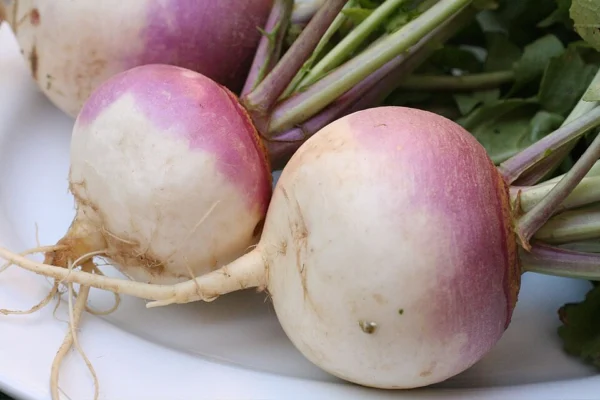
Oversized roots and slow, stressed growth commonly disappoint. Pick earlier, sow smaller batches and maintain moisture. Once a root has become coarse, extra watering will not restore its young texture.
Flea beetles often feed on young brassicas. Fine insect mesh over new sowings and good growing conditions help protect vulnerable seedlings. Light cosmetic damage on established plants is less serious than seedlings being repeatedly checked.
Cabbage root fly can damage the edible swelling. Protect clean new sowings with suitable insect mesh, keep edges secure and avoid placing a fresh crop over soil where an earlier infestation can emerge beneath the cover.
Club root produces abnormal swelling and poor growth. Avoid spreading affected soil on tools or footwear, and move future brassicas to a clean growing area. A short break alone will not reliably clear contaminated ground.
Slugs and snails can remove young growth, particularly in damp weather. Check the bed and nearby hiding places at dusk, protect new seedlings and avoid allowing weeds or debris to shelter directly over emerging rows.
Renew the crop from seed rather than trying to regrow harvested roots. Direct sowing avoids unnecessary handling, while a carefully managed early module batch is useful when protected space is available.
Seed saving requires plants to flower and can involve crossing with other Brassica rapa crops. Keep a planned, isolated seed crop if purity matters. Seed from F1 varieties such as Tokyo Cross will not reproduce the named hybrid reliably.
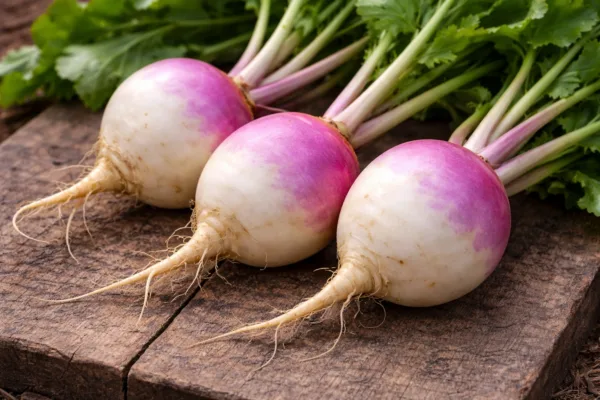
Purple Top Milan
A familiar early type with white roots and purple shoulders. Choose it for small, tender roots and follow its packet for spring sowing or an optional protected early start.
Illustrative purple-topped turnips; not confirmed as Purple Top Milan.
Image from the BFFD media library.
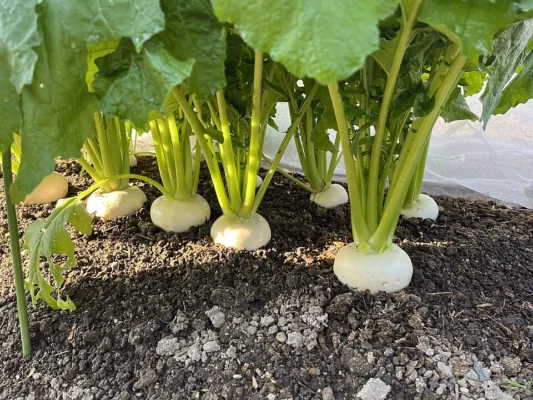
Tokyo Cross F1
A fast-growing white hybrid that is particularly useful for harvesting young. It gives a different look from the familiar purple-topped types and suits small repeat sowings.
Illustrative turnip photograph; not confirmed as Tokyo Cross F1.
Photo: Miya, CC BY-SA 4.0. Resized and optimised; cropped for display. Adapted image under the same licence.
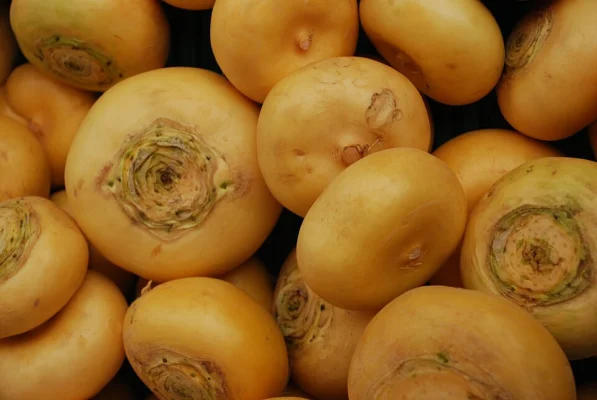
Golden Ball
A traditional yellow-fleshed type with a firmer texture. It takes longer to bulk up than quick white hybrids, so allow an appropriate growing period and avoid leaving the roots oversized.
Yellow Målselvnepe turnips, shown as a colour illustration; not Golden Ball.
Photo: Osopolar, CC BY-SA 3.0. Resized and optimised; cropped for display. Adapted image under the same licence.
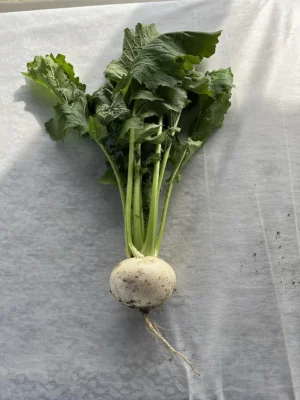
Snowball
An all-white turnip offering a mild young root for the kitchen. Sow and pick little and often within the supplier’s recommended season rather than aiming for the biggest possible roots.
Illustrative turnip photograph; not confirmed as Snowball.
Photo: Miya, CC BY-SA 4.0. Resized and optimised; cropped for display. Adapted image under the same licence.
Compare early and maincrop guidance, skin and flesh colour, and the recommended picking size. A small packet used for several short sowings is often more useful than a large planting harvested too late.
Turnips left for seed produce yellow brassica flowers that insects can visit. These plants will no longer be managed for tender roots, so set aside only the number you actually want to keep.
Protect the crop with well-fitted mesh while retaining other flowering plants and sheltered ground nearby. Ground-dwelling predators are part of a healthy garden, and a few holes do not automatically justify treating every insect as a problem.
Published by Buy From Farmers Direct. Growing guidance reviewed 6 October 2026. The seasonal timeline uses the shared BFFD Growers Calendar record; adjust timings to your variety and local conditions.
No. Garden turnips are Brassica rapa, while swedes belong to a different brassica crop. Regional names overlap, so check the packet’s plant name and growing instructions.
Fast early types may be usable in around six weeks, while larger maincrops often take about ten weeks or more. Weather, variety and the size you want matter more than an exact day count.
Yes, tender tops are edible. Pick only a few from plants grown for their roots, or use a separate sowing for repeated leaf picking.
Usually no: direct sow them where they will grow. Young modules can provide an early protected start, but move them while small and keep their roots undisturbed.
Only where the variety and conditions allow it. Roots can be damaged by severe frost or wet soil. Lift before harsh weather if you want a more dependable stored supply.
Uneven moisture can be a factor, especially after a dry period. Keep growth steady and harvest young. Split roots are best used promptly if the remaining tissue is sound.
Grow turnips as a sequence of small, timely harvests. Give seedlings moisture and space, pick before the roots become coarse, and treat the autumn batch according to your local winter weather.
Explore more growing guides: Carrot, Beetroot, Chinese Cabbage.
Want to get food independence, support your local grower, get better prices and shop more privately?
Local food isn’t just something you find. It’s something you protect. A free account helps keep local supply visible, supported, and resilient.

….it takes 30 seconds for food lovers and 5 minutes for suppliers
We built this for people who care where their food comes from. For people who want to remain food secure. For Farmers to get to the local people, who deserve a better income and to deliver a better price for you. For the environmentally conscious and the privacy-conscious. An account simply helps us make the map and supplier reach more useful to you, without changing how open it is. You’re always in control.


Find local food. Stay connected to it. Create a free account to support local producers and be part of a growing food network.


